How Many Horses Died in WWII?
You might be surprised to learn that between 750,000 and 2 million horses died during WWII. Both German and Soviet forces heavily relied on horses despite mechanization, with German losses reaching about 2.75 million and Soviet losses over 3.5 million.
Harsh weather, overwork, and combat took a severe toll on these animals, which were vital for logistics and mobility. Understanding the full impact of these losses reveals much about war strategies and military shifts during that period.
Why Horses Still Mattered Despite Mechanization in WWII
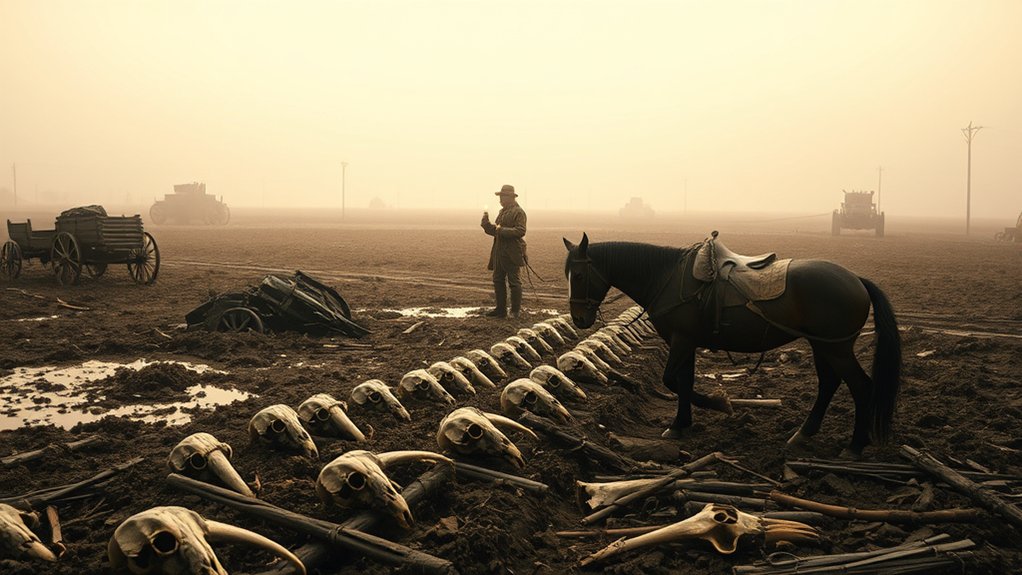
Although WWII saw rapid mechanization, horses still played a vital role because vehicles and fuel were often scarce or unavailable in many regions. You’d find horses essential for logistical support, transporting supplies, artillery, and performing reconnaissance where mechanized vehicles couldn’t operate effectively.
Despite advances, mechanization had limitations, especially in harsh terrains and during fuel shortages, making horses indispensable. However, this reliance came at a high cost. Around 750,000 horses died due to overwork, combat, and harsh conditions.
The significant casualties among horses highlight both their strategic importance and the challenges armies faced shifting fully to mechanized forces. Understanding this balance clarifies why horses remained critical in WWII, even as mechanization reshaped warfare logistics and mobility.
Horses Used by Germany and Its Allies in WWII
While mechanization advanced during WWII, Germany and its allies still relied heavily on horses, employing approximately 2.75 million of them primarily for transportation, logistics, and support roles. You should recognize that horses were integral despite technological progress.
German horses suffered significant casualties, especially on the Eastern Front. Key points include:
German horses faced severe losses, particularly on the harsh and demanding Eastern Front during WWII.
- German forces lost around 189,000 horses in just two months (Dec 1941-Jan 1942) due to harsh conditions and combat.
- Many horses died from exposure, starvation, exhaustion, and injuries.
- Allied countries like Romania and Italy contributed millions more horses to Axis efforts.
- An estimated 750,000 horses died overall during the war, with a large proportion serving German and allied military operations.
These facts highlight the extensive reliance on horses and the heavy equine casualties involved in German World War II campaigns.
Roles of Horses on Different WWII Fronts
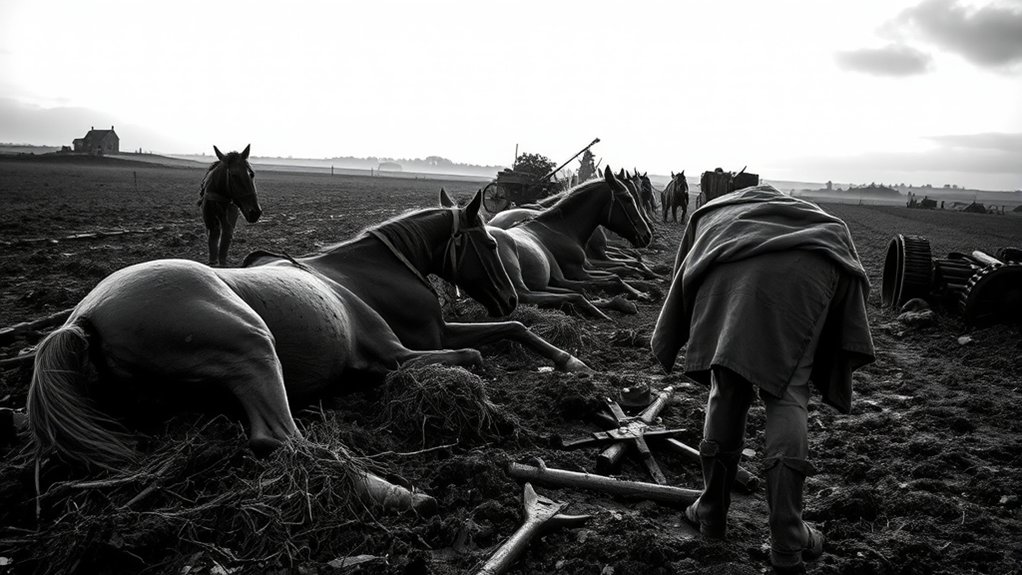
Because mechanization varied widely across theaters, horses retained essential roles on multiple WWII fronts. On the Eastern Front, the Soviet Union deployed over 3.5 million horses, while German forces used about 2.75 million. This shows how critical horses were for transportation and logistics amid harsh conditions.
These animals were indispensable for moving supplies where vehicles struggled, especially in rough terrain and severe weather.
In the North African and Mediterranean campaigns, horses supported logistics by carrying equipment and provisions across challenging landscapes.
Even in the Pacific Theater, where mechanization was limited, horses helped transport goods on islands and occupied territories.
Despite their utility, horses suffered significant casualties, with estimates ranging from 750,000 to over 2 million deaths due to combat, starvation, and the extreme environments they endured across all fronts.
Major Logistical Challenges of Using Horses in WWII
You face some serious supply chain challenges when relying on horses. They need a lot of feed, water, and veterinary care, which really puts a strain on logistics.
On top of that, harsh environments—like the brutal Russian winters—make things even tougher. Horses often suffer from starvation and exhaustion, leading to high mortality rates.
All these factors together end up reducing operational mobility and adding extra pressure on military supply lines.
Supply Chain Difficulties
How did relying on horses complicate supply chains during WWII? The use of horses introduced critical logistics challenges that impacted military operations. You’d to manage:
- Extensive feeding needs, requiring constant supply of fodder to prevent starvation.
- Sheltering horses in harsh conditions, which strained limited infrastructure.
- High mortality rates. German forces lost about 189,000 horses in two months, which disrupted transportation.
- Difficult terrain and winter weather, making supply line maintenance even harder.
These factors increased the logistical burden a lot. Horses died in large numbers due to starvation and exposure, which reduced operational mobility. Supporting them also diverted resources from mechanized units and hastened the decline of horse-dependent forces.
Understanding these supply chain difficulties shows why armies gradually shifted away from relying on horses despite their historical importance.
Harsh Environmental Impacts
Managing horses during WWII wasn’t just about feeding and sheltering. They also had to endure brutal environmental conditions that took a heavy toll. Harsh conditions like freezing temperatures, snow, and winter storms caused massive winter casualties.
For example, around 179,000 to 189,000 German horses died during the winter of 1941-1942. Many horses succumbed to starvation and dehydration, especially on the Eastern Front where supply lines failed to meet demand. Exhaustion was another critical factor.
Horses were pushed beyond limits through mud, snow, and icy terrains, which often led to heart failure and death. These combined stresses, alongside combat injuries, showed how environmental challenges complicated the logistics of using horses in WWII.
They contributed to millions of warhorse deaths.
How WWII Conditions Led to Massive Horse Deaths
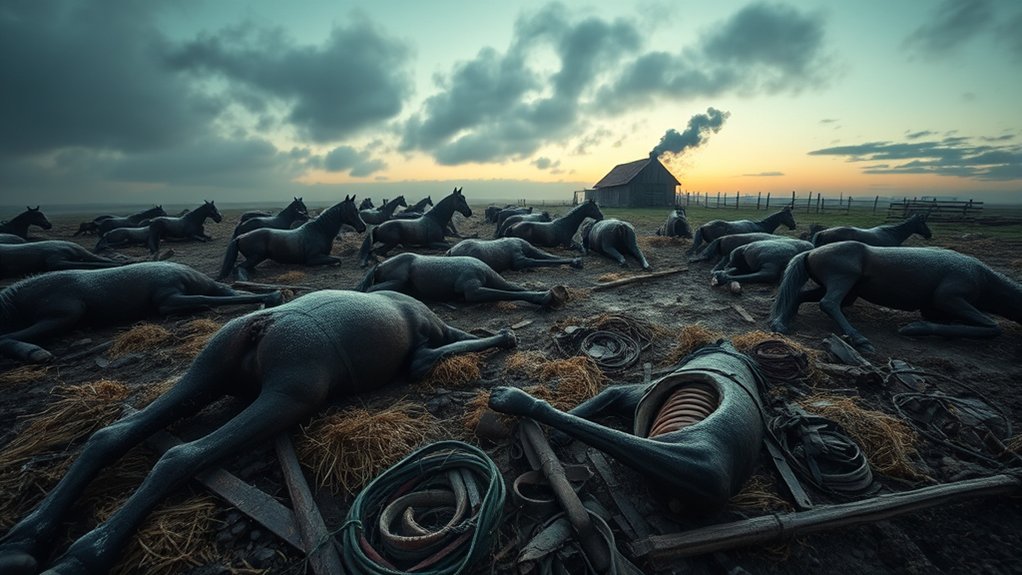
Although horses were indispensable to military operations during World War II, the extreme conditions on battlefields like the Eastern Front led to staggering losses among these animals. The death toll reflects the brutal environment horses endured, especially in winter.
Key factors contributing to massive horse deaths include:
- Harsh winter conditions causing heart failure and frostbite.
- Starvation and malnutrition due to scarce forage and disrupted supply lines.
- Overwork and physical exhaustion from continuous military demands.
- Exposure to artillery fire, disease, and harsh climates within war zones.
These conditions combined to cause over 200,000 horse deaths in Operation Barbarossa alone. Understanding these factors clarifies how the war’s environment critically impacted horse survival and military logistics.
Soviet Horse Losses in WWII Compared to Germany
You’ll find that the Soviet Union relied on over 3.5 million horses during WWII. Their losses were staggering, actually surpassing Germany’s estimated 750,000 horse casualties.
Harsh winters and stretched supply lines made things even worse for the Soviets, causing many horses to die from starvation and exposure.
When you compare these figures, it really highlights how different the scale and conditions were for each country’s equine losses.
Soviet Horse Losses
Over 3.5 million horses served in the Soviet Union during World War II, making their equine force the largest among the combatants. These horses were essential for Soviet logistics, especially under harsh Eastern Front winter conditions.
You’ll find that Soviet horse casualties were significant due to several factors:
- Extensive use in transportation and supply lines.
- Exposure to extreme weather leading to starvation and hypothermia.
- Combat wounds sustained during major battles like Stalingrad.
- The sheer scale of deployment, resulting in higher absolute losses than Germany.
Estimates suggest over 200,000 Soviet horses died, reflecting the indispensable yet costly role they played. The Soviet Union’s reliance on horses in World War II highlights the critical intersection of resource logistics and battlefield attrition.
German Horse Casualties
While the Soviet Union deployed the largest equine force in World War II, Germany also relied heavily on horses, fielding approximately 2.75 million. The Wehrmacht’s cavalry and transport units depended on these horses, especially during Operation Barbarossa.
Harsh conditions and intense combat led to severe German horse losses. In just two months (December 1941 to January 1942) on the Eastern Front, around 189,000 horses died due to artillery fire, exhaustion, starvation, exposure, and wounds.
Overall, German horse casualties totaled approximately 750,000 throughout the war. Compared to Soviet losses exceeding 3 million horses, German losses were substantial but notably lower.
These figures highlight the critical role and vulnerability of horses in mechanized warfare, showing their importance to both armies despite the rise of motorized vehicles.
How WWII Changed Cavalry Units and Their Roles
Although cavalry units had played essential roles in previous conflicts, WWII fundamentally transformed their composition and function as mechanization took precedence. You’ll notice the shift away from traditional horse-mounted troops as armies adapted to new warfare demands.
Key changes include:
- The German Wehrmacht disbanded most cavalry units, converting them into reconnaissance or armored units.
- Soviet cavalry divisions remained active but shifted toward mobility support rather than mounted combat.
- Cavalry units reorganized into bicycle and motorized infantry, reducing reliance on horses.
- Horses persisted mainly in logistics and support roles, with their combat use declining sharply.
Why Horses Had Short Combat Lifespans in WWII
Because horses faced extreme cold, exhaustion, and combat injuries, their average lifespan in WWII combat zones barely reached six weeks. You’ll find horses struggled against harsh conditions like freezing temperatures and overexertion, which led to heart failure and high mortality rates.
Starvation, dehydration, artillery wounds, and insufficient veterinary care further shortened their combat lifespan. This brutal combination of stressors meant horses often perished before recovery or replacement was possible.
| Factor | Effect on Horses | Resulting Issue |
|---|---|---|
| Extreme Cold | Hypothermia, heart failure | Reduced stamina |
| Overexertion | Exhaustion, heart stress | Early death |
| Combat Injuries | Wounds, infections | High mortality |
| Harsh Conditions | Starvation, dehydration | Weakened resilience |
You can see how these factors decisively limited horses’ effectiveness in combat.
How Losing Horses Affected WWII Military Operations
You’ll see that losing hundreds of thousands of horses during WWII really hurt army mobility and caused big supply chain problems. Because of these losses, commanders had to change their tactics since horse-drawn transport wasn’t reliable anymore, especially in tough conditions.
When you look at these challenges, it becomes clear just how important horses were for keeping operations running smoothly. And that’s also why their decline pushed armies to speed up the move toward mechanization.
Impact on Mobility
Millions of horses lost during WWII drastically reduced the mobility and logistical efficiency of armies, especially on the Eastern Front. You’d see how this loss disrupted operations and forced rapid adaptation. Consider these key impacts:
- The death of 750,000 to 2 million horses slowed troop movements, particularly in harsh terrains.
- German forces lost about 189,000 horses in two months during Operation Barbarossa, which severely hindered their supply lines.
- The loss from cold, starvation, and combat wounds limited cavalry effectiveness and delayed advances or retreats.
- Armies increasingly relied on motorized vehicles, but mechanization couldn’t fully replace the versatility horses provided.
This horse loss directly impaired mobility and logistical support, making troop deployments and artillery transportation more complicated without immediately causing supply chain failures.
Supply Chain Disruptions
While mechanization advanced during WWII, armies still relied heavily on horses to transport ammunition, supplies, and artillery in difficult terrains where vehicles faltered. The German military’s loss of approximately 750,000 horses severely disrupted their supply chain and logistical support, particularly on the Eastern Front.
During Operation Barbarossa alone, over 200,000 horses died, causing critical shortages in mobility and supply transport. These losses diminished the capacity to move essential materials efficiently, especially in harsh winter conditions and damaged infrastructure.
As a result, logistical chaos ensued, forcing armies to adopt slower, less reliable transportation methods. You can see how losing horses directly undermined supply chain effectiveness, weakening operational sustainability and contributing to broader military challenges during the war.
Tactical Limitations
Because horses played a crucial role in transporting artillery, supplies, and troops across difficult terrain, their massive losses during WWII severely limited military mobility and tactical options. The loss of up to a million horses, especially on the Eastern Front, directly impacted armies’ logistical capabilities.
You’d notice how these losses constrained operational effectiveness in several ways:
- Disrupted supply lines due to fewer horses available for hauling essential materials.
- Slowed troop movements in terrains unsuitable for mechanized vehicles.
- Increased vulnerability of units relying on cavalry tactics during the early war years.
- Accelerated the shift toward mechanization as horse-dependent strategies became obsolete.
Understanding these tactical limitations helps explain how losses of horses shaped military decisions and operational outcomes during WWII.
The Lasting Military Legacy of WWII Warhorses
Although mechanization advanced during World War II, horses remained indispensable to military operations, especially for armies like Germany and the Soviet Union that relied heavily on them for logistics and transportation.
You can see that horses were essential for moving supplies, conducting reconnaissance, and supporting frontline troops where mechanized vehicles struggled.
However, the military cost was high. An estimated 750,000 to 2 million horses died during WWII, particularly on the Eastern Front due to harsh conditions and combat.
Germany’s use of about 2.75 million horses and the Soviet Union’s employment of over 3.5 million underscore horses’ crucial role despite massive casualties.
This legacy highlights both the strategic importance and the human and animal toll of relying on horses in modern warfare.
Frequently Asked Questions
What Breeds of Horses Were Most Commonly Used in WWII?
You’ll find that the most commonly used breeds in WWII were selected through strategic equine breeding to optimize strength and endurance. The Russian Orlov Trotter and Polish Arabian excelled due to their stamina, influenced by horse racing traits.
German forces preferred Hanoverians for their power.
Animal training and veterinary care guaranteed these horses performed under harsh conditions. This evidence-based approach highlights how military needs shaped breed selection during the war.
How Were Horses Cared for During WWII Military Campaigns?
You’d think horses had royal treatment, but during WWII, their care was often minimal. Horse nutrition was basic, relying on scarce oats and hay, with frequent shortages. Veterinary care existed but was limited, focused on urgent injuries rather than preventive health.
Breeding programs aimed to supply sturdy horses, yet transportation methods subjected them to exhaustion. Overall, military demands prioritized speed and efficiency over ideal equine welfare, causing widespread suffering.
Did Any Countries Use Horses for Medical Evacuation in WWII?
Yes, several countries used horses for medical evacuation in WWII, especially where motorized vehicles couldn’t operate. You’d see horse transportation playing a key role in frontline medical support.
Wartime cavalry units managed equine logistics carefully, ensuring wounded horses received veterinary treatment to maintain efficiency.
The Soviet Red Army particularly relied on this method to evacuate injured soldiers, highlighting horses’ essential role in battlefield medicine before mechanized ambulances became widespread.
Were Horses Ever Used in Covert or Special Operations During WWII?
Yes, horses were used in covert operations during WWII. You’d find that successful missions depended on advanced equine training and careful horse nutrition to maintain stamina.
Veterinary care ensured horses remained healthy despite harsh conditions.
Remarkably, units sometimes incorporated racial diversity among handlers to blend in. While mechanization grew, horses’ silent mobility was invaluable for reconnaissance and secret deliveries. They proved their strategic role in special operations despite modern warfare’s challenges.
How Did Soldiers Bond With Their Horses in Wartime?
Imagine whispering to a weary horse after a grueling mission, building trust through horse training and cavalry tactics. You bond by ensuring equine nutrition and veterinary care, essential for survival.
Soldiers formed these connections by daily routines like feeding, grooming, and riding, which strengthened teamwork. This mutual reliance, backed by disciplined care and strategy, created resilient partnerships that endured battlefield hardships.
It shows how soldiers and horses depended on each other in wartime.
Conclusion
You can clearly see how WWII’s widespread warfare wiped out a whopping number of horses, with millions lost to harsh conditions and heavy hauling. Despite mechanization, horses held hefty importance, hauling supplies and helping troops across tough terrains.
Their swift sacrifice profoundly shaped strategies and logistics, signaling a stark shift in military might. Understanding this somber statistic spotlights the silent, steadfast service horses supplied amid WWII’s chaotic combat.