What to Feed a Horse With Loose Droppings
When your horse has loose droppings, feed a gradual, fiber-rich diet low in starch to restore gut balance and firm stool. Introduce high-quality, low-sugar forage like Timothy hay and soaked beet pulp while reducing grain and starch-heavy feeds.
Add soluble fibers such as psyllium husk to support gut repair and beneficial bacteria. Keep feeding consistent and guarantee fresh water and electrolytes are available to aid recovery.
Explore additional strategies to optimize your horse’s digestive health and comfort.
What Causes Loose Droppings in Horses?
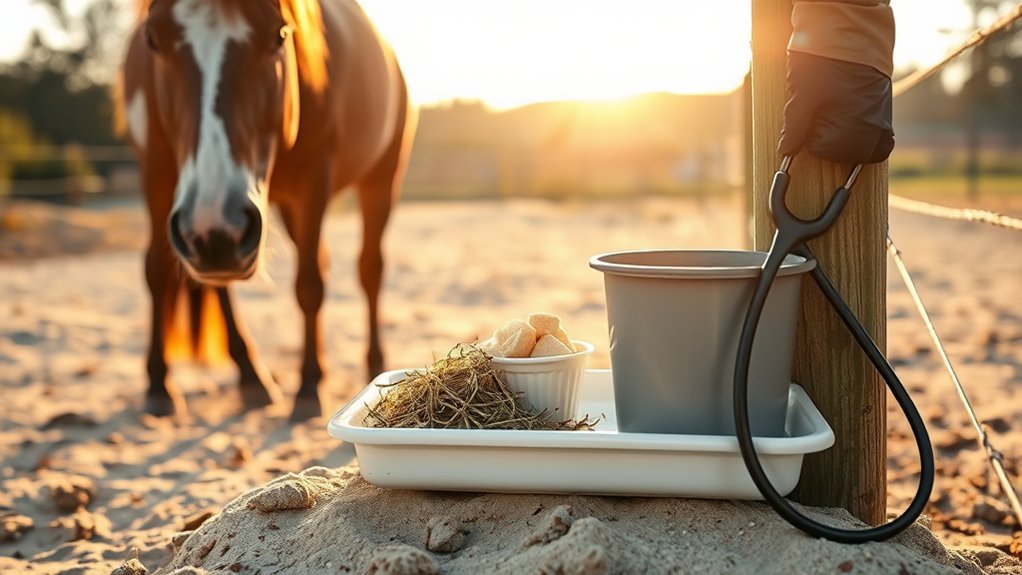
Although loose droppings in horses can stem from various causes, stress and dietary changes are among the most common. When your horse experiences stress from travel, competition, or environmental shifts, its digestive system can become disrupted, leading to loose droppings.
Similarly, an abrupt change in diet or overfeeding high-starch feeds can cause undigested material to enter the hindgut, upsetting gut health and resulting in softer manure.
Moreover, factors like antibiotics, worming treatments, and fluctuations in exercise or weather may disturb the gut microbial balance, impairing digestion.
It’s also essential to take into account that underlying health issues such as parasites or inflammation can contribute to chronic loose droppings.
Understanding these causes helps you manage your horse’s gut health effectively and maintain its digestive system’s stability.
How Your Horse’s Diet Affects Its Gut Health
When you manage your horse’s diet carefully, you support a balanced gut environment that prevents loose droppings and digestive upset. Feeding high-quality, low-sugar hay like first-cut meadow hay helps maintain gut health by minimizing water-soluble carbohydrates that disrupt microbial balance.
Gradually shifting to new feeds over 7-14 days prevents sudden changes that can cause digestive disturbances.
Incorporating fiber-rich foods such as beet pulp or psyllium husk slows gut transit time, promoting beneficial bacterial activity and improving manure consistency.
Maintaining consistent feeding routines avoids abrupt dietary shifts that destabilize gut microbiota.
How to Limit Starch to Prevent Loose Droppings
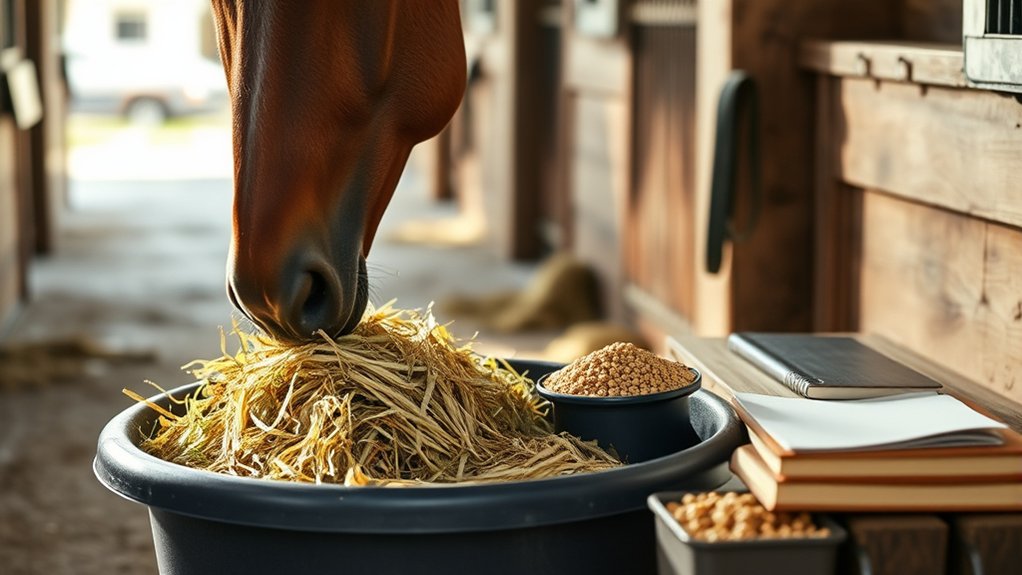
Balancing your horse’s diet means paying close attention to starch intake, as too much starch can disrupt gut health and lead to loose droppings. The small intestine can digest only about 2-3 kg of starch per meal. If you exceed this, undigested starch reaches the hindgut.
There, rapid fermentation produces lactic acid, which lowers pH and kills beneficial bacteria. To prevent this, design a feeding program centered on high-fiber, low-starch components like hay, chaff, or soaked beet pulp.
Gradually shift your horse to lower-starch feeds over 7-14 days. This gives gut microbes time to adjust and minimizes digestive upset.
How to Choose the Right Forage for Loose Droppings
When you’re picking forage for a horse dealing with loose droppings, it’s important to think about the fiber quality and how much water the forage holds. These factors really help keep digestion on track.
For example, grass hays like Timothy usually have better water-holding capacity, which means they’re less likely to cause soft manure compared to something like alfalfa.
And one thing you definitely want to avoid is moldy or spoiled hay. That stuff can really irritate your horse’s gut and make diarrhea worse.
Forage Types Comparison
Although choosing the right forage for a horse with loose droppings may seem straightforward, selecting varieties with lower sugar content and appropriate fiber structure plays a critical role in stabilizing manure consistency.
Among forage types, Timothy hay stands out due to its higher water-holding capacity and lower risk of causing soft manure compared to nutrient-dense alfalfa. You should focus on forage that supports digestion without promoting excess fermentation.
Key considerations include:
- Opt for grass hays like Timothy or orchardgrass over ryegrass
- Choose processed forage such as hay cubes or chopped hay for digestibility
- Prioritize low soluble carbohydrate content verified by lab analysis
- Maintain consistent forage quality and avoid moldy or spoiled hay
- Monitor manure response to forage changes closely to adjust feeding
These steps help you manage loose droppings effectively.
Water Content Importance
Selecting the right forage goes beyond fiber type and sugar content; water content greatly influences how well your horse’s digestion functions and the consistency of its manure.
Forage with balanced water content, like Timothy hay, supports ideal microbial fermentation in the hindgut, which helps stabilize stool consistency and reduces loose droppings.
High-quality forage with sufficient water-holding capacity maintains proper hydration and promotes uniform digestion.
Using short fiber hay cubes or pellets can also improve digestion and stool consistency by ensuring more consistent moisture levels.
Consistency in forage type and moisture content is key to preventing fluctuations in stool water content.
Prioritizing forage quality that balances fiber and water content will notably contribute to managing your horse’s loose droppings effectively.
Avoiding Moldy Hay
Because moldy hay can introduce harmful toxins that disrupt your horse’s digestive system, it’s essential to choose fresh, high-quality forage free from visible mold and musty odors. To avoid moldy hay and maintain forage quality, focus on proper selection and storage practices. Here’s what you should do:
Select grass hays like Timothy or orchardgrass, which typically have lower mold and toxin levels than alfalfa. Avoid hay with any visible mold or musty smell. Test hay for sugar content to prevent exacerbating loose droppings.
Store hay in a dry, well-ventilated area to minimize mold development. Never feed hay stored in damp or humid conditions, as this promotes mold growth and mycotoxin production.
These steps help protect your horse’s digestive health by minimizing exposure to harmful moldy hay.
Fibre-Rich Foods That Help Firm Up Your Horse’s Stool
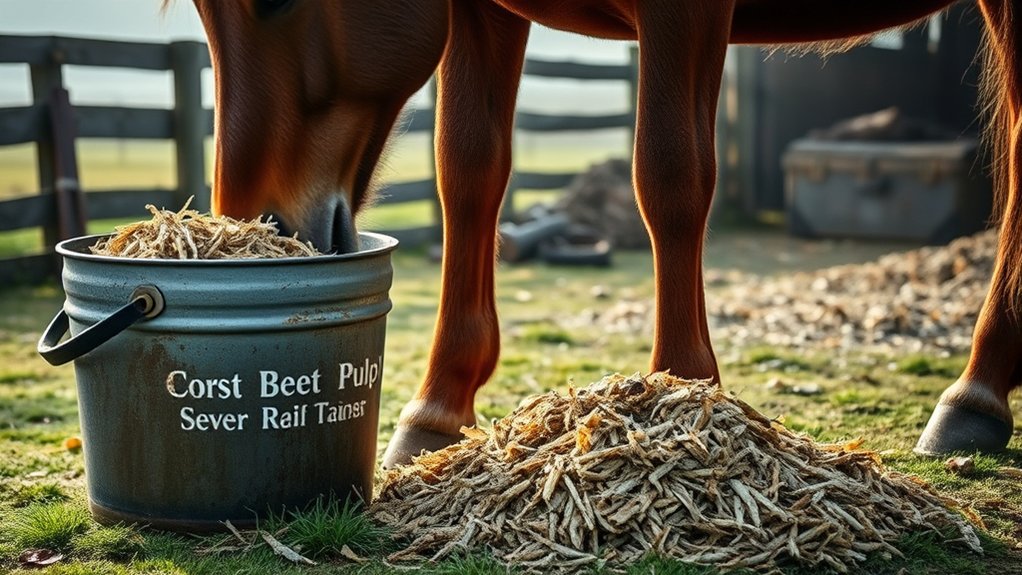
When your horse experiences loose droppings, adding fiber-rich foods can effectively firm up their stool by promoting healthy gut function and slowing digestion. Incorporate beet pulp into their diet; its high fiber and water-holding capacity slows gut transit, improving stool firmness.
Feeding small amounts of chopped hay or hay cubes boosts dietary fiber, increasing fecal bulk and supporting healthy hindgut fermentation. Psyllium husk, a soluble prebiotic fiber, encourages beneficial gut bacteria, helping to normalize stool consistency.
You can also supplement with high-fiber feeds like soy hulls or dried grass to extend feed passage time, reducing loose droppings. A diet rich in both soluble and insoluble fiber stabilizes gut motility and promotes a firm stool, essential for maintaining your horse’s overall gut health.
Why Consistent Feeding Schedules Matter for Loose Droppings
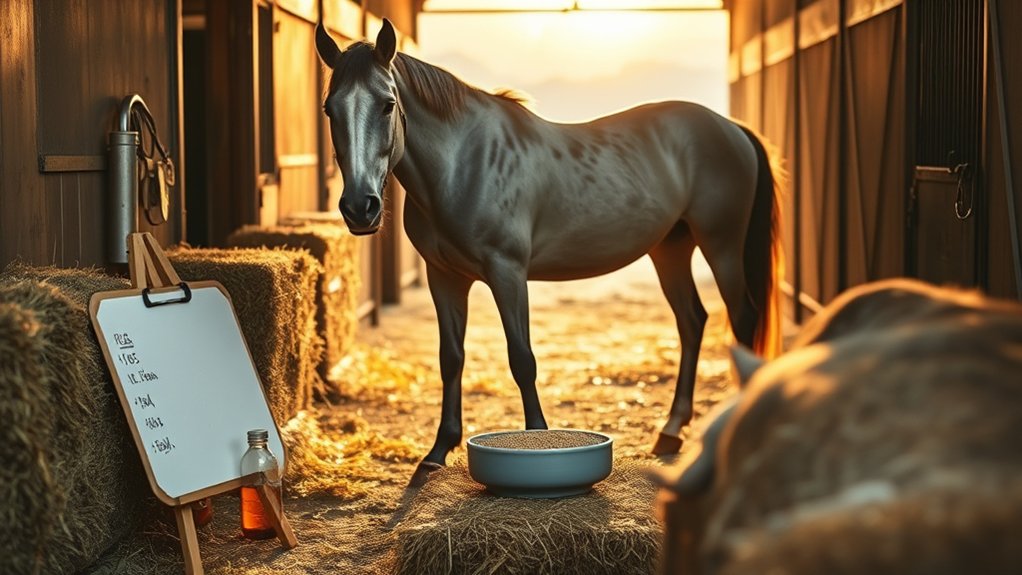
In addition to providing fiber-rich foods to improve stool consistency, maintaining a consistent feeding schedule plays a significant role in managing loose droppings.
Consistent feeding helps stabilize your horse’s gut microbial populations, which supports digestive health and improves manure consistency.
Consistent feeding stabilizes gut microbes, supporting digestive health and improving manure quality.
By feeding at regular intervals, you prevent sudden changes in gut transit time and reduce gastrointestinal upset that causes soft stools.
A stable routine also allows your horse’s digestive system to adapt gradually, minimizing stress and digestive disturbances.
Key benefits of consistent feeding include:
- Stabilizes gut microbial populations
- Prevents abrupt changes in digestion speed
- Reduces gastrointestinal stress
- Promotes balanced fermentation
- Enhances manure consistency and digestive health
Keeping a reliable feeding schedule is essential for managing loose droppings effectively.
How to Safely Transition Your Horse’s Diet to Prevent Loose Droppings
To prevent loose droppings, you should introduce dietary changes gradually. This gives your horse’s gut microbiota time to adjust. Gradually introduce feeds over 7 to 14 days, slowly increasing forage intake while decreasing hard feeds.
Shift pasture access incrementally to avoid dietary shocks. Monitor manure consistency closely and adjust if loose droppings appear.
| Step | Action |
|---|---|
| 1 | Introduce new feeds in small amounts |
| 2 | Increase forage intake gradually |
| 3 | Decrease hard feed proportionally |
| 4 | Extend pasture time slowly |
| 5 | Observe manure consistency daily |
Following this structured approach ensures gut stability and reduces digestive upset during dietary changes.
How Probiotics and Amino Acids Support Gut Health
You can support your horse’s gut health by adding probiotics like Lactobacillus and Saccharomyces to their diet. These helpful microbes work to restore the balance of good bacteria and boost fiber fermentation.
On top of that, key amino acids such as glutamine and arginine play an important role. They help repair the intestinal lining and calm inflammation.
When you combine these nutrients, they work together to strengthen the gut barrier and make sure your horse absorbs nutrients better, especially during digestive upset.
Benefits of Probiotics
Although managing loose droppings can be challenging, introducing probiotics like Lactobacillus and Saccharomyces can considerably restore and balance your horse’s gut flora.
These beneficial microorganisms improve gut health by enhancing fiber fermentation in the hindgut. This helps produce more solid manure and reduces diarrhea.
Probiotics also strengthen immune function, lessening the duration and severity of diarrheal episodes. Regular probiotic supplementation, especially during stress or dietary changes, maintains a healthy microbial balance.
Key benefits of probiotics for your horse include:
- Restoring healthy gut flora
- Supporting fiber digestion
- Reducing loose droppings
- Enhancing immune response
- Shortening diarrhea duration
Incorporating probiotics is a critical step toward improving your horse’s digestive stability and overall gut health.
Key Amino Acids
When your horse experiences digestive issues, key amino acids like glutamine and arginine play an essential role in repairing and maintaining the intestinal lining. Glutamine acts as the primary fuel for enterocytes, supporting mucosal healing and reducing intestinal inflammation.
Meanwhile, arginine enhances nitric oxide production, which improves blood flow and aids tissue repair within the gut.
Together, these amino acids help restore normal gut barrier function, which is fundamental for improving intestinal health and reducing the severity of loose droppings.
Gut Repair Mechanisms
Supporting your horse’s gut health goes beyond providing key amino acids like glutamine and arginine. Incorporating probiotics plays an essential role in restoring and maintaining a balanced intestinal environment.
Probiotics introduce beneficial bacteria that support fiber fermentation and stool formation. Meanwhile, amino acids promote intestinal repair by regenerating gut lining cells and reducing inflammation.
Together, they enhance mucosal barrier function, which helps reduce intestinal permeability and prevent pathogen invasion.
Key benefits include:
- Restoration of healthy gut microbiome
- Support for intestinal cell regeneration
- Decreased gut inflammation
- Improved production of volatile fatty acids (VFAs)
- Accelerated recovery from gastrointestinal disturbances
How Psyllium and Other Supplements Improve Stool Consistency
Because maintaining firm stool is essential for your horse’s digestive health, incorporating psyllium and other supplements can make a significant difference. Psyllium husk acts as a soluble fiber prebiotic, supporting beneficial gut bacteria and enhancing stool consistency.
By increasing volatile fatty acid production, psyllium promotes mucosal repair, which further stabilizes stool quality. A daily dose of about 100 grams for 3-6 months has been shown to positively alter gut microbiota and reduce loose droppings.
Psyllium’s high absorbency draws fluids into the gut, extending transit time and normalizing watery feces.
Alongside psyllium, other fiber sources like beet pulp and prebiotics also support gut health by fostering beneficial microbes and improving stool firmness, making them valuable supplements in managing loose droppings in horses.
Easy Ways to Keep Your Horse Hydrated and Balanced
Although managing loose droppings can be challenging, keeping your horse properly hydrated and balanced plays an essential role in recovery. You need to focus on replenishing fluids and electrolytes to support gut function and overall health.
Here are easy ways to maintain hydration and balance:
Provide unlimited access to fresh, lukewarm water (around 20°C/68°F) to encourage drinking and replace fluid loss.
Offer free-choice plain salt (minimum two tablespoons daily) to restore lost electrolytes.
Use horse-specific electrolyte supplements during diarrhea episodes.
Ensure consistent intake of fiber-rich forage like quality hay to aid hydration and gut motility.
Avoid excessive grain or concentrates that may dehydrate and worsen stool consistency.
Frequently Asked Questions
Can Stress or Environmental Factors Cause Loose Droppings in Horses?
Yes, stress and environmental factors can cause loose droppings in horses. You should focus on dietary adjustments by introducing easily digestible feeds gradually.
Maintain proper parasite management to reduce gastrointestinal irritation.
Don’t forget hydration importance; guarantee your horse has constant access to fresh water to support gut health.
Managing stress through stable routines and reducing environmental triggers also helps maintain consistent manure quality and overall digestive balance.
How Does Exercise Influence a Horse’s Digestive Health?
Exercise influences your horse’s digestive health by promoting intestinal motility. This helps process dietary fiber efficiently and supports balanced hydration levels.
Regular, moderate activity enhances gut microbial balance and aids parasite control by stimulating natural gut function. However, sudden or intense exercise can disrupt digestion, leading to loose droppings.
You should maintain consistent, controlled exercise to support healthy hindgut fermentation and reduce the risk of gastrointestinal upset in your horse.
Are There Specific Breeds More Prone to Loose Droppings?
Ever wonder why some horses seem more prone to loose droppings? Breed predispositions play a big role here. You’ll find that ponies, Arabians, and Thoroughbreds often show breed-specific sensitivities that affect gut health.
Genetic factors influence their digestive systems and stool consistency, making them more susceptible to digestive upsets. Understanding these genetic and breed-specific nuances helps you manage their diet and care more effectively, ensuring better digestive stability for your horse.
What Role Does Dental Health Play in Digestion and Stool Quality?
Dental health directly impacts digestion and stool quality by affecting how well your horse chews feed. When you guarantee regular dental checks, you prevent pain and malocclusions that hinder chewing and reduce saliva production.
Saliva is vital for breaking down feed and protecting gut function. If dental issues arise, make feeding adjustments to provide softer, easier-to-chew options.
This helps maintain digestion efficiency and prevents loose droppings.
How Can I Monitor My Horse’s Recovery From Loose Droppings?
You can monitor your horse’s recovery from loose droppings by tracking stool consistency daily and ensuring proper hydration management. Check hydration signs like skin elasticity and gum color regularly.
Keep bedding cleanliness a priority to avoid infections or irritants.
Incorporate dietary supplements as recommended by your vet to support gut health.
Record appetite, energy levels, and behavior changes.
Schedule veterinary check-ups to assess recovery progress and adjust care plans accordingly.
Conclusion
When your horse has loose droppings, remember that an ounce of prevention is worth a pound of cure. By managing their diet carefully, limiting starch, choosing the right forage, and adding fiber-rich foods, you’ll support their gut health effectively.
Shift diets gradually and consider supplements like probiotics and psyllium. Keeping your horse hydrated and balanced completes the approach.
With consistent care, you’ll help your horse maintain firm, healthy stool and overall well-being.