How Much to Feed a Horse
You should feed your horse 1.5% to 2.5% of its body weight daily in forage, adjusting for activity and health. Sedentary horses need less, while active ones require more.
Always introduce changes gradually and measure feed accurately to avoid digestive issues. Limit grain to under 0.5% of body weight per meal to prevent metabolic problems.
Monitoring weight and body condition ensures proper adjustments. Understanding these basics helps you maintain your horse’s ideal nutrition and well-being.
Why Forage Is the Foundation of Your Horse’s Feeding
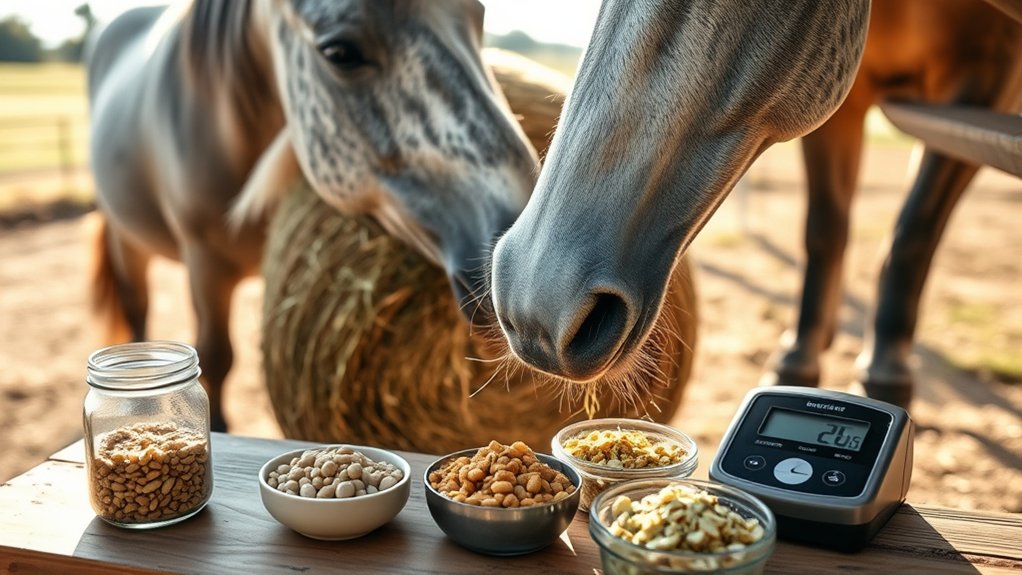
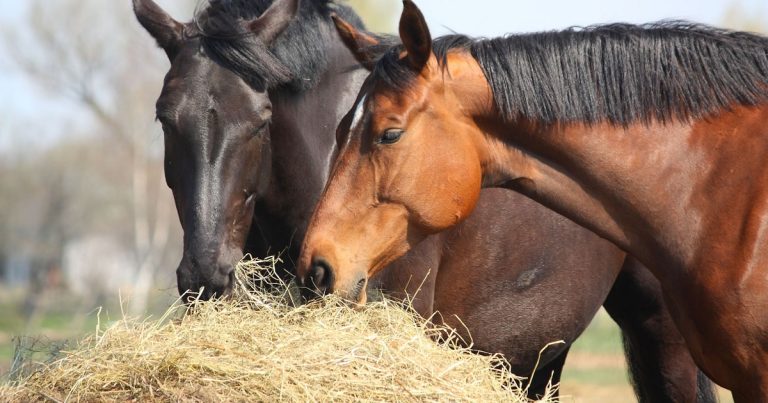
Because horses evolved to consume small, frequent meals of forage, such as hay or grass, this should form the foundation of your horse’s diet. Forage naturally provides essential fiber, vitamins, and minerals vital to maintaining digestive health and metabolic function.
You should feed your horse forage amounting to 1.5% to 2.5% of its body weight daily, ensuring adequate nutrient intake and supporting weight stability. Introducing new forage gradually allows your horse’s digestive system to adapt, minimizing the risk of colic or diarrhea.
The quality of forage directly influences overall health and performance, so prioritize nutrient-dense, clean hay or fresh pasture.
How Activity Level Changes How Much to Feed a Horse
When you adjust your horse’s feed based on its activity level, you guarantee it receives the right amount of energy to match its workload. Activity level directly influences how much feed per day your horse needs.
Horses in moderate work require about 20-30% more calories than sedentary horses. Overfeeding inactive horses risks obesity. Underfeeding active ones causes weight loss and deficiencies.
Tailoring feed per activity level supports healthy weight and performance without stressing digestion.
| Activity Level | Feed Per Body Weight (%) | Notes |
|---|---|---|
| Sedentary | 1.5% | Lower energy demands |
| Light Work | 2.0% | Maintenance needs |
| Moderate Work | 2.4-2.6% | Increased energy for exercise |
How to Calculate Your Horse’s Daily Feed Needs
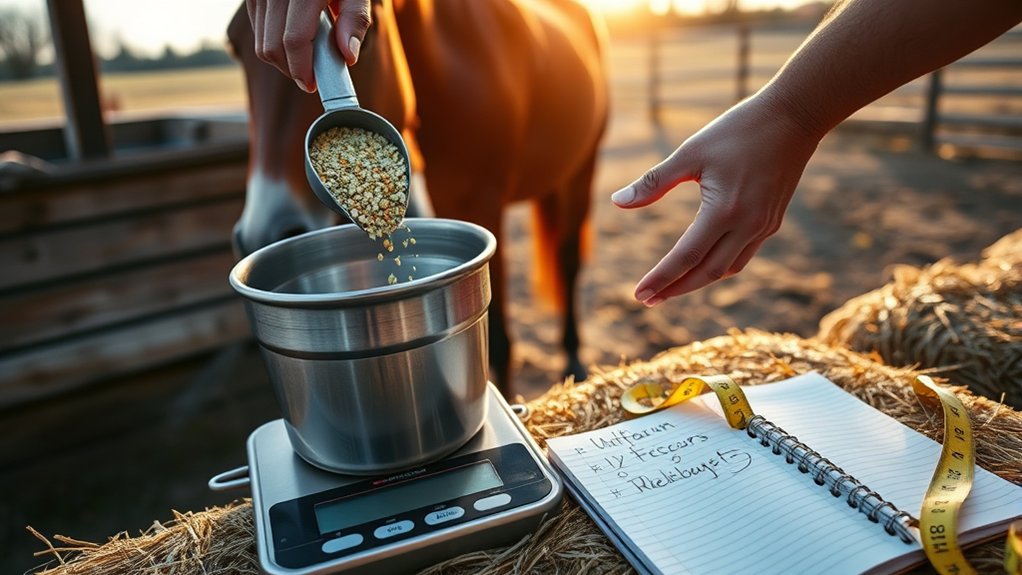
Adjusting your horse’s feed according to its activity level sets the foundation for calculating daily feed needs accurately.
First, determine your horse’s body weight using scales, weight tapes, or the formula BW = (Heartgirth² × Body length) ÷ 330.
Next, select the appropriate percentage of body weight to feed daily, typically between 1.5% and 2.5%, depending on activity and condition.
Multiply this percentage by your horse’s weight (in pounds) to find the total daily feed amount.
Follow feeding directions or use manufacturer calculators to fine-tune these amounts.
Divide the total forage requirement into multiple small meals to mimic natural grazing behavior, supporting digestion and nutrient absorption.
This precise approach guarantees your horse receives balanced nutrition tailored to its individual needs.
Why Overfeeding Grain Can Harm Your Horse
You need to understand that overfeeding grain can cause serious health issues like obesity, laminitis, and digestive disturbances. If you feed more than 0.5% of your horse’s body weight in grain per meal, it can disrupt nutrient balance and increase metabolic risks.
Besides the health concerns, giving your horse too much grain also means you’re spending more than necessary on feed, which can really add up and impact your budget.
Health Risks Of Overfeeding
Although grains provide essential energy, overfeeding them can seriously harm your horse’s health. Overfeeding grain poses significant health risks, including obesity, which increases the likelihood of laminitis and metabolic disorders.
Consuming more than 0.5% of body weight per meal overwhelms the digestive system, disrupting gut bacteria balance and causing colic or founder. Without adequate exercise, excess grain intake can lead to insulin resistance and equine metabolic syndrome.
Additionally, overfeeding may create nutrient imbalances, resulting in uneven weight distribution and poor coat condition. To maintain ideal health, carefully regulate grain amounts, monitor your horse’s body condition, and adjust feeding accordingly.
Understanding these health risks helps you prevent complications and supports your horse’s well-being through balanced nutrition and proper management.
Economic Impact Of Excess
When horses consume more grain than necessary, they not only face health risks but also incur significant economic costs. Excess grain increases feeding costs without enhancing your horse’s nutrition, leading to unnecessary financial waste.
Overfeeding grain promotes obesity and metabolic disorders, which may require costly veterinary care.
Furthermore, digestive complications such as colic and founder often result from high grain intake, further escalating treatment expenses.
Disrupted gut health caused by excess grain can trigger inflammation, potentially causing long-term health issues that demand ongoing medical attention.
By accurately managing grain portions, you prevent waste, optimize feeding costs, and support your horse’s overall well-being.
Efficient grain feeding balances nutrition with cost-effectiveness, minimizing both health complications and unnecessary economic burdens.
How to Weigh Hay and Grain for Accurate Feeding
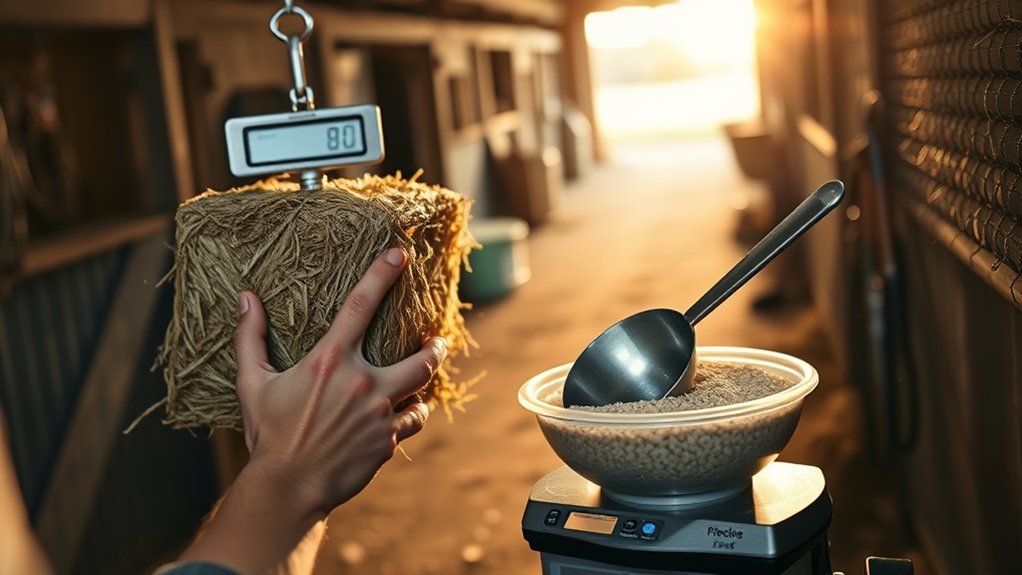
You need to weigh hay and grain to make sure your horse gets the right amount. Just going by volume can be tricky because different feeds have different densities.
So, it’s best to use a reliable scale or a calibrated scoop to measure your feed by weight.
Doing this helps you avoid overfeeding and keeps your horse in great health.
Importance Of Weighing
Since accurate feeding directly impacts your horse’s health, weighing hay and grain becomes essential to prevent over- or underfeeding. When you feed by weight, you eliminate inconsistencies caused by volume measurements, ensuring precise nutrient delivery.
Consider these key points:
Hay and grain densities vary; a 3-pound coffee can of oats differs markedly in weight from corn. Measuring by volume often leads to underestimated feed amounts.
Weighing prevents nutritional imbalances linked to over- or underfeeding. Accurate feed weights enable tailored feeding programs specific to your horse’s caloric and nutritional needs.
Consistent weighing supports monitoring and adjusting diets as your horse’s requirements change.
Tools For Accurate Measurement
Although accurately weighing hay and grain might seem intimidating at first, using the right tools simplifies the process and guarantees precise feeding.
For small grain quantities, a digital kitchen or postal scale provides accurate measurements down to grams, eliminating errors from volume-based scoops.
When dealing with larger hay amounts, a livestock or platform scale designed for heavy loads ensures reliable weighing. This precision is essential because feed density varies, making volume measurements unreliable.
Consistently weighing your horse’s feed allows you to customize rations precisely, meeting nutritional needs without waste or deficiencies.
Avoiding Overfeeding Errors
When managing your horse’s diet, weighing hay and grain accurately is essential to avoid overfeeding errors that can lead to health complications. Overfeeding increases risks like obesity and nutrient imbalances, so precise weighing is critical.
Use a reliable scale or pre-measured scoop instead of volume estimates, which can vary by 20% or more. Consider these points:
- Weigh all feed portions consistently for accuracy
- Use a kitchen or livestock scale for precise measurement
- Adjust feed amounts based on your horse’s specific weight needs
- Avoid relying on volume measurements to prevent overfeeding
- Monitor daily intake to maintain nutritional balance and cost efficiency
How to Balance Concentrate and Forage Feeding
Balancing concentrate and forage feeding requires careful adjustment based on your horse’s activity level, body condition, and nutritional needs. Forage should form the foundation, providing 1.5-2.5% of body weight daily. Concentrates supply targeted nutrients and energy but are typically capped at 0.5% of body weight per meal.
Overfeeding concentrates risks digestive issues, so moderation is key. Use a ration balancer or high-quality forage to optimize nutrition without excess calories.
| Feeding Component | Recommended Amount |
|---|---|
| Forage | 1.5-2.5% of body weight per day |
| Concentrates | Up to 0.5% of body weight per meal |
| Balance Tip | Adjust based on activity and condition |
This approach ensures your horse meets energy needs without compromising digestive health.
Adjusting Feed When Your Horse’s Weight Changes
When your horse’s weight changes, it’s important to adjust their daily feed intake accordingly—usually by about 10-15%. Make it a habit to regularly check their weight using tapes or scales.
Also, keep an eye on their body condition scores to help guide these adjustments.
Monitoring Weight Fluctuations
Although maintaining a stable weight requires ongoing attention, regularly monitoring your horse’s weight with a scale or weight tape provides essential data for timely feed adjustments. Tracking body weight helps you detect subtle weight fluctuations that indicate changes in health or metabolism.
Use body condition scoring alongside measurements to assess gradual gain or loss. Keep in mind to make any feeding changes gradually over 7 to 14 days to prevent digestive disturbances. Consistently tracking trends helps you evaluate the effectiveness of your management strategies.
Key practices include:
- Weigh your horse regularly using reliable tools
- Record weight and body condition scores systematically
- Identify gradual weight fluctuations early
- Adjust feed cautiously to avoid digestive upset
- Analyze trends over time to maintain ideal body weight
Adjusting Feed Quantities
If your horse’s weight changes, you should adjust its daily feed amount proportionally to support healthy body condition. Typically, for moderate shifts in body weight, increase or decrease total feed by 10-15%.
For every 50 pounds gained or lost, modify feed by approximately 0.5 to 1.0 pounds daily, considering the horse’s current diet and activity level. Make these adjustments gradually over one to two weeks to prevent digestive upset and allow physiological adaptation.
Regularly monitor your horse’s weight and body condition score to determine if further adjusting feed is necessary. Before making significant changes, consult a veterinarian or equine nutritionist to ensure the revised feeding plan meets your horse’s specific nutritional needs and maintains ideal health.
Balancing Nutrient Intake
Since your horse’s weight directly influences its nutritional requirements, you need to adjust both forage and concentrate feed to maintain balanced nutrient intake. Changes in body weight alter your horse’s nutrient needs, so feeding amounts must reflect current conditions, not past plans.
To balance nutrient intake effectively:
- Adjust feed by 1-2 pounds of forage or concentrate per 50-pound weight change
- Use body condition scoring (BCS) to assess ideal body weight
- Regularly measure weight with a scale or weight tape
- Gradually change feed amounts over 7-14 days to support digestive adaptation
- Monitor for signs of overfeeding or underfeeding to maintain ideal body condition
Why Feed Your Horse at Consistent Times
When you feed your horse at consistent times, you help maintain regular gut activity, which reduces the risk of digestive upset and colic. A strict feeding schedule supports digestive health by aligning with a horse’s natural grazing pattern of small, frequent meals.
This routine promotes better eating habits, minimizing feed refusal and stall vices. By feeding consistently, you can effectively monitor your horse’s appetite and detect early signs of health issues.
Furthermore, a set feeding schedule enhances management efficiency, simplifying nutritional assessments and overall care.
Consistency in feeding not only protects digestive function but also contributes to your horse’s well-being by providing predictable, stable conditions essential for optimal health and performance.
How to Manage Feeding for Multiple Horses in a Group
Although managing multiple horses in a group can be challenging, setting up individual feeding stations guarantees each horse receives the proper amount of forage and concentrates.
Managing group-fed horses is easier when each has an individual feeding station for proper nutrition.
In group feeding, individual feeding is essential to prevent competition and ensure nutritional balance.
To manage feeding effectively, consider these points:
- Use separate feeding areas or individual stations for each horse.
- Measure feed by weight, not volume, to avoid over- or underfeeding.
- Adjust rations based on each horse’s body weight, activity, and condition.
- Maintain a consistent feeding schedule to reduce stress and promote healthy eating.
- Monitor body condition regularly and modify individual feed amounts accordingly.
Implementing these strategies helps maintain healthy weights and supports the well-being of every horse within your group feeding setup.
When to Ask a Nutritionist for Help With Feeding
If you find yourself uncertain about your horse’s specific nutritional requirements or the appropriate feeding amounts based on factors like age, weight, or activity level, consulting a nutritionist can provide tailored, evidence-based guidance.
Horse owners should also seek expert advice when changing diets or introducing new feeds to ensure nutrient requirements are properly balanced and to prevent digestive issues.
If your horse struggles with weight management, whether obesity or difficulty maintaining weight, a nutritionist can develop a precise feeding plan to address these concerns.
Furthermore, horses with special health conditions or dietary restrictions require specialized feeding strategies that only an expert can safely design.
Regular consultation with a nutritionist helps horse owners optimize feeding protocols, enhancing health, performance, and overall well-being.
Frequently Asked Questions
What Types of Supplements Can Improve My Horse’s Diet?
You can improve your horse’s diet by adding herbal supplements that support digestion and immune health. Mineral blocks provide essential trace minerals like selenium and zinc, filling nutritional gaps effectively.
Incorporate antioxidant supplements with Vitamin E for oxidative stress reduction. Fat-based supplements boost energy, while probiotics enhance gut flora.
High-quality protein sources aid muscle development. These targeted supplements help maintain balanced nutrition and optimize your horse’s overall performance and well-being.
How Often Should I Clean My Horse’s Feeding Equipment?
Clean your feeding equipment daily, wash your buckets weekly, and inspect your horse feed storage regularly. Consistent feeding equipment maintenance prevents mold, bacteria, and spoilage, ensuring your horse’s feed stays safe and nutritious.
Grain or concentrate feeders need extra attention. Clean them promptly when you spot residues or mold. This disciplined routine supports ideal hygiene, reduces disease risks, and extends the lifespan of your feeding gear, safeguarding your horse’s health effectively.
Can Feeding Schedules Affect My Horse’s Behavior?
Yes, feeding schedules substantially affect your horse’s temperament. Maintaining feeding consistency helps regulate their digestive system and supports stable energy levels, which directly influences behavior.
Irregular feeding can cause stress, leading to negative behaviors like cribbing or weaving.
By providing multiple small, evenly timed meals, you promote natural grazing patterns, improving mental well-being and reducing anxiety or aggression.
Consistent feeding schedules are essential for a calm, balanced horse temperament.
What Signs Indicate My Horse Is Not Digesting Feed Properly?
You’ll notice signs of compromised digestive health through abnormal manure consistency, like diarrhea or overly firm droppings.
Bloating, colic, and abdominal discomfort also indicate feed intolerance or improper digestion.
Watch for unexplained weight loss despite adequate feeding, excessive gas, or foul manure odor, which signal fermentation issues.
Moreover, dental problems can impair chewing, resulting in poor feed breakdown and compromised nutrient absorption, ultimately affecting your horse’s overall digestive efficiency.
How Does Age Impact a Horse’s Nutritional Requirements?
Age-related digestion changes mean your horse’s nutritional aging demands shift markedly. You’ll notice reduced digestive efficiency, so your horse needs higher-quality, easily digestible feed to absorb nutrients properly.
Dental issues may limit chewing, requiring softer or ground feeds. While caloric and protein needs often decrease, balanced nutrition remains essential.
Tailored vitamin and mineral supplements help prevent deficiencies, ensuring your aging horse maintains ideal health and condition despite these metabolic shifts.
Conclusion
Feeding your horse properly is like tuning a vintage clock. Precision matters. By focusing on forage as the foundation, adjusting for activity, and weighing feed accurately, you prevent health issues linked to overfeeding grain.
Consistent feeding times and monitoring weight changes keep your horse thriving. Managing group feeding requires extra care, and don’t hesitate to consult a nutritionist when needed.
With these strategies, you’ll support your horse’s health scientifically and effectively every day.