How to Care for Horses in 3 Steps
Start by safeguarding your horse in a safe, hazard-free area using a quick-release knot. Organize your grooming tools so everything is ready.
Next, groom your horse thoroughly. Use a rubber curry comb to loosen dirt, a stiff brush to remove debris, detangle the mane and tail carefully, and clean hooves daily with a hoof pick.
Finally, maintain hoof health by scheduling regular trims and inspecting for issues. Following these key steps guarantees your horse stays comfortable and healthy, with more essential care tips ahead.
How to Safely Prepare Your Horse and Grooming Area
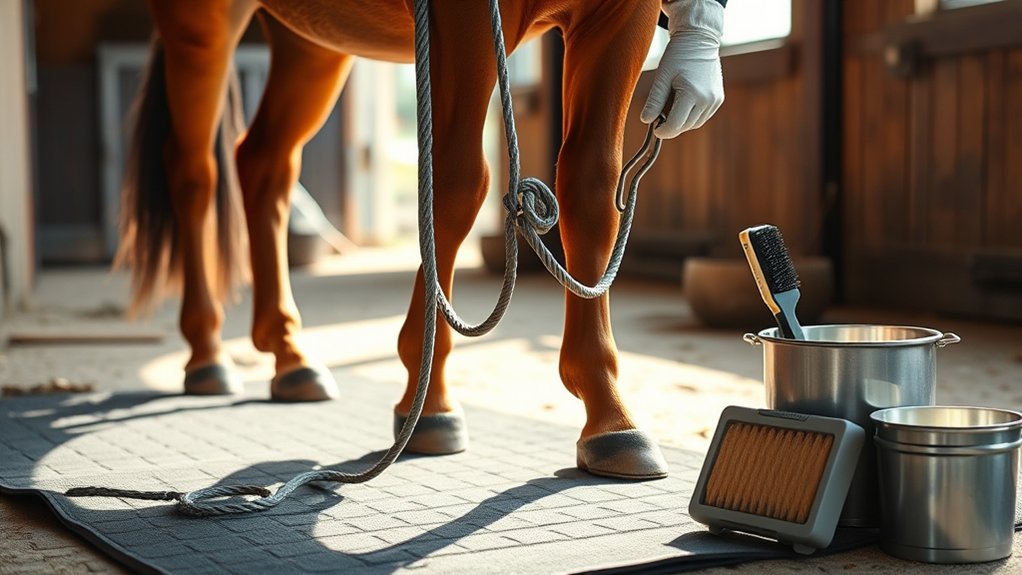
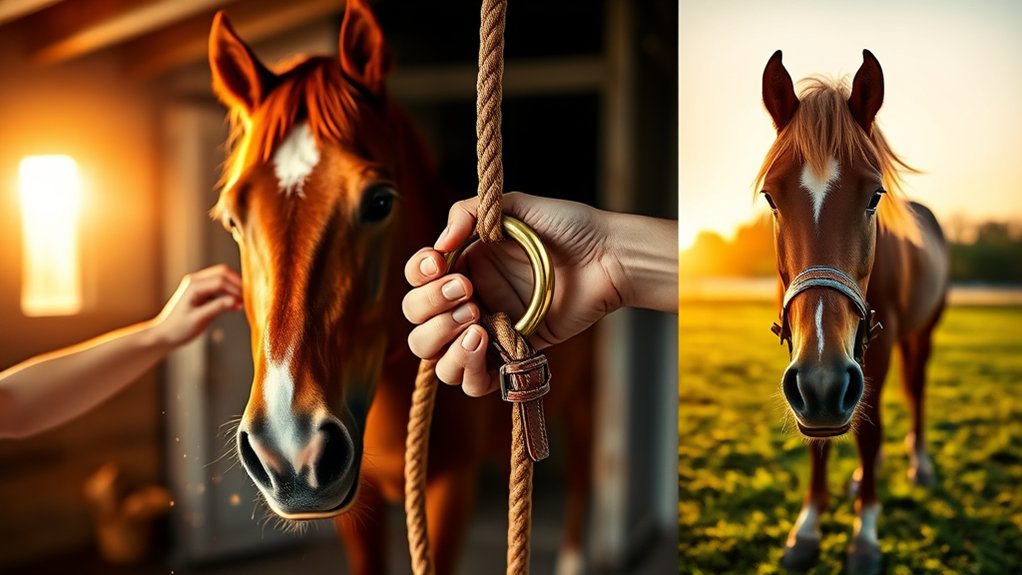
Before you begin grooming, always secure your horse with a quick-release knot using a lead rope or crossties to prevent sudden movements. This step guarantees safety for both you and the horse.
Prepare your grooming area by choosing a stable, flat surface free from hazards like loose objects or uneven ground. Remove any manure, debris, or poisonous plants to maintain a clean environment.
Organize your grooming tools, such as rubber curry combs and brushes, within easy reach to streamline the process.
If necessary, have a helper hold the lead rope, especially when working with sensitive horses or areas.
Prioritizing these safety and preparation measures creates a secure atmosphere, minimizing risks and making grooming efficient and comfortable for your horse.
Groom Your Horse’s Coat, Mane, Tail, and Hooves
Once you’ve secured your horse and organized your grooming area, start by using a rubber curry comb in circular motions to loosen dirt, mud, and loose hair from the coat.
Next, use a stiff brush with short, firm strokes to remove the lifted dirt, focusing on the body and legs.
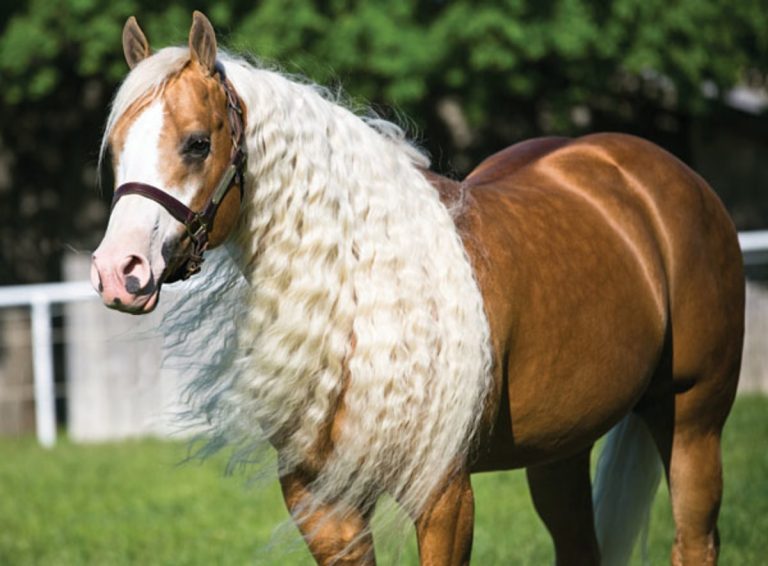
Gently detangle the mane and tail with a wide-tooth comb or mane brush, working from the bottom up to avoid breakage.
Clean the hooves daily with a hoof pick, scraping away dirt, manure, and small rocks starting at the heel and moving toward the toe.
Regular grooming promotes circulation, helps you spot injuries early, and maintains a healthy coat.
Keeping the hooves free of debris ensures your horse stays comfortable and sound.
Maintain Hoof Care to Keep Your Horse Healthy
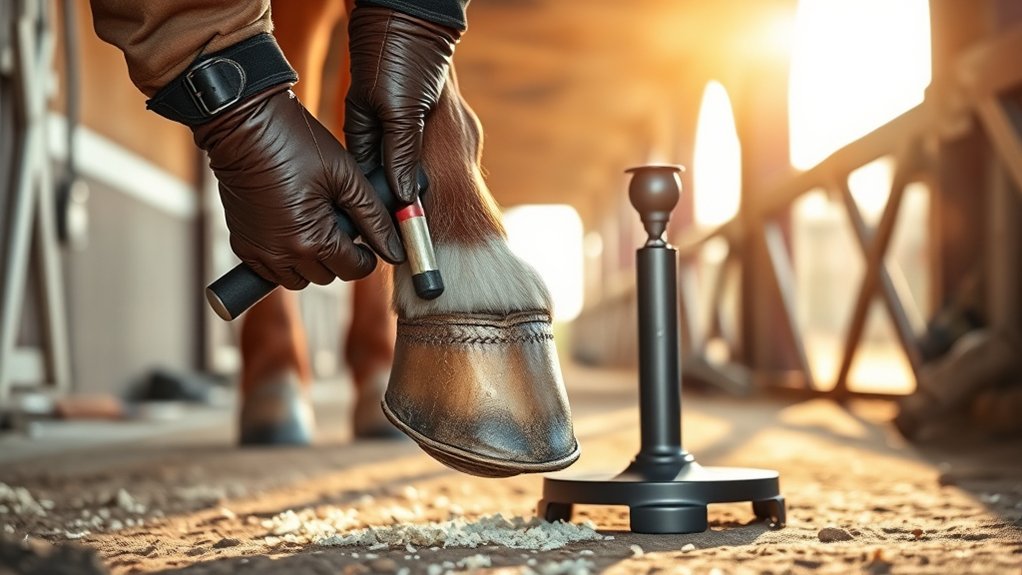
Regularly cleaning your horse’s hooves with a hoof pick removes dirt, rocks, and debris that could lead to infections or lameness. Consistent hoof care also involves scheduling hoof trimming every 4 to 8 weeks with a skilled farrier.
This helps maintain proper hoof balance, preventing issues like hoof cracks and abscesses.
Monitoring your horse’s hoof health is vital. Inspect for cracks, splits, and signs of abscesses to catch problems early.
Maintaining appropriate hoof moisture levels through trimming and managing your horse’s environment prevents excessive dryness or softening, which can compromise hoof integrity.
If your horse’s activity level or terrain demands it, shoeing may be necessary to protect the hooves from wear.
Prioritizing these practices ensures your horse’s hooves remain strong and healthy.
Frequently Asked Questions
What Should I Feed My Horse Daily for Optimal Nutrition?
You should meet your horse’s dietary nutritional requirements by providing high-quality forage daily, making up 1.5-2.5% of their body weight.
Incorporate appropriate feed types like grains in small amounts as supplement options, respecting any dietary restrictions.
Monitor grazing habits and maintain consistent feeding schedules to support digestive health.
Always guarantee constant access to clean water for peak hydration.
Adjust based on forage quality, workload, and health to keep your horse thriving.
How Often Should I Schedule Veterinary Check-Ups?
You should schedule veterinary check-ups at least once a year to maintain ideal horse health. This complements routines like horse grooming, hoof care, and tack maintenance.
Horses with intense workloads or breeding practices may need visits every six months. Regular exams support stable management, pasture rotation, and horse transportation by detecting issues early.
Monitoring horse behavior also helps decide how often to schedule visits. Equine insurance often requires documented veterinary care, so stay proactive with your saddling techniques and overall care.
What Are Common Signs of Equine Illness to Watch For?
Think of your horse as a delicate clock. Any misalignment shows in its movement. Watch for lethargy symptoms and appetite changes, which signal internal issues.
Lameness indicators and swelling signs reveal injury. Breathing issues and fever detection hint at infection.
Digestive problems and behavioral changes often indicate distress.
Keep an eye out for skin abnormalities and eye infections. Catching these early lets you act swiftly to maintain your horse’s health.
How Can I Train a Horse to Respond to Commands?
You can train a horse to respond to commands by starting with horse groundwork and halter training, using consistent cues and voice commands.
Incorporate positive reinforcement and reward systems, like clicker training, to encourage learning.
Apply patience training and boundary setting to build trust.
Use desensitization techniques to reduce fear and improve responsiveness.
Regular, calm practice with clear communication helps your horse understand and reliably follow your commands.
What Is the Best Way to Exercise a Horse Safely?
Since horses can sweat up to 15 gallons per hour during exercise, you’ve got to prioritize safety. Start with a warm-up using lunging exercises.
Then use proper riding techniques combined with well-maintained tack and safety gear.
Monitor weather considerations closely, and cool down with slow walking.
Keep hoof care, stall cleanliness, and pasture management in check to support recovery.
Regular horse grooming before and after exercise helps spot issues early, ensuring your horse stays healthy.
Conclusion
Caring for your horse is like tending a living masterpiece. Each brushstroke and hoof pick shapes its strength and spirit.
By preparing safely, grooming thoroughly, and maintaining hoof health, you’re not just preserving a creature. You’re nurturing a bond built on trust and respect.
Remember, your consistent care is the foundation that lets your horse thrive. It transforms daily routines into a shared journey of wellness and connection.