Are All Racing Horses Male?
You might think all racing horses are male, but that’s not the case. Both male horses, like stallions and geldings, and females, such as fillies and mares, actively compete in many major races.
Males often dominate because of greater muscle mass and breeding value, but females can excel too. Hormones affect behavior and performance differently across sexes.
If you want to understand the full impact of gender on racehorse training, physiology, and competition, there’s much more to explore.
Types of Racehorses: Stallions, Geldings, Mares, and Fillies

Although many people assume racehorses are mainly male, both male and female horses compete in racing under specific classifications.
Stallions, which are uncastrated adult males, often race later in their careers and may have breeding potential.
Stallions are uncastrated adult males who race later and often have breeding potential.
Geldings, castrated males, are preferred for racing because their temperament is calmer and more focused on performance.
On the female side, fillies are young females under four years old and usually race in juvenile categories.
Once they mature, fillies become mares, adult females that race and often shift to breeding roles after retirement.
Understanding these distinctions helps you recognize the diverse types of racehorses on the track, each classified by age, sex, and reproductive status, ensuring fair competition and effective management within the sport.
How Male and Female Racehorses Differ Physically
Understanding the different classifications of racehorses, such as stallions, geldings, mares, and fillies, sets the stage for examining the physical distinctions between male and female competitors.
Male horses generally have greater physical strength due to higher testosterone levels. This hormone increases muscle mass and contributes to a taller, sturdier build.
This enhanced musculature supports improved endurance and power, which are essential in racing. Male horses also tend to have a longer stride length because of their size and muscular development, influencing their running mechanics.
Female racehorses, while often more placid, may experience hormonal fluctuations that affect behavior but typically have a lighter frame.
These anatomical and hormonal factors distinctly separate male and female racehorses physically. They shape overall racing capabilities without implying superiority in speed or strength.
Are Male Racehorses Faster or Stronger Than Females?
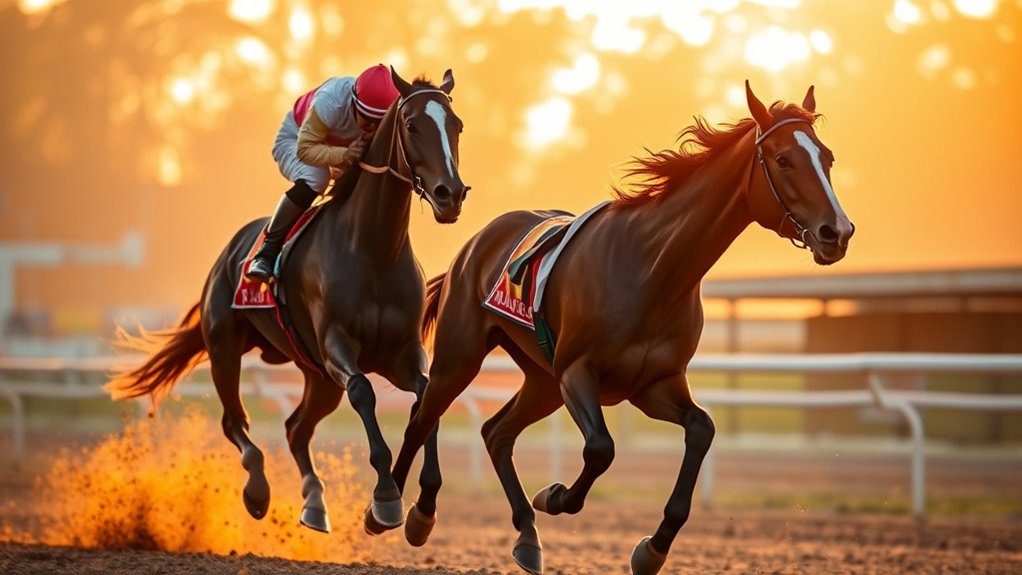
You’ll find that male racehorses generally have greater muscle mass and strength because of higher testosterone levels. This can give them an edge in speed and stamina.
But here’s the thing—performance data shows that while males often win more races, some females actually outperform them. So, it’s not always true that males are faster or stronger.
On top of that, females have hormonal cycles that can affect their racing performance. This makes comparing males and females a bit more complicated than it seems at first glance.
Physical Differences Explained
While male racehorses typically boast larger muscle mass and greater physical strength due to elevated testosterone levels, this doesn’t guarantee they always outperform females.
Male horses generally exhibit increased height and longer stride lengths, contributing to potential speed advantages.
Testosterone enhances muscle development and confidence, offering endurance and power benefits. However, physical differences between male and female racehorses are most pronounced in younger animals and can be mitigated through training and skill development.
Female racehorses often match or exceed male counterparts in performance despite these disparities.
Understanding these physical differences clarifies that while male horses may have certain biomechanical advantages, the varied factors influencing race outcomes extend beyond raw physicality alone.
Performance Comparisons By Gender
Although male racehorses generally possess greater height, muscle mass, and strength due to higher testosterone levels, this doesn’t guarantee they’ll always outperform females.
When evaluating performance, male horses, particularly colts and stallions, often show superior race outcomes and win rates. This is usually attributed to increased muscle mass and stamina.
These gender differences give male horses a physiological edge in speed and endurance. However, female racehorses have demonstrated exceptional performance, sometimes surpassing males under specific race conditions or distances.
It’s important to recognize that beyond inherent physical traits, individual ability, training, and race strategy critically influence outcomes.
Therefore, while male horses typically dominate in raw performance metrics, gender doesn’t solely determine racing success. You must consider multiple factors when comparing performance by gender.
Impact Of Hormonal Cycles
Because male racehorses have higher testosterone levels, they typically develop greater muscle mass and physical strength than females. This often translates to enhanced speed and endurance.
Hormonal cycles in mares cause fluctuations in estrogen and progesterone, affecting their stamina and behavior during estrous phases. These changes can temporarily reduce performance, making mares less consistent compared to males.
You should consider that testosterone enhances not only muscle development but also confidence, further boosting male racehorses’ endurance and speed.
| Horse Type | Hormonal Influence | Impact on Performance |
|---|---|---|
| Male | High testosterone | Increased muscle, endurance |
| Mare | Estrous cycle fluctuations | Variable stamina, behavior |
| Filly | Hormonal fluctuations | Possible reduced speed |
Understanding these hormonal effects clarifies gender-based performance differences.
How Hormones Affect Male and Female Racehorses

You’ll notice that testosterone really boosts muscle mass and confidence in male racehorses, which directly improves their performance.
On the other hand, female horses go through hormonal cycles that lead to seasonal mood changes. These shifts can influence their speed and how consistent they are.
Hormonal Cycles Impact Performance
When you consider the physiological differences between male and female racehorses, hormonal cycles play an essential role in influencing their performance. Female racehorses undergo cyclical hormonal changes that cause notable performance fluctuations. You should understand these key impacts:
- During breeding season, elevated estrogen levels in mares can reduce focus and energy, affecting racing consistency.
- Hormonal cycles may trigger unpredictable behavior or physical discomfort, directly influencing stamina and race readiness.
- Trainers often manage these fluctuations by timing races to coincide with ideal hormonal phases or using medication to stabilize performance.
Unlike males, females don’t maintain more stable hormone levels—in fact, their levels fluctuate more, which can affect strength and confidence. Understanding these hormonal cycles helps you better anticipate and enhance female racehorses’ performance.
Testosterone Benefits Male Horses
Although both male and female racehorses rely on hormones to regulate their performance, testosterone plays a particularly crucial role in male horses.
In stallions, testosterone enhances muscle mass, physical endurance, and confidence, directly impacting racing performance by improving stamina and strength.
This hormone also contributes to their larger size and aggressive behavior, traits that can provide a competitive edge on the track.
When stallions are castrated to become geldings, testosterone levels decrease markedly, resulting in calmer temperaments and allowing them to concentrate energy on racing rather than mating behaviors.
Understanding how testosterone influences these physiological and behavioral factors helps explain why male horses often exhibit distinct advantages in racing performance compared to females, whose hormonal fluctuations differ markedly.
Seasonal Mood Fluctuations
Because hormones govern much of a racehorse’s physiology and behavior, seasonal fluctuations can profoundly impact both male and female athletes. Hormonal fluctuations in mares cause cyclical changes that affect racing performance, especially during their breeding season. You’ll notice three critical effects:
- Mares may show unpredictable temperament and reduced stamina due to estrogen peaks, leading to inconsistent race outcomes.
- Stallions experience elevated testosterone levels that enhance muscle mass and confidence, often boosting performance during their breeding period.
- Both genders undergo mood swings and physical shifts influencing training adaptation and race readiness.
Understanding these hormonal patterns helps you optimize conditioning and race planning, ensuring both mares and males perform at their peak despite seasonal mood changes.
How Mixed-Gender and Gender-Specific Races Work
Since horse racing features both mixed-gender and gender-specific events, understanding how these races operate is essential.
Horse racing includes both mixed-gender and gender-specific events, each with unique rules and dynamics.
In mixed-gender races, males compete alongside fillies and mares, with weight allowances applied to females to offset physiological differences and maintain fairness. These adjustments help balance competition despite males often dominating outcomes.
Gender-specific races restrict entry to either fillies or mares, such as the Kentucky Oaks or Breeders’ Cup Distaff. These races provide exclusive platforms for female horses to showcase their abilities.
Racing jurisdictions implement regulations and handicapping systems to guarantee equitable competition across genders.
Why Male Racehorses Are Preferred for Breeding
You’ll find that male racehorses, especially stallions, are usually preferred for breeding. That’s mainly because they can sire a lot of offspring, which helps maximize their genetic impact and the revenue they generate.
Their success on the racetrack plays a big role too. The better they perform, the higher their stud fees tend to be, which can bring in significant money for their owners.
On top of that, hormonal factors also influence their performance and why they’re so desirable for breeding. All these reasons combined make male racehorses key players in the breeding industry.
Male Breeding Advantages
While both male and female racehorses contribute to breeding programs, male racehorses, particularly successful stallions, offer distinct advantages due to their proven track records and genetic impact.
When you focus on stallions, you benefit from:
- Racing success: Stallions with outstanding performance records are more likely to pass on favorable traits, enhancing the quality of offspring.
- Breeding capacity: A single stallion can sire numerous foals each season, maximizing genetic influence compared to mares.
- Genetic value: Offspring of top stallions often command high prices, reflecting strong market demand tied to inherited racing ability.
These factors make male racehorses pivotal in breeding, as their genetic contribution accelerates improvement in racing lines and sustains competitive advantages.
Economic Impact Of Stallions
Because stallions can sire hundreds of foals over their breeding careers, they hold immense economic value in the racing industry. You’ll find that successful stallions command high stud fees, often reaching six figures per mating, reflecting their genetic desirability.
Breeding with proven stallions maximizes the likelihood of producing competitive offspring, enhancing both the sire’s and breeder’s financial return. Owners frequently retire top-performing stallions early to focus on breeding, leveraging their pedigree to generate substantial revenue.
The stud fee for elite stallions like Frankel can reach $150,000 per foal, underscoring the economic advantage stallions provide. This breeding potential elevates a male racehorse’s market value markedly above that of mares, making stallions a preferred investment for those aiming to capitalize on long-term genetic and financial gains.
Hormonal Influence On Performance
The significant economic value of stallions largely stems from their hormonal profile, which directly impacts racing performance and breeding desirability. You’ll find that the hormonal influence in stallions, primarily testosterone, enhances muscle mass, stamina, and competitive drive, making them superior racing candidates.
Mares, by contrast, experience hormonal fluctuations during estrous cycles, causing inconsistent performance. Consider these key points:
- Stallions’ high testosterone levels improve physical development and aggressive racing behavior.
- Hormonal consistency in males leads to more reliable performance on the track.
- Castration reduces hormonal influence, calming temperament but often diminishing elite performance traits.
Because of these factors, breeders prefer stallions with strong hormonal profiles to pass on advantageous traits, reinforcing why male racehorses dominate breeding selections.
Gender Differences in Racehorse Training and Behavior
Even though training methods apply broadly to all racehorses, gender-specific hormonal differences considerably influence behavior and handling.
Male racehorses, particularly stallions, exhibit dominant, confident behavior during training due to elevated testosterone levels. This requires experienced handlers to manage their assertiveness.
Stallions display dominant, confident behavior demanding skilled handlers to effectively manage their assertiveness during training.
Female racehorses, or mares, tend to be more placid and easier to handle, but their reproductive hormonal cycles can cause temperamental shifts. Because of this, training schedules need to be adaptable.
Geldings, castrated male racehorses, often show calmer, more focused behavior than stallions. This usually helps with consistent training responses.
These gender differences directly impact temperament, handling strategies, and training efficacy. Understanding these distinctions is essential for optimizing performance and welfare across all racehorse categories.
Trainers need to tailor approaches based on the specific behavioral tendencies linked to each gender.
Notable Female Racehorses Who Changed the Game
While many assume top-tier racing is dominated by males, several female racehorses have decisively rewritten the standards of excellence in the sport. These notable female racehorses haven’t only shattered records but also challenged entrenched gender stereotypes within the racing community.
Consider these exemplary mares:
- Zenyatta, the first mare to win the Breeders’ Cup Classic in 2009, retired with 19 wins out of 20 starts and over $7 million in earnings.
- Personal Ensign retired undefeated after 13 races, marking her as one of the most celebrated female racehorses in American history.
- Black Caviar, an Australian mare, achieved 25 consecutive wins, becoming a national icon and symbol of female excellence in racing.
Why More Male Horses Race Than Females
Because male horses typically possess greater muscle mass and physical strength, they dominate the racing population, making up over 60% of competitors. In the racing industry, male horses such as colts, stallions, and geldings benefit from hormonal advantages like testosterone, which enhance speed and stamina.
Male horses dominate racing, boosted by greater muscle mass and testosterone-enhanced speed and stamina.
Owners often favor geldings and stallions for their focus and manageability compared to mares. Mares, on the other hand, experience reproductive cycles and hormonal fluctuations that can affect performance consistency.
Furthermore, successful male horses hold higher breeding value, increasing their economic appeal for both racing and stud careers.
These factors collectively explain why more male horses race than females. It all comes down to strategic decisions rooted in physiology and financial incentives within the racing industry.
Why Talent Matters More Than Gender in Racing Success
Although male horses often dominate the racing scene, talent plays a far more critical role in determining success than gender. When evaluating performance, you need to focus on factors beyond gender, such as:
- Individual Talent The innate physical ability and racing aptitude vary widely among horses regardless of gender.
- Training and Temperament Skilled training and a horse’s mental resilience directly impact race outcomes.
- Race Conditions Track type, distance, and competition level influence performance more than gender differences.
Notable mares like Zenyatta and Black Caviar show that female horses can outperform males in prestigious races. Performance data confirms that gender alone isn’t a reliable predictor of success.
Instead, a combination of talent, training, and race conditions determines a horse’s competitive edge.
Frequently Asked Questions
How Do Racehorse Diets Differ Between Males and Females?
You’ll notice racehorse diets differ between males and females primarily in feeding schedules and nutritional supplements.
Mares often need adjusted feeding schedules during breeding seasons, with added calcium and minerals to support reproductive health.
Stallions might receive higher protein supplements to enhance muscle development.
Diet restrictions vary, as hormonal fluctuations in females require careful balancing, while males focus more on energy-dense feeds for performance without reproductive considerations.
What Are the Injury Rates for Male Versus Female Racehorses?
Don’t assume gender performance alone dictates injury rates. You’ll find male racehorses have injury rates between 2% and 4%, while females range from 1.5% to 3%.
This difference relates to hormonal factors aiding tissue repair and differences in training intensity.
When focusing on injury prevention and racing stamina, consider race type and track surface too, since they influence injuries more than gender does.
Tailoring training optimizes both performance and safety.
How Does Racehorse Ownership Vary by Gender?
Racehorse ownership varies considerably by gender due to entrenched gender stereotypes influencing ownership demographics. You’ll notice men dominate most ownership roles, reflecting traditional biases within training programs and the broader industry.
However, female ownership is rising, especially among those managing breeding mares and fillies in boutique operations. These shifts challenge existing stereotypes, promoting more diverse participation.
Understanding these patterns helps you grasp how gender shapes ownership and impacts racing’s evolving landscape.
Are There Differences in Racehorse Retirement Ages by Gender?
Picture two ships steering different seas; mares retire earlier, like vessels docking sooner to nurture new fleets. You’ll notice training techniques and saddle fitting adjust to preserve their strength for breeding, often retiring around 4 to 6 years.
Stallions favor firmer track surfaces and race longer, up to 12 years, maximizing breeding potential. So yes, retirement ages differ by gender, shaped by physiology and economic strategy, not just racing demands.
How Do Breeding Costs Compare for Male and Female Racehorses?
You’ll find breeding costs for male racehorses particularly higher than for females due to genetic inheritance potential. Stallions can sire multiple foals yearly, increasing their stud fees, often exceeding $150,000 per breeding.
Breeding regulations and pedigree analysis play vital roles in determining fees for both genders. While mares produce only one foal annually, their value depends on reproductive health and pedigree, making their costs generally lower but still significant for top-quality breeding programs.
Conclusion
While you might notice more male horses on the track, it’s not about gender dominance but the nuances of physiology and tradition. Both stallions and mares bring their unique strengths to racing, influenced by hormones and training.
Ultimately, talent and conditioning trump gender. So, when you watch a race, remember it’s the horse’s heart and skill that truly count, making the sport as thrilling and unpredictable as ever.