What Is A Weapon Used On Horseback – What to Know
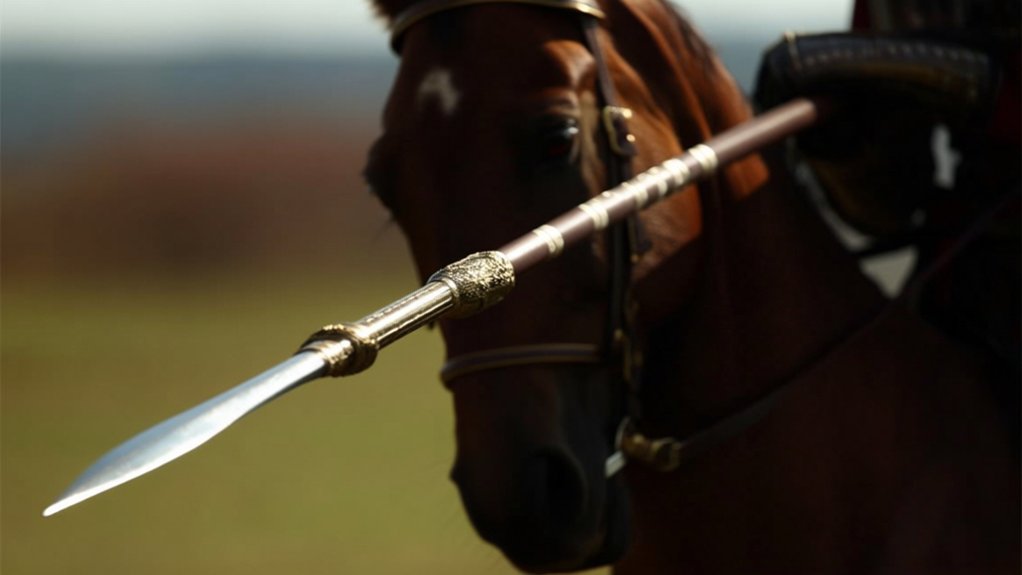
When wielding weapons on horseback, you’ll rely on tools like lances, sabers, and polearms designed to leverage your horse’s speed and power. Lances deliver powerful, armor-piercing thrusts, while curved sabers let you slash with agility in close combat.
Controlling these weapons requires skillful reins handling and timing, especially if you switch between one- and two-handed arms. Your armor and saddle choice also impact maneuverability and protection.
Understanding these elements sharpens your mounted combat effectiveness, with more insights on tactics and equipment ahead.
Types of Weapons Used on Horseback
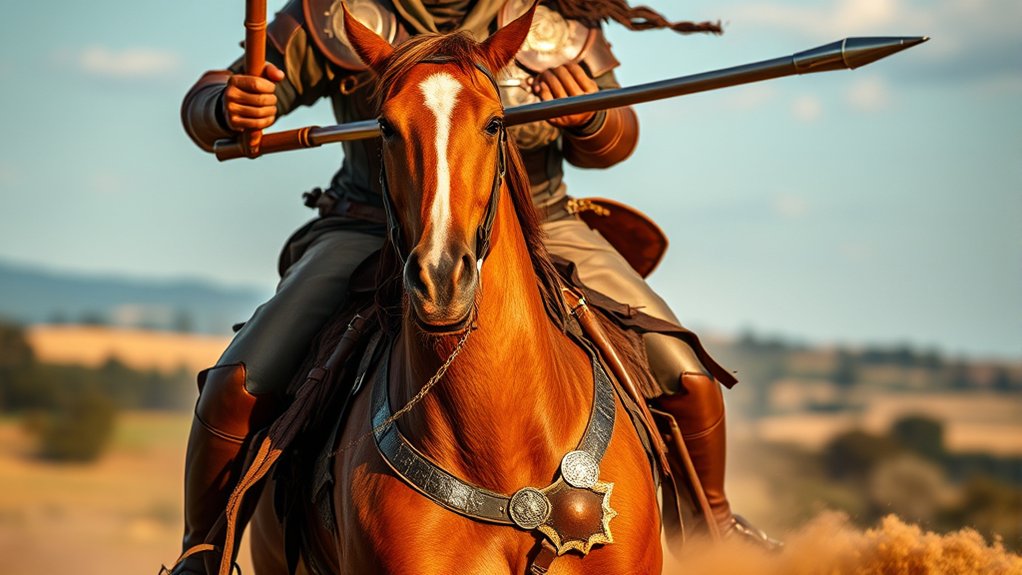
Although the types of weapons used on horseback vary across cultures and eras, you’ll find that common choices include lances, spears, swords, polearms, and flails.
In many Asian traditions, horsemen wielded large, two-handed weapons like glaives, halberds, and moon swords, balancing reach with control. These weapons, weighing between 4 to 8 pounds, required skillful handling to avoid getting stuck or losing control during fast maneuvers.
Western cavalry, by contrast, emphasized lances and swords for shock impact and swift, versatile strikes. You’ll notice that the design and weight of these weapons were optimized to suit mounted combat.
This allowed you to effectively leverage your horse’s speed and power while maintaining precise control over your weapon in the chaos of battle.
Lances and Sabers: Cavalry’s Preferred Weapons
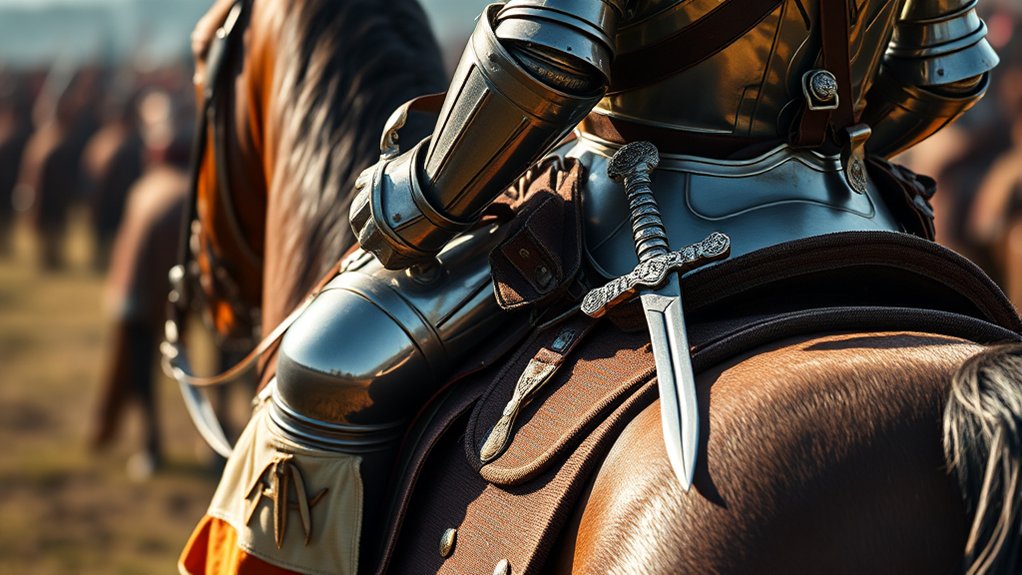
When you wield a lance, you’re really maximizing reach and impact. You drive linear force straight into your target during a charge.
Now, sabers are a bit different. With their curved blades, they give you the flexibility to slash or thrust in close combat. This means you can adapt quickly to shifting battlefield conditions.
Mastering both weapons? That demands precise control and timing to really make the most of their unique advantages from horseback.
Lance Advantages And Impact
Because lances extend the reach of a mounted warrior, they let you strike enemies with powerful thrusts while keeping a safe distance. This extended reach, combined with the lance’s linear momentum, makes it especially effective for shock tactics. It allows you to penetrate armor and disrupt enemy formations decisively.
You hold the lance with one hand, freeing the other for a shield or quick weapon shift. This setup enhances your maneuverability and adaptability on horseback.
The lance’s impact is swift and concentrated, often delivering the first, vital blow in cavalry charges.
After that initial strike, you can seamlessly switch to a sword or other weapon for close combat.
Historically, this combination of reach, power, and flexibility made lances a cornerstone of cavalry dominance on the battlefield. It’s pretty clear why they were so important.
Saber Design And Use
While lances deliver powerful thrusts from a distance, sabers excel at close-range combat with their curved, single-edged blades designed for slicing.
You’ll find that the saber’s curved design enables sweeping slashes, perfect for mounted warriors needing rapid, fluid strikes.
Weighing just 2 to 3 pounds, sabers balance agility and cutting power, allowing you to maneuver quickly without sacrificing effectiveness.
Historically, they evolved from straight swords to adapt to cavalry tactics, especially across Eastern Europe and Asia during the 18th and 19th centuries.
When wielding a saber, you often use one hand, sometimes alongside a shield, maintaining horse control while delivering swift offensive blows.
This combination of speed, precision, and design makes the saber indispensable for cavalry close combat.
Training for Using Cavalry Weapons
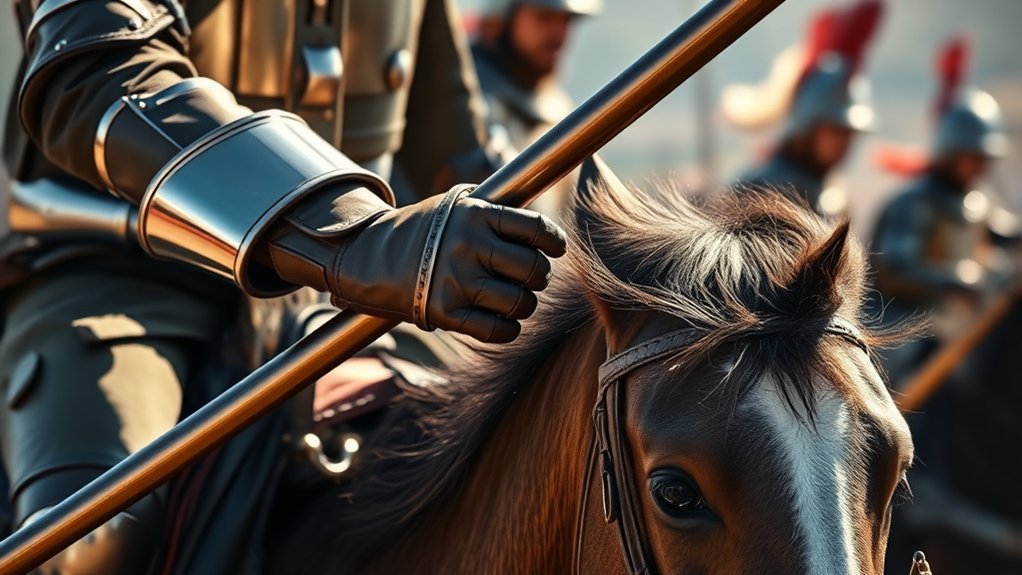
You need to get the hang of handling two-handed weapons while still keeping control of your horse. This requires some precise coordination and a good amount of strength.
Training with polearms really helps sharpen your reach and timing, which is super important given how fast-paced mounted combat can be.
Plus, being able to switch smoothly between different weapons ensures you stay effective no matter what the battlefield throws at you.
Mastering Two-Handed Weapons
Mastering two-handed weapons on horseback demands exceptional balance, control, and strength to handle their weight and length effectively. You’ll need to coordinate your body precisely to strike accurately while maintaining stability, especially at high speeds. Practicing with training swords or mock weapons builds this essential skill.
Quick, precise adjustments are vital to prevent your weapon from getting stuck or losing control of your horse during combat. You’ll learn to efficiently drop and regather the reins, enabling powerful swings or thrusts with large weapons like glaives or greatswords.
Historical manuals stress controlled body mechanics and keen situational awareness, which you must internalize to wield these weapons effectively. This rigorous training guarantees you command both your mount and weapon with confidence in battle.
Training With Polearms
Although wielding polearms on horseback demands rigorous skill, focused training sharpens your control, timing, and accuracy at speed to deliver powerful and safe strikes. You’ll practice mounting, dismounting, and striking from multiple angles, like front, flank, or over-the-shoulder to simulate real combat.
Coordinating reins with weapon handling is vital. Mastering techniques like dropping and regathering reins lets you make effective two-handed strikes without losing control.
| Training Aspect | Key Focus |
|---|---|
| Control & Timing | Synchronize reins and weapon |
| Striking Angles | Practice flanking and overhead hits |
| Mounting & Dismounting | Smooth shifts in battle |
| Two-Handed Techniques | Reins management for power strikes |
This disciplined approach guarantees you wield polearms with precision and confidence under dynamic conditions.
Transitioning Between Weapons
When combat shifts rapidly, your ability to switch seamlessly between weapons can determine survival on horseback. Cavalry training hones this skill, pushing you to change from lance to sword in about a second, even if unhorsed. Manuals from the medieval era stress dropping reins to wield two-handed weapons, then regaining control instantly.
You practice drawing, striking, and re-sheathing swords or halberds at full gallop, making sure you stay ready no matter how chaotic things get.
Cavalry weapons are designed for quick shifts. Long swords and spears let you thrust and slash without missing a beat.
Your coordination with the horse is essential. Smooth weapon changes depend on rhythm and balance.
Mastering these transitions sharpens your adaptability and gives you the edge you need to respond effectively as the battle evolves.
Pros and Cons of Great Weapons on Horseback
If you want to wield great weapons like polearms or large swords on horseback, you must understand the significant challenges involved. These weapons demand exceptional skill due to their size and weight, which complicate control and rapid maneuvering.
Here’s what you need to factor in: Two-handed weapons are forward-balanced and heavy, reducing your ability to make quick, precise strikes while mounted. Large weapons risk getting stuck in opponents or gear, which could unseat you, posing serious danger.
Despite their power, these weapons lack the versatility and ease of handling that smaller one-handed swords or spears provide, which better suit the dynamic nature of cavalry combat.
Ultimately, mastering great weapons on horseback requires intensive training and awareness of these critical limitations. It’s definitely doable, but you have to be prepared for the challenges.
Weapon Differences Between Eastern and Western Cavalry
Understanding the distinct weapon choices between Eastern and Western cavalry reveals how each culture adapted its mounted forces to different combat demands. Western cavalry favored lances, sabres, and spears, emphasizing heavy armor and shock tactics through rapid, direct charges. Their weapons focused on delivering powerful melee strikes within tight formations.
In contrast, Eastern cavalry employed a diverse arsenal including polearms like glaives, halberds, and double-handed flails, alongside archery and missile weapons. This combination allowed for highly mobile skirmishing and harassment, blending ranged attacks with versatile polearm use.
You can see how Western knights prioritized blunt force and close combat, while Eastern mounted troops integrated long-range and multipurpose weapons to maintain flexibility and mobility in various terrains and battle scenarios.
Use of Two-Handed Weapons on Horseback
Although two-handed weapons pose significant challenges for mounted combat, historical Asian martial traditions show they were used effectively, though rarely, on horseback. You’ll find weapons like spears, flails, and moon swords documented.
Their heft and length demand exceptional skill to wield while riding. You need to master controlling these cumbersome weapons without losing stability or grip on your mount. Consider these key points: The weight and size complicate maneuverability and can interfere with riding posture.
Extended blades risk getting caught in armor or foes, which could unseat you. Training is vital to balance offense with the constant danger of overextension. While it’s possible to use two-handed weapons on horseback, they usually don’t measure up to lances or one-handed swords.
Those offer better reach and control during mounted combat.
Armor and Equipment in Mounted Combat
How did armor and equipment evolve to meet the demands of mounted combat? You had to balance protection with mobility. Knights wore full plate armor to defend against arrows, swords, and polearms. Meanwhile, lighter armor suited cavalry who needed more agility.
Shields protected essential areas without getting in the way of weapon use. They were often secured by the guige strap to keep them in place during the chaos of battle. Your horse’s gear, like a solid-treed saddle and stirrups, made a big difference too. They enhanced your stability and control, which was critical when fighting on horseback.
Both rider and horse required protective gear to ensure endurance and effectiveness in battle. It wasn’t just about looking tough—it was about surviving and winning.
| Equipment | Purpose |
|---|---|
| Full Plate Armor | Maximum protection, less mobility |
| Shields (with guige) | Defend torso and head, maintain weapon use |
| Saddle & Stirrups | Rider stability and combat control |
Evolution of Cavalry Weapons and Tactics
Armor and equipment set the stage, but it’s the weapons and tactics that defined cavalry’s battlefield role. You’ll see cavalry evolve from simple spears and javelins to advanced polearms such as glaives and halberds, influenced by both Asian and European designs.
Technological breakthroughs like the saddle, stirrup, and horse collar transformed mounted combat, enhancing control and power.
Heavy cavalry, like armored knights, relied on shock tactics with lances and swords, while light cavalry exploited speed with bows and javelins.
To grasp this evolution, focus on these key points:
- Early mounted warfare’s roots in chariot tactics laid the foundation for mobility and archery.
- Innovations in equipment boosted cavalry effectiveness and altered battlefield strategies.
- Despite modern warfare’s decline of cavalry, historical tactics endure in equestrian martial arts.
Frequently Asked Questions
How Did Horses Impact the Effectiveness of Mounted Weapons?
Horses boosted your mounted weapons’ impact by adding speed, momentum, and stability. This let you strike harder and more accurately.
They also enabled quick maneuvers, so you could outflank enemies and execute rapid, powerful attacks with precision. It made a big difference on the battlefield.
What Role Did Mounted Weapons Play in Non-Military Cultures?
Mounted weapons in non-military cultures acted as the brushstrokes painting identity and survival. You’d rely on them for hunting, ceremonial power, and swift defense. These skills shaped your community in ways that went beyond the battlefield’s shadow.
They weren’t just tools of war. Instead, they helped define who people were and how they connected with their environment. It was about more than fighting—it was about life, culture, and tradition.
How Were Mounted Weapons Maintained During Long Campaigns?
You maintain mounted weapons by regularly cleaning, lubricating, and inspecting them to prevent rust and damage. Carry maintenance kits for quick repairs, sharpen blades, and rely on camp blacksmiths for extensive upkeep to guarantee combat readiness.
Regular care is key during long campaigns. Keeping weapons in good shape means they’ll perform when you need them most. And having the right tools on hand makes fixing problems faster and easier.
When things get more serious, blacksmiths at camp step in. They handle repairs that are too tough to manage on the spot. This teamwork keeps everyone ready for battle.
Did Mounted Weapons Influence Modern Cavalry or Police Forces?
Yes, mounted weapons shaped modern cavalry and police tactics. You’ll see their impact in rapid response, patrol mobility, and crowd control methods. These all directly evolved from historic cavalry’s emphasis on speed, shock, and versatile engagement techniques.
It’s pretty interesting how these old strategies still influence how forces operate today. The focus on quick movement and adaptability remains key in many situations. So, even though the tools have changed, the core ideas have stuck around.
What Historical Battles Prominently Featured Mounted Weapon Tactics?
You’ll find mounted weapon tactics key at battles like Gaugamela, Tours, Hastings, Crecy, and during Mongol invasions. Cavalry charges, mounted archers, and shock tactics decisively shaped outcomes across diverse historical conflicts.
These battles really show how important mobility and mounted combat were back in the day. It’s pretty fascinating how different cultures used horses to gain the upper hand.
Conclusion
You might think wielding a heavy lance or saber on horseback is all about brute strength, but it’s equally about precision and skill honed through rigorous training.
While Eastern cavalry favored agility and speed with lighter weapons, Western forces relied on heavier arms and armor for sheer impact.
Understanding these contrasts shows that mounted combat isn’t just about power or speed. It’s a complex balance of technique, weapon choice, and tactical evolution you must master.