What Do American Quarter Horses Eat – Quick Answer
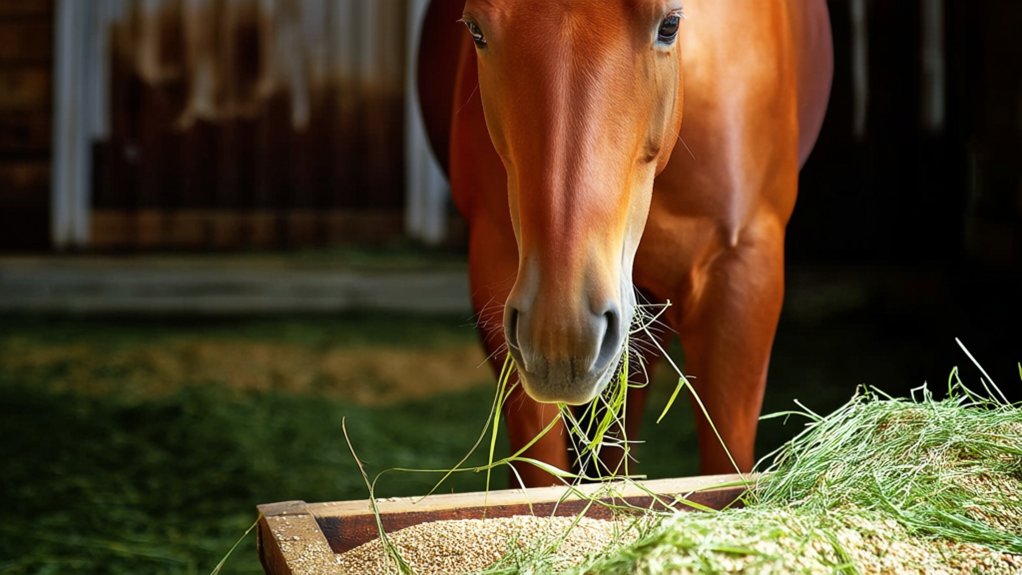
You feed American Quarter Horses primarily high-quality forage, such as clean hay or pasture. Aim to provide about 1.5-2% of their body weight daily to support digestion and overall health.
Supplement this with grains or concentrates based on their activity level. Just be sure to introduce these gradually to avoid any digestive upset.
Balanced vitamins and minerals, along with tailored adjustments, help manage weight and genetic conditions. Maintaining this foundation guarantees their performance and well-being.
If you want, there are more precise feeding strategies available to optimize their nutrition even further.
Daily Diet of Quarter Horses
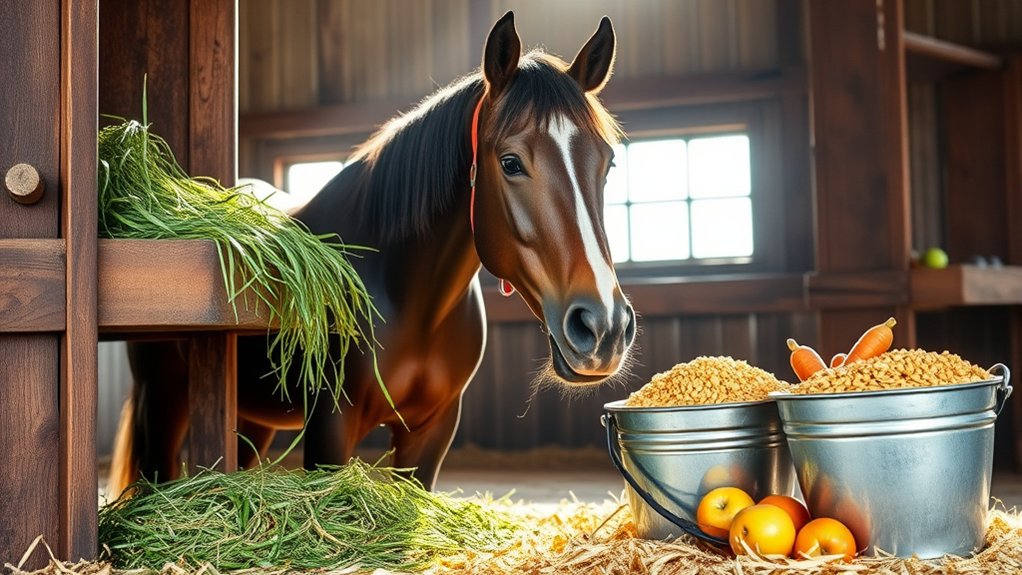
Although their specific needs may vary, Quarter Horses primarily consume high-quality forage like hay or pasture, which should amount to 1.5-2% of their body weight daily.
You may need to supplement their diet with grains or concentrates if they’re more active, older, or have specific health demands.
Adding fats like vegetable oil or rice bran can increase calorie intake efficiently without raising feed volume.
To prevent micronutrient deficiencies, fortified feeds or ration balancers supply essential vitamins and minerals.
Managing these components carefully helps you maintain your Quarter Horse’s health and performance.
Why Forage Is the Foundation of a Quarter Horse’s Diet
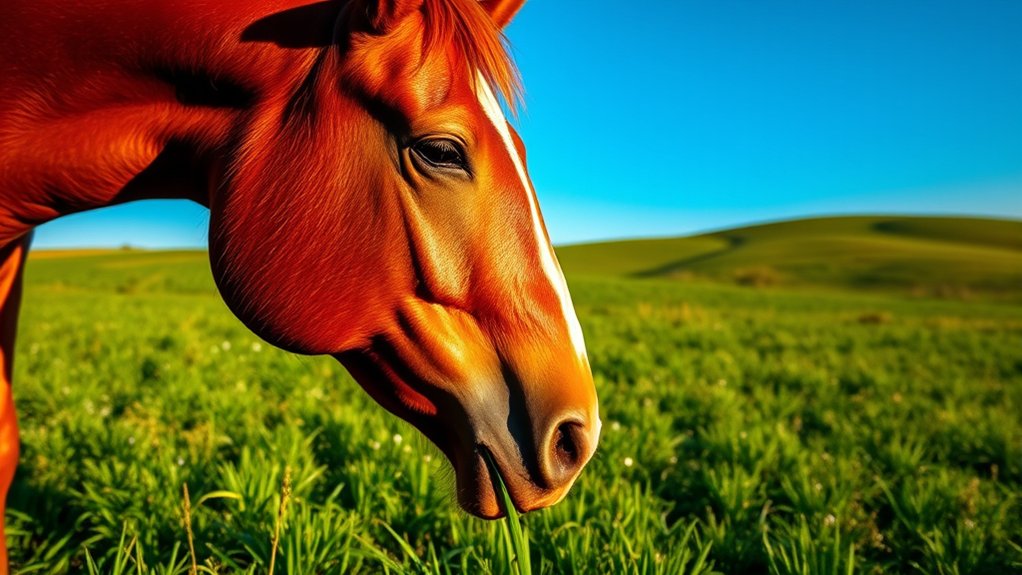
Because forage supplies the majority of essential nutrients and fiber, it forms the foundation of a Quarter Horse’s diet. You need to prioritize high-quality hay or pasture to support hindgut fermentation, which is critical for nutrient absorption and digestive health.
Forage also provides the primary energy source, helping reduce reliance on concentrates and lowering obesity risk.
| Aspect | Importance |
|---|---|
| Nutrients & Fiber | Supports digestion and health |
| Intake Recommendation | Minimum 1%, ideal 2-3% body weight |
| Energy Source | Primary fuel for daily activity |
| Forage Quality | Influences condition & performance |
| Health Impact | Enhances long-term wellness |
Ensuring your Quarter Horse consumes adequate, quality forage maintains *ideal* condition and performance. It’s really the key to keeping them healthy and energetic.
How Much Hay or Pasture Should You Provide
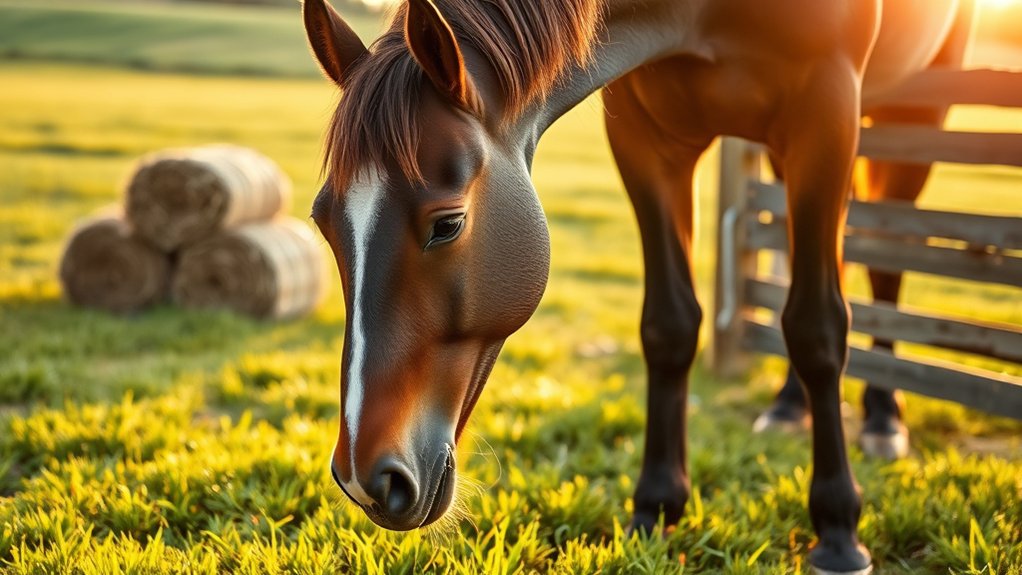
When feeding your Quarter Horse, aim to provide between 1.5% and 2% of its body weight in high-quality hay or pasture daily. For a 1,200-pound horse, that usually means 18 to 24 pounds.
For ideal digestive health, forage intake should sometimes reach 2 to 3%, depending on activity and metabolism. It’s important to give your horse consistent access to clean, green, leafy, and mold-free forage. This supports gut function and nutrient absorption.
Keep a close eye on your horse’s body condition so you can adjust intake and avoid overfeeding.
Key points to contemplate:
- Forage quality: free of dust, mold, weeds, and foreign materials.
- Intake adjustments based on activity level and individual metabolism.
- Maintain steady access to hay or pasture to promote hindgut fermentation and digestive efficiency.
When to Feed Grains and Concentrates to Quarter Horses
You should start by figuring out your Quarter Horse’s energy needs based on how much work it’s doing. That way, you can decide if grains and concentrates are necessary. It’s all about picking the right kinds of feed and tweaking when and how often you feed them to help your horse digest better and perform at its best.
A good tip is to begin with small amounts and slowly increase the feed. This approach helps prevent any tummy troubles while still making sure your horse gets all the nutrients it needs.
Identifying Energy Requirements
Although Quarter Horses typically thrive on forage alone, their energy demands can increase markedly during periods of intense training or competition. You need to identify when their workload exceeds what forage can supply, signaling the need for grains or concentrates.
Key indicators include:
- Increased exercise intensity or duration requiring additional calories
- Noticeable weight loss or failure to maintain condition on forage alone
- Specific performance goals demanding enhanced energy availability
When energy needs rise, introduce low-starch concentrates gradually over 7-10 days to avoid digestive upset.
For moderate work, feeding 0.5 to 1.5% of body weight in concentrates daily can meet energy requirements without causing excess weight gain.
Keep a close eye on your horse’s body condition to prevent obesity or metabolic issues. Adjust feed based on workload fluctuations to keep everything balanced and your horse feeling great.
Choosing Appropriate Feed Types
Determining the right feed types depends largely on your Quarter Horse’s workload and life stage, which dictate their energy and nutrient demands. You should feed grains and concentrates only when these needs exceed what forage alone can supply.
For inactive or easy-keeper horses, high-quality forage with minimal or no grain maintains ideal health and weight. When you include concentrates, make sure to follow the manufacturer guidelines carefully. These are usually tailored to your horse’s body weight and activity level, helping to prevent overfeeding.
Keep concentrates to no more than 50% of the total daily diet. Balance the rest with forage or pasture.
Also, choose properly processed grains like steam-flaked oats or extruded feeds. These improve digestibility and nutrient absorption, ensuring your Quarter Horse gets the energy and nutrients it needs efficiently.
Timing and Feeding Frequency
When managing your Quarter Horse’s diet, feeding grains and concentrates in two to three small meals per day closely mimics their natural grazing patterns and supports digestive health. Dividing portions helps prevent colic and ulcers by promoting steady digestion.
For horses in moderate work, one or two daily feedings usually suffice, but adjust based on workload, age, and health. Consistent feeding times stabilize blood sugar and reduce behavioral issues.
Keep these key points in mind:
- Feed concentrates 2-3 times daily to mirror natural grazing and optimize gut function
- Tailor feeding frequency to the horse’s energy requirements and health status
- Maintain regular feeding schedules to support metabolic stability and performance
This approach guarantees your Quarter Horse receives nutrients efficiently while minimizing digestive risks.
How Vitamins and Minerals Help Your Quarter Horse
Since vitamins and minerals play a critical role in your Quarter Horse’s health, ensuring proper intake is essential for supporting growth, immune function, and metabolic processes.
Vitamin A, stored in the liver, is essential for vision, cellular growth, and immune defense, but excessive amounts risk toxicity.
Maintaining mineral balance, particularly calcium, phosphorus, and electrolytes, is indispensable for bone integrity, muscle contraction, and metabolic reactions.
Deficiencies in these micronutrients can cause poor coat quality, lameness, and reproductive complications.
To prevent these issues, supplementing with fortified feeds or ration balancers guarantees your Quarter Horse receives adequate vitamins and minerals.
This targeted nutritional support optimizes performance, promotes recovery, and sustains overall health.
Managing Weight in Quarter Horses
Although managing weight in Quarter Horses may seem straightforward, it actually requires careful attention to forage quality and quantity, tailored to each horse’s activity level. You should provide high-quality forage at 1.5-2% of their body weight daily and adjust based on workload.
Overweight horses need calorie intake control by limiting concentrates and emphasizing fiber-rich forage. Use ration balancers or low-starch feeds to meet nutritional needs without excess calories.
Regular body condition scoring is essential to track weight changes and guide diet modifications. Remember to maintain consistent access to clean water and avoid high-calorie treats, which can promote unwanted weight gain.
Key considerations include:
- Forage intake adjusted for activity level
- Use of ration balancers to control calories
- Routine body condition scoring for monitoring
Adjusting Your Quarter Horse’s Diet for Genetic Conditions
Because genetic conditions profoundly impact your Quarter Horse’s metabolism and nutrient requirements, adjusting their diet is critical to managing symptoms and promoting overall health.
For HYPP, provide a low-potassium diet by avoiding alfalfa, brome, and bluegrass hay to reduce episodes.
Horses with PSSM benefit from low-starch, high-fat feeds such as Tribute®, which enhance energy utilization and muscle function.
If your horse has HERDA or GBED, emphasize high-quality protein and restrict excess energy sources to prevent symptom exacerbation.
Managing EMS involves feeding low non-structural carbohydrate (NSC) diets alongside regular exercise to control obesity and metabolic disturbances.
For genetic muscle disorders, consult an equine nutritionist to develop tailored diets that support muscle and joint health while minimizing risk factors effectively.
Building a Balanced Feeding Plan for Your Quarter Horse
Managing genetic conditions in your Quarter Horse requires careful dietary adjustments, but establishing a balanced feeding plan forms the foundation for overall health and performance.
Start by providing high-quality forage, like hay or pasture, at 1.5-2% of body weight daily. Supplement with a ration balancer or fortified feed to supply essential vitamins, minerals, and amino acids, especially if forage quality varies.
Tailor concentrate and supplement levels based on your horse’s age, workload, and health status for the best results. You might also consider adding fats like vegetable oil or rice bran to boost energy without increasing feed bulk. These little tweaks can make a big difference.
Key components to focus on include forage quality and quantity as the dietary base, appropriate supplementation for nutrient balance, and regular body condition monitoring along with nutritionist consultation.
This approach helps ensure your Quarter Horse maintains peak condition and performance.
Frequently Asked Questions
Can American Quarter Horses Eat Fruits and Vegetables as Treats?
Yes, you can feed American Quarter Horses fruits and vegetables as treats, but only in moderation. It’s best to introduce them gradually to see how your horse reacts. Also, avoid giving spoiled or seasoned items since those can be harmful.
Make sure the treats don’t exceed 10% of their daily caloric intake. Keeping it within this limit helps maintain their overall health. Just remember, treats are fun extras—not a main part of their diet.
How Often Should I Clean My Quarter Horse’s Water Trough?
Think of your water trough as your horse’s oasis. You should clean it at least once a week, or twice during hot, humid weather.
Drain, scrub, rinse, and disinfect to keep the water fresh and bacteria-free. This helps your horse stay ideally hydrated.
Keeping up with this routine makes a big difference in your horse’s health and comfort. It’s a simple step that really pays off!
Are There Any Common Foods Toxic to American Quarter Horses?
Yes, you must avoid cherry, cherry laurel, yew, onions, garlic, moldy feed, and sugary human foods like chocolate. These can cause toxicity, anemia, colic, and neurological issues in American Quarter Horses.
It’s important to keep these foods well away from your horse. Even small amounts can be harmful, so always double-check what they’re eating. Keeping their environment clean and free from these toxins helps keep them safe and healthy.
What Type of Salt Block Is Best for Quarter Horses?
Imagine your Quarter Horse as a finely tuned engine. You’d never fuel it with anything but premium grade.
You’ll want plain, mineralized salt blocks, no molasses, to guarantee balanced electrolytes and steady hydration. That’s essential for peak performance.
How Does Feeding Differ for Quarter Horses in Winter Versus Summer?
You’ll feed Quarter Horses more hay and energy-dense concentrates in winter to meet higher caloric needs. This helps keep them warm and maintains their energy levels during colder months.
In summer, you’ll rely on pasture grazing and emphasize fresh water. Staying hydrated is key, and fresh pasture provides good nutrient intake too.
Conclusion
Feeding your American Quarter Horse the right balance of forage, grains, and supplements is key to keeping them healthy and performing at their best. Remember, forage should form the backbone of their diet, with grains and minerals added as needed.
Keep a close eye on their weight and any genetic conditions to adjust their meals accordingly. With a well-planned diet, you’ll be hitting the nail on the head, ensuring your horse thrives every day.