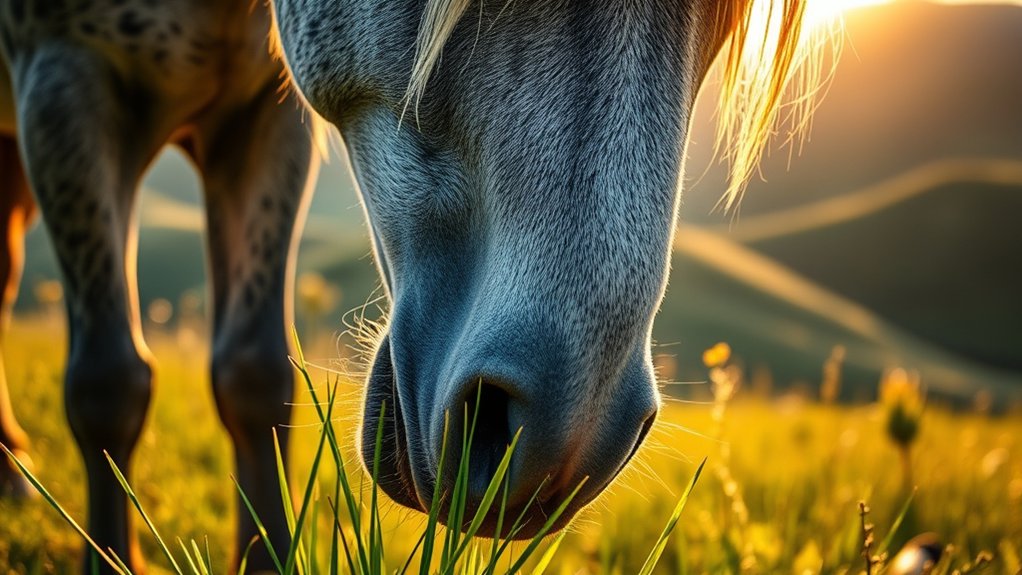
Is a Horse a Herbivore?
Yes, a horse is a strict herbivore with teeth and a digestive system specialized for processing fibrous plant material. You’ll find their large incisors and grinding molars perfectly adapted to break down grasses and forage.
Their hindgut fermentation extracts nutrients efficiently from high-fiber diets. Meat is unsuitable and can disrupt their gut health.
Understanding how horses naturally digest fiber and the best forages to provide will help you support their well-being and prevent digestive issues.
What Makes Horses Herbivores
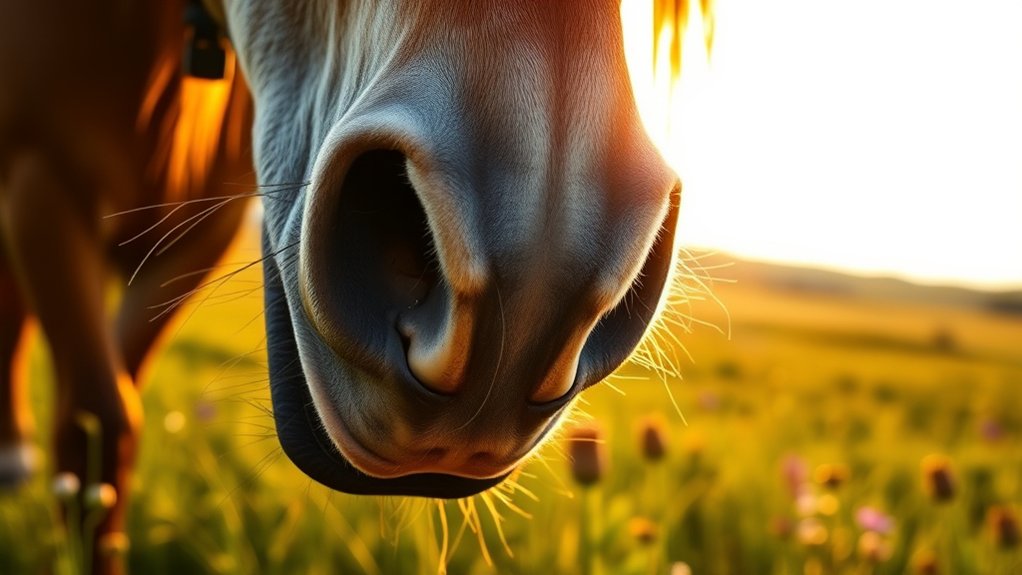
Although you might notice horses occasionally nibbling on non-plant items, their physical and physiological traits clearly identify them as herbivores. Their teeth, featuring large, flat incisors and grinding molars, are perfectly adapted to process plant material efficiently.
Horses’ teeth, with flat incisors and molars, are expertly designed for efficiently processing plant material.
This dental structure helps you understand why horses primarily consume grasses, hay, and other forage as their main diet. Additionally, their digestive system is specialized for fermenting fiber-rich plant material in the hindgut.
This allows them to extract essential nutrients from cellulose-rich forage.
These adaptations underline horses’ classification as herbivores, as their anatomy and physiology support a diet consisting almost exclusively of plant-based material. Despite rare reports of meat consumption, the evidence firmly confirms horses as specialized herbivores.
How Horses Are Built to Eat Plants
Because horses rely entirely on plant-based diets, their bodies have evolved specific features to efficiently consume and process vegetation. Horses possess large, flat incisors designed to graze and pull at plants, perfectly suited for biting off grass and forage.
Their long molars and premolars grind fibrous plant material thoroughly, aided by a jaw structure that allows wide lateral movements. This mechanical process prepares plants for digestion.
Furthermore, horses have a specialized digestive system with an enlarged cecum and colon that ferment high-fiber forage over extended periods, extracting necessary nutrients.
Their teeth continuously grow and wear down in patterns adapted to a diet dominated by plants.
These anatomical and physiological traits ensure horses are highly efficient herbivores, optimized for consuming and digesting plant matter.
What Horses Naturally Eat in the Wild
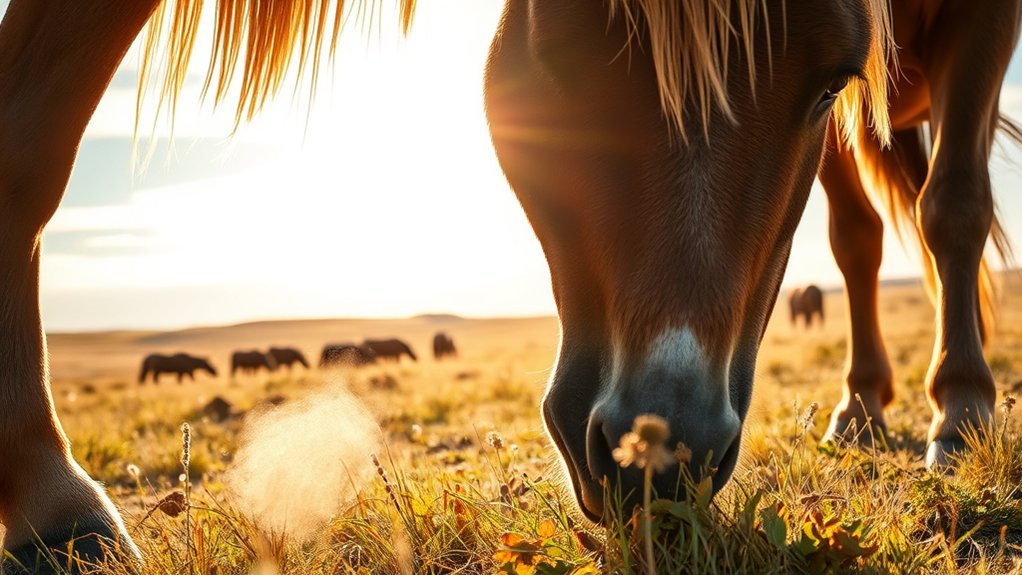
Understanding a horse’s physical adaptations helps clarify why their diet in the wild consists mainly of grasses, herbs, and shrubs. As true herbivores, wild horses rely on high-fiber forage like pasture grass and seasonal plants, which their digestive system efficiently processes.
Their large, flat incisors and grinding molars enable them to break down tough plant fibers, optimizing nutrient extraction.
You’ll observe wild horses grazing for extended periods daily, often in groups, to access abundant forage while maintaining vigilance against predators.
Their hindgut fermentation system specializes in digesting fibrous material, allowing them to absorb essential nutrients from roughage. This natural diet is low in fat and rich in fiber, perfectly aligned with their evolutionary physiology and dietary needs in the wild.
Why Meat Is Unsuitable for Horses
You really shouldn’t feed horses meat because their digestive systems just aren’t built for it. Their teeth and hindgut are specially designed to handle fibrous plants, not animal protein.
Eating meat can mess up their gut microbiome, which might lead to serious problems like ulcers and colic.
Plus, raw meat can carry harmful pathogens that create even more risks for their health. So, it’s definitely best to stick to plant-based foods for horses.
Digestive Limitations
Although horses occasionally nibble on unusual items, their digestive systems aren’t built to handle meat. As herbivorous animals, horses have a small stomach designed primarily to digest fibrous plant material, not protein or fat from meat.
Their digestive system lacks the enzymes needed to break down raw meat efficiently. Instead, horses rely on a large intestine specialized for fermenting fiber, which supports nutrient absorption from plant-based diets.
Introducing meat disrupts this fermentation process and can imbalance the gut microbiome. Such disruption increases the risk of digestive problems, including gastric ulcers.
Since horses can’t ruminate or process animal tissues properly, their herbivorous digestive system limits their ability to handle meat, confirming why meat is unsuitable for their natural dietary needs.
Health Risks
Because horses’ digestive systems aren’t equipped to handle animal protein, feeding them meat can lead to serious health risks like gastric ulcers and colic. Meat lacks dietary fiber, which is essential for maintaining proper gut motility and microbial balance.
Without sufficient fiber, horses experience gastrointestinal issues, impairing digestion and nutrient absorption.
Furthermore, raw or spoiled meat can harbor pathogens such as salmonella and listeria, posing infection risks.
Excessive protein from meat disrupts the horse’s microbiome, potentially causing metabolic disorders.
Contaminated animal-derived feeds may also introduce toxins that result in severe illnesses like botulism, which can be fatal.
To protect your horse’s health, avoid meat and prioritize a fiber-rich herbivorous diet that supports their specialized digestive system and prevents gastric ulcers, colic, and other gastrointestinal complications.
Effects of Occasional Meat Eating in Horses
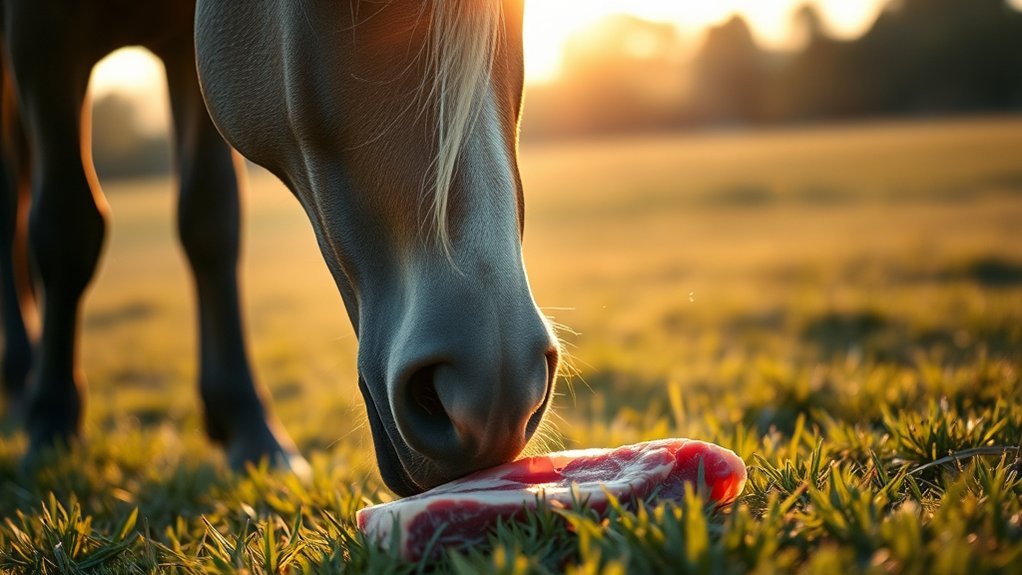
How does occasional meat consumption affect a horse’s health? As natural herbivores, horses have digestive systems adapted for grasses and forage, not meat. When a horse consumes meat sporadically, it usually doesn’t indicate nutritional deficiency but can disrupt the gastrointestinal environment.
Meat lacks dietary fiber and contains excess protein, which challenges the horse’s digestive processes. This disruption may lead to gastrointestinal issues like gastric ulcers and negatively alter the microbiome, impairing digestive efficiency.
Meat’s lack of fiber and high protein can disrupt digestion, causing ulcers and harming the gut microbiome.
While rare, these effects highlight that occasional meat intake isn’t ideal and can stress the horse’s specialized herbivore system.
Understanding these subtle impacts helps maintain best equine health by supporting a diet aligned with their natural digestive adaptations.
Health Risks of Feeding Meat to Horses
Occasional meat consumption can disrupt a horse’s digestive system, but regularly feeding meat carries more serious health risks. Meat lacks the necessary dietary fiber horses require, and its excess protein content can impair digestive function.
Horses don’t have the enzymes or gut microbiota to process meat effectively, increasing the risk of colic and other digestive disturbances. Feeding raw or contaminated meat introduces pathogens such as salmonella, listeria, and botulism-causing bacteria, which pose severe health risks.
These infections may cause gastric ulcers, severe bacterial illnesses, and potentially fatal conditions. By feeding meat, you compromise your horse’s digestive microbiome, leading to imbalances that exacerbate colic risk.
Understanding these health risks underscores why meat is unsuitable and potentially dangerous for horses’ digestive health.
Healthy Alternatives to Meat in Horse Diets
You can support your horse’s health by adding omega-3 sources like fish oil. It provides EPA and DHA very efficiently.
On the other hand, plant-based options like flaxseeds also offer omega-3s, but horses don’t convert them as well.
Omega-3 Sources
Several effective omega-3 sources provide healthy alternatives to meat in your horse’s diet. Fish oil is the most direct and efficient source of omega-3 fatty acids, supplying EPA and DHA that support joint, skin, and brain health.
Plant-based sources like flaxseeds and chia seeds offer ALA, which horses must convert to EPA and DHA, a less efficient process. Supplementing with fish oil can reduce inflammation and improve coat condition without meat-associated risks.
Products like EO-3™ enhance palatability, ensuring intake. Always consult your veterinarian to determine proper dosage.
| Source | Omega-3 Type | Benefits |
|---|---|---|
| Fish Oil | EPA & DHA | Reduces inflammation, improves coat |
| Flaxseeds | ALA (plant-based) | Requires conversion to EPA/DHA |
| Chia Seeds | ALA (plant-based) | Supports overall omega-3 intake |
Plant-Based Supplements
Building on omega-3 supplementation, plant-based options extend beyond seeds and oils to include nutrient-rich forages like alfalfa hay and specific grasses. These forages serve as natural sources of essential vitamins and minerals, promoting balanced nutrition that aligns with a horse’s herbivorous digestive system.
You can also incorporate plant-based supplements such as carrots, beet pulp, and seaweed to enhance vitamin and mineral intake without relying on animal products. While fish oil offers superior bioavailability of EPA and DHA, plant-derived sources like flaxseeds and chia seeds remain valuable for joint, skin, and hoof health.
Utilizing plant-based supplements supports digestive health and nutritional balance, ensuring your horse receives appropriate nutrients consistent with their evolutionary herbivorous diet. This ultimately promotes ideal wellbeing without introducing animal proteins.
How Horses Digest Fiber
Although horses can’t digest fiber in their stomachs, their large cecum and colon ferment this plant material. This breaks it down into volatile fatty acids that serve as an essential energy source. This hindgut fermentation lets you maximize energy extraction from high-fiber forage, which horses continuously graze.
Fiber digestion in the hindgut is slow, taking 24-48 hours, so it’s important to always have forage available. Your horse’s specialized teeth also help grind fibrous plant material, which optimizes fermentation.
| Component | Function |
|---|---|
| Cecum | Ferments fiber into fatty acids |
| Colon | Continues fermentation process |
| Forage | Primary fiber source |
| Volatile Fatty Acids | Energy produced from fermentation |
| Teeth | Grind fibrous plant material |
Understanding this process helps you support your horse’s digestive health effectively.
How to Provide the Right Forage and Supplements
When choosing forage for your horse, prioritize green, fresh, and mold-free hay or pasture that’s harvested before seed maturity to guarantee the best nutrient content. As herbivores, horses rely on forage as the foundation of their nutrition.
To optimize forage and supplements, consider these steps:
- Test forage samples to assess nutrient levels accurately.
- Gradually introduce fat and protein supplements, such as soybean meal or rice bran, tailored to your horse’s needs.
- Maintain consistent feeding routines and avoid sudden diet changes.
- Ensure proper calcium-to-phosphorus ratios in forage and supplements to support metabolic functions.
How Proper Diet Boosts Horse Health
Since horses depend heavily on forage, providing a diet rich in high-quality fiber and balanced nutrients directly supports their digestive health and overall well-being. A proper diet guarantees you supply essential vitamins and minerals, like calcium and phosphorus in the ideal ratio, promoting strong bones and metabolic function.
Including healthy fats enhances coat condition and joint health without compromising digestion. Regular forage quality testing helps you adjust nutrient intake to prevent deficiencies and metabolic disorders.
Consistent feeding routines and gradual diet changes maximize digestion and reduce colic risk, which is crucial for maintaining excellent horse health.
| Nutrient Component | Health Benefit |
|---|---|
| High-quality forage | Supports digestion and fiber intake |
| Vitamins & minerals | Maintain bone strength and metabolism |
| Healthy fats | Improve coat and joint health |
Frequently Asked Questions
How Do Horses Communicate With Each Other in a Herd?
You’ll notice horses rely heavily on horse body language to communicate within their herd social structure. They use ear positions, tail movements, and posture to express emotions or intentions.
Vocal communication, like neighs and snorts, alerts others or calls for companionship.
Grooming behavior plays an essential role in bonding and establishing hierarchy, reinforcing social ties.
What Breeds of Horses Are Best for Beginner Riders?
Imagine a gentle giant patiently waiting to guide you through your first rides. Breeds like the American Quarter Horse, Morgan, and Welsh Pony are ideal for beginners due to their calm temperament and reliability.
When you focus on proper horse nutrition, effective horse training techniques, and consistent equine health care, these breeds respond well.
Using the right horse grooming tools also helps build trust and comfort, making your learning experience safer and more enjoyable.
How Often Should Horses Be Groomed for Optimal Health?
You should groom your horse daily to optimize equine health. Regular horse grooming removes dirt, sweat, and loose hair, preventing skin infections and promoting coat maintenance by stimulating natural oils.
Using proper grooming tools, inspect the coat and hooves for abnormalities to catch issues early. Grooming before and after exercise also helps cool your horse and removes debris, ensuring comfort and enhancing overall well-being.
Consistency strengthens your bond and supports health.
What Are Common Signs of Stress in Horses?
You can identify stress in horses by observing equine body language and stress-related behaviors. Common signs include pawing, tail swishing, head tossing, and shying.
Indicators of anxiety often show as trembling, reluctance to move, and persistent nasal flaring.
Signs of discomfort also involve increased heart rate, rapid breathing, sweating without exertion, and changes in vocalization like whinnying or whimpering.
Recognizing these helps you manage their wellbeing effectively.
How Do Horses Sleep and Rest Throughout the Day?
Like a clockwork symphony, horse sleeping habits follow precise rhythms. You’ll notice horses rest in short, frequent bursts throughout the day, engaging in horses’ nap routines mainly while standing, thanks to their stay apparatus.
Their resting patterns in horses include lying down for brief REM sleep episodes, usually during quieter moments.
Understanding their daily activity cycles reveals they need just 2-3 hours of sleep, mostly light, with intermittent deep sleep periods.
Conclusion
You know horses are true herbivores. They’re built to eat plants, designed to digest fiber efficiently, and naturally graze on grasses and hay.
You shouldn’t feed them meat because it’s unsuitable and can cause health issues. Instead, provide proper forage, balanced supplements, and a plant-based diet.
By understanding their needs and offering the right nutrition, you’ll support their health, improve digestion, and help them thrive naturally and scientifically.