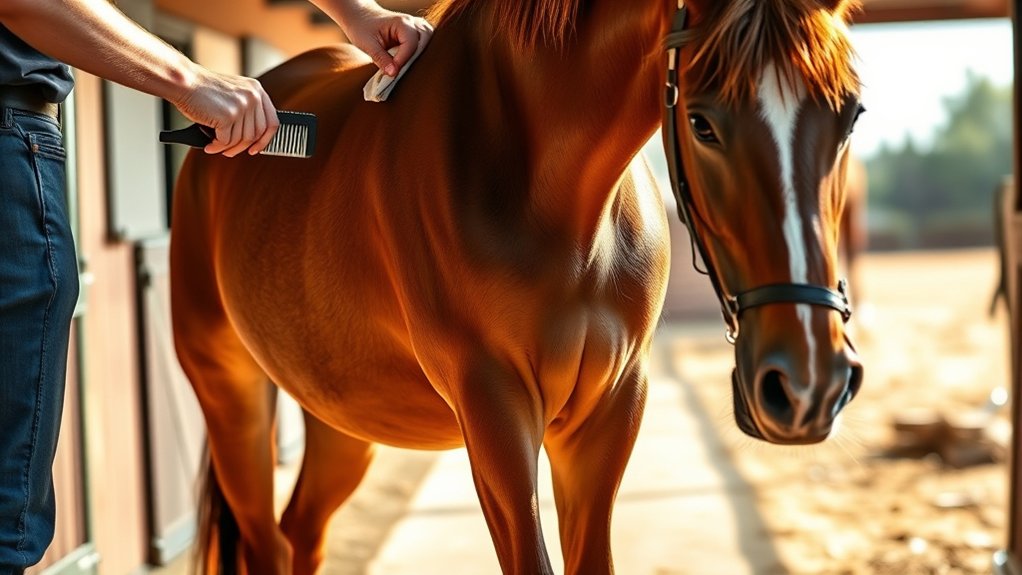
How to Groom a Horse in 7 Steps
To groom your horse in seven steps, start by securely tying it with a lead rope to guarantee safety. Next, carefully pick out hooves with a hoofpick, checking for issues. Use a rubber curry comb in circular motions to loosen dirt, then remove debris with a hard brush and finish with a soft brush for shine.
Gently clean the face and sensitive areas with a damp sponge. Detangle the mane and tail from the side, and finally, apply fly spray and coat shine. Follow these steps closely for a healthy, happy horse and discover tips to perfect your technique.
Secure Your Horse for Grooming With a Lead Rope
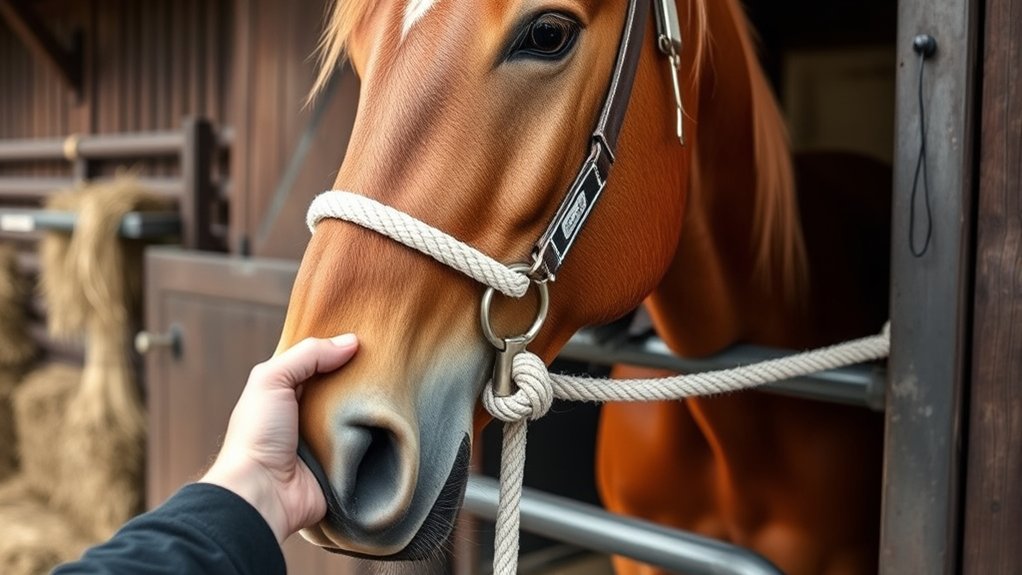
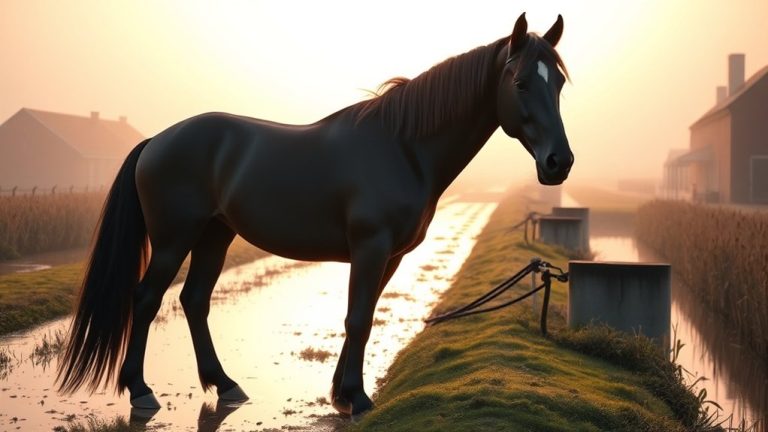
Before you begin grooming, make sure to securely tie your horse using a lead rope and a quick release knot. Attach the lead rope to a snug, properly fitted halter to maintain control without causing discomfort.
The quick release knot is essential. It keeps the horse stable while allowing you to untie it immediately if needed, which enhances safety.
Tie the horse to a sturdy post or inside the stable, making sure the area is free of hazards.
Before starting, confirm the horse stands calmly and isn’t pulling back.
Ensure your horse stands calmly and does not pull back before you begin grooming.
Regularly check the tie’s security throughout grooming to prevent accidents.
Pick Out Your Horse’s Hooves Carefully With a Hoofpick
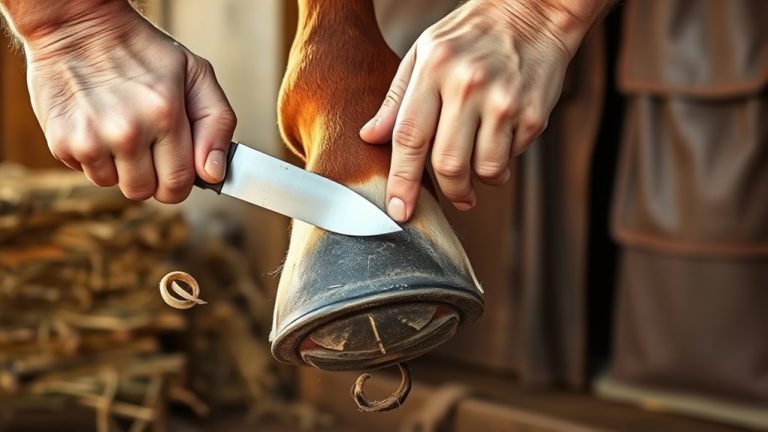
How do you guarantee your horse’s hooves stay healthy and comfortable? Start by using a hoofpick to carefully remove dirt and mud, as well as stones, from the hoof. Hold the leg securely, supporting it to avoid sudden movements.
Begin hoof cleaning at the heel and work toward the toe, paying special attention to sensitive areas around the frog. Be gentle to prevent causing pain or damage.
Thoroughly clean the entire hoof, including the sole and heel. As you work, closely examine the hoof for any signs of cracks, abscesses, or thrush.
Regular, careful hoof cleaning not only helps maintain health but also prevents infections and discomfort. It ensures your horse stays sound and happy with every step.
Loosen Dirt and Mud With a Rubber Curry Comb in Circular Motions
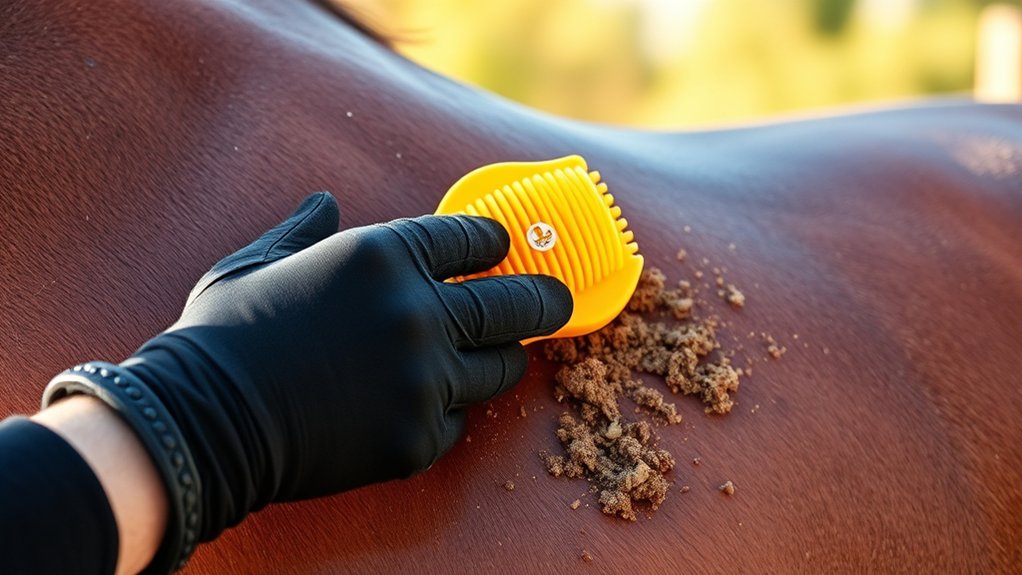
While loosening dirt and mud from your horse’s coat, use a rubber curry comb in small, circular motions to effectively break up debris and shed loose hair. Start with gentle pressure and gradually increase it to dislodge stubborn dirt and dust without causing discomfort.
Focus on large muscle areas like the neck, shoulders, and hindquarters, steering clear of bony or sensitive spots. This technique not only aids mud removal but also stimulates circulation, supporting healthy skin and coat.
Remember to clean the rubber curry comb regularly during grooming to maintain its effectiveness as a grooming tool. Using consistent, light circular motions ensures effective grooming, preparing your horse’s coat for the next steps while keeping your horse comfortable and clean.
Remove Dirt With a Hard Brush, Then Dust With a Soft Brush
Once you’ve loosened dirt and mud with the rubber curry comb, it’s time to remove the debris using a hard-bristled brush, like a dandy brush. This brush excels at dirt removal and loosens embedded particles in the coat.
Follow these brushing techniques for effective grooming: Start at the neck and brush downward to the hindquarters, using firm, short strokes that follow the hair’s direction. Cover all large areas systematically to remove dirt and loose hair thoroughly.
Afterward, switch to a soft brush to dust the coat gently, using sweeping motions. This step smooths the coat and evenly distributes natural oils for a healthy shine.
Using both brushes properly guarantees your horse’s coat stays clean and well-maintained.
Gently Clean the Face and Sensitive Areas With a Sponge
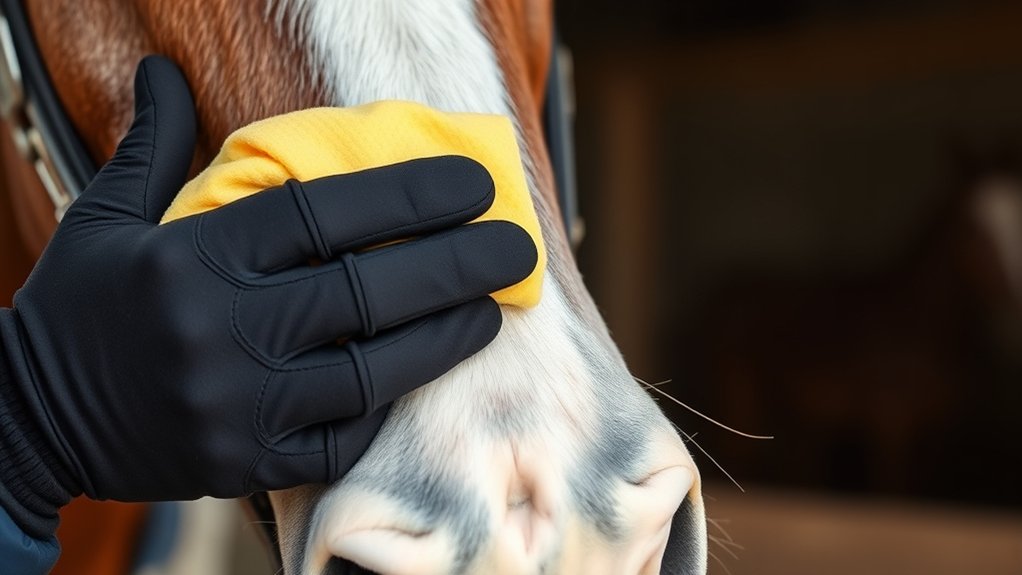
Although the horse’s face and sensitive areas require careful attention, you can clean them effectively using a damp sponge or washcloth. Use gentle cleaning motions to avoid pressure on the delicate skin around the nostrils, ears, and eyes.
Always use a separate sponge for the face and other sensitive areas, like the dock, to prevent spreading germs. Focus on cleaning around these spots without causing discomfort.
| Area | Cleaning Tips |
|---|---|
| Face & Eyes | Use a damp sponge; avoid pressure |
| Nostrils & Ears | Clean gently; avoid soap irritation |
| Dock | Use a separate sponge; prevent infection |
Detangle and Brush the Mane and Tail Safely From the Side
Because horses can move unexpectedly, you should always stand to the side when detangling and brushing their mane and tail. This position keeps you safe while you work gently through knots and tangles.
Always stand to the side when grooming to stay safe while gently working through knots.
Follow these steps for effective grooming:
- Apply a detangler or conditioner to the mane and tail to loosen knots and make brushing easier.
- Use your fingers or a wide-tooth comb to detangle knots gently, starting from the bottom and working upward to avoid hair breakage.
- Brush the mane and tail with a gentle, downward motion, carefully avoiding sensitive areas to prevent pulling or discomfort.
Apply Fly Spray for Protection and Finish Grooming With Coat Shine Products
When you apply fly spray, make sure to hold the bottle about 6 to 12 inches away. Try to cover all the exposed areas evenly but avoid the face.
Then, use a grooming mitt or a soft brush to spread the spray thoroughly. Keep an eye on your horse’s reactions to make sure they’re comfortable.
Once that’s done, finish up by applying a coat shine product—just a little bit will do. Afterward, buff it out with a soft cloth to give your horse a smooth, glossy finish. Easy and effective!
Proper Fly Spray Application
To protect your horse from pesky insects, you’ll want to apply fly spray evenly across its body while avoiding sensitive areas like the face, ears, and eyes. Hold the spray bottle about 6-12 inches from the coat to guarantee a fine mist, preventing over-saturation.
For effective insect protection, follow these steps:
- Spray evenly over the horse’s body, steering clear of eyes and ears for safe application.
- Use a soft brush to distribute the fly spray thoroughly, ensuring full coverage of the coat.
- Reapply as needed during peak insect seasons, especially when your horse is calm and standing still.
This careful approach maximizes protection and keeps your horse comfortable while maintaining a healthy, well-groomed coat.
Using Coat Shine Products
After applying fly spray to protect your horse from insects, you can enhance its appearance by using a coat shine product like ShowSheen.
Spray the grooming product evenly over the horse’s body, taking care to avoid the face.
Use a soft brush or cloth to gently work the coat shine into the hair, ensuring even application.
Pay close attention to your horse’s comfort during this process and adjust your technique if needed.
Once applied, finish with final grooming using a soft brush or mitt to distribute the product thoroughly.
This step not only helps the coat shine but also leaves your horse’s coat looking glossy and polished.
Thoughtful application of coat shine products can truly enhance your horse’s overall appearance and health.
Frequently Asked Questions
How Often Should I Groom My Horse for Optimal Health?
You should groom your horse daily, like brushing away a mountain of dust, to maintain peak equine skin health. Adjust grooming frequency based on seasonal needs. Increase it during wet months and reduce it if the coat thickens.
Use proper grooming posture and horse grooming techniques to guarantee safety and effectiveness. Tailor grooming product selection and horse temperament management to keep routines smooth.
Consistent horse coat maintenance and grooming safety measures protect your horse’s well-being.
What Are the Best Grooming Tools for Different Horse Coat Types?
You’ll want a stiff-bristled dandy brush for heavy dirt removal on thick horse coats and a soft-bristled brush for sensitive areas. Use rubber curry combs to loosen dirt and boost skin health on short coats.
Shedding blades help with coat shedding, while wide-tooth combs are perfect for mane care and tail brushing. Don’t forget hoof cleaning tools.
Maintain your grooming tools regularly to guarantee effective grooming techniques and overall horse coat care.
Can Grooming Help Detect Early Signs of Illness or Injury?
Think of grooming as your horse’s early warning system. By sticking to a consistent grooming schedule, you enhance horse hygiene and perform a thorough health inspection every time.
Checking coat condition and skin health helps with parasite detection and injury prevention. Paying close attention to hoof care and behavioral cues during your grooming routine lets you spot issues early.
This keeps your horse comfortable and healthy before problems escalate.
How Do I Calm a Nervous Horse During Grooming?
To calm a nervous horse during grooming, observe its body language closely to spot nervous habits. Use gentle handling strategies and calming techniques like soft voices and slow, consistent strokes to ease grooming anxiety.
Build trust gradually by letting the horse sniff tools and rewarding calm behavior. Employ relaxation methods such as short sessions and breaks to reduce stress.
Consistent behavior modification focused on patience will help improve the horse’s temperament and overall cooperation.
What Are Common Grooming Mistakes to Avoid?
You’ll want to avoid skipping your horse’s grooming schedule and neglecting regular cleaning techniques, as it risks poor hygiene practices and infections.
Don’t use dirty grooming products or harsh strokes on sensitive areas; grooming safety is vital.
Overlooking small cuts or skin irritations during your grooming routine can cause bigger issues.
Maintain consistent grooming habits, focus on horse hair health, and use grooming essentials properly to keep your horse comfortable and healthy.
Conclusion
Grooming your horse is like painting a masterpiece. Each stroke builds trust and care. By following these seven steps, you’re not just cleaning; you’re strengthening your bond and ensuring your horse feels loved and comfortable.
Take your time, be gentle, and enjoy the rhythm of this calming ritual. With patience and attention to detail, you’ll keep your horse healthy, happy, and shining like the star they truly are.