What Kind of Digestive System Does a Horse Have?
You have a non-ruminant, hindgut fermenter digestive system designed to extract energy primarily through microbial fermentation in your large intestine, including the cecum and colon. Your small stomach and long small intestine digest most soluble nutrients quickly, but fiber fermentation occurs slowly in the hindgut.
This unique setup means your digestive health depends on stable microbial populations and proper feeding management. Understanding this system helps you optimize your horse’s nutrition and prevent common issues like ulcers and colic.
The Type of Digestive System in Horses
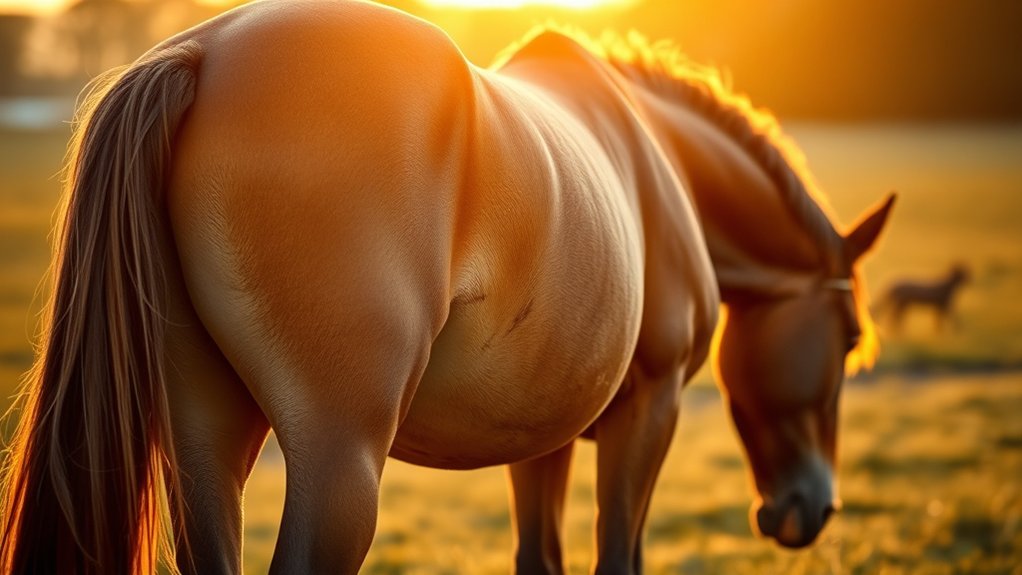
Although horses lack a multi-chambered stomach like ruminants, they possess a specialized non-ruminant, hindgut fermenter digestive system. You’ll find their small stomach limits intake to 2-4 gallons, optimized for continuous, small meals.
Horses have a small stomach designed for continuous, small meals despite lacking a multi-chambered ruminant stomach.
The primary site for fiber digestion is the hindgut, composed mainly of the cecum and colon within the large intestine. Here, a dense microbial population facilitates fermentation, breaking down fibrous plant material that the foregut can’t digest efficiently.
This fermentation process produces volatile fatty acids, which serve as an essential energy source for the horse.
As a hindgut fermenter, the horse relies heavily on this large intestine fermentation, enabling efficient fiber utilization despite the absence of a multi-chambered stomach typical in ruminants.
Understanding this system highlights how horses digest fibrous diets uniquely.
How the Horse’s Foregut Processes Food
When food enters the horse’s foregut, it undergoes critical initial processing in the mouth, esophagus, stomach, and small intestine. You’ll notice the following key steps in this digestive process:
In the mouth, chewing breaks down food into a bolus, while saliva production helps buffer acid and prepares the bolus for swallowing. The esophagus then uses peristaltic waves to transport the bolus to the stomach, preventing regurgitation.
Within the stomach’s glandular region, gastric acid and enzymes start protein digestion. The small stomach has limited capacity, so it needs to process food efficiently.
Finally, the small intestine, which is part of the foregut, continues enzymatic digestion and nutrient absorption. It handles carbohydrates, proteins, and fats before the digesta moves to the hindgut.
The Small Intestine’s Role in Horse Digestion
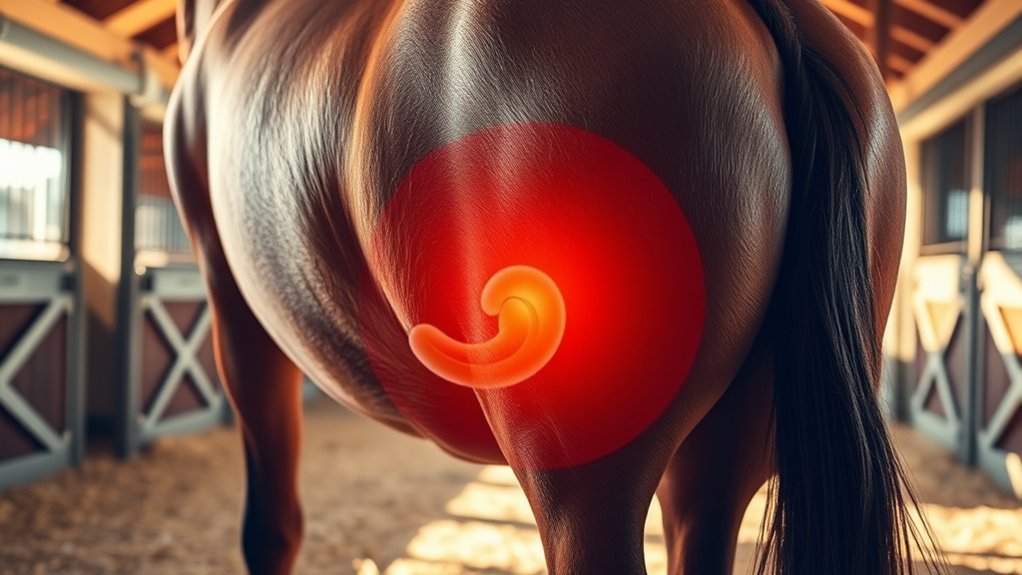
Following the stomach’s initial breakdown of food, the small intestine takes over to complete the digestion and absorption of key nutrients. This approximately 70-foot-long organ is divided into the duodenum, jejunum, and ileum.
It’s where enzyme activity from the pancreas and intestinal lining breaks down soluble carbohydrates, proteins, and fats.
About 90% of soluble carbohydrates and 50-70% of these nutrients are absorbed here, meeting the horse’s nutrient requirements efficiently.
Bile from the liver emulsifies fats, which helps enhance their digestion and absorption.
Transit time in the small intestine averages 3 to 4 hours but varies with meal size and composition.
Understanding this process is critical for optimizing feeding strategies. This ensures the horse receives adequate energy and nutrients through effective digestion and absorption in the small intestine.
How the Hindgut Ferments Fiber for Energy
You depend on the horse’s hindgut—mainly the cecum and large colon—to house microbes that break down fibrous plant materials. These tiny organisms work by converting cellulose and hemicellulose into volatile fatty acids.
And those fatty acids? They’re what give the horse essential energy.
Microbial Fiber Breakdown
Although the horse’s stomach and small intestine handle initial digestion, the real breakdown of fibrous plant material happens in the hindgut. Here, a diverse microbial community ferments fiber into usable energy.
This microbial fermentation takes place primarily in the cecum and large colon, which are vital sites for fiber digestion.
You need to understand these key aspects of microbial fiber breakdown:
- The microbial community in the hindgut breaks down complex fibers from a forage-based diet into simpler compounds.
- Maintaining a stable pH balance (6.4 to 6.7) in the hindgut is essential for ideal microbial activity and efficient fiber digestion.
- Microbes produce volatile fatty acids, which serve as the main energy source, supporting the horse’s metabolism and overall health.
This process highlights the essential role of the hindgut in equine nutrition.
Volatile Fatty Acid Production
Microbial fermentation in the hindgut breaks down complex fibers into simpler compounds, but the real energy gain comes from the volatile fatty acids (VFAs) these microbes produce.
Through microbial activity in the cecum and colon, undigested plant fibers undergo microbial breakdown, resulting in volatile fatty acids production, primarily acetate, propionate, and butyrate.
These VFAs are absorbed through the hindgut wall, supplying approximately 70-75% of a horse’s daily energy needs.
Maintaining an ideal pH balance between 6.4 and 6.7 is critical to support efficient hindgut fermentation and fiber digestion.
Disruption of this pH balance, often caused by excessive starch or sugar intake, impairs microbial activity, leading to overproduction of volatile fatty acids and potential digestive disturbances.
Understanding this process is essential for managing equine nutrition and hindgut health.
What the Cecum and Large Colon Do
How do the cecum and large colon contribute to a horse’s digestion? The cecum acts as a fermentation vat, where microbial populations break down fibrous fiber into volatile fatty acids (VFAs), essential energy sources. The large colon continues this fermentation, absorbs water, and synthesizes microbial proteins and B-vitamins, supporting gut health.
Here’s what they do specifically:
- The cecum holds 7-10 gallons of digesta, retaining it about seven hours to maximize fiber fermentation.
- The large colon, with roughly 90 gallons capacity, retains digesta 48-65 hours, enabling extensive microbial fermentation.
- Both structures extract crucial nutrients from fibrous forage and maintain microbial balance critical for digestive efficiency.
Together, the cecum and large colon are indispensable for nutrient extraction and overall equine gut health.
How Digestion Time Affects Nutrient Absorption
You need to understand that how long digestion takes directly affects how well a horse absorbs nutrients. This is especially true because fiber fermentation in the hindgut can take up to 48 hours.
Basically, the speed at which food moves through the digestive system determines whether nutrients get fully extracted or just pass through too quickly. And that can really impact how much energy the horse gets.
Digestion Duration Impact
Why does digestion duration matter for nutrient absorption in horses? Digestion duration directly influences how efficiently your horse extracts nutrients from feed.
A consistent forage-based diet promotes an ideal digestion duration, ensuring thorough fiber fermentation in the hindgut. Consider these factors:
- Small meals reduce transit time, allowing more complete nutrient absorption in the small intestine and hindgut.
- Large meals extend digestion duration, potentially overwhelming the system and impairing nutrient uptake.
- Inadequate digestion duration, especially with rapid concentrate digestion, risks reduced fiber fermentation and nutrient loss.
Fiber Fermentation Timing
The timing of fiber fermentation considerably impacts nutrient absorption in horses, as the digestion process unfolds over 36 to 72 hours depending on feed type and size.
As hindgut fermenters, horses rely heavily on fiber fermentation occurring in the cecum and colon, where microbial populations break down fibrous material over approximately 48 hours.
This fermentation timing allows for efficient production and absorption of volatile fatty acids (VFAs), essential energy sources.
If fiber fermentation is too rapid or delayed, it disrupts the gut pH balance, impairing microbial function and nutrient extraction.
Maintaining ideal fermentation timing within the hindgut ensures thorough fiber degradation and stable gut pH, which supports digestive health and prevents disorders.
Understanding this precise timing helps you manage equine diets to maximize nutrient uptake throughout the digestive process.
Passage Rate Effects
Although digestion times vary, the passage rate of feed through a horse’s digestive tract directly influences nutrient absorption efficiency. A slower passage time in the hindgut promotes microbial fermentation, enhancing fiber digestion and volatile fatty acid production, which is critical for energy.
Conversely, a rapid passage rate, especially with high starch and sugar intake, reduces nutrient absorption in the foregut and heightens the risk of digestive disturbances. To optimize digestion, consider these factors:
- Larger, frequent meals increase passage time, supporting thorough hindgut fermentation.
- Processed grains accelerate foregut passage, limiting starch and sugar breakdown.
- Rapid passage disrupts microbial fermentation, decreasing fiber digestion and nutrient uptake.
Understanding these dynamics helps you manage feed strategies to maintain digestive health and maximize nutrient absorption.
Digestive Problems Caused by Horse Anatomy
Because horses have a uniquely structured digestive system, they face specific challenges that can lead to serious health issues. Their small stomach holds only 2-4 gallons, making them prone to gastric ulcers from irregular feeding and excessive gastric acid.
The large intestine, where hindgut fermentation occurs, is vulnerable to impactions, particularly at the pelvic flexure. Rapid fermentation can disrupt microbial balance, causing colic and digestive upset. Furthermore, the cecum’s loose attachment increases the risk of twisting, which makes colic more likely.
| Problem | Cause | Emotional Impact |
|---|---|---|
| Gastric Ulcers | Small stomach, gastric acid | Anxiety over pain |
| Colic | Cecum twisting, impactions | Fear for horse’s life |
| Impactions | Pelvic flexure narrowing | Frustration in care |
| Fermentation | Rapid starch breakdown | Concern for balance |
| Large Intestine | Hindgut fermentation issues | Urgency to manage diet |
How Diet Affects the Horse’s Digestive System
You should make long-stemmed forage the main part of your horse’s diet because it helps keep the microbes in their gut happy and working well. It’s really important to cut back on high-starch feeds since they can cause quick fermentation, which might lead to problems like colic.
When you need to change what your horse eats, try to do it slowly over about 7 to 10 days. This way, the microbes in their digestive system can adjust smoothly, and you’ll avoid any upset stomachs.
Forage Importance
When you provide a horse with at least 50% high-fiber forage, you support its hindgut fermentation process essential for digestion. The cecum and colon rely on continuous grazing of dietary fiber to maintain microbial balance critical for fiber digestion.
Without adequate forage, the fermentation process slows, disrupting gut microbiota and increasing health risks.
To optimize the digestive system, focus on:
- Ensuring continuous grazing of long-stemmed forage to sustain microbial populations in the hindgut.
- Providing consistent access to dietary fiber, promoting saliva production and preventing gastric ulcers.
- Avoiding sudden reductions in forage intake to preserve stable fermentation and prevent colic or dysbiosis.
Proper forage management is crucial for maintaining efficient fiber digestion and overall equine digestive health.
Starch Intake Limits
How much starch can a horse safely digest in a single meal? The small intestine effectively processes starch up to about 2 grams per kilogram of body weight per feeding.
Exceeding this limit causes undigested starch to pass into the hindgut, where microbial fermentation occurs. This overload triggers excessive fermentation, leading to digestive upset and compromised digestive health.
Traditional high-starch feeds contain 50-65% starch, but controlled starch diets reduce this to 15-25%, minimizing risks.
Managing starch intake is vital to avoid metabolic disturbances like insulin spikes and to protect the gut from colic and laminitis linked to fermentation overload. Monitoring feed intake and starch content supports ideal gut function and overall digestive system balance in horses.
Gradual Diet Changes
Controlling starch intake sets the foundation for maintaining a balanced digestive environment, but changing the diet requires careful management to protect the horse’s gut health. A gradual diet shift over 7-10 days lets the gut microbiome adapt, preserving microbial balance and stable pH levels in the hindgut.
Sudden changes can disrupt fermentation and trigger colic or laminitis.
To guarantee a smooth diet transition:
- Introduce new forage or feed incrementally, increasing no more than 10% daily.
- Monitor the horse for signs of digestive upset, such as diarrhea or colic.
- Maintain consistent feeding routines to support stable hindgut fermentation.
Following these steps helps preserve the horse’s microbial balance and prevents digestive disturbances during dietary adjustments.
Best Practices to Support Your Horse’s Gut Health
Because your horse’s digestive system relies heavily on a stable microbial environment, you’ll need to provide continuous access to high-quality forage for at least 16 hours daily. This supports the hindgut microbial population essential for efficient fiber digestion.
Manage feed intake by offering small, frequent meals to prevent gastric ulcers and colic. Introduce any dietary changes gradually over 7-10 days to maintain microbial balance and avoid gut upset.
Make certain your horse drinks 8-12 gallons of water daily, as hydration is crucial for digestion and maintaining fecal consistency.
Regular dental care is also important; it improves mastication, which enhances digestion and prevents disruptions in gut health.
Using Digestive Supplements: When and Why
While maintaining a balanced diet and proper management is essential, you may find that digestive supplements play a critical role in supporting your horse’s gastrointestinal health under specific conditions. These supplements target different aspects of the digestive system to optimize gut health management within your equine diet.
Consider these key uses:
Gastric acid buffers help neutralize stomach acid, providing ulcer prevention during stress or intense exercise.
Psyllium supplements clear sand from the hindgut, reducing the risk of sand colic in horses grazing on sandy soils.
Equine GI sponges manage diarrhea caused by gut imbalances or infections, firming stools for better digestive stability.
Always consult a veterinarian before introducing any digestive supplements to ensure they suit your horse’s specific gastrointestinal health needs.
Frequently Asked Questions
How Does Stress Impact a Horse’s Digestive Health?
Stress symptoms in your horse trigger cortisol effects that suppress appetite and disrupt gut motility, increasing gastric ulcer risk.
Hormonal influence from elevated cortisol weakens the immune response, making infections and inflammation more likely.
You’ll notice behavioral changes linked to discomfort or pain.
Stress also causes metabolic impact, altering nutrient absorption and energy balance.
Managing stress is essential to maintain your horse’s digestive health and prevent serious complications.
Can Horses Digest Grains as Effectively as Forage?
You can’t rely on horses to digest grains as effectively as forage. Their digestive enzymes and gut motility favor fiber breakdown through a fermentation process in the hindgut. This optimizes forage efficiency and digestible energy extraction.
Grain digestion happens mainly in the small intestine. But limited stomach acidity and rapid nutrient absorption can disrupt this.
That reduces nutrient uptake and raises the risk of digestive upset.
What Signs Indicate a Horse Has Digestive Discomfort?
About 10% of horses experience colic annually, signaling digestive distress. You’ll notice colic symptoms like pawing or rolling, indicating issues in the horse’s stomach or intestinal health.
Poor nutrient absorption, decreased feed digestion, or reluctance to eat suggest disrupted digestive enzymes or a gut microbiome imbalance. Watch for gastric ulcers causing discomfort and changes in manure consistency.
Acting quickly ensures the digestion process stays ideal and prevents serious complications.
How Does Water Intake Influence Horse Digestion?
Your horse’s water intake directly affects hydration levels, water absorption, and digestive fluid balance, all essential for ideal gut function. Frequent intake helps maintain electrolyte balance and supports thirst regulation, which prevents dehydration symptoms like impaction colic.
Poor water quality or irregular feeding schedules can disrupt these processes, impairing fermentation and motility.
Are There Breed Differences in Horse Digestive Efficiency?
You’ll find breed variations affect digestive capacity subtly, influenced by metabolic differences and genetic factors. Stomach size remains fairly consistent, but enzyme activity and gut microbiota can vary, impacting fiber digestion efficiency.
Some breeds show differing lactose tolerance levels, affecting nutrient absorption. While these factors influence digestion, diet and health management play bigger roles.
Conclusion
You might think a horse’s digestive system, with its complex foregut and hindgut fermentation, is simple like other herbivores, but it’s far more specialized. While the foregut rapidly processes nutrients, the hindgut slowly ferments fiber, a delicate balance that’s easily disrupted.
Understanding this intricate system helps you manage diet and health smarter. By supporting both sections properly, you guarantee your horse thrives, avoiding common digestive issues caused by mismatched feed or care.