Horse Riding Workout: A Simple Guide
To excel in horse riding, focus on building your core, back, hips, and glutes for strength and stability. This keeps you balanced and centered in the saddle. Include targeted exercises like planks, squats, and shoulder workouts to enhance rein control, leg positioning, and posture.
Don’t forget stretching to boost flexibility and prevent injuries. Pair consistent strength and flexibility training with proper warm-ups and safety tips to elevate your riding skills. Keep going, and you’ll discover how to refine your performance even further.
Why Strength and Stability Matter for Horse Riders
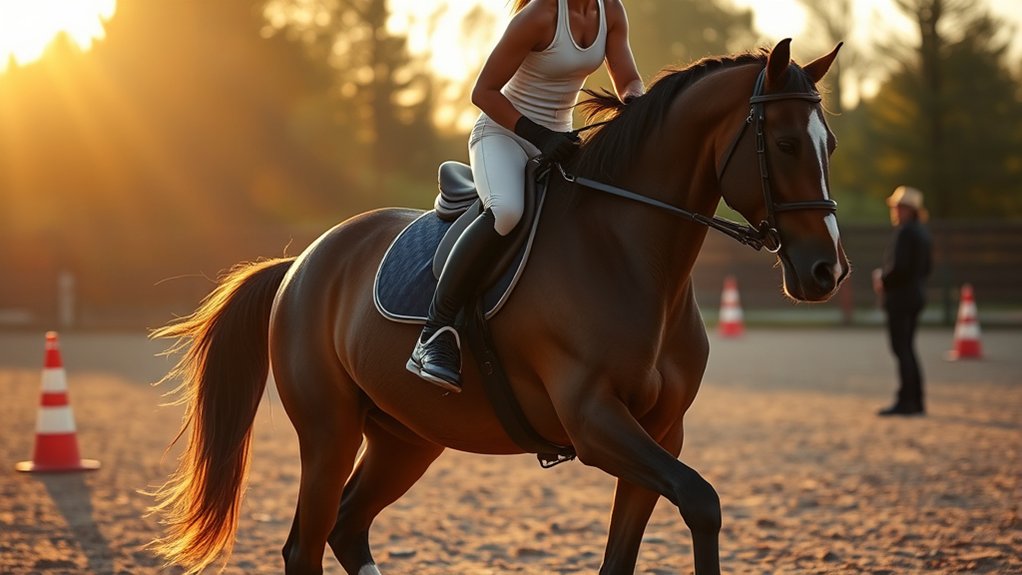
Because your core, back, hips, and glutes form the foundation of your riding, strengthening these muscles directly boosts your stability and control in the saddle. Developing core strength enhances your balance, allowing you to stay centered even during sudden movements.
Strengthen your core, back, hips, and glutes to boost stability and stay balanced during every ride.
Strong back muscles support proper posture, which reduces fatigue and prevents common riding errors. Improving muscle endurance means you maintain this stability longer, leading to consistent, precise cues that your horse can trust.
When your stabilizing muscles work efficiently, they protect your joints from strain, lowering injury risk during dynamic riding maneuvers. Emphasizing strength and stability isn’t just about power, it’s about creating a solid, balanced connection with your horse that enhances every ride.
Focus here, and you’ll ride with confidence and control every time.
Core Exercises for Horse Riding Balance and Posture
Building on the strength and stability of your core, focusing on specific exercises will sharpen your balance and posture in the saddle. Target your transverse abdominis to create a supportive “corset” around your spine, enhancing core stability essential for smooth riding.
Incorporate planks and dead bugs into your routine; these riding exercises boost proprioception, improving your control and ability to stay centered.
Strengthen your oblique muscles to prevent lateral collapse, maintaining a straight, balanced posture.
Engaging your abdominal muscles during these exercises trains you to absorb shocks and maintain proper alignment, reducing back pain risks.
Upper Body Workouts for Stronger Rein Control

To gain stronger rein control, you must develop the muscles in your upper body, particularly your shoulders, arms, and upper back. Strengthening your shoulder muscles, including the deltoids and rotator cuff, directly enhances rein control and stability.
Focus on scapular retraction exercises to improve shoulder blade stability, which allows for clearer communication with your horse. Building arm strength through targeted moves like bicep curls and push-ups helps you maintain consistent rein tension.
Developing your upper back muscles, such as the latissimus dorsi and rhomboids, supports excellent posture and reduces fatigue during rides. By improving flexibility and endurance in these areas, you’ll deliver precise, sustained rein cues, elevating your overall riding finesse and control.
Commit to these workouts to transform your connection with your horse.
Lower Body Exercises to Improve Riding Stability and Cueing
To improve your riding stability and cueing, it really helps to focus on strengthening your hips, thighs, and calves with some targeted exercises.
Building up powerful hip adductors, abductors, and inner thigh muscles will make it easier for you to keep a precise leg position and better control while riding.
And don’t forget about your calves! Having strong, flexible lower legs is key for effective heel positioning and clear communication with your horse.
Hip And Thigh Strength
Although riding may seem effortless when done well, your hip and thigh muscles play an essential role in maintaining stability and delivering clear cues.
Developing hip strength, especially in the hip abductors, directly enhances your leg stability. This allows you to maintain a secure seat and precise leg positioning.
Targeted leg exercises like sumo squats and side-lying leg lifts focus on the inner and outer thighs. They help correct imbalances that can compromise your cueing effectiveness.
Strengthening these thigh muscles improves your ability to stay centered and reduces fatigue during long rides.
By consistently working on hip and thigh strength, you’ll achieve smoother, more controlled movements and communicate more confidently with your horse.
This elevates both your performance and riding experience.
Calf And Lower Leg
When you strengthen your calf muscles, you directly improve your heels-down position. This is essential for maintaining balance and delivering precise leg cues while riding.
Strong calves boost your leg strength and lower leg endurance, helping you stay effective throughout long rides.
Neglecting these muscles risks poor heel positioning and unstable cues.
To optimize your calf and lower leg performance, focus on these key exercises and stretches:
- Calf raises to build muscle strength and endurance.
- Toe taps for dynamic lower leg activation.
- Regular calf stretches to improve flexibility and prevent stiffness.
- Balance drills that challenge your heel positioning under movement.
Incorporating these into your routine will sharpen your stability and cue precision, transforming your riding experience.
Simple Stretching Routines to Prevent Riding Injuries
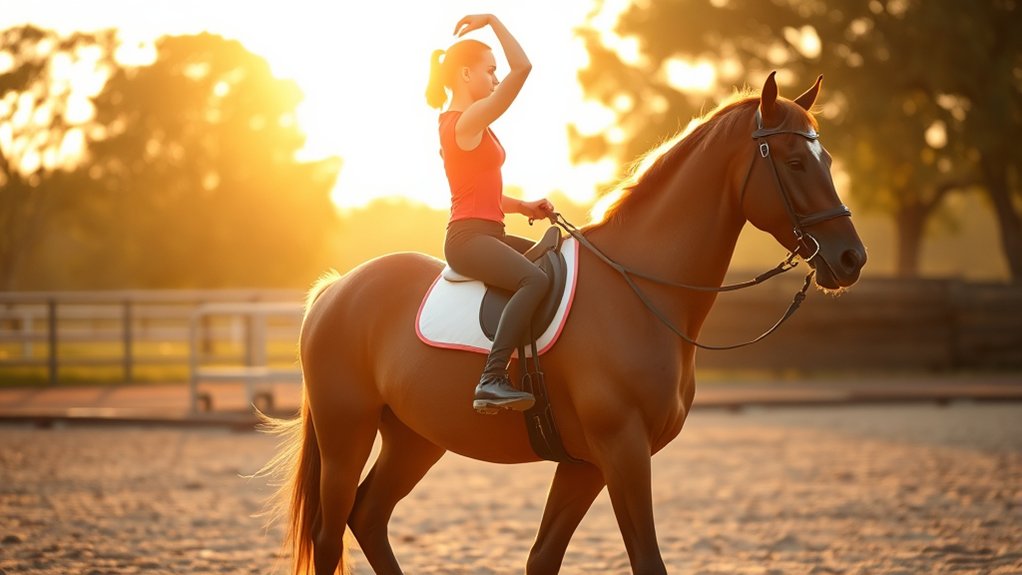
Since riding puts unique demands on your muscles and joints, incorporating simple stretching routines before and after your sessions is essential to prevent injuries. Focus on gentle stretches for your calves, hamstrings, and hip flexors to maintain muscle elasticity and reduce stiffness.
Incorporate gentle stretches for calves, hamstrings, and hip flexors before and after riding to prevent injuries.
Address lower back tension with core stretches like the seated spinal twist and child’s pose. Don’t neglect upper body flexibility. Perform cross-body arm pulls and tricep stretches to improve rein control.
Include stretches for your inner thighs and groin to avoid tightness that affects leg positioning.
Consistent warm-up and cool-down stretches enhance your overall injury prevention strategy, minimizing muscle strains and joint issues.
Commit to these routines regularly, and you’ll boost your riding performance while safeguarding your body.
How to Combine Workouts for Balanced Equestrian Fitness
To achieve balanced equestrian fitness, you’ll want to combine core and lower body exercises that focus on stability and leg strength. These are key for staying secure in the saddle.
At the same time, it’s important to include upper body movements that help improve your rein control and posture.
And don’t forget about flexibility routines—they’re great for keeping your muscles limber.
Pair those with some cardio to boost your endurance and lower the risk of injury.
When you put all these elements together, you’ll build the strength and mobility that are essential for riding at your best.
Core And Lower Body
Although many riders focus on either core or lower body training separately, combining these workouts delivers the stability, balance, and strength you need for superior horse riding performance. Engaging your core muscles alongside your lower body enhances posture and stability, which are essential for effective riding cues and control.
To maximize results, follow these steps:
- Perform planks and bridges to strengthen core muscles and glutes, improving overall balance.
- Incorporate squats and lunges to target leg muscles, hips, and endurance.
- Balance training sessions to reduce injury risks caused by muscular imbalances.
- Create a routine integrating core and lower body exercises for consistent progress.
Upper Body Integration
Building on the strength and stability you’ve developed in your core and lower body, integrating upper body workouts will elevate your riding performance to the next level.
Incorporate upper body exercises like shoulder presses and scapular push-ups to boost shoulder strength and endurance. These are essential for maintaining your riding position during long sessions.
These exercises, combined with core engagement, enhance your posture and balance. They prevent overreliance on your arms and promote precise aids.
Coordinated muscle activation between your upper body and core ensures effective communication with your horse, improving overall stability.
Flexibility And Injury Prevention
When you pair strength training with targeted flexibility work, you create a balanced foundation that protects your body from injury and enhances your riding performance. Prioritize stretching routines that maintain muscle elasticity and improve your range of motion. These are essential for injury prevention.
Focus on these four key strategies:
- Combine dynamic warm-ups with static stretching post-workout to prepare muscles and aid recovery.
- Target calves, hamstrings, hips, and back to support proper riding posture and mobility.
- Balance strength exercises with flexibility training to prevent muscle imbalances that increase injury risk.
- Consistently stretch to reduce overuse injuries, ensuring smoother, safer movements in the saddle.
Tips for Exercising Safely During and Before Riding
Before you mount your horse, you need to prepare your body and gear meticulously to guarantee safety and maximize performance. Start with a thorough warm-up that includes dynamic stretching to activate muscles and reduce injury risk.
Incorporate pre-riding exercises focused on building core strength, as a strong core is essential for maintaining posture and balance while riding.
Pay attention to your clothing and footwear. Wear fitted, supportive gear to prevent discomfort and enhance stability.
Hydrate well and pace yourself to avoid fatigue, especially in hot conditions.
Always inspect your equipment and tack for proper fit and safety before each ride.
Beginner-Friendly Exercises to Build Horse Riding Fitness
Preparing your body with targeted exercises will elevate your horse riding fitness and confidence. Focusing on essential movements builds the core strength, balance, and flexibility vital for horseback riding.
Targeted exercises boost your core strength, balance, and flexibility, enhancing horse riding fitness and confidence.
Start with these beginner-friendly exercises:
- Incorporate core exercises like planks and dead bugs to enhance posture and stability on the saddle.
- Perform squats and lunges to strengthen your legs, improving balance and cueing precision.
- Add push-ups and rows to develop upper body strength, supporting rein control and endurance.
- Stretch hamstrings and calves regularly to maintain flexibility and prevent tightness that can disrupt riding form.
Advanced Moves to Enhance Riding Endurance and Strength
As you advance your horse riding fitness, incorporating targeted exercises like single-leg Romanian deadlifts and overhead presses will activate stabilizer muscles essential for endurance and control. Combine core stability drills such as oblique V-ups with plyometric exercises to boost riding endurance and explosive power.
Dynamic moves like burpees enhance cardiovascular fitness, supporting longer rides without fatigue. Progressively increase intensity to build resilience.
| Exercise | Focus Area | Benefit |
|---|---|---|
| Single-leg Romanian Deadlifts | Stabilizer muscles | Balance and strength |
| Overhead Presses | Upper body strength | Shoulder endurance |
| Core Stability Drills | Core control | Fatigue prevention |
| Plyometric Exercises | Explosive power | Jumping and quick turns |
| Burpees | Cardiovascular | Riding endurance improvement |
These advanced moves sharpen your control and stamina for sustained performance.
Maintaining Consistency: Staying Fit for the Riding Season
Even if your schedule gets hectic, maintaining a consistent fitness routine is essential to stay ready for the riding season. Consistency guarantees your muscles stay prepared, reducing injury risk and enhancing endurance.
Maintaining consistent fitness keeps muscles ready, lowers injury risk, and boosts endurance for the riding season.
Focus on a balanced workout routine targeting core strength, legs, and back to support your riding posture. To maintain progress, follow these steps:
- Schedule regular strength and flexibility exercises to build injury prevention.
- Incorporate cardio and stability workouts to boost overall fitness and avoid burnout.
- Track your training progression in a riding journal to stay motivated and identify weaknesses.
- Start early and increase intensity gradually, allowing your body to adapt for peak performance.
Stay disciplined, and your fitness will directly translate into better control and stamina on horseback.
Frequently Asked Questions
What Type of Horse Is Best for Beginner Riders?
For beginner riders, selecting a calm horse breed suitability is key. Breeds like Quarter Horses or Morgans offer beginner horse temperament that’s steady and forgiving.
You’ll want to take into account horse size considerations. A medium-sized horse often suits your comfort and control.
Focus on riding horse training to guarantee responsiveness. Also, select horse age wisely. Middle-aged horses tend to be more experienced.
Don’t forget horse grooming basics. It builds trust and confidence as you bond with your new partner.
How Often Should I Clean and Maintain My Riding Gear?
Think of your riding gear as a trusted steed. It needs daily care to perform well. You should follow a cleaning schedule: wipe down tack after every ride, deep clean weekly using proper cleaning products, and inspect for wear regularly.
Employ gear maintenance tips like oiling leather and checking stitching. Use smart storage solutions to avoid damage. Practice hygiene habits to keep things fresh, and apply repair techniques promptly to extend your gear’s life.
What Are the Best Helmets for Horse Riding Safety?
The best helmets for horse riding safety prioritize helmet fit, ensuring a snug but comfortable feel. Look for models meeting strict safety standards like ASTM/SEI certification.
Material durability is essential. Choose impact-resistant shells with sturdy liners.
Ventilation features keep you cool during rides, while adjustable straps guarantee secure wear.
Helmets with visibility enhancements, like reflective patches or bright colors, boost your safety. Invest in these elements to protect yourself confidently every ride.
How Do I Choose the Right Saddle for Comfort and Support?
Oh, sure, just grab any saddle and expect perfect comfort! In reality, saddle fitting is essential. Make sure it matches your horse’s back and your riding style.
Look for cushioning options that absorb shock, prioritize material durability for longevity, and explore adjustability features to fine-tune fit.
Don’t forget price considerations; quality often pays off. If you want true comfort and support, consider customization possibilities—they’re worth every penny.
You’ve got this!
Can Horse Riding Help With Mental Health and Stress Relief?
Yes, horse riding can considerably boost your mental health and stress relief. It naturally incorporates mindfulness exercises and relaxation strategies, helping you stay present and calm.
Engaging with horses enhances your emotional well-being and supports anxiety management by reducing cortisol levels. This active connection promotes mental clarity and serves as an effective stress reduction technique.
Conclusion
By building your strength and stability, you’ll ride with the confidence of a seasoned equestrian mastering every stride. Remember, consistency is your trusty saddle. Without it, progress slips away.
Focus on core, upper, and lower body workouts, and don’t neglect stretching to keep injuries at bay. Whether you’re a beginner or pushing for advanced endurance, commit to these exercises. Watch your riding transform into a powerful, graceful dance between you and your horse.