How Fast Does a Racing Horse Run?
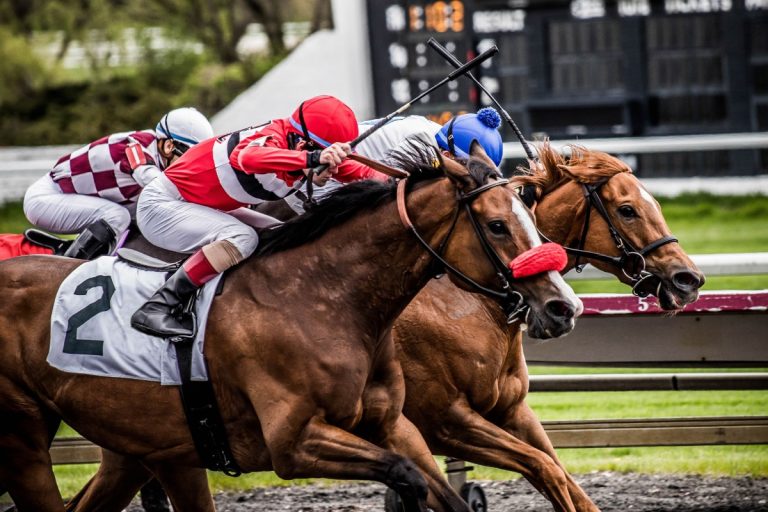
You can expect a racing horse to reach speeds between 38 and 55 mph, depending on breed and gait. Quarter Horses sprint up to 55 mph over short distances, while Thoroughbreds excel at sustained speeds of 38 to 44 mph.
Horses reach top speed within seconds but can only maintain it briefly due to fatigue and oxygen limits. Their speed also depends on their gait, anatomy, and training. Keep exploring to understand how these factors precisely influence race performance.
Typical Speeds of Racing Horses
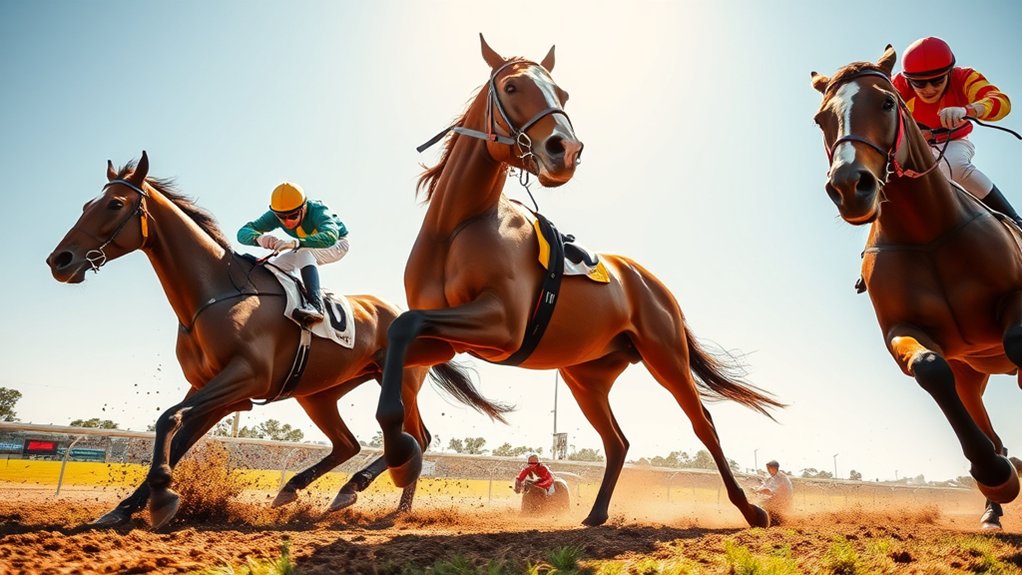
Although different breeds vary, racing horses typically reach impressive speeds during competitions. You’ll notice Thoroughbreds race at speeds between 38 and 44 mph, excelling over middle to long race distances.
Quarter Horses stand out for their sprinting ability, hitting top speeds up to 55 mph in short bursts. Standardbreds average around 30 mph, but some have achieved record speeds exceeding 46 mph.
The fastest recorded race speed, about 43 mph, was set by Winning Brew. During a gallop, horses accelerate rapidly, reaching their top speeds within seconds.
Understanding these race speeds helps you appreciate how breed characteristics influence performance, especially as different horses optimize speed based on race distances.
This data underlines the remarkable athleticism of racing horses across various disciplines.
How Horse Gaits Affect Racing Speed
You’ll notice that a horse’s gait directly influences its speed and endurance during a race. Each gait—walk, trot, canter, and gallop—has its own unique biomechanical pattern.
These patterns determine not just how fast the horse can move, but also how long it can keep up that speed.
So, when you understand these different gait types, it becomes clearer why some horses do better in certain racing disciplines than others.
It’s pretty interesting how much the way a horse moves can affect its performance on the track!
Gait Types Explained
When you study how horses move, understanding their four primary gaits, walk, trot, canter, and gallop, is essential because each gait affects their speed and efficiency differently. The gallop, characterized by its extended stride length and rapid stride frequency, enables racehorses to reach peak speeds.
The trot and canter serve as intermediary gaits, balancing energy use and speed. Pacing, used notably by Standardbreds, offers an alternative gait with synchronized lateral leg movement, often surpassing the trot in speed.
Key aspects to consider:
- Stride length and frequency vary markedly across gaits, influencing maximum attainable speed.
- Efficient gait transitions, especially entering the gallop, are critical for maintaining momentum.
- Pacing provides a unique speed advantage by optimizing lateral leg coordination.
Understanding these gaits helps you grasp how horses achieve ideal racing performance.
Speed Variations By Gait
Each horse gait produces distinct speed ranges that considerably impact racing outcomes. When you analyze gait, you notice the trot averages about 8 mph, while the canter ranges between 10 to 17 mph, offering moderate speed with efficient energy use.
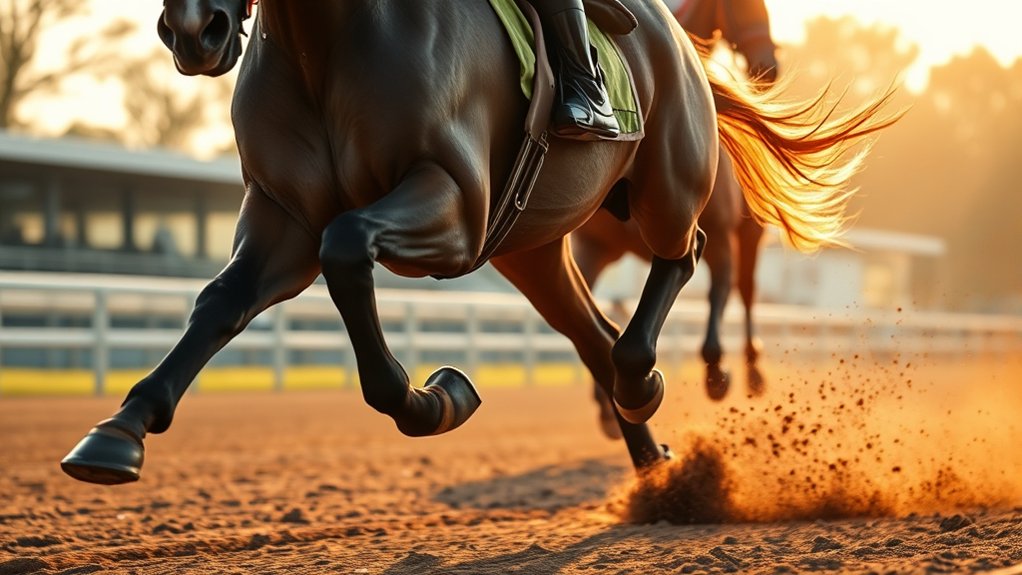
The gallop, however, delivers the maximum speed, with racehorses reaching over 40 mph briefly by maximizing stride length and frequency. This gait’s extended stride length enables rapid ground coverage, critical for sprinting phases in races.
Shifting from trot to canter and finally gallop involves substantial acceleration changes, optimizing speed for short bursts. Understanding how each gait influences speed lets you appreciate the biomechanical efficiency each racehorse employs to maximize performance on the track.
Gait Impact On Endurance
How does a horse’s gait influence its endurance during a race? The gait determines the balance between speed and energy conservation, directly impacting how long a horse can maintain performance.
The gallop offers maximum speed with a long stride length but quickly depletes endurance. It’s suitable only for short bursts.
The trot has a shorter stride and moderate speed, preserving energy and making it ideal for extended distances.
The canter bridges the gap by providing a moderate stride length and speed, optimizing both speed and endurance.
Gallop delivers 25-30 mph speed but is unsustainable for long distances due to rapid energy use.
Trot maintains 8-12 mph, conserving energy for endurance across lengthy races.
Canter balances 10-17 mph speed with efficient stride length, enhancing stamina during progressions.
Key Biological Factors in Horse Speed
Although many factors influence a racing horse’s speed, its muscular power, respiratory efficiency, and skeletal structure play the most critical roles. You’ll find that a horse’s muscular power directly drives propulsion.
Respiratory efficiency, supported by larger lungs and a strong heart, ensures sufficient oxygen delivery during intense exertion.
The horse’s gait and stride length depend largely on leg length and musculature, which dictate how far and how frequently each step covers ground. Breed-specific anatomy, such as the longer legs of Thoroughbreds, enhances these mechanics, allowing greater velocity.
Furthermore, tendons and ligaments around the lower legs provide essential support for rapid, steady movement and acceleration. Understanding these key biological factors helps you grasp why certain horses excel in speed and racing performance.
Horse Anatomy and Sprinting Ability
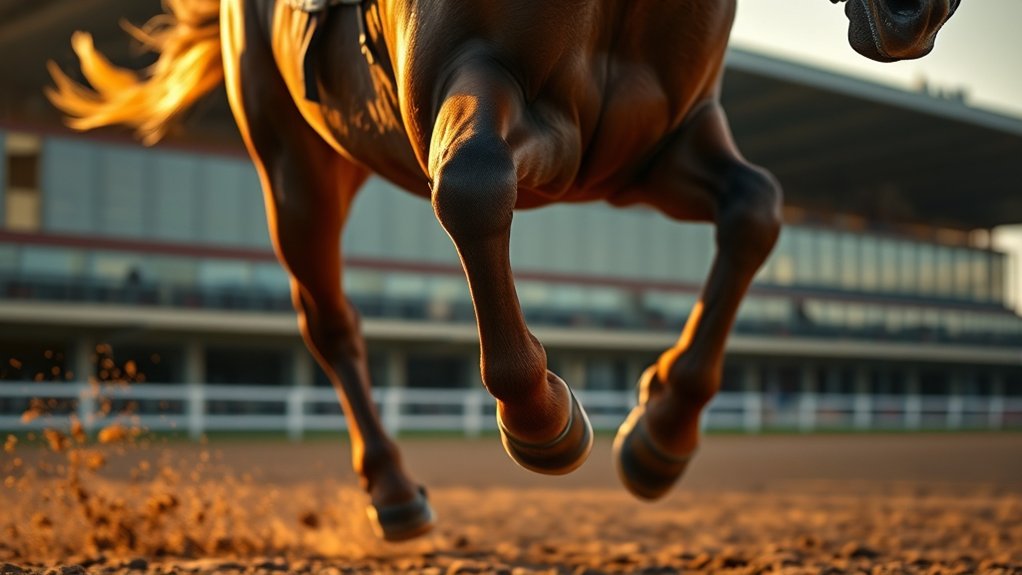
When you examine a horse’s anatomy closely, you’ll find that limb length and muscular development directly impact sprinting ability. Longer limbs contribute to greater stride length, which helps optimize speed.
The hindquarters house powerful muscles that generate the force needed for rapid acceleration.
Furthermore, tendons in the lower legs store elastic energy, improving running efficiency.
A horse’s skeletal structure balances strength and lightness, supporting agility without sacrificing durability.
Lung capacity also plays a vital role, as it determines oxygen intake essential for sustained high-speed performance.
Key anatomical factors include:
- Muscle strength in hindquarters for propulsion and quick bursts
- Elastic tendons that recycle energy during each stride
- Skeletal design that maximizes stride length and overall speed
Fastest Horse Breeds in Racing
Understanding a horse’s physical attributes gives you insight into why certain breeds excel at different racing distances. Among the fastest breeds, the American Quarter Horse stands out, reaching record speeds of up to 55 mph in a short-distance sprint, particularly over a quarter-mile.
This makes it the fastest breed for brief, explosive bursts. In contrast, Thoroughbreds maintain race speeds between 38 and 44 mph, excelling in longer races with sustained velocity.
When you compare breed performance, Quarter Horses dominate short sprints, while Thoroughbreds deliver consistent speed over extended distances.
Their differing muscle composition and cardiovascular capacity explain these variations. By analyzing these breed comparisons, you understand how race speeds vary by genetics and training focus, highlighting the Quarter Horse’s supremacy in short-distance racing scenarios.
How Riders Influence Horse Speed
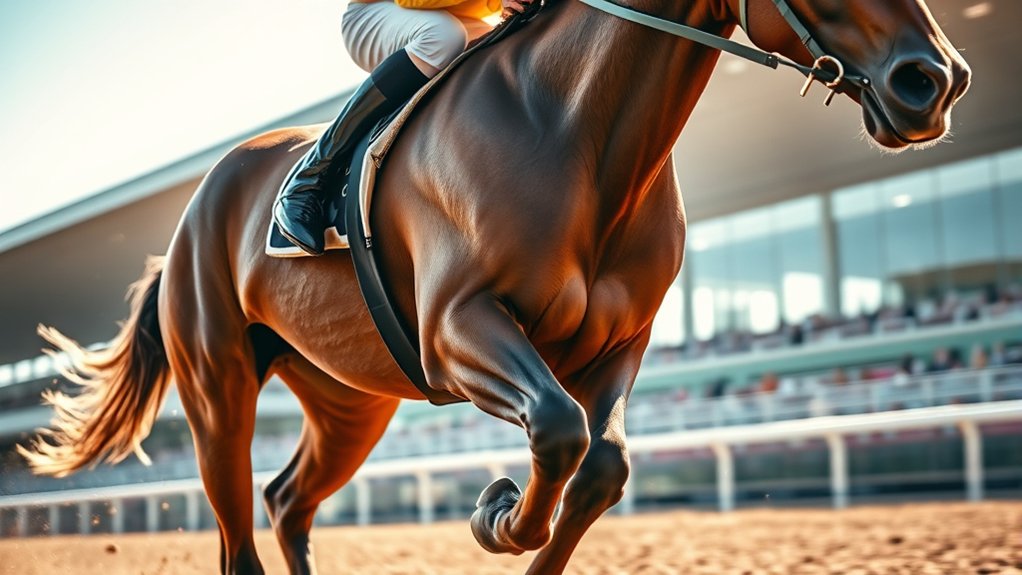
Because a rider’s technique directly affects a horse’s performance, mastering proper balance and signaling is essential to maximize speed. Your rider influence hinges on maintaining an aerodynamic posture that reduces wind resistance, helping the horse reach top speeds between 43 to 55 mph during sprints.
Mastering balance and signaling with aerodynamic posture boosts a horse’s sprint speed to 43–55 mph.
Enhancing rider weight and distributing it evenly minimizes strain, allowing the horse to perform efficiently. Precise cues and signals keep the horse focused, improving energy use and speed efficiency.
Poor riding technique or excess weight can substantially hinder maximum velocity by adding drag and fatigue.
Key elements of rider influence include:
- Maintaining an aerodynamic posture to reduce wind resistance
- Using subtle cues and signals for efficient communication
- Ensuring ideal rider weight distribution for balanced horse performance
How Training Improves Horse Speed
You’ll see that targeted training really boosts both conditioning and muscle strength, which directly helps improve a horse’s speed.
When you work on endurance through interval workouts and build muscle with hill training, you’re helping the horse keep up faster speeds for longer periods.
Plus, proper conditioning makes oxygen delivery more efficient, and that’s super important for maintaining top performance during races.
Conditioning and Endurance
While raw speed is essential, a racehorse’s true potential depends heavily on conditioning and endurance. Effective training enhances cardiovascular fitness and stamina, allowing the horse to sustain near-maximum speed for extended periods, often beyond a minute.
Conditioning improves not only the duration but also the consistency of performance across different race types and terrains. By focusing on specialized workouts, you optimize endurance without compromising speed.
Key training components include:
- Interval workouts alternating sprints and rest to boost cardiovascular efficiency and stamina.
- Varied terrain training to enhance adaptability and overall speed performance.
- Balanced nutrition and rest, critical for maintaining conditioning and peak fitness.
This precise approach to endurance conditioning directly translates into faster, more reliable race times.
Strength and Muscle Development
Building on endurance, strength and muscle development play a significant role in enhancing a racehorse’s speed. Proper conditioning targets the hypertrophy of muscle fibers, particularly in the hind leg muscles, which are essential for explosive acceleration.
Training programs incorporating sprint intervals, hill work, and resistance exercises systematically improve muscle strength and muscular endurance. These adaptations increase the force production during high-speed gallops, enabling more powerful strides.
Furthermore, well-structured training optimizes muscle coordination and timing, allowing the horse to reach top speed efficiently. By consistently applying these conditioning methods, you enhance the horse’s ability to accelerate rapidly and sustain speed, which is vital for competitive racing.
This precise focus on muscular development ensures peak performance and maximizes velocity on the track.
World Records for Horse Racing Speeds
Although many horse breeds achieve impressive speeds, the world records for horse racing speeds highlight extraordinary performances that push the limits of equine athleticism. You’ll find that the fastest horse speeds often occur over short distances, where explosive power peaks.
For instance, the Guinness World Records acknowledges a Quarter Horse reaching 55 mph during a sprint, an unparalleled record speed.
Thoroughbreds, while slightly slower, can exceed 40 mph in brief bursts, typically running between 38-44 mph. Winning Brew holds the record for the fastest speed over two furlongs at approximately 43 mph.
To add depth:
- Quarter Horses excel in short distance sprints with record speeds up to 55 mph.
- Thoroughbreds maintain high speeds around 40 mph in racing events.
- Standardbreds reach speeds near 46.5 mph in harness racing.
These benchmarks define elite racing speeds across breeds.
How Long Can Horses Sustain Top Speed?
The incredible speeds recorded by racing horses raise an important question: how long can they actually maintain those top velocities? Horses can sustain their top speed for only a few seconds before fatigue rapidly sets in.
Elite racehorses typically maintain maximum sprinting speed for about 1 to 2 furlongs (200 to 400 meters), with stride length and muscle power optimized for this brief burst.
Beyond this distance, stamina declines due to oxygen depletion and muscle fatigue, forcing horses to reduce speed to conserve energy.
While endurance horses cover over 100 miles at moderate speeds, they can’t sustain top speed over long race distances.
During races, horses strategically alternate between sprinting and slower pace to manage fatigue and maximize overall performance.
Understanding this balance between top speed and endurance is essential in horse racing dynamics.
Impact of Track Conditions on Racing Speed
When you consider how track conditions affect racing speed, you’ll find that the type and state of the surface play critical roles. Track surface type, whether dirt, turf, or synthetic, directly influences speed. Synthetic tracks often allow the fastest times.
Track firmness and race surface moisture change traction and stability, which impacts a horse’s gait and stride length. Track weather and maintenance also modify these dynamics, making race conditions variable and complex.
Key factors include:
- Track surface type: Synthetic surfaces typically enhance speed compared to dirt or turf.
- Track firmness: Firm, dry surfaces promote maximum speed by providing excellent footing.
- Track weather and maintenance: Wet or poorly maintained tracks increase resistance, slowing horses and reducing stability.
Understanding these variables helps you appreciate how track conditions shape race outcomes.
Frequently Asked Questions
What Is the Average Lifespan of a Racing Horse?
You should know the average lifespan of a racing horse is about 25 to 30 years. Horse aging depends on factors like genetics, diet, and health maintenance.
Most horses retire between 5 and 7 years old, which helps manage age-related issues. Monitoring aging signs closely lets you guarantee longevity through proper healthcare and retirement plans.
Staying proactive in these areas ensures your horse lives a longer, healthier life.
How Do Weather Conditions Affect Horse Racing Outcomes?
You’ll notice weather impact plays a vital role in horse racing outcomes. Rain consequences create slick track conditions, reducing traction and speed.
Temperature effects influence muscle performance. Heat and humidity cause quicker fatigue, while cold and wind affect breathing and flexibility.
Sunlight variation alters visibility and track temperature, further affecting performance. Understanding these variables helps you gauge race conditions and predict how horses might respond during competition.
What Are Common Injuries in Racing Horses?
Even if you think like a medieval knight, you’d know stallion injuries often include tendon damage, muscle strains, and bone fractures from high-speed stress.
You’ll also want to watch out for respiratory issues like bleeding lungs, hoof problems from intense track contact, and dehydration symptoms that worsen performance.
Proper training and vet care are essential because these injuries result from overexertion, sudden stops, and repetitive strain during races.
How Is a Racehorse’s Diet Different From Other Horses?
You’ll notice racehorses have stricter dietary restrictions compared to regular horses, focusing on optimized horse nutrition. Their protein intake is higher to support muscle growth, and feeding schedules are carefully timed for energy efficiency.
Unlike typical grazing habits, they get limited forage to control weight.
Dietary supplements, including electrolytes, enhance hydration strategies and replenish minerals lost during exertion. This precise nutritional management maximizes their performance and recovery.
What Role Do Jockeys Play in Horse Racing Strategy?
You rely on jockey tactics and riding techniques to optimize race outcomes. Effective weight management helps maintain the horse’s balance, while precise communication signals guide pacing and acceleration.
Through strategy planning and risk assessment, you determine ideal race positioning and when to push for speed or conserve energy. Your decisions directly influence performance, making jockey expertise essential in managing pace, steering through competition, and maximizing the horse’s potential during races.
Conclusion
You’ve seen how a racing horse is like a finely tuned engine, with speed shaped by gait, anatomy, and breed. Training and track conditions act as the fuel and terrain, influencing how fast and how long a horse can run.
Understanding these factors helps you appreciate the intricate science behind those breathtaking sprints. Next time you watch a race, you’ll know exactly what powers those incredible bursts of speed.