Is Horse Riding Cruel?
You might wonder if horse riding is cruel. It can cause physical injuries like muscle strain or joint damage, especially if started too early or with poorly fitted gear. Emotional stress may also occur from restrictive equipment or harsh handling.
However, with proper timing, well-maintained equipment, and positive training methods, riding can be an ethical partnership that respects horse welfare. Understanding these complexities helps clarify when riding supports or harms horses and how to improve practices.
What Does “Cruelty” Mean for Horses in Riding?
How do we define cruelty in horse riding? Cruelty involves causing physical pain, distress, or harm through equipment, training, or handling methods.
When you engage in horse riding, cruelty shows up if the horse displays fear, panic, or helplessness, especially during breaking in or forceful mounting.
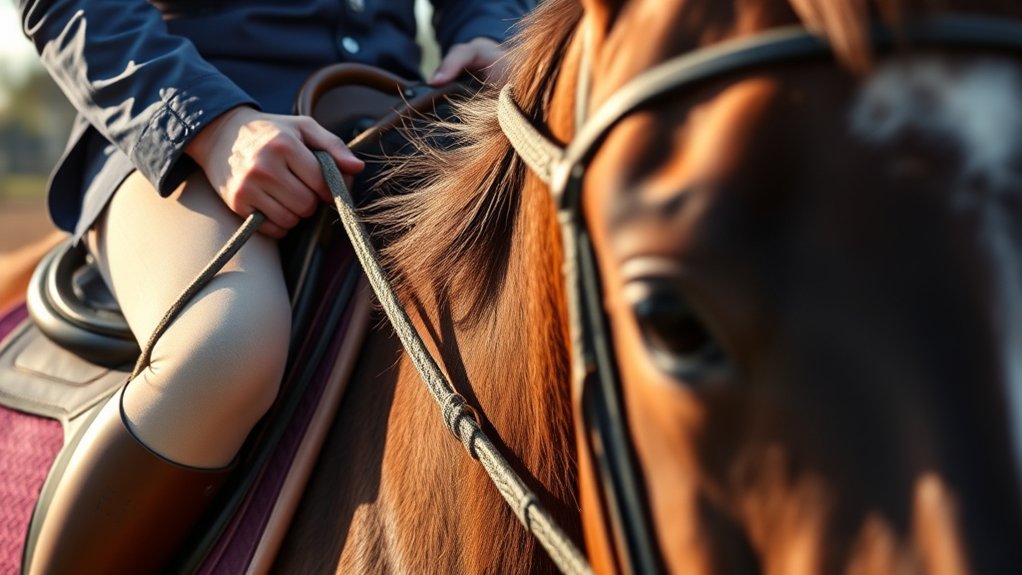
Misusing tools like whips, spurs, or bits often leads to discomfort, which is a clear sign of cruelty. You need to pay attention to the horse’s emotional and physical reactions.
These responses help you figure out if your riding respects their autonomy and comfort.
Ethical horse riding means avoiding forceful or harmful actions. Instead, it’s about promoting the horse’s well-being and making sure they can give or withhold consent.
Understanding cruelty in horse riding comes down to observing these evidence-based signs rather than just assuming.
How Does Horse Riding Affect a Horse’s Body Physically?
You should know that horse riding can sometimes cause damage to a horse’s bones and muscles, especially if the horse starts riding before its skeleton is fully developed.
On top of that, the equipment we use—like saddles and bits—can lead to tissue injuries and even chronic pain, even when everything is fitted properly.
Studies have shown that these factors can increase the chance of long-term physical problems for the horse.
Skeletal And Muscular Damage
Although horse riding offers many benefits, it can cause significant skeletal and muscular damage if not managed properly. You should know that skeletal damage includes stress fractures and joint issues, especially if horses are ridden before their growth plates fuse around 5-8 years old.
Muscular injuries, such as strains and tears, often arise from repetitive riding and improper techniques. The horse’s back and spinal column are vulnerable to vertebral misalignment and tissue damage.
| Damage Type | Common Causes |
|---|---|
| Skeletal Damage | Early riding, joint stress |
| Muscular Injuries | Repetitive strain |
| Spinal Issues | Improper riding posture |
| Tissue Damage | Poor saddle fit |
| Chronic Pain | Nerve compression |
To minimize harm, proper management and timing are essential.
Equipment-Induced Physical Harm
Skeletal and muscular damage from riding doesn’t occur in isolation; the equipment used plays a crucial role in the physical impact on a horse’s body. When saddles aren’t properly fitted, they create pressure points that can lead to tissue necrosis and vascular occlusion.
Bits, even when correctly applied, frequently cause oral tissue pain, inflammation, and nerve damage. Research also suggests bitless options may still induce discomfort.
Whips and crops, commonly used for encouragement, cause pain, skin damage, and distress without conclusive evidence of performance improvement.
Misuse or poor design of saddles, bits, and related equipment can provoke muscular strains, nerve compression, and chronic skeletal issues, particularly in developing horses. Therefore, equipment-induced harm contributes markedly to both acute injuries and long-term structural damage in ridden horses.
Can Horse Riding Harm Horses Emotionally and Mentally?

You should know that horse riding can sometimes cause emotional distress for horses, especially when it involves forced training and restrictive equipment. These things often trigger fear and anxiety in the animals.
When horses are repeatedly forced or coerced, they might develop something called learned helplessness, which means they stop trying to resist because they feel they’ve no control. This can really damage their ability to trust and cause long-lasting mental stress.
On top of that, if we ignore a horse’s natural behaviors, it can lead to chronic stress and affect their emotional health over time.
Emotional Impact Of Riding
How does horse riding affect a horse’s emotional and mental well-being? The emotional impact of riding can be significant, especially if the horse experiences stress or fear. You need to take into account these factors:
- Equipment such as bits, whips, and spurs may cause pain or distress, leading horses to associate riding with negative experiences.
- Forced breaking and mounting can strip a horse of its agency, resulting in emotional trauma and learned helplessness.
- Even well-meaning riding can provoke mental fatigue or frustration if the horse feels overwhelmed or misunderstood.
Recognizing signs of emotional distress is crucial because persistent discomfort may lead to behavioral problems and lasting psychological harm. Understanding this helps you ensure riding practices minimize emotional harm to the horse.
Mental Stress And Control
Although horse riding is often seen as a mutually rewarding activity, the mental stress imposed by coercive training methods can substantially harm a horse’s emotional well-being. When you rely on force and intimidation to establish control, horses may develop learned helplessness, reducing their trust in humans and causing persistent emotional distress.
The use of equipment such as bits and whips can induce discomfort and fear rather than cooperation. Because horses lack voluntary participation, you often place them in situations they’d naturally avoid, resulting in chronic mental stress.
Scientific studies document behavioral signs like anxiety, agitation, and depression in horses subjected to such stressful control methods, indicating that riding practices can inflict significant mental and emotional harm. Understanding these effects is vital to promoting more ethical horse-riding approaches.
How Do Bits, Whips, and Saddles Cause Pain?
The use of bits, whips, and saddles can inflict pain on horses through direct physical pressure and impact on sensitive tissues. When you use these tools, you may unintentionally cause discomfort or injury by:
- Applying bits that press on sensitive areas like the tongue, bars, and palate, especially if the bits are ill-fitted or used with excessive force.
- Striking with whips or crops, which can cause sharp pain, tissue damage, and emotional distress, even if intended as cues.
- Employing saddles that don’t fit properly, leading to pressure on the back, tissue necrosis, or vascular occlusion.
Scientific evidence confirms horse skin is highly sensitive, so improper use of bits and saddles can produce significant physical and emotional harm.
When Is It Safe to Start Horse Riding for Young Horses?

You should wait until a horse’s skeletal system is fully mature before starting riding. Riding too early can put too much stress on their developing bodies and might cause injuries.
Most horses have growth plates in their spine that fuse around age 6. But if you’re working with larger breeds, it can take up to 8 years.
Getting the timing right is really important because it helps reduce the risk of long-term joint damage and supports healthier musculoskeletal development.
Skeletal Maturity and Riding
Because young horses’ bones fuse at different stages, knowing when to start riding is crucial to prevent injury. Skeletal maturity is a gradual process marked by the fusion of growth plates, which indicates bone development completion.
You should consider these key milestones:
- Radius-ulna growth plates fuse between ages 2 and 3, signaling initial skeletal maturity.
- Scapula and pelvis bones fully mature by ages 3 to 5, so premature riding risks limb damage.
- Vertebral column fusion varies by breed, 5 years in small breeds, up to 8 years in larger horses, making early spinal loading hazardous.
Scientific evidence advises delaying intense riding until these growth plates have fused to avoid long-term skeletal injuries.
Developmental Risks and Timing
Understanding skeletal maturity leads naturally to contemplating when it’s safe to start riding young horses. Skeletal maturation occurs as growth plates in vital bones fuse, reducing developmental risks from premature riding.
For example, the vertebral column’s growth plates typically fuse between ages 5 to 8, while scapula and pelvis fuse earlier, around 3 to 5 years. Starting riding before these milestones can cause permanent skeletal damage, deformities, or chronic pain.
Scientific evidence recommends waiting until at least age 3 to minimize harm and support healthy bone development.
| Bone/Region | Fusion Age (years) | Developmental Risks if Ridden Early | Recommended Riding Start Age |
|---|---|---|---|
| Vertebral Column | 5 to 8 | Permanent spinal damage, chronic pain | After 5 |
| Scapula | 3 to 5 | Bone deformities, injury risk | After 3 |
| Pelvis | 3 to 5 | Pelvic misalignment, growth interference | After 3 |
| General Skeleton | Variable | Developmental delays, chronic issues | At least 3 |
Do Horses Show They Enjoy Being Ridden?
How can you tell if a horse enjoys being ridden? Horses enjoy riding when they exhibit specific behaviors and body language that contrast with signs of stress. You can look for:
Identifying a horse’s enjoyment while riding involves observing behaviors that differ from stress signals.
- Excitement behaviors like increased nostril flaring, tail swishing, and playful actions, indicating engagement.
- Relaxed body posture, such as a soft eye and lowered head, reflecting comfort and willingness.
- Absence of signs of stress, including pinned-back ears and tense muscles, which suggest discomfort or negative associations with riding.
Scientific studies confirm that a horse’s enjoyment depends on individual temperament and the rider’s methods. Harsh handling or ill-fitting equipment often leads to negative experiences.
What Ethical Arguments Support Horse Riding?
Observing a horse’s behavior can indicate whether it enjoys being ridden, but ethical considerations extend beyond individual responses. You should recognize that supporters argue horse riding, when performed with proper training and equipment, can be ethically justified by promoting horse welfare.
Riding provides physical exercise and mental stimulation, which are *essential* for a horse’s overall health. You’ll find that ethical considerations emphasize responsible management, ensuring the horse’s development and comfort are prioritized, minimizing potential harm.
Proponents highlight that riding fosters trust and positive interactions, strengthening the horse-rider bond. *Furthermore,* advanced equestrian techniques aim to reduce discomfort and enhance well-being.
*Consequently,* from an evidence-based standpoint, ethical arguments supporting horse riding focus on enrichment, welfare, and mutual benefit when conducted responsibly.
What Are the Ethical Objections to Horse Riding?
Why do many argue that horse riding is ethically problematic? Central to horse ethics is the concern that riding often disregards the horse’s natural behaviors and welfare, raising issues of cruelty. You should consider these key objections:
- Horses are herd animals with complex needs, often suppressed by riding practices. This can cause psychological stress.
- The “breaking in” process uses force and intimidation, stripping horses of agency and inducing distress.
- Equipment like bits and whips may inflict pain or tissue damage if misused, highlighting the potential for cruelty.
Since horses can’t consent, riding inherently exploits them for human benefit. It prioritizes entertainment over their physical and emotional well-being.
This exploitation challenges fundamental principles of horse ethics, making riding morally questionable.
Can Horse Riding Be a Respectful Partnership?
Although horse riding has faced ethical criticism, it can be practiced as a respectful partnership when riders prioritize the horse’s natural behaviors, emotional needs, and autonomy. A respectful partnership requires you to understand and honor the horse’s individual personality and emotional state, fostering genuine trust through compassionate handling and clear communication.
Ethical riding avoids force, coercion, and misuse of equipment, promoting cooperation rather than submission. By recognizing the horse as an autonomous being, not merely a tool, you contribute to a relationship grounded in mutual respect and well-being.
Scientific evidence supports that such ethical riding practices improve horse welfare and performance, demonstrating that horse riding can align with principles of respect and empathy when approached thoughtfully.
How Can We Improve Horse Riding to Minimize Harm?
To minimize harm in horse riding, you must prioritize the horse’s physical and emotional development by implementing evidence-based practices. Addressing the ethics of horseback riding means respecting the horse’s natural growth, comfort, and psychological needs.
Prioritize the horse’s well-being by respecting its growth, comfort, and emotional needs through ethical riding practices.
You can improve riding by starting training only after horses reach full skeletal maturity, typically around age five, to prevent long-term injury.
Use well-fitted, humane equipment and avoid harsh devices, reducing physical distress. Applying positive reinforcement techniques encourages voluntary cooperation, lowering stress and promoting emotional well-being.
Additionally, regular veterinary and chiropractic assessments help detect musculoskeletal problems early.
Frequently Asked Questions
How Do Different Horse Breeds Respond to Riding?
Different horse breeds respond uniquely to riding due to breed behavior and riding compatibility. You’ll find light breeds like Arabians mature faster, making them more suitable for earlier riding.
In contrast, heavy breeds require longer skeletal development before riding safely. Knowing each breed’s growth rate and temperament helps you tailor training, reducing injury risk.
Understanding these factors guarantees you promote the horse’s well-being while matching riding demands to their physical and behavioral traits.
What Are Common Misconceptions About Horse Riding and Cruelty?
You might think horse riding always harms horses, yet evidence shows that responsible rider behavior and proper horse training minimize risks.
Many believe equipment like bits and whips is inherently cruel, but their impact depends on rider responsibility and skill.
Some assume all horses enjoy riding, while studies reveal varied responses. Understanding skeletal maturity and humane training helps debunk misconceptions, proving that cruelty isn’t inherent but linked to how you approach riding.
How Does Horse Riding Impact Wild Versus Domesticated Horses?
You’ll notice horse riding impacts wild and domesticated horses differently. Wild horse welfare is generally preserved because they roam freely, displaying natural horse behavior like grazing and socializing.
In contrast, domesticated horses often face restricted movement and forced handling, which can alter their behavior and cause stress.
Riding equipment and training can lead to physical and emotional strain in domesticated horses, effects that wild horses don’t experience due to their unfettered lifestyle.
What Role Do Trainers Play in Ethical Horse Riding?
Oh, you think horse training is just about cracking whips and fancy saddles? Actually, trainers set the ethical standards that make or break a horse’s welfare.
By applying science-based methods, you guarantee your horse avoids pain and stress, promoting trust and physical health.
Ethical trainers continuously update their knowledge to prevent harm, proving that responsible horse training is less about domination and more about respect and care.
Are There Alternative Activities to Riding for Horse Interaction?
Yes, you can foster horse bonding through alternative therapies like groundwork, clicker training, and free lunging. These activities encourage natural behaviors and mental stimulation without riding.
Research shows such therapies enhance trust and communication, benefiting the horse’s well-being.
By engaging your horse in obstacle courses or varied pasture environments, you promote both physical health and positive social interaction.
This supports ethical and evidence-based horse care practices.
Conclusion
You might think horse riding is just harmless fun, but it’s clear that physical strain, emotional stress, and equipment-induced pain challenge that notion.
Yet, despite evidence of potential harm, many still champion riding as ethical and respectful. Ironically, your choice to ride or not directly shapes whether horses endure cruelty or partnership.
So, if you care about science and welfare, it’s on you to demand and practice riding methods that truly minimize harm.