What Type Of Hay Do Horses Eat – Top Picks
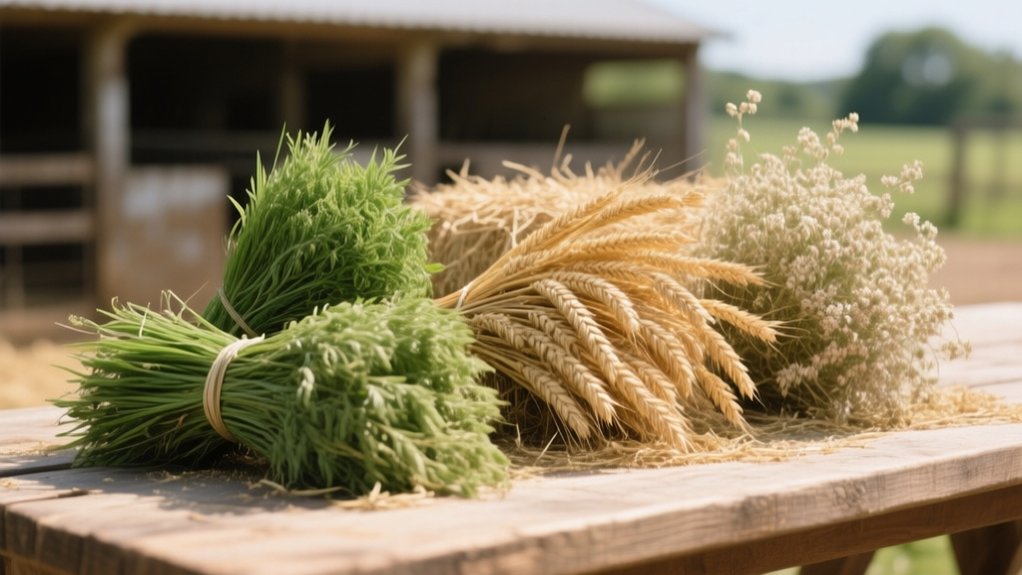
You’ll want to feed your horse high-quality hay like Timothy, alfalfa, or blended grass-legume mixes to guarantee ideal fiber, protein, and mineral intake. Timothy hay supports digestion with its high fiber, while alfalfa provides extra protein and calcium for growth or performance.
Specialty hays like Bermuda or Teff offer alternatives for specific health needs. Proper selection and storage maintain nutrient value and minimize risks. Exploring hay types further reveals how to tailor choices for your horse’s well-being.
Why Hay Is Essential for Your Horse’s Health
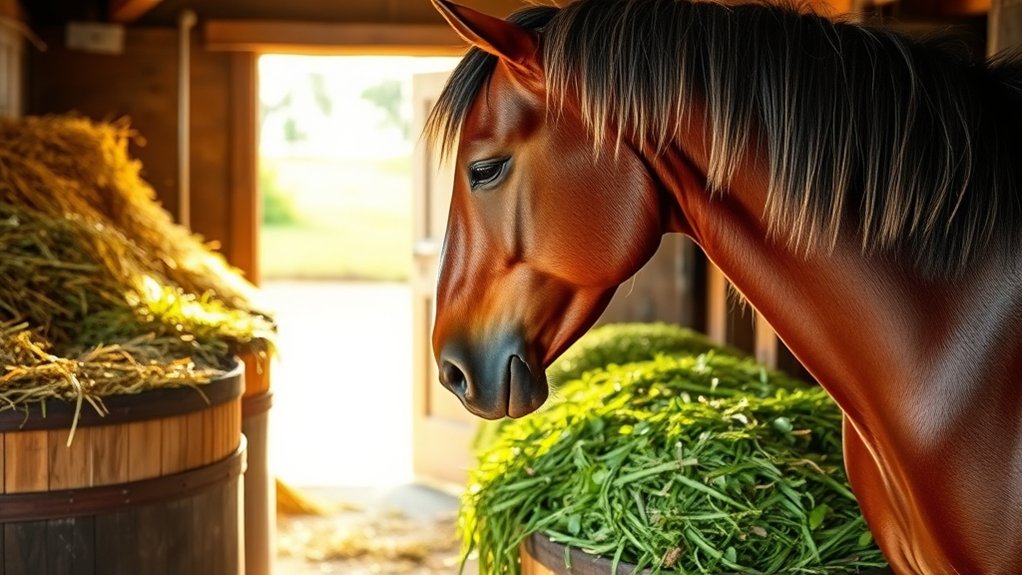
Although many factors influence your horse’s health, hay remains its primary source of fiber and energy. This is essential for maintaining proper gut function and preventing digestive issues such as colic.
High-quality hay also delivers essential vitamins and minerals that support metabolic processes and immune function.
Premium hay provides vital vitamins and minerals that enhance metabolism and strengthen immune health.
By providing consistent fiber intake, hay promotes effective hindgut fermentation. This process is indispensable for nutrient absorption and stable gastrointestinal pH.
Regular hay consumption encourages natural grazing behaviors, which helps reduce stress and fosters mental well-being.
The nutritional profile of the hay you provide directly impacts your horse’s body condition, coat quality, and performance capacity.
So, prioritizing top-quality hay ensures your horse receives balanced nutrients that support ideal digestion and overall health.
On the other hand, inadequate or poor-quality hay compromises these functions and increases the risk of colic and other digestive disturbances.
Nutritional Differences Among Common Horse Hay Types
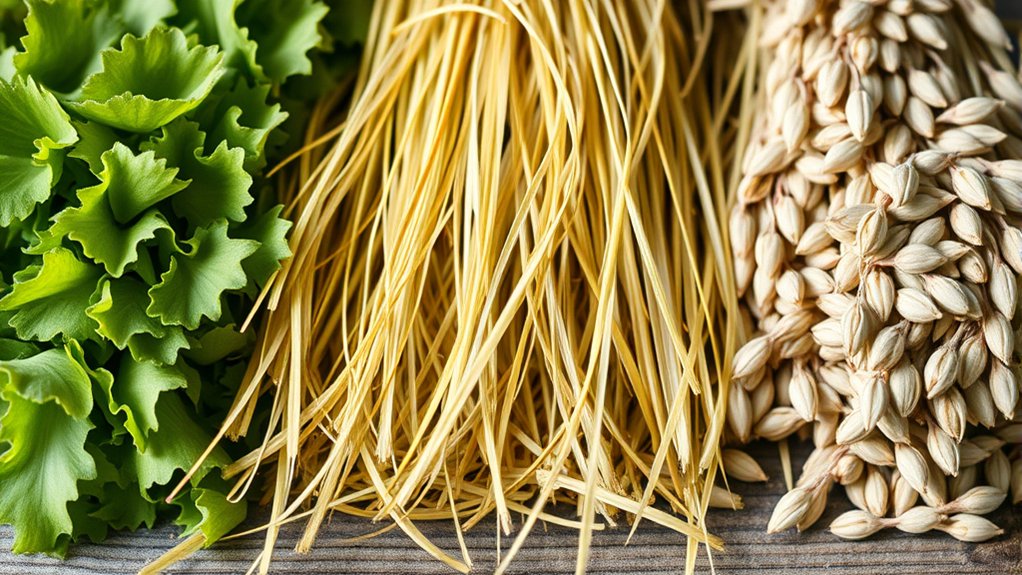
When selecting hay for your horse, understanding the nutritional differences among common types is essential to guarantee specific dietary needs. Each hay variety offers distinct protein, fiber, and mineral profiles that influence your horse’s health and performance.
Timothy hay provides 8-12% crude protein and 50-60% neutral detergent fiber (NDF). This makes it ideal for maintenance in adult horses.
Alfalfa hay boasts 14-26% protein and high calcium (1.2-2%). It’s great for supporting growth, reproduction, and lactation.
Bermuda grass hay contains 6-10% protein with 60-65% NDF. This type works well for horses requiring lower energy intake.
Meadow hay varies widely in nutrients depending on species and harvest timing. It often delivers moderate protein and fiber.
Choosing hay based on these factors assures balanced nutrition tailored to your horse’s physiological demands. So, it’s worth paying attention to what type you pick!
Top Grass Hays: Benefits and Best Uses
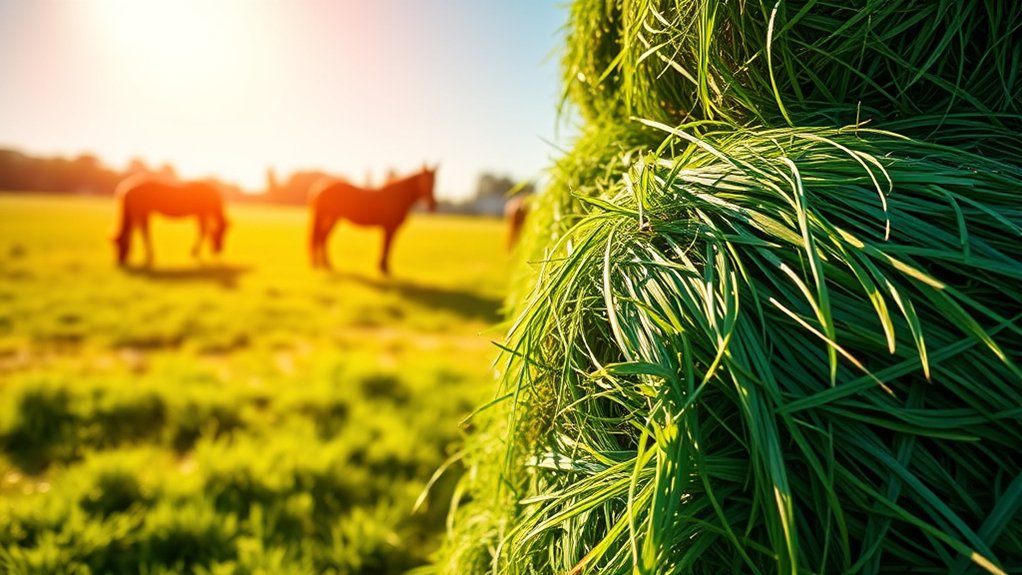
Why choose one type of grass hay over another for your horse? Each grass hay offers distinct benefits tailored to your horse’s needs. Timothy hay, high in fiber, supports ideal digestion and suits most horses.
Orchard grass hay’s soft texture and sweet aroma make it ideal for older or sensitive horses. It really helps ease the effort of chewing.
Bermuda hay, thriving in warm climates, promotes natural dental wear through its fibrous structure.
Meadow hay provides a diverse mix of grasses and herbs, ensuring dietary variety and balanced nutrition.
To get the most out of these benefits, you need to harvest grass hays at peak maturity. Storing them properly is key too, to preserve nutrient content and keep mold at bay.
Picking the right grass hay can boost your horse’s digestive health, dental condition, and overall well-being. It’s all about matching the hay to what your horse needs most.
Popular Legume Hays Like Alfalfa: When and How to Use Them
Since legume hays like alfalfa contain considerably higher protein and calcium levels than most grass hays, you should incorporate them carefully into your horse’s diet to meet specific nutritional demands.
Alfalfa suits growing, lactating, or highly active horses due to its 17-25% protein content and rich calcium. However, feeding it in moderation is vital to avoid health risks like kidney strain or obesity.
Harvesting alfalfa at the early bloom stage maximizes nutrient density and digestibility.
You can offer alfalfa as a primary forage or blend it with grass hays to balance nutrition.
Proper storage in dry, ventilated spaces preserves quality and prevents mold.
Ideal for horses with high energy needs
Prevent overfeeding to avoid nutrient overload
Early bloom harvest guarantees maximum nutrients
Store in dry, well-ventilated areas
How to Evaluate Hay Quality Before Buying
Although selecting quality hay can seem straightforward, evaluating its true nutritional value requires careful inspection and testing. You should take multiple core samples from various parts of a bale to obtain a representative sample. Then, send these for laboratory analysis measuring moisture, crude protein, acid detergent fiber (ADF), neutral detergent fiber (NDF), and mineral content.
Visually, check for bright green coloration, a high leaf-to-stem ratio, and the absence of mold, dust, or foreign material. The smell is just as important; fresh hay gives off a sweet, pleasant aroma. If it smells musty, that usually means poor curing or spoilage.
At harvest, make sure the hay was cut at the right maturity and properly cured to prevent nutrient loss. By combining these scientific evaluations with your own observations, you can confidently pick hay that meets your horse’s dietary needs and avoids health risks linked to low-quality forage.
Specialty Horse Hays and Mixes: When to Consider Alternatives
When you’re picking hay for your horse, you might want to think about specialty types like Teff or Coastal hay. These are great because they’re low in sugar and high in fiber, which is perfect if your horse has metabolic sensitivities.
Then there are mixed hays, like Timothy-Alfalfa blends. These mixes give balanced nutrition that helps support your horse’s energy and gut health.
Really, the key is to choose alternatives based on your horse’s specific health, age, and dietary needs. That way, you can make sure digestion stays smooth and your horse stays feeling good overall.
Benefits of Mixed Hays
If you want to optimize your horse’s nutrition, mixing different hay types offers significant benefits by balancing protein and fiber levels. Combining alfalfa’s high protein with timothy’s fiber creates a well-rounded diet, essential for maintaining muscle and digestive health.
Specialty hays like Teff or Bermuda, when mixed with traditional grasses, can target specific needs such as weight control or dental care. Hay mixes also promote dietary diversity, reducing risks of deficiencies or nutrient overload.
Consider these advantages of mixed hays:
- Balanced nutrient profiles support overall health and recovery.
- Enhanced palatability encourages consistent intake, especially in picky eaters.
- Supports natural grazing behavior, aiding digestive function.
- Tailors diet for aging or convalescing horses requiring both energy and fiber.
Specialty Hay Nutrient Profiles
Because each horse has unique nutritional requirements, understanding specialty hay nutrient profiles is essential for selecting appropriate forage alternatives. Specialty hays like Teff and Coastal provide low sugar and high fiber content, making them excellent for horses with metabolic concerns or those managing weight.
Timothy-alfalfa mixes deliver a balanced combination of fiber and protein, supporting horses needing nutrient-dense yet palatable forage. These blends can address specific health issues such as metabolic syndrome or dental limitations by optimizing digestion and reducing feed waste.
Additionally, seasonal and regional factors may necessitate specialized hays to fulfill environmental and nutritional demands. By incorporating these forage options, you tailor your horse’s diet precisely, enhancing overall health and performance while accommodating individual metabolic and physiological needs.
When To Use Alternatives
Although traditional hay remains a staple, you’ll want to take into account specialty hays and mixes when addressing specific health or environmental challenges in your horse’s diet.
Alternatives like Teff or Coastal hay are essential when managing allergies, respiratory sensitivities, or low-sugar requirements. You should also consider mixed hays such as Timothy-Alfalfa for balanced nutrition in young or lightly worked horses.
Additionally, using alternative hays can mitigate risks associated with poor-quality or moldy traditional hay. Key scenarios to use specialty hays and mixes include managing metabolic syndrome or obesity with lower-calorie forage.
It’s also great for supporting horses with dental issues by providing softer textures. Reducing respiratory or colic risks from mold exposure is another important reason.
Plus, meeting nutrient needs in growing or active horses through balanced mixes really makes a difference. Selecting the right alternative enhances health and performance efficiently.
Choosing the Right Hay Form and Storage for Your Horse
When it comes to choosing hay for your horse, you’ll want to pick the right form—whether that’s small square bales or large round ones. It really depends on the equipment you have and how much space you can use for storage. This way, you can keep the hay’s nutrients intact.
Storing hay properly is just as important. Make sure it’s kept in a dry, well-ventilated spot and stacked off the ground. This helps prevent mold and spoilage, which can really lower the quality.
Also, it’s a good idea to balance cost with quality. Regularly checking the moisture levels and inspecting the hay will ensure your horse always gets feed that’s both safe and nutritious.
Hay Forms Explained
When selecting the right hay form for your horse, understanding the distinct characteristics and storage requirements of each type is vital. You’ll encounter several common forms, each with specific handling demands and suitability depending on your setup.
Small square bales (40-80 lbs) are manageable, stackable, and fit well in sheltered, confined spaces. They’re ideal for small-scale operations.
Large round bales exceed 1,200 lbs. They need machinery for movement and require well-ventilated, covered storage to inhibit mold growth.
Pelleted and cubed hay offer convenience, reduce waste, and simplify storage. However, they come at roughly a 50% premium compared to baled hay.
Large square bales balance weight and storage efficiency. Still, they need proper shelter to maintain nutrient integrity.
Choosing wisely ensures hay quality and optimizes feeding efficiency for your horse’s health. It’s all about matching your needs with the right hay form.
Proper Storage Techniques
Selecting the right hay form sets the foundation for effective storage and preservation. You should choose small square, large square, or round bales based on your handling equipment and available space.
Store hay in a cool, dry, well-ventilated area to minimize moisture accumulation. Moisture promotes mold growth and nutrient loss, so keeping hay dry is key.
Use covered or enclosed structures to shield hay from rain, snow, and excessive sunlight. This helps preserve its quality over time.
When stacking bales, arrange them to allow adequate air circulation. Avoid compression that traps moisture inside since that can cause spoilage.
Regularly inspect stored hay for signs of mold, moisture, or spoilage. This way, you make sure it remains safe and nutritious for your horse.
Implementing these scientifically grounded techniques helps maintain hay’s nutritional integrity. Plus, it prevents health risks associated with poor storage.
Cost Versus Quality
Although higher-quality hay may demand a larger initial investment, it often proves more economical over time by reducing waste and enhancing nutrient absorption in your horse. When choosing hay form and storage, weigh cost against long-term benefits carefully.
Consider these points:
- Square bales are cost-effective and manageable, unlike large round bales that need special equipment.
- Pelleted and cubed hay cost more but reduce waste and help horses with dental problems.
- Proper storage in cool, dry conditions prevents mold and nutrient degradation.
Investing in quality hay stored correctly improves health outcomes and minimizes feed loss. It’s worth thinking about how these factors play into your overall budget and your horse’s well-being.
Frequently Asked Questions
How Often Should I Rotate My Horse’s Hay Supply?
You should rotate your horse’s hay supply every 1 to 3 months to prevent spoilage, mold growth, and nutrient degradation.
Always store hay in a dry, ventilated area and inspect it regularly for moisture or odors. This way, you keep your hay fresh and safe for your horse. It’s a simple step that makes a big difference!
Can Horses With Allergies Eat All Hay Types Safely?
You can’t feed allergic horses all hay types safely. Avoid dusty, moldy, or pollen-heavy hays like orchardgrass.
It’s better to opt for low-dust options like Teff or processed hay cubes. And always test for allergens before feeding. That way, you keep your horse comfortable and healthy.
What Is the Best Hay for Horses With Dental Issues?
You don’t want your horse gnawing on a medieval torture device. Choose soft alfalfa or orchard grass hay.
If needed, soak it or offer hay cubes. These options reduce chewing strain and protect sensitive teeth effectively.
How Does Hay Moisture Content Affect Horse Health?
Hay moisture content directly impacts your horse’s health by influencing mold growth and nutrient retention. Too wet hay risks bacterial contamination and respiratory issues.
On the other hand, overly dry hay leads to vitamin loss. This can compromise your horse’s overall well-being. So, it’s important to keep hay moisture balanced for the best health results.
Are There Seasonal Differences in Hay Quality to Consider?
You should know hay quality can drop up to 30% in winter due to mold and moisture. Seasonal shifts impact nutrient levels, so regularly testing hay guarantees your horse gets ideal nutrition year-round.
This helps avoid health risks and keeps your horse feeling great no matter the season. It’s a simple step that makes a big difference!
Conclusion
So, you want to feed your horse like a pro, not just toss hay like it’s confetti at a parade. Remember, not all hay is created equal. Grass, legumes, or specialty mixes each have their quirks and perks.
Skimping on quality or ignoring storage is basically signing up for a health drama. Choose wisely and store smartly. Your horse will thank you with more than just a neigh. Think peak performance backed by science, not guesswork.