Friesian Horse Breed Characteristics: Quick Guide
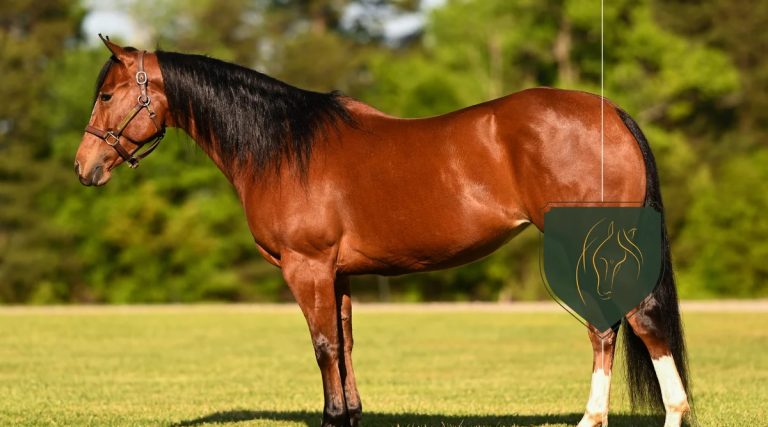
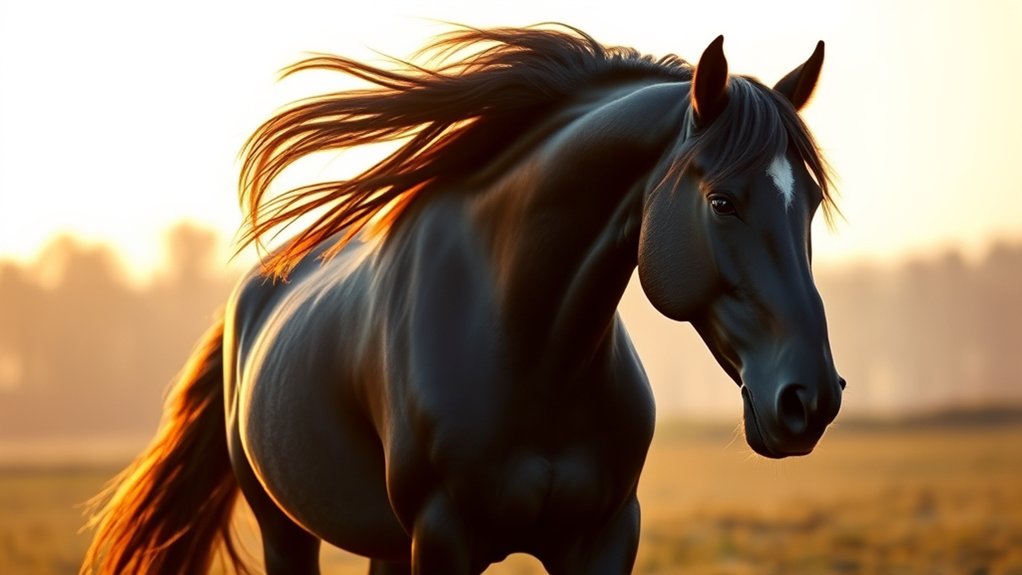
If you’re looking for a Friesian horse, expect a muscular, elegant breed standing 15.2 to 16 hands tall. They have a glossy black coat with a long, flowing mane and tail.
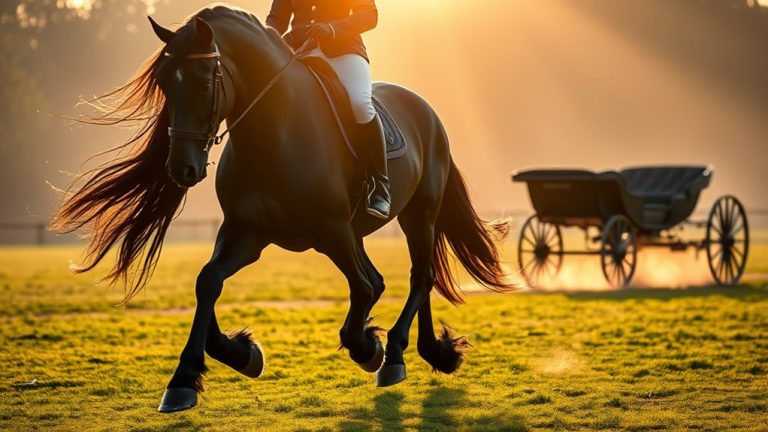
They feature a high-set neck and powerful hindquarters and are known for their elevated, rhythmic trot. Calm and trainable, Friesians excel in dressage and driving.
These horses require careful grooming and specialized care to manage genetic health risks. This helps maintain their striking appearance. Explore further to understand their unique care and performance traits.
Friesian Horse Origins and History
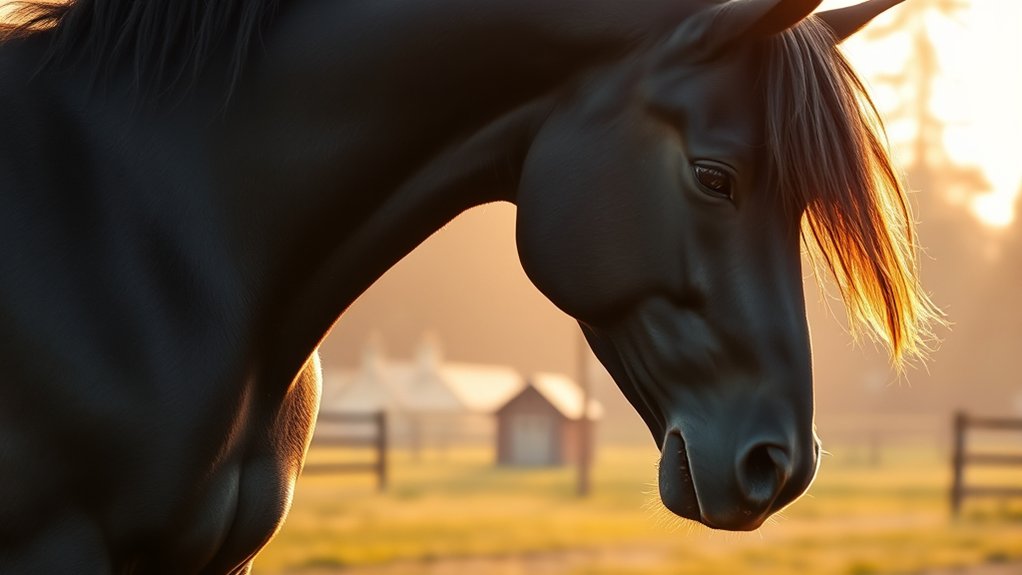
Although the Friesian horse is widely recognized today, its origins trace back to Friesland in the northern Netherlands. Artistic depictions from the 11th century first documented the breed.
The Friesian horse’s roots lie in Friesland, with its earliest images dating back to the 11th century.
You’ll find that Friesians served as essential war horses and noble coach horses throughout medieval Europe, starting as early as the 4th century. Their lineage reflects notable Arabian influence introduced by Crusaders, alongside Andalusian bloodlines from Spain. Both of these enhanced the breed’s refinement and movement.
Genetic studies confirm Friesians’ distinctiveness and isolation from other Dutch breeds, culminating in their formal recognition in 1879. Despite near extinction in the early 20th century, dedicated breeders successfully orchestrated a breed revival.
They did this through careful selection and the establishment of official studbooks, ensuring the Friesian’s survival and preservation.
Key Physical Traits and Appearance of Friesians
You’ll notice that Friesians usually stand between 15.2 and 16 hands tall. Stallions, in particular, tend to reach at least 15.3 hands by the time they’re about four years old.
Their most striking feature has to be their black coat, which really catches the eye.
And it’s not just the color—these horses have a long, flowing mane and tail that often reach down to the ground.
They’re built with a muscular, well-balanced frame, featuring a high-set neck and powerful hindquarters.
It’s a combination that really shows off both their strength and elegance.
Distinctive Black Coat
When you examine a Friesian horse, its solid black coat immediately stands out as a defining characteristic. It reflects both health and breed purity. The breed standards demand a sleek, glossy coat free from white markings, except for a small white star on the forehead.
This distinctive black coat color is genetically fixed. Although some foals may be bay or gray initially, they change to black as they mature. A healthy Friesian’s glossy coat signals prime condition and adherence to breed standards.
| Feature | Description | Breed Standard Requirement |
|---|---|---|
| Coat Color | Solid black | Genetically fixed black |
| Glossy Coat | Shiny, reflective surface | Must appear sleek and healthy |
| White Markings | Small white star acceptable | No other white markings |
| Coat Health | Indicates overall vitality | Essential for breed purity |
Long Mane And Tail
The Friesian’s striking black coat naturally draws your attention, but its long mane and tail further define the breed’s appearance. These features, with their thick, luxurious hair, create a regal silhouette that’s unmistakable.
You’ll note the long mane and tail often reach the ground, never trimmed, preserving natural elegance. Proper grooming is essential to prevent tangles and skin issues due to the hair’s density. Maintaining this characteristic look requires consistent care.
- Long mane and tail remain uncut to maintain natural length
- Thick, luxurious hair matches the coat’s deep black color
- Grooming prevents tangles and promotes healthy skin beneath
- Hair contributes to the breed’s iconic regal silhouette
- Historically, long mane and tail symbolize Friesian strength and elegance
Muscular Build And Height
Although Friesian horses are renowned for their flowing mane and tail, their muscular build and height are equally defining traits. You’ll notice they typically stand between 15.2 and 16 hands at the withers, with some stallions exceeding 16 hands. Mares tend to be slightly shorter.
Their well-balanced physique features a broad chest and strong legs that are straight and sturdy, supporting their powerful frame. The long, arched neck showcases notable muscularity, contributing to the breed’s noble appearance.
This muscular build emphasizes strength and elegance, creating a harmonious proportion ideal for various equestrian disciplines. When observing a Friesian, you’ll immediately recognize how their height and strong legs combine with their noble appearance to form a distinctive and impressive presence.
Friesian Horse Height and Build
You’ll usually see Friesian horses standing between 15.2 and 16 hands at the withers.
Stallions, in particular, tend to reach at least 15.3 hands by the time they’re four years old.
They’ve a compact and muscular build, with a broad chest and well-defined hindquarters.
This mix of height and strength gives them a powerful yet elegant presence that’s hard to miss.
Height Range Standards
Friesian horses typically measure between 15.2 and 16 hands (62 to 64 inches) at the withers. This range balances strength and elegance.
This height range aligns with strict breed standards set by the Koninklijke Vereniging Het Friesch Paarden-Stamboek (KFPS), ensuring consistency across adult Friesians.
Stallions must reach a minimum height of 15.3 hands (63 inches) by age four, confirming maturity and proper development.
Key height range standards include:
- Adult Friesians stand between 15.2 and 16 hands at the withers
- Stallions require a minimum of 15.3 hands by age four
- Height contributes to the breed’s commanding presence
- Horse height supports versatility in multiple disciplines
- Breed standards maintain uniformity for competitive and breeding purposes
Understanding these height criteria helps you appreciate the Friesian’s balanced stature.
Muscular Build Traits
When evaluating a horse’s build, you’ll notice that this breed combines a compact, muscular frame with a broad chest, strong shoulders, and well-developed hindquarters. You’ll also see a well-balanced physique that supports its powerful, high-stepping trot.
The compact physique is further enhanced by a high-set, arched neck and prominent withers, adding to its muscular build and imposing presence. Its straight, sturdy legs perfectly complement the overall structure, ensuring strength and elegance in movement.
| Trait | Description |
|---|---|
| Height | 15.2 to 16 hands |
| Chest | Broad, muscular |
| Shoulders | Strong, well-defined |
| Hindquarters | Well-developed, powerful |
| Movement | High-stepping trot, balanced gait |
Friesian Horse Temperament and Behavior
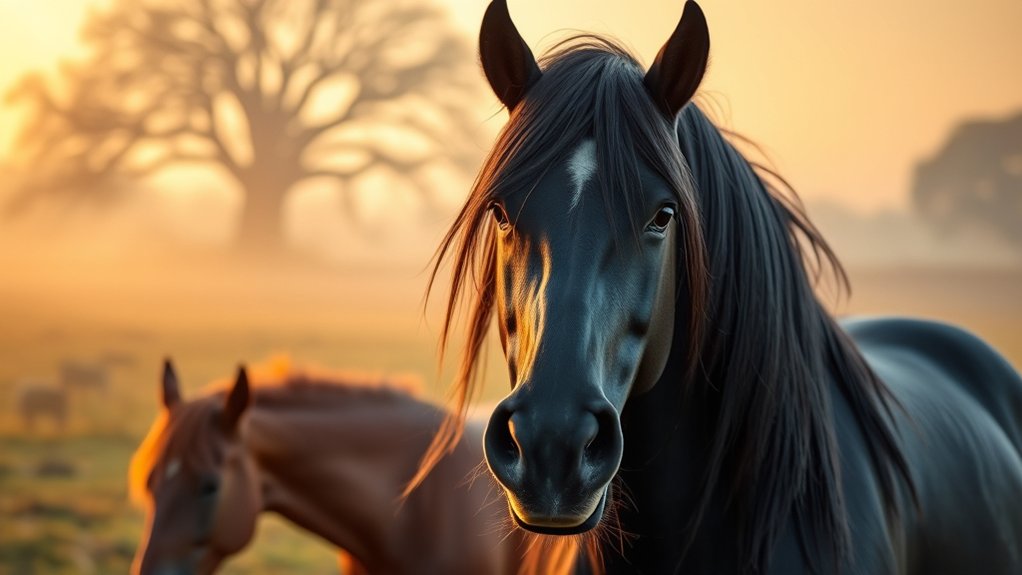
Although these horses possess considerable stamina and energy, they maintain a calm and gentle demeanor that supports consistent performance across disciplines. You’ll find Friesian temperament highly favorable due to their intelligent, easy-going nature and balanced behavior.
Their trainability is exceptional; they quickly grasp commands and show eagerness to please, which makes learning efficient. Moreover, their social disposition means they thrive on interaction, forming strong bonds with handlers and riders alike.
This combination of traits makes Friesians adaptable and reliable for various equestrian activities.
- Friendly and intelligent temperament
- Calm, gentle behavior supporting focus
- Strong work ethic without anxiety
- Quick learning and high trainability
- Social nature fostering human bonds
Friesian Horse Gaits and Movement
Because of their powerful hindquarters and natural athleticism, you’ll notice these horses exhibit a light-footed, elevated gait marked by a high-stepping trot. The Friesian gait features a pronounced knee and hock lift, showcasing significant hindquarter power that drives the horse forward with energy and precision.
Their flowing stride maintains rhythm and balance, vital for effective dressage movement. This elevated trot isn’t merely aesthetic; it reflects muscular strength and joint flexibility, allowing the horse to perform expressive, lively actions.
When trained consistently, Friesians sustain their signature smooth, rhythmic gaits, making their movement both harmonious and dynamic. Understanding these technical aspects helps you appreciate the breed’s unique locomotion, essential for disciplines demanding precise, controlled motion and elegant presentation.
Popular Disciplines for Friesian Horses
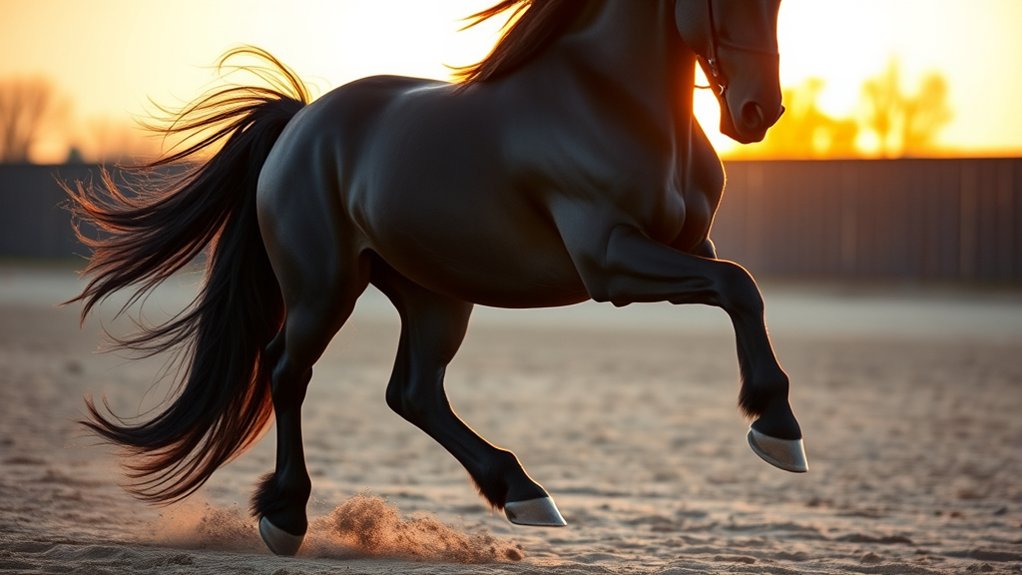
You’ll find Friesian horses really shine in the show ring. Their striking looks and high-stepping action catch the judges’ eyes, especially in ceremonial and competitive events.
Plus, their powerful, controlled movement makes them perfect for recreational driving, where you need precision and stamina.
When you look at these disciplines, it’s easy to see how their physical traits and temperament match up perfectly with what’s required.
Show Ring Success
When competing in the show ring, Friesian horses consistently demonstrate exceptional success across several popular disciplines that highlight their unique qualities. You’ll notice their elegant movement and impeccable conformation make them stand out, particularly in dressage, where their high-stepping trot and balanced frame excel under precise training.
In harness shows, their strength and powerful action shine as they pull high-wheeled gigs and show carts with remarkable presence. Their versatility also extends to combined driving competitions and traditional Dutch shows, where their charisma and energy captivate judges and audiences alike.
Key areas of success include:
- Dressage emphasizing fluid movement and balanced conformation
- Harness shows showcasing strength and action
- Combined driving competitions demanding stamina and precision
- Traditional Dutch ceremonial performances
- Classes focusing on overall presence and harmony
Recreational Driving Appeal
Although Friesian horses have earned acclaim in formal show rings, their appeal extends strongly into recreational driving disciplines. You’ll find their high-action trot and striking presence ideal for both driving competitions and leisurely carriage rides.
Their calm temperament guarantees manageable behavior during long-distance outings, while their stamina supports extended drives without fatigue. Thanks to natural strength and excellent pulling ability, Friesian horses excel in harness work, making them perfect for traditional Dutch driving events and scenic tours.
When you engage in recreational driving with a Friesian, you leverage their intelligence and willingness to learn, enhancing your connection and control.
This breed’s combination of elegance, energy, and temperament makes it a top choice for anyone serious about recreational driving.
Common Health Issues in Friesians
Three primary genetic health issues profoundly affect Friesian horses: dwarfism, hydrocephalus, and aortic rupture. These Friesian health issues stem from inherited genetic disorders, so vigilance through DNA testing and veterinary screening is crucial.
Hydrocephalus affects about 0.25% of Friesian foals. It leads to fluid accumulation in the brain and is often fatal, resulting in stillbirth or euthanasia.
Dwarfism is an autosomal recessive disorder. It shows up as a broad chest, shortened limbs, and hyperextended joints. The good news is it can be detected through precise DNA testing before breeding.
Collagen abnormalities contribute to aortic rupture, a connective tissue disorder. This condition weakens the arterial wall and can cause sudden death in adult horses.
Genetic testing helps prevent passing these disorders to offspring. Alongside that, regular veterinary screening is essential for early detection and management.
How to Care for Your Friesian Horse
Because Friesian horses have thick manes, tails, and abundant leg feathers, regular grooming is critical to prevent skin infections, matting, and irritation. Maintain your horse’s body condition by monitoring weight and adjusting feeding accordingly.
Prioritize hoof care with daily cleaning and professional trims to avoid foot and joint issues. Supporting overall health involves providing clean water and supplementing vitamins, minerals, fatty acids, and joint aids.
| Care Aspect | Frequency | Key Actions |
|---|---|---|
| Grooming | Daily | Detangle mane, tail, and feathers |
| Hoof Care | Daily cleaning | Trim every 6-8 weeks |
| Body Condition | Weekly monitoring | Adjust feeding as needed |
| Health Support | Ongoing | Provide supplements, fresh water |
Feeding and Nutrition for Friesian Horses
When managing your Friesian horse’s diet, providing approximately 2% of its body weight in high-quality forage daily is essential. For a 1,300-pound horse, this equates to about 26 pounds.
A forage-based diet forms the foundation of balanced nutrition, complemented by a vitamin and mineral supplement tailored to its needs.
Prioritize high-quality hay with low starch and sugar content, verified by hay analysis to support metabolic health. Avoid high-starch grains.
Instead, use fat supplements and fermentable fibers for energy.
Maintain consistent access to fresh water and provide loose salt daily.
- Provide 26 pounds of high-quality hay daily
- Supplement with vitamins and minerals for nutrient balance
- Avoid high-starch grains; use beet pulp and fat supplements
- Guarantee constant fresh water availability
- Offer 12 ounces of loose salt and electrolytes as needed
Maintaining Friesian Horse Health and Wellness
Although Friesian horses possess striking beauty and strength, they require vigilant health management to address breed-specific vulnerabilities. To maintain ideal horse health, schedule regular veterinary check-ups to detect genetic health issues like aortic rupture, hydrocephalus, and dwarfism early.
Prioritize hoof care by performing daily cleaning and arranging professional trimming, especially given their feathered legs prone to foot and joint problems. Provide a balanced diet consisting of high-quality forage at approximately 2% of body weight daily to support metabolic stability.
Control weight through limited pasture access and grazing muzzles to prevent obesity and laminitis. Implement rigorous disease prevention by monitoring skin conditions such as pastern dermatitis and insect hypersensitivity, maintaining hygiene, and applying insect control measures.
These targeted practices ensure your Friesian’s longevity and wellness.
Frequently Asked Questions
How Much Does a Friesian Horse Typically Cost?
You’ll typically find a Friesian horse costs between $10,000 and $30,000, but pricing factors like age, training, and pedigree heavily influence this.
For an accurate cost comparison, consider current market trends and breed value fluctuations.
When purchasing, focus on health certifications and performance records.
Staying updated on these elements helps you make a well-informed decision and avoid overpaying, ensuring your investment aligns with the horse’s true worth.
Are Friesian Horses Good for Beginner Riders?
Friesian horses can be suitable for beginner riders if you understand their horse temperament, which is generally calm but spirited.
You’ll need to focus on proper riding techniques to manage their strength and responsiveness.
Training challenges include their sensitivity and occasional stubbornness, so consistent, patient instruction is crucial.
Prioritize riding safety by wearing protective gear and riding under supervision.
For beginner tips, start with groundwork and build confidence slowly to ensure a positive experience.
What Is the Average Lifespan of a Friesian Horse?
You can expect a Friesian horse to enjoy about 16 to 20 years of spirited companionship. Their Friesian temperament, combined with specific dietary needs and strict breeding standards, influences their longevity.
Maintaining consistent exercise routines tailored to their strength helps prevent common health concerns like joint issues.
Can Friesians Be Trained for Trail Riding?
Yes, you can train Friesians for trail riding by focusing on trail riding techniques like gradual exposure to varied terrain and obstacles.
Prioritize proper saddle fitting to guarantee comfort and avoid injury.
Address their nutrition needs with a balanced diet to maintain energy.
Always consider weather conditions to prevent heat stress or chills.
Follow safety tips such as wearing protective gear and carrying first aid to guarantee a secure trail experience for both you and your horse.
Do Friesian Horses Require Special Grooming Tools?
Yes, Friesian horses do require special grooming tools. You’ll need a sturdy hoof pick for thorough hoof cleaning and a soft-bristle brush for gentle coat brushing.
Mane detangling demands a wide-toothed comb or fingers to prevent breakage.
Regular bridle maintenance is essential to keep leather supple and clean.
Stick to a consistent grooming schedule to maintain their thick mane and glossy coat, ensuring their health and comfort.
Conclusion
As you run your hand along your Friesian’s flowing mane, you’re reminded of its powerful build and graceful movement. This majestic breed demands attentive care, from balanced nutrition to regular health checks, ensuring its strength and energy.
Understanding their unique traits and temperament helps you anticipate their needs precisely. With consistent, informed care, your Friesian will thrive, exuding elegance and resilience in every stride, a true proof of its storied heritage.