How Much Alfalfa To Feed A Horse – Full Breakdown
You should start feeding alfalfa pellets gradually. Begin with ½ to 1 pound daily, increasing over 7 to 10 days to about 1.5% to 2.5% of your horse’s body weight per day.
Feed in 2 to 3 small meals to support digestion and nutrient absorption. Soaking pellets helps certain horses eat safely. Be cautious to avoid overfeeding, especially for horses with metabolic concerns.
Want to understand feeding frequency, soaking, and risk management? There’s more to contemplate for ideal care.
What Are Alfalfa Pellets and Why Feed Them?
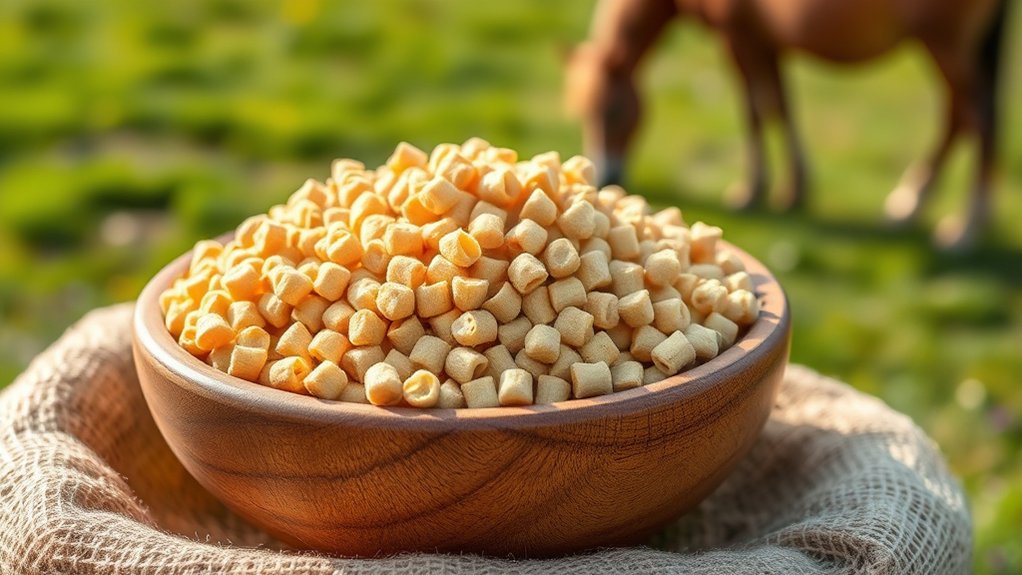
Although alfalfa pellets might seem unfamiliar at first, they offer a practical way to deliver concentrated nutrition to your horse. These pellets are made by grinding dried alfalfa hay and compressing it into small, uniform shapes. This process preserves the high levels of digestible fiber, protein, vitamins, and minerals found in alfalfa, making the pellets a nutrient-dense feed option.
Alfalfa pellets provide concentrated, nutrient-rich feed by compressing dried alfalfa hay into uniform, digestible shapes.
You can use them as a supplement or partial hay replacement, especially if your horse needs increased nutritional intake. Alfalfa pellets reduce waste and spoilage compared to loose hay, which helps improve feeding efficiency.
Plus, they’re easy to measure, store, and feed.
All of this supports consistent nutrition management, helping you maintain your horse’s health and performance effectively. So, if you’re looking for a convenient and nutritious option, alfalfa pellets are definitely worth considering.
How Do You Gradually Introduce Alfalfa Pellets to Your Horse?
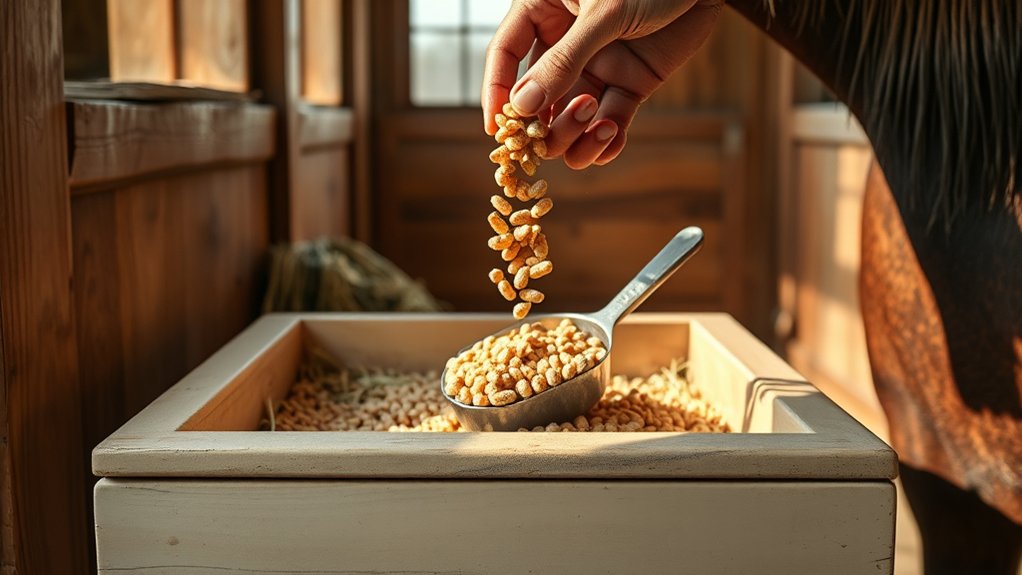
Start by offering your horse a small amount of alfalfa pellets—around half a pound to one pound daily. This helps their digestive system get used to the new feed.
Then, gradually increase the amount over the next 7 to 10 days. It’s best to split the feed into two or three smaller portions throughout the day. This way, you can help minimize any digestive stress.
Keep a close eye on your horse’s behavior and stool during this transition. That way, you can catch any signs of discomfort early and make adjustments if needed.
Starting With Small Amounts
When you introduce alfalfa pellets to your horse’s diet, begin with a small amount, typically between ½ to 1 pound per day. This helps reduce the risk of digestive upset. Offer pellets alongside their current hay or pasture feed to avoid sudden dietary changes.
Keep a close eye on your horse for any signs of colic, loose stools, or other digestive issues. If you notice any problems, talk to your veterinarian. This is especially important if your horse has existing health concerns.
| Step | Action |
|---|---|
| Initial Offering | ½ to 1 pound per day |
| Monitoring Period | Watch for digestive signs daily |
| Feeding Context | Mix with existing diet |
Starting small makes the transition safer and helps keep your horse’s gut healthy during dietary changes.
Gradual Feeding Increase
After introducing a small amount of alfalfa pellets, you’ll want to increase the feeding gradually to allow your horse’s digestive system to adjust. Start with ½ to 1 pound per day, then raise the amount by ¼ to ½ pound every 3 to 4 days over 7 to 10 days.
This slow progression helps prevent digestive upset like loose stools or colic.
Watch your horse closely for any signs of discomfort during this period. If adverse reactions occur, slow down the increase or pause until symptoms resolve.
Throughout the transition, ensure total forage intake stays within 1.5% to 2.5% of your horse’s body weight to maintain a balanced diet and avoid overfeeding.
This method supports a smooth dietary adjustment and optimal digestion. Taking it slow really makes a difference, so your horse stays happy and healthy.
How Much Alfalfa Pellets Should I Feed My Horse Daily?
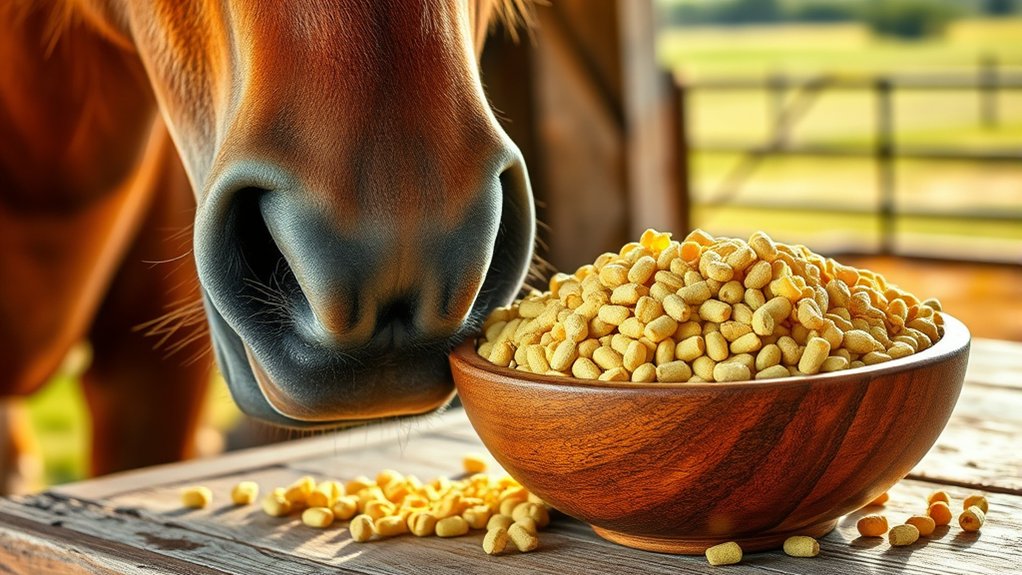
You should feed your horse alfalfa pellets at about 1.5% to 2.5% of its body weight each day. Of course, you’ll want to adjust this depending on your horse’s health and activity level.
It’s a good idea to start with smaller amounts—somewhere around half to one pound daily—and then gradually increase the amount over a week to ten days. This helps avoid any digestive upset.
Also, try splitting the total daily forage, including the pellets, into multiple feedings. Doing this supports better digestion and can reduce the risk of colic. It’s all about keeping your horse comfortable and healthy!
Daily Feeding Amounts
Although alfalfa pellets provide a nutrient-dense option, you should feed your horse approximately 0.5% to 1% of its body weight daily. That’s typically 5 to 10 pounds for a 1,000-pound horse.
Divide this total into 2 to 3 feedings to support efficient digestion and minimize colic risk. Adjust the amount based on your horse’s activity, overall diet, and health status. It’s a good idea to consult a veterinarian as needed.
For horses needing weight gain, you can increase pellets up to 2% of body weight, but only under veterinary supervision. Starting with small amounts and gradually increasing is critical, but that falls under gradual introduction, which we’ll cover later.
Monitoring your horse’s response guarantees you provide a suitable, balanced intake tailored to its specific nutritional demands.
Gradual Pellet Introduction
Starting alfalfa pellets at a low daily amount, such as ½ to 1 pound, helps your horse adjust without overwhelming its digestive system.
Introduce pellets gradually over 7 to 10 days, increasing the quantity while closely monitoring for digestive upset like colic or loose stools.
Divide the total daily pellet amount into 2 to 3 feedings to replicate natural grazing and support steady digestion.
Pay special attention to horses with sensitive stomachs, adjusting amounts if any signs of discomfort arise.
Always consult your veterinarian before making significant dietary changes to facilitate a smooth shift and maintain ideal gut health.
This careful, methodical approach minimizes digestive disturbances and promotes better acceptance of alfalfa pellets in your horse’s daily diet.
Adjusting Forage Intake
How much alfalfa pellets should you feed your horse daily to meet its nutritional needs without causing digestive issues?
For a 1,000 lb horse, total forage intake should be 15 to 25 lbs daily. This includes all hay, pasture, and pellets.
Start feeding ½ to 1 lb of alfalfa pellets, then increase gradually over 7 to 10 days to avoid digestive upset.
Split the daily pellet amount into 2 to 3 feedings to mimic natural grazing.
Adjust pellet quantity based on other forage consumed and your horse’s health status.
Always consult a veterinarian for tailored advice.
Feed 1.5% to 2.5% of body weight in total forage daily.
Introduce pellets slowly and increase gradually.
Divide pellet feedings throughout the day to support digestion.
How Often Should You Feed Alfalfa Pellets?
When you feed alfalfa pellets to your horse, aim for two to three meals per day to closely replicate their natural grazing behavior. Spreading the daily ration into multiple small feedings helps enhance digestibility and supports stable blood sugar levels, reducing colic risk.
Avoid feeding more than three times daily, as this can disrupt normal digestion and increase digestive upset. Consistency in feeding intervals is essential to maintain gastrointestinal health.
For horses with special conditions like insulin resistance, you might need to limit alfalfa or reduce feeding frequency under veterinary guidance.
When Should You Soak Alfalfa Pellets?
Although alfalfa pellets are generally safe for horses to consume dry, you should soak them in specific cases like senior horses, those prone to choke, or fast eaters. This helps minimize risks and makes the pellets easier to digest.
Soaking softens the pellets, which reduces the chance of choking and helps with digestion.
To soak properly, use warm water and let the pellets soak for 15 to 30 minutes until they’re fully softened. You can adjust the soak time depending on the pellet size—smaller pellets soften faster.
Always serve soaked pellets in a bucket or feed bin, never on the ground, and be sure to provide fresh water.
This way of soaking ensures safer feeding for vulnerable horses. It also keeps the nutrients available and reduces stress on their digestion.
Can Alfalfa Pellets Help My Horse Gain Weight?
If you want to help your horse gain weight effectively, incorporating alfalfa pellets into their diet can be a practical strategy. Alfalfa pellets are calorie-dense and rich in digestible fiber and protein, which are essential for muscle development and energy.
Feeding small, frequent amounts improves nutrient absorption and promotes steady weight gain.
You’ll typically notice results after 60 to 90 days of consistent feeding. To enhance the effects, try combining pellets with other high-calorie feeds like beet pulp, rice bran, or added fats.
It’s a good idea to introduce alfalfa pellets gradually to prevent digestive upset.
Keep a close eye on how your horse responds to the new diet. This approach helps guarantee safe and effective weight gain while meeting your horse’s nutritional needs in a practical, scientific way.
What Are the Health Risks of Feeding Too Many Alfalfa Pellets?
Feeding alfalfa pellets can support weight gain, but giving too many poses significant health risks you need to manage carefully. Overfeeding increases mineral intake, which can cause imbalances that affect your horse’s overall health. Excess protein and calcium from alfalfa might lead to urinary stones or kidney complications.
Alfalfa pellets aid weight gain but overfeeding risks mineral imbalances and kidney complications.
Also, a sudden increase in alfalfa disrupts digestion and raises the risk of colic.
Be aware of these specific risks: laminitis, especially in metabolically sensitive horses, gastrointestinal upset including colic from abrupt diet changes, and long-term obesity that can contribute to metabolic syndromes.
To avoid these issues, introduce alfalfa pellets gradually and keep a close eye on your horse’s condition. Balancing alfalfa with other forage helps maintain nutritional harmony and prevents these problems from cropping up.
Which Horses Should Limit Alfalfa?
Because alfalfa contains high levels of calcium, protein, and sugars, you should limit its intake for horses with metabolic disorders such as insulin resistance, metabolic syndrome, or PSSM.
These nutrients can disrupt mineral balance and make metabolic issues worse.
Also, horses prone to laminitis face increased risk when eating too much alfalfa because of its sugar and mineral content.
If your horse has a history of founder or tends to gain weight easily, managing or restricting alfalfa carefully is really important to avoid problems.
Always work closely with your veterinarian to check your horse’s specific health and create a feeding plan that fits.
Frequently Asked Questions
Can Alfalfa Pellets Replace Hay Entirely in a Horse’s Diet?
Yes, you can replace hay entirely with alfalfa pellets, but you must balance minerals carefully. Make sure to maintain an intake of 1.5–2.5% of your horse’s body weight.
Also, shift gradually over 7–10 days to avoid digestive issues or imbalances. This helps your horse adjust smoothly. Taking it slow really makes a difference!
How Do Alfalfa Pellets Compare Nutritionally to Grass Hay?
Imagine nutrient-packed alfalfa pellets as concentrated powerhouses. They deliver 15-20% protein and higher calcium than grass hay’s 8-12%. Plus, they offer denser calories and digestible fiber.
But you’ve got to balance minerals carefully to avoid health risks. It’s important to keep an eye on that to make sure everything stays in check.
Are There Specific Brands of Alfalfa Pellets Recommended for Horses?
You should consider brands like Tribute, Manna Pro, and Progressive Nutrition. They guarantee high-quality sourcing, contaminant testing, and consistent pellet size.
This means you get safer, more digestible alfalfa pellets for your horse’s ideal nutrition and health. These brands really focus on quality, so it’s easier to trust what you’re feeding your horse.
Can Alfalfa Pellets Cause Allergies or Sensitivities in Horses?
Yes, alfalfa pellets can cause allergies in horses, especially if they contain mold or dust. You should introduce them gradually, monitor for respiratory or skin reactions, and consult a vet if sensitivities appear.
It’s always a good idea to keep an eye on your horse when trying new feed. If you notice any unusual symptoms, don’t hesitate to reach out to your vet. They can help figure out if the alfalfa pellets are the cause.
How Should Alfalfa Pellets Be Stored to Maintain Freshness?
You should store alfalfa pellets in a cool, dry, well-ventilated area. Make sure they are sealed airtight to keep out moisture and odors. This helps keep them fresh for longer.
It’s a good idea to regularly check for any signs of mold or clumping. If you notice either, it’s best to discard those pellets. Try to use them within 3 to 6 months to maintain their freshness and nutritional value.
Conclusion
Feeding alfalfa pellets isn’t rocket science, but overdoing it can turn your horse’s digestive system into a ticking time bomb. Stick to gradual introductions and measured amounts to avoid overwhelming their gut with too much protein and calcium.
Think of alfalfa pellets as powerful fuel. Used wisely, they can boost weight and health like a finely tuned engine. But used recklessly, they risk colic and laminitis.
Precision and patience keep your horse thriving, not struggling. So take it slow and pay attention to how your horse responds.