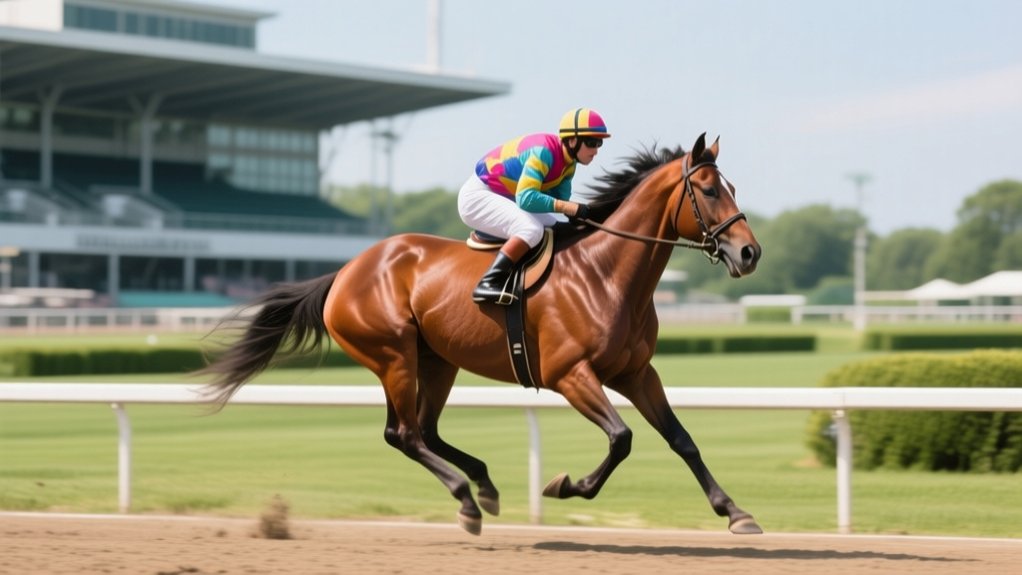
How Old Are Racing Horses – Quick Facts
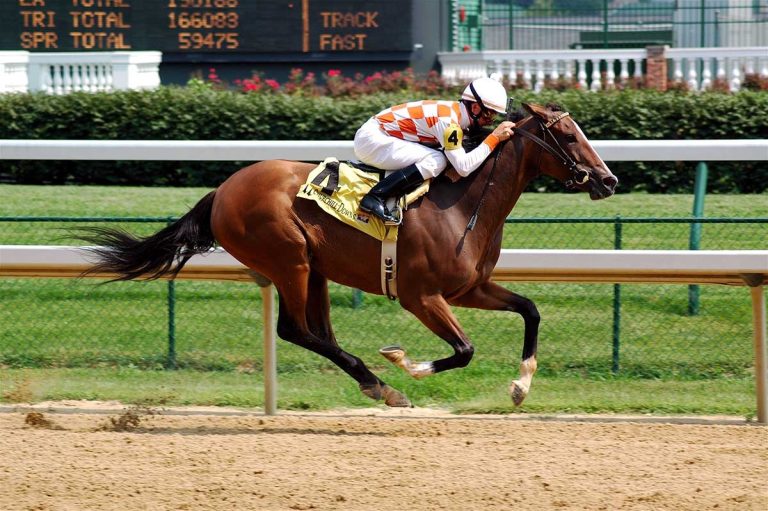
You’ll typically see racehorses start competing at 2 years old, with early races designed to test speed and stamina over shorter distances. They usually reach peak performance between 4 and 5 years before gradually declining after 6¾ years.
Career length varies by breed. Flat racers retire around 5, while jump and endurance horses tend to race longer. Aging signs affect training and health management.
Explore further to understand how age shapes their racing journey and post-career shifts. It’s pretty interesting to see how their needs change as they grow older!
When Do Racehorses Typically Start Racing?

Although some racehorses start as early as 18 months, most begin their racing careers at two years old, commonly entering Juvenile races designed for this age group. These events serve as a critical assessment phase, allowing trainers to evaluate a horse’s speed and stamina early on.
Most racehorses begin at two years old, entering Juvenile races to assess early speed and stamina.
Typically, flat racehorses start between ages two and three, benefiting from early exposure to competition. In contrast, jump racehorses generally commence racing later, around four years old, due to the increased physical demands of jumping.
This staggered start helps guarantee developmental readiness specific to the racing discipline.
Starting at two provides valuable data on each horse’s potential before they reach peak performance. This info guides training and race selection strategies more effectively. It really helps trainers make smarter decisions down the line.
How Does Age Influence Racing Performance?
When you analyze racing performance across a horse’s lifespan, you’ll see that their peak speed typically occurs between four and five years old.
From age two to mid-four, horses improve markedly, with an average increase of 22.2 speed figure points. The probability of achieving top speed figures is highest before age six, although only 3% of two-year-olds reach peak performance.
After approximately 6¾ years, racing ability begins a predictable quadratic decline. Horses over nine years old consistently perform below their career average speed figures.
This age-related trend highlights a clear performance trajectory: rapid improvement in early years, peak performance around 4.45 years, followed by gradual decline.
Understanding this progression helps you assess a horse’s current capabilities and anticipate future performance changes based on age.
When Do Racehorses Reach Their Peak Age?
You’ll find that racehorses typically hit their peak performance between 4¼ and 4½ years old. That’s when their speed figures usually reach their highest levels.
Before they turn 2½, horses generally perform below their career averages, which shows they haven’t fully matured yet.
Then, after about 6¾ years, their performance tends to decline, revealing a clear age-related trend in their racing ability.
Peak Performance Age
At what age do racehorses reach their peak performance? You’ll find that racehorses typically hit their prime around 4 1/4 to 4 1/2 years old. This is when they often achieve their highest Beyer speed figures, reflecting maximum racing ability. Here’s what you should know:
Horses improve significantly from age 2 to about 4.5, gaining approximately 22.2 speed points on average. The majority of top speed figures come from horses aged 4 and 5, marking these as prime racing years.
Regression models place the overall peak age near 4.45 years, reinforcing this timeframe scientifically.
After 6 3/4 years, performance declines, with horses over nine years running roughly 7.1 points below their career average.
Understanding these facts helps you gauge when a racehorse is likely at its best.
Age-Related Speed Trends
How do racehorses’ speeds evolve as they age? You’ll notice that their speed improves markedly from age 2 to around 4.5 years. That’s when they hit peak performance, roughly 5 points above their career average.
After age 6.75, speed declines gradually. Horses older than 9 run about 7.1 points below their mean. Only a small fraction peak as two-year-olds, and top speeds mostly occur before age 6.
| Age Range | Speed Trend | Speed Difference (Points) |
|---|---|---|
| 2 – 4.5 years | Rapid improvement | +22.2 |
| ~4.45 years | Average peak age | +5 |
| Before 6 years | Most top speeds occur | Peak |
| After 6.75 years | Gradual decline | – |
| 9+ years | Notably decline | -7.1 |
This table highlights key speed trends by age.
Why Do Two-Year-Olds Race Shorter Distances?
Because two-year-old racehorses are still developing physically, they usually compete in shorter races, around 5 to 6 furlongs. This helps you manage their immature musculoskeletal systems and avoid overexertion.
Racing shorter distances lets you gradually build their stamina as they mature. It’s also a good way to test their early speed and agility through sprint events.
Plus, it minimizes the risk of injury by avoiding excessive strain. You’ll want to align the race length about 0.75 furlongs below their eventual career average.
What Is the Typical Length of a Racehorse’s Career?
After managing two-year-olds through shorter races to protect their developing bodies, you’ll want to understand the typical duration of a racehorse’s career.
Thoroughbreds usually race from age two until around five, with many retiring by their mid- to late-fives. Flat racehorses tend to peak between four and five years old, then gradually decline.
They often retire early due to injury or decreased competitiveness. In contrast, jump racehorses frequently compete longer, sometimes racing until age ten or beyond. Some even continue into their early teens for longer-distance events.
This difference reflects the varying demands and physical stress of each racing type.
Knowing these career spans helps you anticipate training and racing strategies. It also guides you on potential progression, ensuring prime performance and welfare throughout the horse’s active years.
What Happens to Racehorses After Their Racing Career?
After their racing career, a lot of horses transition into breeding roles or get retrained for other equestrian activities, depending on their pedigree and how well they performed.
Stallions with strong racing records often go on to become sires.
Mares, on the other hand, might enter broodmare programs.
Besides that, there are also specialized organizations that focus on rehabilitation and retirement services.
They make sure these horses get the proper care and new opportunities they deserve once their racing days are over.
Breeding Opportunities
When racehorses finish their competitive careers, many move into breeding roles that take advantage of their genetics and track records. You’ll often see colts become stallions, while fillies serve as broodmares, especially if they’ve strong pedigrees and impressive racing achievements.
Breeding decisions focus on things like age, health, lineage, and performance history. Here are some key points to keep in mind:
Successful racers with excellent pedigrees are in high demand for breeding programs. Colts with superior genetics usually become stallions to sire future champions. Fillies become broodmares, adding valuable bloodlines to the breed.
Retirement facilities help horses that aren’t suitable for breeding find other roles.
Understanding these breeding opportunities shows how genetics and performance continue to influence a racehorse’s value even after they leave the track.
Retirement And Retraining
Although racehorses often retire young, typically between 4 and 6 years old, they can have a variety of second careers through retraining. You can retrain retired racehorses for disciplines like dressage, jumping, or pleasure riding. This helps extend their active lifespan beyond the track.
Organizations such as New Vocations and the Secretariat Center specialize in adopting these horses and shifting them into riding or companion roles. If a horse has a strong racing record and pedigree, it might become breeding stock.
There are also equine retirement facilities that provide essential care and rehabilitation, especially for injured or aging horses. These places ensure the horses’ health and comfort.
While some Thoroughbreds race into their early teens, most retire earlier. That’s why retraining and proper post-racing care are really important for their long-term welfare and use. It’s great to know these horses can have fulfilling lives after their racing days are over.
How Does Racing Age Vary Across Different Horse Breeds?
Since different horse breeds have distinct physiological traits and racing demands, their competitive ages vary quite a bit. Understanding these differences helps you appreciate the unique racing career spans for each breed.
Thoroughbreds start racing at two and usually peak around four to five years old. This reflects their high early physical maturity.
Jump racehorses, on the other hand, begin later—around four years old—but often race until they’re twelve or even older. That’s because their events demand more endurance.
Quarter Horses tend to have shorter careers, typically racing from two to six years. They focus more on explosive speed rather than longevity.
Arabian endurance horses are a different story altogether. They can compete well into their teens, sometimes reaching 15 to 20 years, showing exceptional stamina and durability.
These variations really highlight how breed-specific traits influence racing longevity. It means trainers and owners need to manage each horse’s career in a way that fits their unique needs, optimizing both performance and welfare throughout their racing years.
How Does Training Change as Racehorses Get Older?
As racehorses mature, their training shifts focus from intense speed and stamina building to maintaining overall fitness and preventing injuries.
When horses are younger, you’ll push them through progressively intense workouts to develop speed, stamina, and refine racing techniques, especially around ages four to five.
As they age, you’ll reduce workload intensity, incorporating longer rest periods and lighter exercises to accommodate their physical maturity and minimize strain.
Recovery and suppleness become priorities, with targeted routines to prevent injuries common in older horses.
Also, older horses often compete in less demanding races or move into less competitive roles.
This change affects how often and how hard you train them.
Adjusting their training like this helps extend their active careers while keeping them healthy and performing well for longer.
What Are the Signs of Aging in Racehorses?
When you observe a racehorse beyond the age of six or seven, you’ll notice distinct signs of aging that affect its performance and physical condition. These changes are measurable and impact training and racing potential.
Key indicators include a decrease in speed figures and performance, with slower recovery times post-exertion.
Key signs of aging in racehorses include reduced speed and longer recovery after exertion.
You might also see increased stiffness and joint issues, which reduce mobility and stride length. There’s often a decline in muscle tone, leading to less power and endurance.
Visible age-related physical traits can show up too, such as a graying coat in breeds like grey Thoroughbreds.
Additionally, aging horses tend to have diminished stamina and a heightened risk of injury.
Recognizing these signs helps you adjust training regimens and manage the horse’s health effectively. This way, you ensure both safety and longevity in their racing career.
Frequently Asked Questions
How Is a Racehorse’s Age Officially Determined?
You determine a racehorse’s official age by assigning January 1st as its universal birthday, regardless of its actual birthdate. This standardizes age for all Thoroughbreds born within the same calendar year. It helps simplify racing classifications.
Do Racehorses Age Differently in the Northern vs. Southern Hemisphere?
Imagine two horses born a month apart but racing at the same time. You’ll find racehorses actually age differently between hemispheres.
Northern ones share a January 1st birthday, while Southern horses’ ages align with their actual birth dates. It’s kind of interesting how that works, right?
How Does Nutrition Impact a Racehorse’s Aging Process?
You’ll see nutrition directly influences a racehorse’s aging by supporting muscle recovery, skeletal strength, and immune function. Balanced diets with essential vitamins, minerals, and hydration slow physical decline, helping maintain peak performance as the horse ages.
Feeding your horse the right nutrients isn’t just about performance on race day. It plays a big role in keeping them healthy and strong over the years. When their diet is spot on, they bounce back faster and stay more resilient against the wear and tear of racing.
Are There Age Restrictions for Entering Specific Races?
Yes, you’ll face firm age filters for flat and jump races. Three-year-olds dominate prestigious derbies, while jump and endurance contests demand four or older. These strict standards sustain safety, fairness, and competitive consistency across competitions.
It’s all about making sure everyone competes on a level playing field. Plus, it keeps the races safe for all the participants. So, if you’re thinking of entering, double-check the age rules first!
What Role Does Genetics Play in a Racehorse’s Longevity?
Genetics play a vital role in your racehorse’s longevity by influencing bone density, muscle fiber efficiency, and injury recovery. You’ll find that selecting horses with strong genetic traits enhances durability and extends their competitive racing careers.
It’s pretty interesting how a horse’s genes can impact not just how fast they run, but how long they can keep running at their best. So, when you’re looking at potential racehorses, paying attention to their genetic background really pays off.
Conclusion
You might wonder if racehorses truly decline after their peak at three to five years old. While performance often drops post-peak, training adjustments can extend competitive viability. However, age-related physical changes inevitably limit speed and endurance.
Understanding this helps you appreciate the delicate balance between a horse’s prime years and careful management. So, while age sets natural boundaries, informed training can maximize a racehorse’s potential throughout its career.