What Does An Andalusian Horse Look Like – Quick Answer
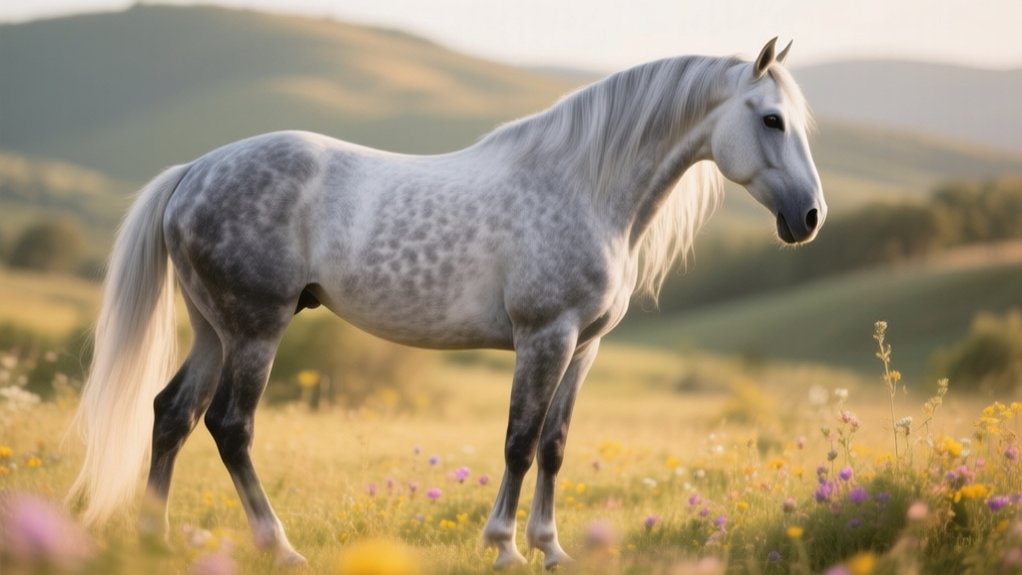
You’ll spot an Andalusian by its compact, muscular build standing around 15 to 16 hands tall, with broad hindquarters and a deep chest supporting agile movement. Its elegant, arched neck flows into a refined head, often with large, expressive eyes. The thick, flowing mane and tail add regal flair.
Their smooth, elevated gaits blend power with grace, creating a striking, noble presence. Keep exploring to discover what sets the Carthusian Andalusian apart and more about their unique traits.
What Are the Distinctive Physical Traits of an Andalusian?
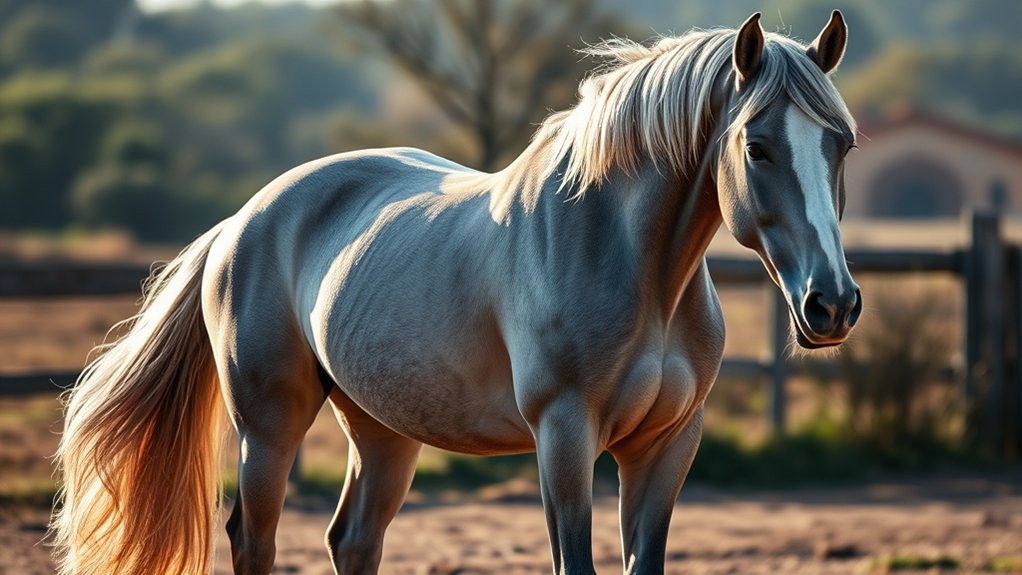
When you look at an Andalusian horse, its compact, muscular build immediately stands out. They usually range from 15.0 to 16.2 hands tall.
You’ll notice a distinctive head with a straight or slightly convex profile, large triangular eyes that convey alertness, and small, expressive ears.
Its long, arched neck is well-crested and perfectly balanced with the body, which really enhances its elegant silhouette.
The horse’s short back supports broad hindquarters and a deep, well-developed chest.
This combination creates powerful yet graceful movement.
Most Andalusians flaunt a silky mane and tail, mainly in gray or bay shades, with minimal leg feathering.
These traits come together to give the Andalusian its characteristic noble and refined appearance.
It’s what makes them both striking and functional.
How Tall and Heavy Do Andalusians Usually Get?
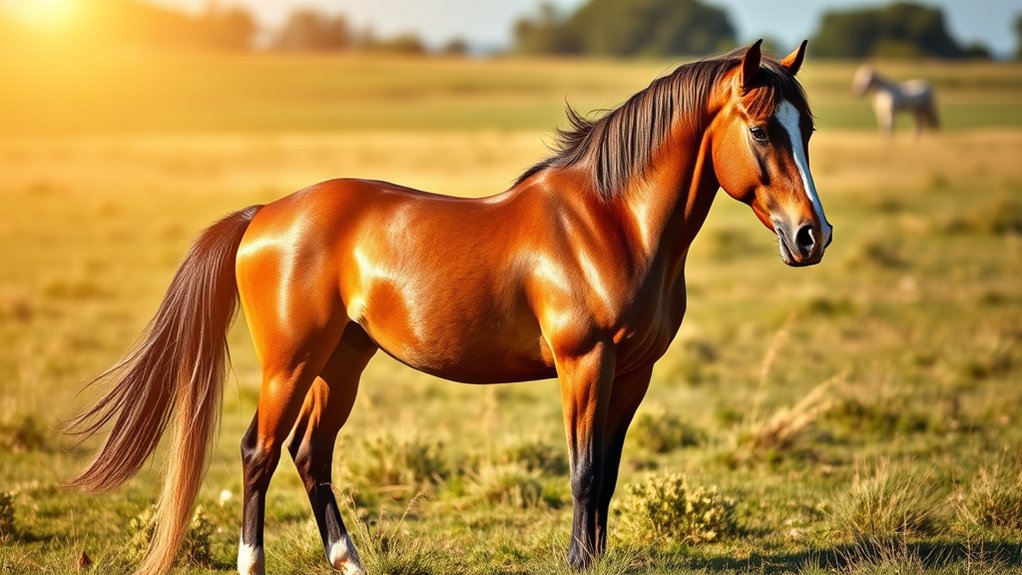
Although Andalusians are often admired for their elegance, they also possess impressive size and strength. When considering their stature, you’ll find these horses stand tall and carry substantial weight, making them powerful yet agile. Here’s what you need to know:
Andalusians blend elegance with impressive strength, standing tall and carrying substantial weight gracefully.
Andalusians typically stand between 15.2 to 16.2 hands tall (62 to 68 inches at the shoulder).
Mature males weigh about 512 kg (1,128 pounds), while females average around 412 kg (907 pounds).
Elite stallions often measure at least 15.1 hands, showcasing a strong, elegant build.
Their compact, muscular physique combines height and heft, giving them notable strength and stamina.
This blend of size and muscle defines the Andalusian’s medium stature. It’s perfect for riding and performance.
What Colors and Markings Are Common in Andalusians?
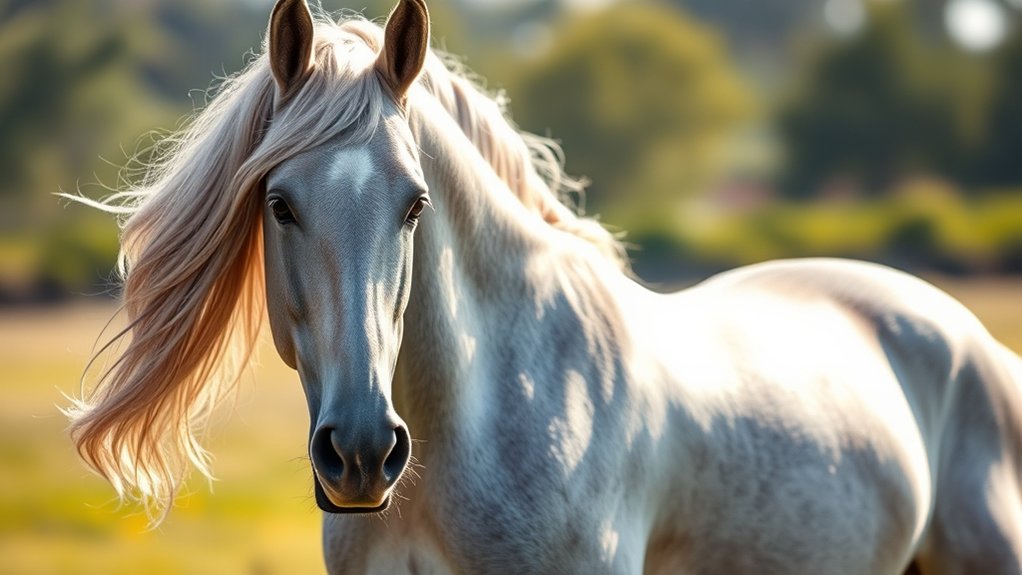
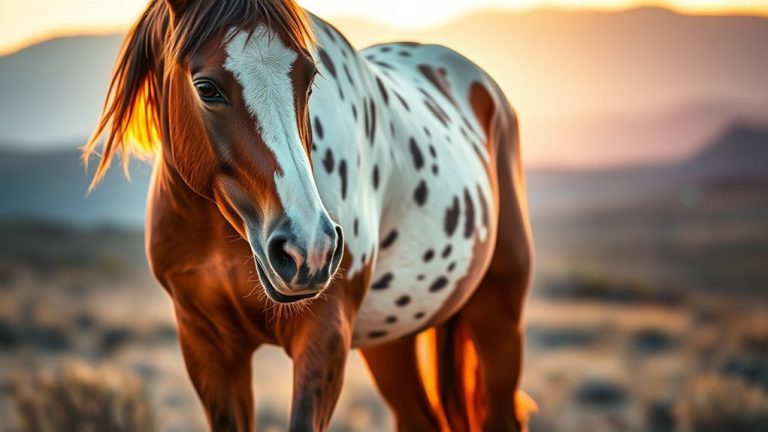
Since color plays a key role in identifying Andalusians, you’ll notice most of these horses sport gray or bay coats. Gray makes up about 80% of the breed in the United States.
While gray and bay are traditional, you’ll also find black, dun, palomino, and chestnut Andalusians.
Rarely, you might encounter buckskin, pearl, or cremello colors. White markings such as socks, stars, and blazes frequently adorn these horses, adding distinct character.
White whorls on the face or body are common and often regarded as signs of luck or personality traits.
Historically, certain white leg markings and whorls were thought to influence a horse’s nature. So, these features are more than just aesthetic.
They really speak to the breed’s rich cultural symbolism and identity.
How Do Andalusians’ Manes and Tails Stand Out?
You’ll notice Andalusian horses really stand out because of their thick, long manes and tails. They flow with a silky texture that’s hard to miss. This abundant hair adds a striking elegance and really enhances their noble presence.
Of course, keeping that lush look doesn’t happen on its own—it takes regular grooming.
But it’s definitely a signature feature that sets them apart from other breeds.
Thick, Long Hair
When you admire an Andalusian horse, its thick, long mane and tail immediately capture your attention. They flow with a silky, fine texture that often reaches the ground. This distinctive feature really enhances their noble, majestic look.
Here’s what sets their hair apart:
- The mane and tail are especially abundant, creating a striking visual impression.
- Their tails are thick and typically carried high, showcasing regal elegance.
- The hair’s silky texture contributes to a refined appearance without losing volume.
- Well-maintained coats, including manes and tails, shine brilliantly, emphasizing the breed’s overall beauty.
You’ll notice how these elements combine to give Andalusians their signature, elegant presence. It’s no wonder horse enthusiasts admire them worldwide.
Silky, Abundant Texture
Although many horse breeds boast beautiful manes and tails, Andalusians stand out with their silky, abundant hair that flows effortlessly. You’ll notice their manes and tails aren’t only thick and long but also exceptionally fine and shiny. This gives them a lush, full appearance unmatched by most breeds.
As gray Andalusians age, their coat and mane often lighten, which enhances the silkiness and adds a luminous quality. To keep this signature texture, regular grooming is essential. It helps preserve the hair’s softness and natural luster.
This flowing, silky mane and tail aren’t just for show. They define the Andalusian’s elegant and noble presence, making the breed instantly recognizable and admired for its refined beauty.
How Would You Describe the Andalusian’s Movement and Gaits?
While observing an Andalusian horse in motion, you’ll notice its elevated, harmonious, and fluid movement that combines grace with impeccable balance. This breed’s gaits captivate with their rhythm and expressiveness, showcasing athleticism and elegance.
The Andalusian horse moves with elevated grace, perfect harmony, and a fluid rhythm that embodies elegance and athleticism.
Here’s what stands out:
- Walk: Smooth, rhythmic, and relaxed, offering a calm yet purposeful pace.
- Trot: Spirited and cadenced, featuring pronounced, elevated front leg action.
- Canter: Energetic and extended, often naturally collected with strong impulsion.
- Advanced Movements: Executes piaffe, passage, and intricate haunch turns with remarkable joint flexion and roundness, emphasizing superior control and finesse.
Together, these qualities create a balance between forward propulsion and roundness, making the Andalusian’s movement both powerful and refined.
You’ll find their gaits ideal for dressage and classical riding disciplines.
What Makes the Carthusian Andalusian Special?
You’ll notice the Carthusian Andalusian really stands out because it has the purest bloodline, which has been carefully preserved since the 18th century.
It’s got that refined, oriental head shape and an elegant build that highlight traits unique to this rare strain.
When you understand these physical characteristics, it’s easier to see why the Cartujano is so highly prized.
Purest Bloodline Traits
Because the Carthusian Andalusian descends from mares carefully selected by Spanish royalty in the early 18th century, it represents the purest bloodline of the breed. This lineage was meticulously preserved through selective breeding, especially after the Peninsular Wars, ensuring its distinct traits remain intact.
When you study this bloodline, you’ll notice pronounced oriental and concave head shapes, giving an aristocratic refinement. There’s also a predominance of gray coat coloration, which is more common here than in other Andalusian lines.
Plus, the elegant conformation really sets it apart in stature and poise. And don’t forget the longer, more refined neck that enhances its graceful silhouette.
These traits make the Carthusian Andalusian a unique symbol of purity and heritage in the equine world.
Unique Physical Characteristics
Although the Carthusian Andalusian shares many qualities with other Andalusian horses, its unique physical characteristics set it apart unmistakably. You’ll notice its more concave, oriental-shaped head with a refined, slightly convex profile, giving it a distinct aristocratic expression.
Typically, it boasts a chiefly gray coat, sometimes marked by rare tail warts or even small horns. These traits hint at its ancient lineage.
This strain presents a compact, muscular build paired with a high-set, elegantly arched neck that enhances its balanced conformation.
When you observe a Carthusian, its refined appearance and pure bloodline really shine through. It makes the horse stand out among Andalusian breeds.
Its distinctive traits reflect centuries of careful breeding, preserving the classical beauty and strength this breed is celebrated for.
What Is the Typical Head and Neck Shape of an Andalusian?
When you observe an Andalusian horse, you notice a head that balances nobility and refinement with its straight or slightly convex profile. This shape gives the horse an elegant, classical appearance. The head is proportionate to the body, featuring a broad forehead that enhances its dignified look.
The Andalusian’s head combines nobility and elegance with a refined, proportionate profile.
The neck complements this with a long, arched, and well-muscled form, flowing smoothly into the shoulders.
Key features include:
- Small, alert ears set proportionately on the head
- Expressive, triangular-shaped eyes that convey intelligence
- A broad forehead providing balance and strength
- A long, arched neck creating a statuesque silhouette
Together, these traits give the Andalusian a graceful yet powerful presence suited to classical riding. It’s really a beautiful combination that stands out in the show ring and the dressage arena.
How Does an Andalusian’s Build Enhance Its Athletic Ability?
The Andalusian’s compact, muscular build gives you the power and stability needed for demanding athletic movements. Its broad chest and strong hindquarters supply exceptional propulsion and balance, which are essential for quick starts, stops, and turns.
The well-arched neck and short back enhance flexibility, making it easier to achieve collection and precise control during dressage or performance routines. You’ll notice how its balanced conformation promotes fluid, harmonious gaits that boost both agility and endurance.
Sturdy legs with strong tendons support swift, accurate maneuvers and impressive jumps without sacrificing durability. This combination of strength, flexibility, and balance means the Andalusian moves with both power and grace.
It’s perfectly equipped to excel in a variety of athletic disciplines that require speed, precision, and sustained effort.
Why Do Andalusians Look Both Elegant and Powerful?
As you observe an Andalusian in motion, it’s clear their balanced build doesn’t just support athletic skill. It actually shapes their striking presence. You’ll notice how their appearance combines elegance with power through a few key traits.
First, they’ve a well-balanced conformation featuring a broad chest and muscular neck. This conveys strength and grace at the same time.
Then, their proportionate frame with a short back and rounded hindquarters enables both strength and a regal silhouette.
Their gaits are harmonious and elevated, highlighting agility, athleticism, and fluidity. This really reinforces their elegant yet powerful movement.
Plus, distinctive features like a convex or straight profile and flowing mane and tail add to their majestic presence.
Frequently Asked Questions
What Is the History Behind the Andalusian Horse Breed?
You’ll find the Andalusian horse’s history rooted in ancient Iberia, shaped by Moorish, Celtic, and Roman influences. Carthusian monks preserved its lineage since the 13th century, refining this noble breed prized by royalty and warriors alike.
It’s pretty fascinating how this breed has such a rich background, don’t you think? Over the centuries, it became known for its strength and elegance, making it a favorite among different cultures.
How Long Do Andalusian Horses Typically Live?
Andalusian horses typically live around 25 to 30 years. If you provide proper care, nutrition, and regular vet check-ups, your Andalusian can even reach its early 30s.
This helps maximize its natural longevity and health. It’s all about giving them the right attention and environment. With a little effort, you can really extend their happy, healthy years.
What Are Common Health Issues in Andalusian Horses?
You know what they say: prevention is better than cure. Andalusian horses often face melanoma, laminitis, inguinal hernias, and hoof problems like thrush.
Staying vigilant and maintaining proper care helps you protect their health effectively. It’s all about keeping an eye out and acting early. That way, you can catch issues before they become serious.
How Do Andalusians Usually Behave Temperament-Wise?
You’ll find Andalusians gentle, calm, and friendly, making them great for riders of all levels. They’re intelligent, quick learners, affectionate, and loyal.
At the same time, they can be spirited and energetic during work or play when engaged. So, you get a perfect mix of calm and energy depending on the moment.
Are Andalusians Suitable for Beginner Riders?
You’ll find Andalusians gentle yet alert, like a calm breeze ready to shift. They suit confident beginners who train patiently with skilled guidance, as their sensitivity and energy demand clear communication and steady groundwork.
That said, they’re not typically the best choice for absolute beginners. With the right approach, though, they can be wonderful partners for riders willing to learn and grow.
Conclusion
You might think Andalusians are just showy horses, but their elegance goes hand in hand with strength and agility. Their distinctive, muscular build and flowing manes aren’t just for looks. They actually help with performance in demanding disciplines.
When you see an Andalusian’s proud carriage, natural athleticism, and expressive gaits, you’ll understand why they’re valued for both beauty and power. They truly embody a perfect balance that’s hard to find elsewhere.