Can Horses Sense Fear?
Yes, horses can sense your fear through chemical signals in your sweat. They detect these chemosignals independently of what they see or hear, triggering behavioral changes like increased alertness and cautious withdrawal.
Physiological responses such as a higher heart rate also occur. Your emotional state directly influences how they react and trust you. Understanding this can improve your interactions and safety with horses.
There’s more to discover about how these subtle signals shape the bond between you and your horse.
How Do Horses Detect Human Emotions Through Smell?
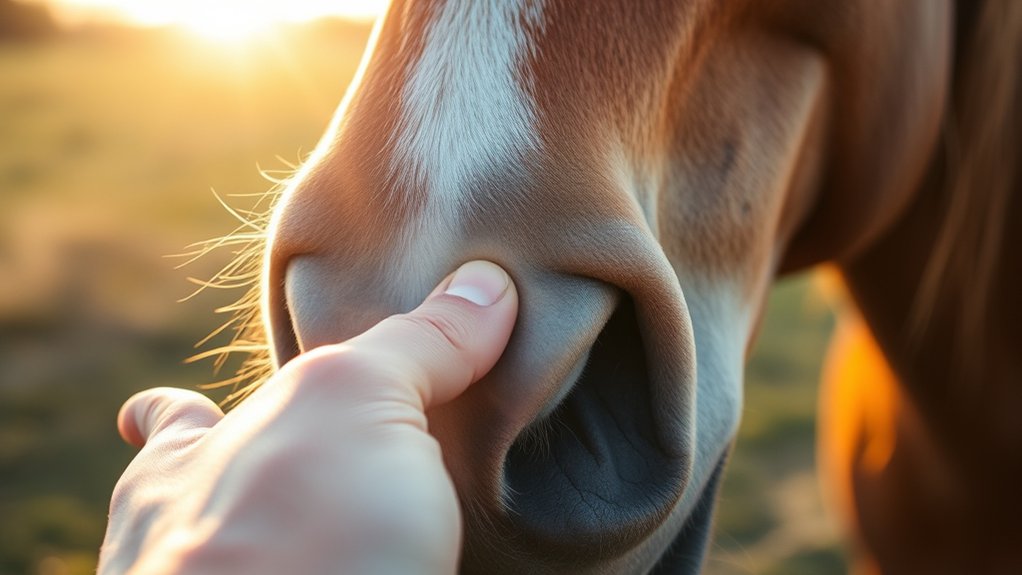
Although you mightn’t notice it, horses can detect your emotions through chemical signals in your sweat. When you experience strong feelings like fear, your body releases specific volatile compounds that horses can pick up using their highly sensitive sense of smell.
These chemical signals carry information about your emotional state, allowing horses to perceive subtle changes in your mood. Research shows that horses respond both behaviorally and physiologically to these odors, indicating they truly detect human emotions chemically rather than just visually or audibly.
Their olfactory system is finely tuned to distinguish these scents, helping them interpret your feelings even when you aren’t aware of it. Understanding this connection can deepen your empathy toward horses and enhance your interactions with them.
What Recent Research Reveals About Horses Smelling Fear
You mightn’t realize it, but horses can actually pick up on fear just by smelling the chemicals in your sweat. They don’t even need to see or hear you to sense it.
Studies have found that when horses catch a whiff of fear, they get more alert, jumpy, and tend to approach more carefully. It’s pretty amazing how closely their sense of smell is tied to picking up on what you’re feeling.
Fear Detection Mechanism
When horses detect fear, they rely primarily on chemosignals present in human sweat rather than visual or vocal cues. Your horse’s olfactory sensitivity allows it to perceive subtle chemical compounds linked to fear, enabling an accurate emotional assessment.
Recent research shows that horses distinguish fear-related odours from sweat samples collected after humans viewed fear-inducing videos. This detection triggers physiological changes like increased heart rate and heightened startle reflexes.
The findings highlight that horses process these chemosignals independently of other sensory inputs, emphasizing the role of scent in their fear detection mechanism.
Understanding this olfactory-based system helps you appreciate how horses intuitively gauge your emotional state, fostering deeper trust and communication between you and your equine companion.
Behavioral Responses Observed
Building on the understanding that horses detect fear through chemosignals in human sweat, research reveals distinct behavioral changes triggered by these odors. When horses smell fear-related emotional signals, they show increased alertness and startle responses, indicating heightened vigilance.
You’ll notice they approach humans less often and exhibit physiological stress markers such as elevated heart rates. These behavioral responses include reduced exploration and cautious movements, suggesting horses interpret fear signals through their olfactory system.
Importantly, horses react based solely on scent without relying on visual or vocal cues, demonstrating a sophisticated sensitivity to human emotional states. Recognizing these subtle changes can help you better understand how horses perceive and respond empathetically to fear, improving your interactions and fostering trust between you and these perceptive animals.
How Horses Behave When Exposed to Fear-Related Human Odors

Although horses can’t see your fear, they can detect it through scent, which considerably alters their behavior. When a horse smells fear-related human odor, it often exhibits increased startle responses and heightened alertness.
You’ll notice that the horse is less likely to approach you or investigate nearby objects, signaling a clear aversion to the fear odor. This reaction suggests the horse perceives fear as a potential threat.
Furthermore, the horse tends to touch or interact with you less frequently, demonstrating a cautious withdrawal. These behavioral changes indicate that the horse processes fear odors as meaningful signals, affecting its willingness to engage.
Understanding this response helps you foster more positive, calm interactions with horses by managing your own emotional state.
Physiological Changes When Horses Smell Human Fear
When you expose a horse to human fear odors, you’ll notice its heart rate goes up, showing that it’s more alert.
At the same time, cortisol levels increase, which means the horse is feeling stressed inside.
Heart Rate Increases
Since horses rely heavily on their senses to interpret their environment, they exhibit clear physiological changes when they detect human fear through scent. You’ll notice that their heart rates increase notably upon exposure to human fear-related odors.
This rise in heart rates, triggered by olfactory cues like sweat from fear-induced humans, signals a stress response in the horse’s autonomic nervous system. Monitoring these changes helps you understand that horses don’t just see or hear fear; they physiologically sense it.
| Parameter | Observation |
|---|---|
| Stimulus | Human sweat during fear exposure |
| Horse Heart Rate | Significant increase |
| Detection Method | Olfactory cues |
| Response Indicator | Elevated stress levels |
Cortisol Level Responses
Despite clear signs of physiological stress such as increased heart rate, horses don’t show significant changes in cortisol levels when exposed to human fear-related odors.
Cortisol, a key hormone involved in stress responses, remained stable even as horses detected fear chemosignals.
This suggests that while horses experience immediate physiological stress reflected in heart rate elevations, their hormonal stress response, measured by cortisol, may require prolonged or more intense exposure to fear cues to manifest.
You should understand that horses’ sensitivity to human fear is complex; they react quickly on a cardiovascular level but don’t necessarily produce measurable cortisol spikes in short-term encounters.
Recognizing this distinction helps clarify how horses process and respond to fear chemosignals physiologically without overstating hormonal stress markers.
Stress Indicators Observed
How do horses physically react when they detect human fear through scent? When horses smell human fear, they exhibit clear stress indicators, including increased heart rates and elevated cortisol levels. These physiological responses reveal that horses process fear odors as genuine signals of threat, even without visual or vocal cues.
You’ll notice horses become more alert and startle more easily, reflecting an internal shift in their physiological state. This sensitivity to human fear highlights their remarkable ability to detect subtle emotional chemosignals, triggering a measurable stress response.
Understanding these stress indicators helps you appreciate the depth of horse-human emotional communication. It also emphasizes the importance of managing your own emotional states around horses to maintain their well-being.
How Fear Scents Affect Horses’ Behavior With Humans
When horses detect fear scents emitted through human sweat, their behavior changes noticeably, reflecting heightened alertness and stress. These chemical signals influence horse behavior independently of visual or vocal cues, showing how deeply horses sense human emotions.
You may observe that horses startle more easily in response to fear scents, exhibit increased heart rates signaling physiological stress, and show reluctance to approach humans emitting fear odors. They also display heightened vigilance and scanning behaviors and alter their usual interactions by maintaining distance.
Understanding how fear scents affect horses’ behavior helps you appreciate their sensitivity to human emotions. Recognizing these subtle changes can improve your interactions and promote a more trusting relationship, as horses respond directly to the invisible cues you emit through scent.
Why Handlers Staying Calm Matters to Horses

Because horses are highly attuned to subtle emotional cues, your ability to stay calm directly influences their stress levels and behavior. When you act as a calm handler, your composed state reduces the horse’s alertness and promotes trust.
Horses detect your emotional cues through body language and chemosignals, which can either soothe or alarm them. Stress or fear from you can heighten their anxiety, disrupting horse behavior and safety. Maintaining calm improves your bond and interaction quality.
| Handler State | Emotional Cues Detected | Horse Behavior Outcome |
|---|---|---|
| Calm | Relaxed posture, steady breathing | Horse relaxed, less startled |
| Anxious | Rapid movements, tense muscles | Horse alert, nervous |
| Fearful | Shaking voice, erratic gestures | Horse stressed, reactive |
| Composed | Controlled gestures, soft tone | Horse trusts, cooperative |
| Stressed | Elevated heart rate, sweating | Horse uneasy, defensive |
Can Horses Smell Other Human Emotions Besides Fear?
Although fear is the most commonly studied emotion in equine olfactory research, horses can detect a variety of human emotions through chemical signals in sweat. When you interact with horses, they don’t just sense fear. They respond to a spectrum of human emotions.
Research reveals that horses distinguish odors linked to happiness, fear, and neutrality. Specific chemical compounds in sweat correspond to distinct emotional states. Horse responses vary based on the emotional chemical signals detected.
Physiological and behavioral changes occur with both positive and negative emotions. This attunement indicates horses’ sensitivity to diverse human emotions.
Understanding this helps you appreciate how finely horses perceive your emotional state. It reinforces the importance of mindful emotional communication through chemical signals.
How This Ability Impacts Horse Training and Safety
When you train horses, managing your own stress is super important. You see, horses can actually sense fear through chemical signals and they respond to it.
So, if you stay calm, it really helps ease their anxiety and keeps both of you safer.
Knowing this connection is pretty powerful. It lets you tweak how you approach training and make the whole experience more effective and secure for everyone involved.
Training With Emotional Awareness
If you stay aware of your emotional state during training, you can considerably influence your horse’s behavior and safety. Horses detect fear through chemosignals in human sweat, which directly affect their reactions.
By cultivating emotional awareness, you create a calm environment that supports learning and reduces risk. Consider these key points:
Emotional awareness helps regulate the release of fear-related compounds in human sweat. Horses mirror your emotional cues, altering their behavior accordingly. Maintaining calmness lowers the chance of fear-induced accidents.
Adjusting your approach based on your emotional state improves communication. A relaxed atmosphere fosters trust and enhances training outcomes.
Understanding this connection empowers you to train more effectively while prioritizing safety for both you and your horse.
Managing Handler Stress
Building on emotional awareness, managing your stress levels plays a significant role in how your horse responds during training sessions. Research shows horses detect handler stress through chemosignals in sweat, which can trigger anxiety and unpredictable reactions.
By practicing emotional regulation, you reduce the release of fear-related chemical signals, fostering a calmer environment that promotes compliance and trust. When you maintain composure, your horse perceives safety, improving both training effectiveness and overall safety.
Understanding this dynamic emphasizes your responsibility to monitor and control your emotions actively. Prioritizing handler stress management not only benefits your horse’s behavior but also enhances your ability to communicate clearly, ensuring a productive, safe partnership throughout training.
Enhancing Safety Protocols
Since horses readily detect fear through chemical signals, enhancing safety protocols must prioritize maintaining a calm and controlled emotional state in handlers.
You can reduce stress transmission and improve safety by focusing on emotional cues during horse training and handling.
Implement these safety protocols to foster a safer environment:
- Train handlers to recognize and manage their emotional cues
- Use relaxation techniques before and during interactions
- Design protocols emphasizing calm, consistent behavior
- Educate on the effects of fear-induced stress transmission
- Monitor horse responses closely to adjust training accordingly
Future Studies to Deepen Understanding of Horses Smelling Fear
Although current research has established that horses can detect fear through human chemosignals, future studies need to explore whether they can differentiate other emotions like sadness or disgust via scent. You could focus on identifying specific chemical compounds in human sweat linked to various human emotions and assess how these affect horse behavior.
Investigating how long these scent-based emotional signals persist and influence horses will deepen your understanding. Comparing horses’ reactions to odors produced during controlled emotional states such as stress, relaxation, or excitement might reveal nuanced sensitivities.
Moreover, examining individual or breed differences in horses’ sensitivity to these chemosignals could clarify variability in responses. Such research will enhance your grasp of the complex ways horses perceive and react to human emotional cues, improving interaction safety and welfare.
How Recognizing Horse Sensitivity Improves Human-Horse Bonds
When you recognize that horses can sense your fear through both chemosignals and body language, you can consciously adopt calmer behaviors that strengthen trust.
Understanding horse sensitivity to human emotions improves your ability to communicate effectively and fosters a safer, more positive interaction.
This awareness directly contributes to bond improvement by reducing unintentional stress transmission.
To enhance your relationship with horses, consider these practices:
- Maintain a relaxed demeanor to promote calmness
- Monitor your emotional state before and during interactions
- Use clear, consistent body language to avoid confusion
- Practice empathetic responses to horse behavior
- Develop techniques that encourage mutual emotional connection
Frequently Asked Questions
Can Horses Detect Fear in Other Animals Besides Humans?
Yes, horses can detect fear in other animals besides humans. Your horse uses horse intuition combined with scent communication to perceive emotional states around them.
They pick up chemical signals and body language, demonstrating advanced emotional perception. This ability helps your horse respond appropriately to fearful cues from various species, enhancing their awareness and safety in diverse environments.
Understanding this can strengthen your bond and improve animal interactions.
Do Different Horse Breeds Vary in Sensing Human Fear?
You should know that horse breed differences can influence equine sensitivity variation, affecting how well they sense human fear. Some breeds, especially those more domesticated, tend to have higher scent detection accuracy, making them more attuned to fear signals.
However, less domesticated breeds might rely less on these cues. While this suggests variability, current research remains limited.
How Long Do Fear Scents Linger on a Person’s Skin?
Fear scents can linger on your skin for about 30 minutes to a few hours, depending on several factors. Your body’s pheromone identification process plays a key role in emotional scent recognition by horses.
The scent persistence duration varies with sweating, skin bacteria, and environment, but regular washing shortens it markedly. Understanding this helps you manage interactions with horses more empathetically, reducing unintended stress signals they might detect from your emotional state.
Are Horses More Sensitive to Fear Scents in Familiar People?
Yes, you’ll find horses are more sensitive to fear scents from familiar people due to their heightened emotional awareness. Their scent communication system picks up subtle chemical signals, especially when those signals come from individuals they trust.
This familiarity triggers stronger behavioral responses, like increased alertness or stress, reflecting a deeper emotional connection.
Understanding this can help you manage interactions with horses more empathetically and effectively.
Can Training Reduce a Horse’s Reaction to Human Fear Odors?
Yes, training methods can reduce a horse’s reaction to human fear odors by modifying horse behavior through controlled scent detection exercises. When you consistently expose horses to fear-related scents in a calm, positive setting, they learn to interpret these chemosignals with less stress.
Over time, this desensitization decreases their startle responses and physiological anxiety, helping you foster calmer, more confident interactions grounded in scientific principles of conditioning and habituation.
Conclusion
When you stand near a horse, imagine your fear as invisible smoke drifting toward its sensitive nose, signaling caution. This subtle chemical language reveals how deeply horses perceive your emotions, shaping their reactions and trust.
Understanding this silent exchange helps you build a stronger, safer bond rooted in empathy and respect. By recognizing their sensitivity, you not only improve training but also honor the profound connection bridging two species through scent and feeling.