Why Do Tennessee Walking Horses Walk That Way – Here’s Why
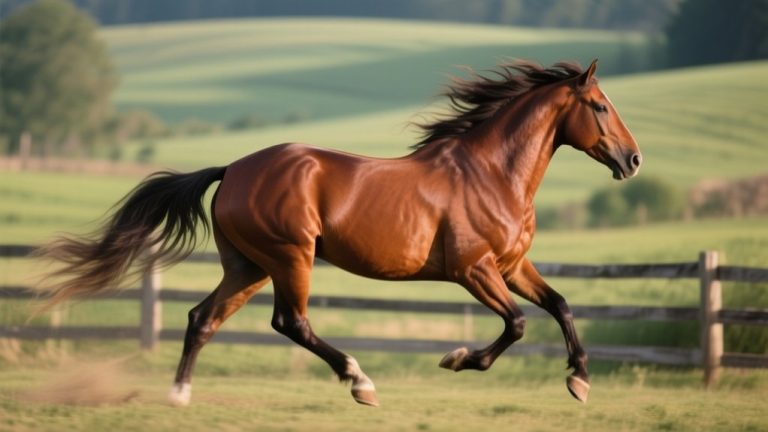
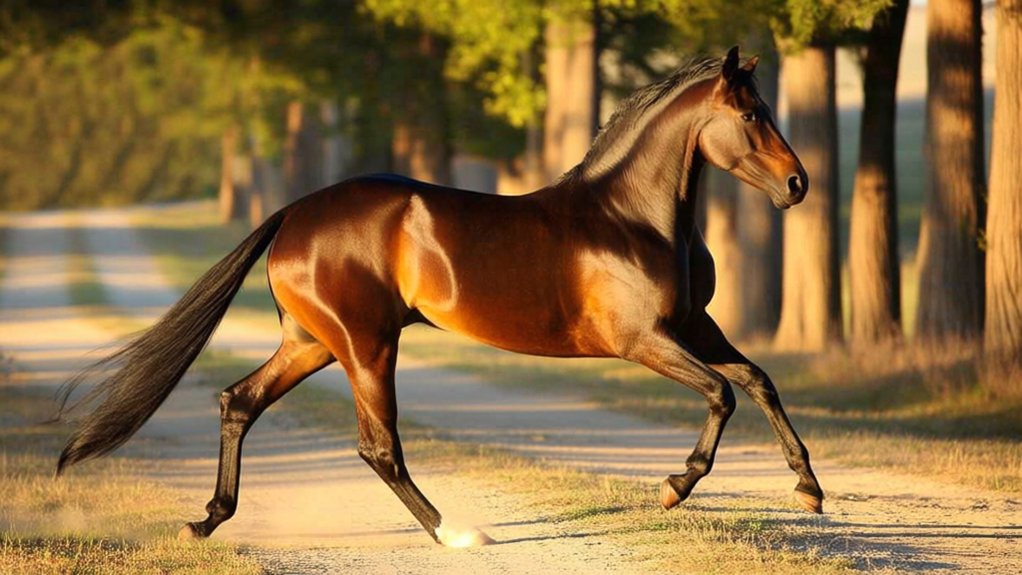
You’ll notice Tennessee Walking Horses move uniquely because of their four-beat running walk. It’s a smooth, rhythmic gait that’s bred for efficiency and comfort.
Their long, sloping shoulders and strong hindquarters create a distinctive overstep. That means their rear feet land ahead of the front prints by 6-18 inches. This reduces impact and helps with balance.
Selective breeding has focused on these traits to support stamina and grace. Training then refines their rhythm and stability. Keep exploring to see how conformation and gait mastery make this movement truly exceptional.
How Tennessee Walking Horse History Shaped the Running Walk
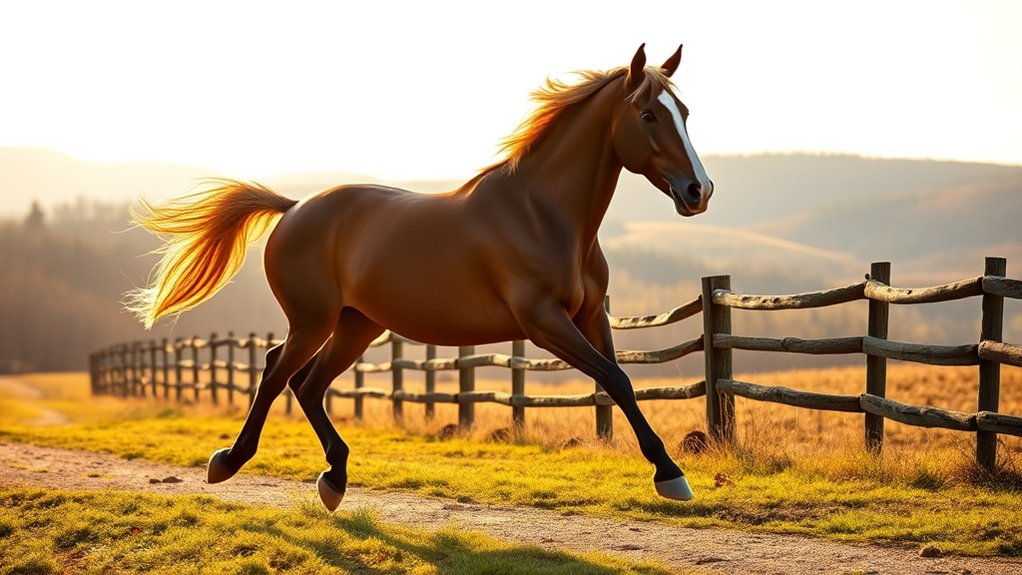
Because the Tennessee Walking Horse’s running walk evolved through targeted breeding on Tennessee farms, its unique gait reflects a deliberate effort to combine smoothness with stamina. You can trace this development back to Black Allan, the breed’s foundation sire, whose genetic influence favored a smooth, rhythmic four-beat gait.
Breeders integrated bloodlines from Standardbred, Morgan, and Saddlebred horses to enhance this movement’s elegance and efficiency. This selective breeding refined the gait to allow horses like you to cover long distances comfortably at speeds between 10 and 20 mph.
It’s perfect for trail riding and farm work.
The running walk became a hallmark of the breed, distinguishing it from others and establishing its reputation for both flashy movement and enduring smoothness. It’s pretty impressive how this gait sets the Tennessee Walking Horse apart!
What Is the Tennessee Walking Horse’s Running Walk Gait?
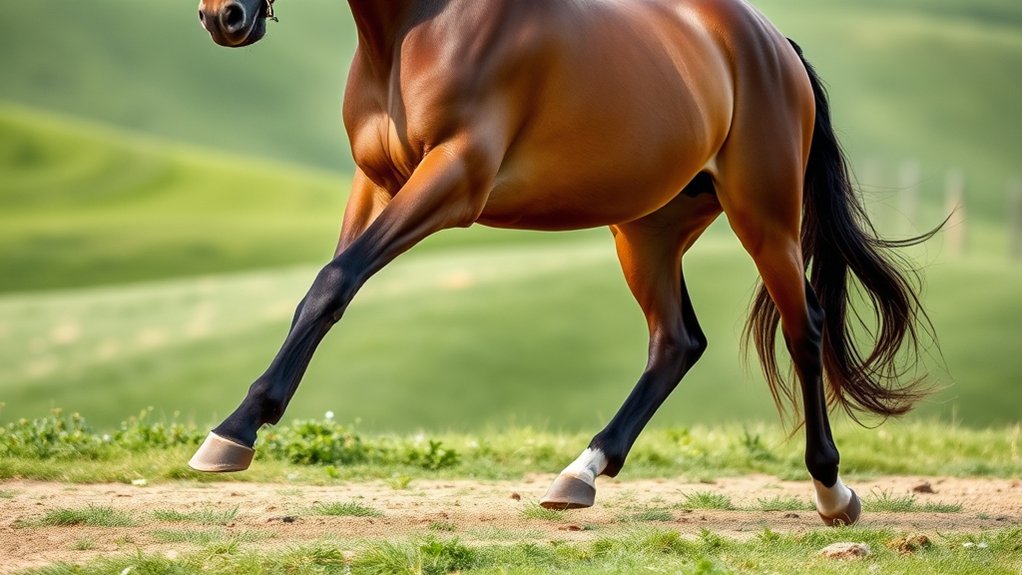
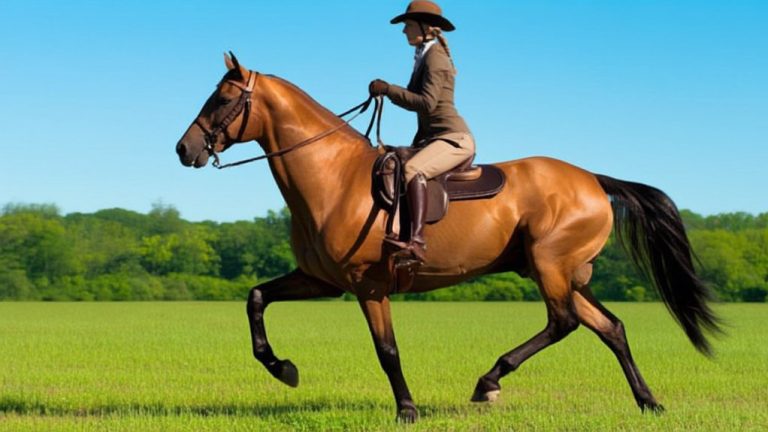
The Tennessee Walking Horse’s running walk is a smooth, four-beat gait distinguished by each foot striking the ground independently in a precise rhythm.
During this gait, the rear feet overstep the front footprints by 6 to 18 inches, creating a flashy, flowing motion. You’ll notice the horse moves steadily at speeds of 10 to 20 mph, maintaining a comfortable, rhythmic stride that reduces rider fatigue.
The characteristic head nod synchronizes with the gait, emphasizing the smoothness and grace unique to this breed.
| Beat Number | Foot Striking Ground | Description |
|---|---|---|
| 1 | Left hind | Initial ground contact |
| 2 | Left front | Seamless shift forward |
| 3 | Right hind | Overstepping front prints |
| 4 | Right front | Completes the rhythm |
How Breeding Creates the Tennessee Walking Horse’s Unique Movement
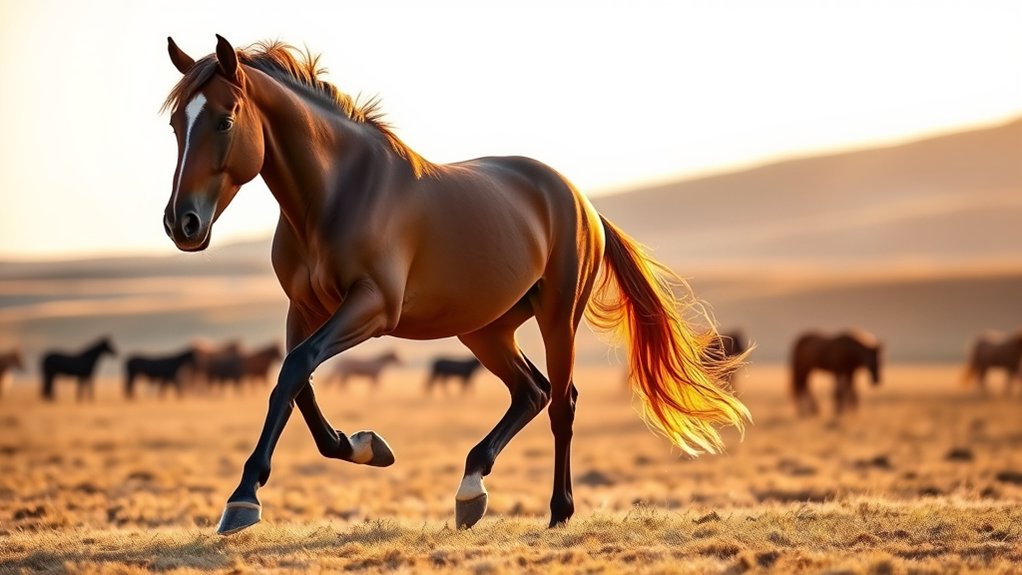
Although many factors influence a horse’s gait, selective breeding plays a crucial role in creating the Tennessee Walking Horse’s distinctive four-beat running walk. Breeders carefully select bloodlines from Standardbreds, Morgans, Thoroughbreds, and Saddlebreds, which contribute genetic traits enhancing smooth, flashy movement.
They focus on conformation traits like long, sloping shoulders and hips, which mechanically support the gait’s rhythm and overstep. This genetic foundation, combined with training emphasizing the breed’s natural head nod and footfall sequence, produces the efficient, elegant running walk.
The interplay of inherited traits and purposeful breeding practices guarantees the gait remains both functional and visually striking, defining the breed’s unique movement and setting it apart from other horses.
You’ll see how this precise selection shapes the hallmark Tennessee Walking Horse gait.
How the Tennessee Walking Horse’s Build Supports Its Gait
When you look at the Tennessee Walking Horse’s build, you’ll notice some pretty unique features. For example, it has long, sloping shoulders and a short back, which really help optimize its running walk.
Plus, its muscular structure is impressive—especially those strong hindquarters—which support a longer stride and better stability.
On top of that, the way its limbs are shaped helps create that smooth motion and the breed’s famous rhythmic head nod.
Unique Physical Features
Because you rely on smooth, effortless motion in a Tennessee Walking Horse, its unique physical build plays a critical role in supporting the signature running walk gait. The horse’s long, sloping shoulders allow greater leg extension, which is essential for the four-beat gait’s fluidity.
Its tall, long neck and straight head ensure balanced movement and proper alignment, optimizing gait efficiency.
Strong, well-developed hips and coupling provide the necessary power for the hind legs’ distinctive action. A shorter back combined with a robust topline maintains stability and consistent rhythm throughout motion.
Additionally, the rear feet overstep the front footprints by 6 to 18 inches, which enhances the gait’s flashy appearance while also contributing to smooth propulsion. These physical features all work together to enable the Tennessee Walking Horse’s graceful, signature gait.
Muscular Structure Benefits
While many factors contribute to the Tennessee Walking Horse’s distinctive running walk, its muscular structure plays a central role in producing that smooth, flowing gait. You’ll notice the breed’s strong hindquarters and elongated leg muscles generate powerful propulsion, essential for the four-beat running walk.
The long, sloping shoulders allow greater extension and flexion of the front limbs, ensuring fluid movement.
Additionally, well-developed back and core muscles provide stability and balance, supporting the horse’s flashy, high-spirited motion. This muscular setup promotes overstride, where the rear feet step beyond the front footprints, enhancing the breed’s characteristic overstep.
Combined with its unique limb angulation, the muscular build enables a smooth, effortless gait.
It’s ideal for long hours of comfortable riding, showcasing the breed’s functional design.
All in all, the muscular structure really is key to what makes the Tennessee Walking Horse’s movement so special.
Limb Conformation Impact
Beyond muscular strength, the Tennessee Walking Horse’s limb conformation plays a big role in shaping its signature gait. You’ll notice its long, sloping shoulders help create that smooth, four-beat rhythm by allowing more freedom of movement in the forelimbs.
Its strong, well-arched neck balances the horse during motion, which adds to its elegant posture.
The shorter back and sturdy coupling provide stability, supporting the distinctive overstep and flashy running walk.
Plus, the long, sloping hips increase stride length, which is essential for the breed’s smoothness and speed.
Proper limb conformation, like straight legs and ideal angulation, makes sure weight is distributed efficiently and helps reduce the risk of injury.
All of this means the gait stays consistent and reliable. When you understand these structural features, it’s easier to see how the Tennessee Walking Horse’s build directly supports its unique, graceful movement.
How Training Perfects the Tennessee Walking Horse’s Running Walk
You’ll use targeted training techniques like specific gait exercises and consistent groundwork to develop the Tennessee Walking Horse’s smooth running walk.
By applying cues such as leg pressure and voice commands, you help refine and maintain that distinctive four-beat rhythm.
It really comes down to repetition and positive reinforcement, which build muscle memory.
This way, the gait stays fluid and balanced every time.
Training Techniques Explained
Because the Tennessee Walking Horse’s running walk is a natural gait, training focuses on refining and enhancing it through consistent, gentle cues that encourage relaxation and gait extension. You’ll use precise leg aids and rider signals to reinforce the four-beat rhythm, guaranteeing smoothness and flair.
Repetition combined with positive reinforcement helps the horse internalize this gait, making it effortless and reliable. Specialized exercises target overstride and balance to perfect foot placement and flashy movement.
Key training techniques include:
- Applying consistent, gentle cues to promote relaxation
- Using leg aids to maintain rhythm and gait clarity
- Incorporating exercises for overstride and balanced footfalls
- Employing repetition and positive reinforcement to solidify the gait
This methodical approach ensures the running walk remains comfortable and visually impressive.
Refining The Running Walk
When you focus on refining the running walk, you develop your Tennessee Walking Horse’s natural gait into a smooth, rhythmic four-beat motion characterized by a distinctive head nod.
You achieve this through targeted training techniques emphasizing consistent leg cues and positive reinforcement, which encourage an exaggerated, flashy gait.
Conditioning exercises promote overstep and balance, essential for producing longer, fluid strides.
You also prioritize fostering a relaxed, willing attitude, essential for maintaining a smooth and consistent gait that aligns with breed standards.
Patience and repetition are key; they allow your horse to internalize the gait, performing it effortlessly in both show rings and pleasure rides.
This precise training process perfects the running walk, highlighting the breed’s unique movement.
How the Running Walk Helps Tennessee Walking Horses Tackle Terrain
Although rough terrain challenges many horse breeds, Tennessee Walking Horses use their distinctive running walk to move smoothly and efficiently across uneven ground. This gait supports their ability to tackle terrain through maintaining balance and stability at speeds between 10-20 mph. It helps prevent stumbling on irregular surfaces.
They also utilize long, overstepping rear feet to clear obstacles without disrupting their rhythm. Plus, they employ a consistent four-beat gait that ensures steady, rhythmical movement. This really enhances their maneuverability.
On top of that, they benefit from anatomical features like long, sloping shoulders and narrow withers. These traits increase their agility on rugged trails, making them well-suited for tricky terrain.
Why the Tennessee Walking Horse’s Running Walk Feels Smoother
The running walk’s unique four-beat footfall pattern, where each hoof lands separately, creates a remarkably smooth and rhythmical gait that riders can immediately feel. This gait’s fluidity comes from the rear feet overstepping front footprints by 6-18 inches, which lessens impact jolts.
The horse’s long, sloping shoulders and hips enable a longer stride, adding to comfort. Additionally, the characteristic head nod signals rhythm, guiding you through a consistent, flowing motion. Together with natural ability and training, these elements produce an exceptionally smooth ride, ideal for long distances.
| Feature | Description | Rider Benefit |
|---|---|---|
| Four-beat pattern | Each hoof hits separately | Smooth, rhythmic feel |
| Overstride length | 6-18 inches | Reduced jarring impact |
| Shoulder & hip slope | Long, sloping | Comfortable stride |
| Head nod | Rhythmic signal | Enhanced gait fluidity |
| Training & genetics | Breed-specific adaptation | Easier, smoother ride |
Why the Running Walk Matters in Shows and Everyday Riding
Since smoothness and rhythm define the Tennessee Walking Horse’s running walk, you’ll find this gait essential both in shows and everyday riding. It really sets the breed apart by combining comfort with performance. Here’s why it matters:
The running walk’s four-beat gait delivers a fluid, gentle ride that reduces fatigue over long distances. It achieves speeds of 10-20 mph while maintaining a rhythmic head nod, which is vital for show presentation.
Judges look for brilliance, manners, and balance during shows, so this gait is a key performance indicator.
For everyday riders, the smoothness enhances control and endurance, making it ideal for trail work and leisure.
Mastering the running walk helps you make the most of the Tennessee Walking Horse’s unique versatility and elegance in both competitive and practical settings.
Frequently Asked Questions
Can Tennessee Walking Horses Perform Other Gaits Besides the Running Walk?
Yes, Tennessee Walking Horses can perform other gaits besides the running walk. With proper training, you’ll see them execute flat walk, canter, rack, stepping pace, fox trot, and single-foot.
This really enhances their versatility and smoothness. They’re not just about one signature gait—they can show off a whole range of movements. It’s pretty impressive once you see them in action!
Are Tennessee Walking Horses Prone to Any Gait-Related Health Issues?
Imagine a Tennessee Walking Horse developing tendon strain from exaggerated gaits. You’ll find they’re prone to lameness and joint issues, especially if soring or poor hoof care is involved.
How Do Tennessee Walking Horses Compare to Other Gaited Horse Breeds?
You’ll notice Tennessee Walking Horses have a smoother, faster running walk than many gaited breeds. Their gait emphasizes comfort and elegance, contrasting with others’ more varied or exaggerated gaits. This makes them ideal for pleasure riding and shows.
They really stand out because their movement feels natural and easy on the rider. Other gaited horses might have flashy or unusual steps, but Tennessee Walkers keep it graceful and relaxed. That’s why so many folks prefer them for long rides or competitions.
What Role Does Rider Skill Play in Maintaining the Running Walk?
You play a critical role in maintaining the running walk by applying subtle cues and balanced aids. This helps ensure the gait stays relaxed and rhythmical.
Your timing and position prevent tension, which promotes smooth, consistent overstep and flashiness. It’s all about staying in tune with your horse.
Can Tennessee Walking Horses Be Trained for Disciplines Outside Trail Riding and Shows?
You absolutely can train Tennessee Walking Horses beyond trail riding and shows. They excel in endurance, cattle work, and versatile disciplines. Their smooth gait and keen intelligence make them incredibly adaptable for various technical equestrian tasks.
It’s pretty impressive how flexible they are, right? With the right training, these horses can really shine in a bunch of different areas. So, don’t just think of them for the usual stuff—they’ve got a lot more to offer!
Conclusion
You might wonder if the Tennessee Walking Horse’s unique gait is just for show, but it’s much more than that. This running walk evolved from careful breeding, specialized training, and anatomical traits to guarantee smooth, efficient movement over varied terrain.
When you ride one, you’ll feel less jarring impact, making long rides more comfortable. Understanding this gait helps you appreciate how form and function combine, enhancing both performance and rider experience.