How To Ride A Tennessee Walking Horse – Complete Guide
To ride a Tennessee Walking Horse effectively, start by thoroughly preparing both horse and tack while evaluating health and temperament. Focus on mastering the signature gaits: flat walk, running walk, and canter. Keep a steady rhythm, stay relaxed, and maintain precise rein contact.
Position yourself balanced with elastic rein cues to encourage natural movement and head nodding. Use ethical training methods that build muscle and trust. Avoid tension or harsh techniques—they just don’t help.
Understanding these fundamentals will make your rides smoother and more comfortable, improving gait quality. And hey, there are plenty of advanced tips you can explore once you’ve got the basics down.
Preparing You and Your Tennessee Walking Horse for Riding
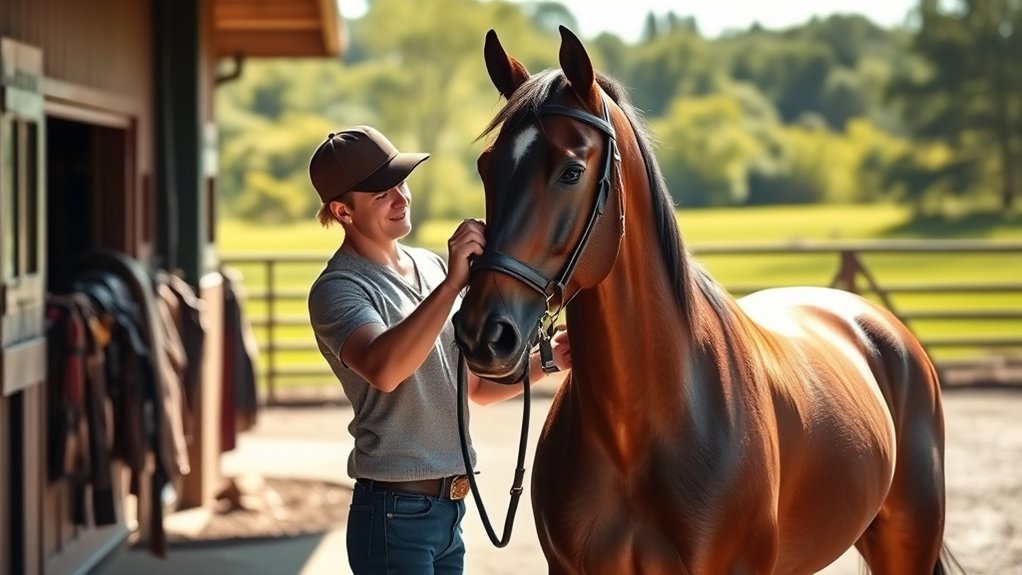
Before you mount your Tennessee Walking Horse, make sure both you and your horse are thoroughly prepared. This helps keep things safe and comfortable during your ride.
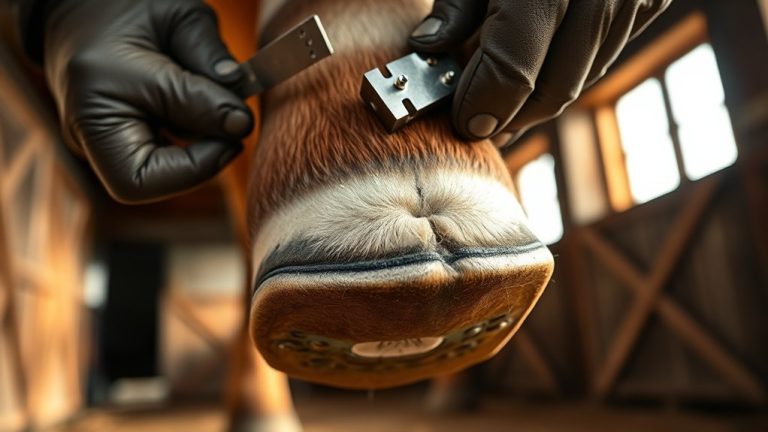
Start by grooming your horse carefully, checking the hooves for any debris or damage. Also, make sure the tack fits properly so it doesn’t cause pressure points or slip around.
Next, do a brief warm-up with some light groundwork and stretching exercises. This will help loosen up your horse’s muscles and make them more responsive.
Take a moment to check your horse’s health, watching for any signs of discomfort or lameness.
It’s also important to get to know your horse’s natural gaits and temperament. This way, you can better anticipate how they might react and communicate clearly with them.
Finally, pick a calm and controlled place to ride, like a quiet arena or a trail your horse knows well. This helps your horse relax and gain confidence, setting you both up for a safe and enjoyable riding session.
Mastering Tennessee Walking Horse Signature Gaits
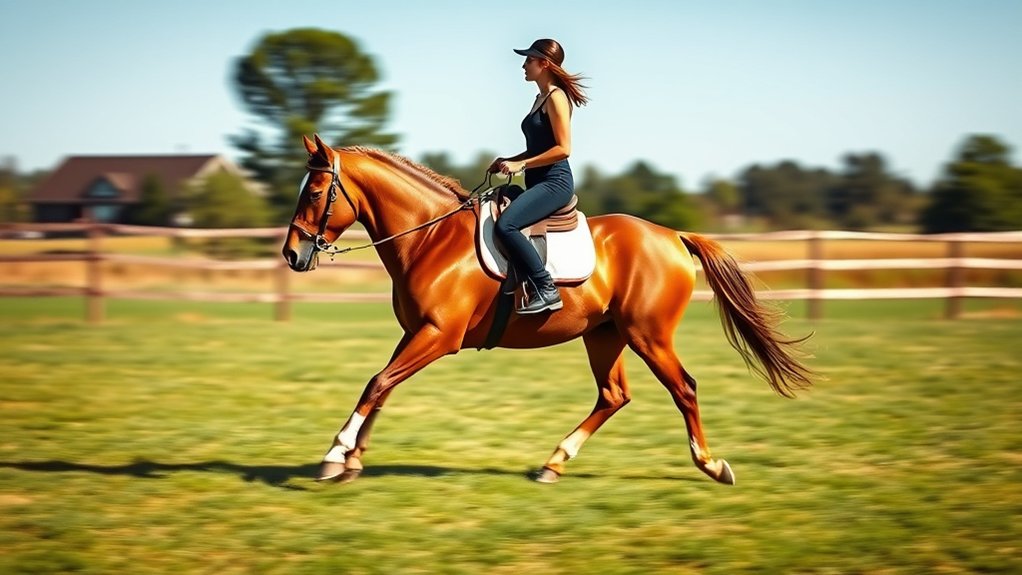
To master the signature gaits of the Tennessee Walking Horse, you’ll want to get a good handle on the distinct footfall patterns and head movements that set the flat walk, running walk, and canter apart. It’s all about understanding what makes each gait unique.
Next, focus on refining your rider position. When you encourage the horse’s natural muscle engagement, it really helps to make the movement smoother and more fluid. It’s a bit like fine-tuning an instrument.
Of course, you’ll run into some common challenges along the way, like uneven strides or losing rhythm. Just be ready to tackle these with consistent training and precise cues.
Stick with it, and you’ll see improvement before you know it.
Signature Gait Characteristics
Although mastering the Tennessee Walking Horse’s signature gaits requires dedication, understanding their defining characteristics is essential for effective training and riding.
The flat walk features a smooth, four-beat rhythm with a distinctive head nod and overstride, where the hind hoof steps beyond the front hoof’s imprint.
The running walk accelerates this pattern, maintaining the four-beat sequence but with extended stride length and a pronounced head nod. This produces a gliding sensation at 10-20 mph.
The canter, known as the rocking-chair gait, is a relaxed, three-beat motion with a gentle rise and fall, enhancing flow and rider comfort.
Focusing on rhythm, overstride, head nodding, and smoothness guarantees your training aligns with breed standards and ensures the horse’s natural movement remains balanced and effortless.
Enhancing Gait Smoothness
How can you refine your Tennessee Walking Horse’s gait to achieve unparalleled smoothness and balance? Focus on maintaining a consistent rhythm and a relaxed frame in each gait, like the flat walk or running walk. Use properly timed half halts and subtle body cues to fine-tune cadence, ensuring even, natural movement.
Strengthen balanced muscles through targeted exercises to support long, tension-free gaits. Keep a light, following contact with the bit to promote freedom and reduce disruptive tension. Regular dressage practice reinforces timing, collection, and rhythm, which are essential for fluid, signature gaits.
| Technique | Key Benefit |
|---|---|
| Half halts | Refines gait cadence |
| Muscle development | Supports smooth motion |
| Dressage training | Enhances timing & rhythm |
Common Gait Challenges
When mastering the Tennessee Walking Horse’s signature gaits, you must recognize and address common challenges such as pacing, stepping pace, and lateral or cross canter. These irregularities disrupt the horse’s natural four-beat flat walk, running walk, and relaxed canter patterns.
To correct them, focus on subtle positional adjustments and consistent, ethical training that respects the horse’s innate movement. Key strategies include identifying early signs of gait irregularities through attentive observation, applying precise rein and leg cues to realign footfall sequences, and reducing tension in the horse’s back and jaw to prevent gait disruption.
Also, it’s important to avoid artificial gait exaggeration to maintain natural smoothness. Taking these steps will help keep your horse moving comfortably and correctly.
Handling Tennessee Walking Horse Head Nods and Ear Flops
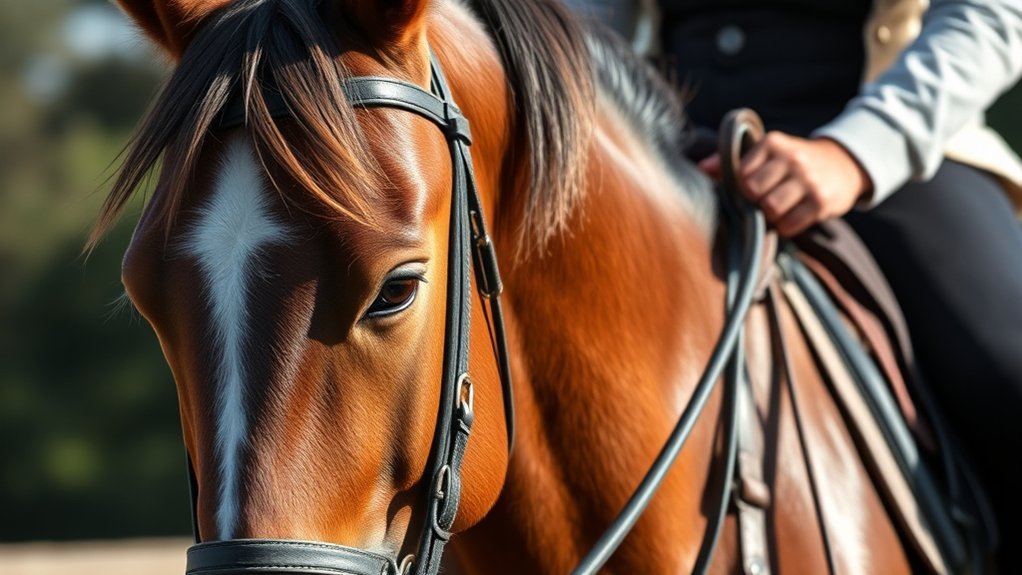
Because head nodding and ear flopping are part of the Tennessee Walking Horse’s natural gaited movement, you need to handle these behaviors with understanding and finesse.
Head nodding is a natural, rhythmic motion linked to the flat walk, running walk, and saddle rack gaits. Meanwhile, ear flopping signals excitement and a response to movement.
To manage these, avoid unnecessary restraint that could cause tension or disrupt the horse’s comfort. Instead, keep a relaxed, following contact with the bit, letting the horse’s head move freely in sync with its gait.
When you recognize and accept these natural motions, you build trust and strengthen your connection. This helps promote smooth, comfortable riding.
Handling these traits properly guarantees a harmonious partnership and preserves the horse’s distinctive gait quality. It’s really about working with your horse, not against it.
Using Rider Position and Rein Contact on Tennessee Walking Horses
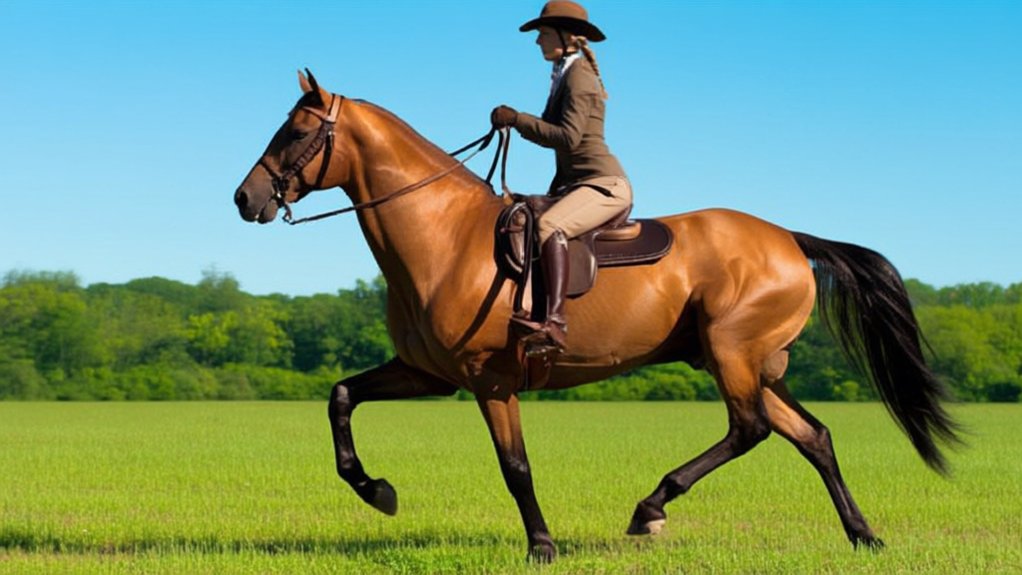
You want to keep a straight, balanced posture with your weight centered on your seat bones. This helps support the horse’s smooth gait and keeps strain to a minimum.
When it comes to the reins, use light, consistent contact that moves with the horse’s natural head and neck motion—try to avoid any tension.
Making small adjustments in your hand pressure and body position can really make a difference. These subtle changes help manage the rhythm of the gait and encourage the horse to stay relaxed.
It’s all about staying connected and responsive without forcing anything.
Ideal Rider Posture
Although perfecting your rider posture demands focus, it directly influences the Tennessee Walking Horse’s gait quality and comfort. To optimize your position, maintain a balanced, straight posture with weight evenly distributed on your seat bones. This stabilizes your influence and prevents back strain in the horse.
Keep your shoulders relaxed and aligned over your hips to allow subtle, effective communication without disrupting gait rhythm.
Sit deep and upright with a slight forward pelvic tilt to support smooth gait transitions.
Ensure your contact with the bit is light and elastic, following the horse’s natural head movement to encourage relaxation.
Distribute weight evenly on seat bones
Align shoulders over hips, keeping them relaxed
Sit deep with a slight forward pelvic tilt
Maintain light, elastic rein contact to follow head motion
Rein Contact Techniques
When maintaining rein contact with a Tennessee Walking Horse, you’ll want to keep the reins long and relaxed to follow the horse’s natural head and neck motion without creating tension.
Maintain a light, steady contact by keeping your shoulders and elbows relaxed, which encourages the horse’s jaw and poll to soften, enhancing gait fluidity.
Use subtle rein cues aligned with your seat to promote gait elevation without forcing the horse. Applying a gentle half halt through your hands and seat refines *passage* and gait quality without disrupting rhythm.
Allow the horse’s head to nod naturally within this contact, fostering trust and acceptance of the bit.
This balanced approach *guarantees* harmony between rider position and rein contact. It’s *vital* for the smooth, signature gait of Tennessee Walking Horses.
Managing Natural Head Movement
How exactly does a rider’s position influence a Tennessee Walking Horse’s natural head movement during gait? Your alignment with the horse’s head and neck motion is critical. A relaxed, following rein contact allows the horse to nod naturally while maintaining gait rhythm.
Avoid tension or resistance, which can interrupt smoothness and cause discomfort.
To manage natural head movement effectively:
Maintain light, consistent rein contact to promote relaxation and bit acceptance. Use subtle rein cues, guiding without restricting the horse’s head nod. Align your upper body with the horse’s head and neck to avoid disrupting motion.
Avoid heavy or fixed rein pressure that induces tension in the mouth and poll.
Mastering these techniques enhances gait quality and the horse’s comfort.
Using Dressage to Improve Smoothness and Comfort
Because dressage training focuses on rhythmic, balanced movements, it considerably enhances the smoothness and comfort of your Tennessee Walking Horse’s gaits. By promoting relaxation and correct muscle engagement, dressage encourages even, fluid four-beat patterns.
You’ll use light, consistent contact with the bit, following the horse’s natural head and neck motion to reduce tension and improve comfort.
Employ half halts and subtle body cues to refine gait quality, maintaining rhythm and collection without relying on artificial aids.
Developing a deep, balanced seat alongside precise rein and leg aids allows you to communicate clearly, fostering better responsiveness.
Regular dressage practice ultimately increases gait fluidity, decreases muscular tension, and creates a harmonious partnership. This ensures both you and your horse experience enhanced smoothness and rideability.
Training Tips to Maintain Tennessee Walking Horse Gait Quality
Although maintaining the distinctive gait of a Tennessee Walking Horse requires ongoing effort, you can preserve its quality by consistently reinforcing natural movement patterns through gentle, ethical training.
Focus on exercises and techniques that enhance the horse’s inherent abilities without artificial alterations.
Emphasize training that supports and strengthens the horse’s natural talents without artificial modifications.
Prioritize muscle strength, balance, and relaxation to sustain smooth gait quality.
Key approaches include:
- Incorporate groundwork to build flexibility, strength, and balance essential for gait consistency.
- Use precise riding cues like half halts and subtle weight shifts to refine rhythm and encourage natural movement.
- Regularly assess and adjust your riding position and rein contact to keep the horse relaxed and balanced.
- Avoid harsh equipment or methods such as soring; rely on positive reinforcement and humane practices.
Frequently Asked Questions
What Is the History of the Tennessee Walking Horse Breed?
You’ll find the Tennessee Walking Horse originated in the late 19th century, blending Standardbred, Thoroughbred, and Morgan bloodlines. It was bred for smooth gaits, endurance, and comfort.
How Do I Choose the Right Tennessee Walking Horse for Beginners?
You should choose a calm, well-trained Tennessee Walking Horse exhibiting a smooth, natural gait and friendly temperament. Prioritize horses with consistent responsiveness, balanced movement, good health, and humane training to guarantee beginner safety and confidence.
Finding the right horse can feel overwhelming, but focusing on these qualities will help you feel more at ease. Remember, a horse that’s patient and gentle makes all the difference for someone just starting out. Take your time getting to know the horse’s personality, and don’t hesitate to ask questions about its training and behavior.
What Are Common Health Issues Specific to Tennessee Walking Horses?
Common chronic concerns include degenerative suspensory ligament desmitis, which causes ligament loss. You’ll want to watch for worsening lameness and back problems that come from poor posture. Hoof health hazards are also important to keep an eye on.
This is especially true if your horse is barefoot or overworked. Taking care of these issues helps maintain your horse’s soundness and stamina. It’s all about keeping them comfortable and moving well.
How Do Tennessee Walking Horses Differ From Other Gaited Breeds?
You’ll notice Tennessee Walking Horses have a unique four-beat running walk with characteristic head nodding and overstride. This gives them a smoother, glide-like movement that really stands out.
It’s quite different from the lateral or three-beat gaits you usually see in other gaited breeds. That’s what makes them special and easy to spot.
What Tack and Equipment Are Best Suited for Tennessee Walking Horses?
You’ll want a lightweight snaffle bit and a soft padded halter or bridle. Long leather or synthetic reins work best for control and comfort.
Using a gaited saddle with a deep seat and secure stirrups is key. Don’t forget durable boots and gloves to help you stay comfortable and in control during your ride.
Conclusion
To truly triumph with your Tennessee Walking Horse, trust in targeted training techniques and tireless tenacity. Tackling the signature gaits takes time, but thorough practice improves your posture and perfects rein responsiveness.
Tailoring your touch and timing transforms tension into tranquil teamwork. Remember, maintaining magnificent motion means mastering head nods and ear flops while melding dressage discipline.
Stay steady, stay skilled, and savor the smooth, seamless stride only a Tennessee Walker can serve.