What Is an Appaloosa Horse?
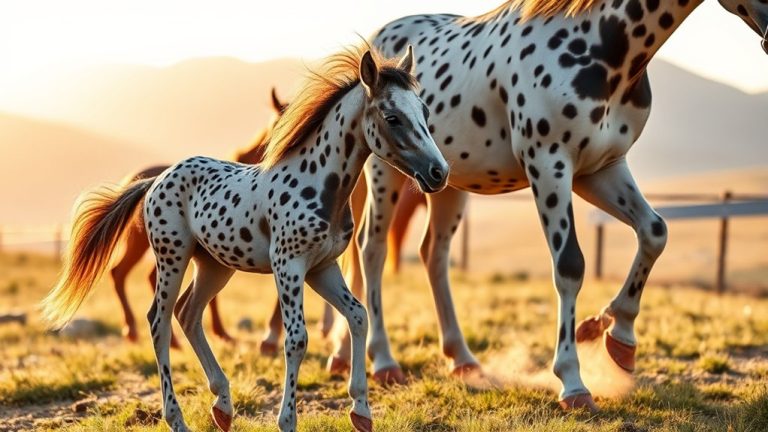
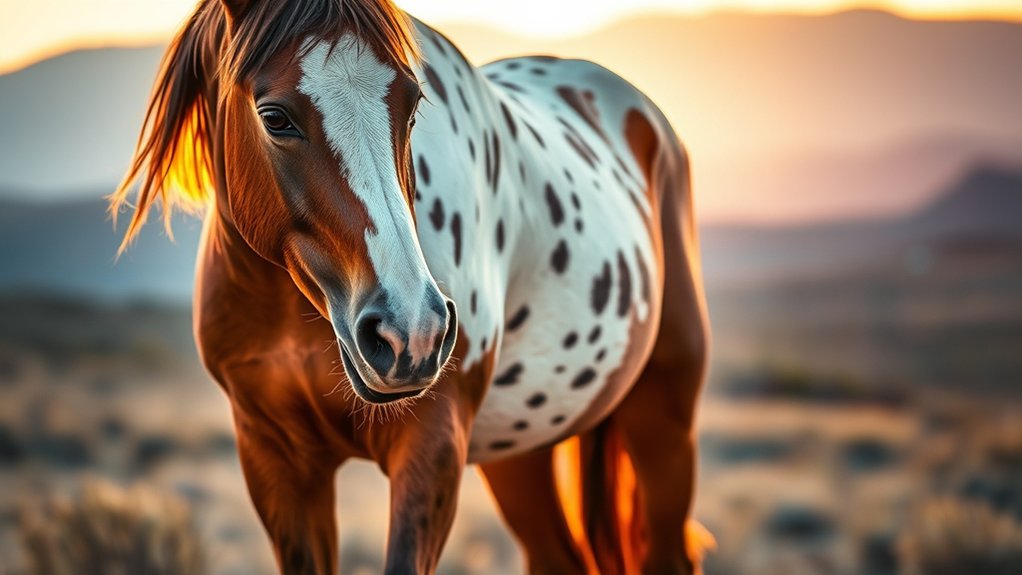
An Appaloosa horse is a distinctive breed known for its striking spotted coat, linked to the leopard complex (LP) gene. This gene also causes mottled skin, striped hooves, and white sclera.
Developed by the Nez Perce tribe in the 1700s, it features a versatile build suited for endurance, agility, and ranch work. You’ll find it requires specific care due to some genetic health risks.
Exploring its history and genetics reveals why it’s so unique and valued.
What Is an Appaloosa Horse?
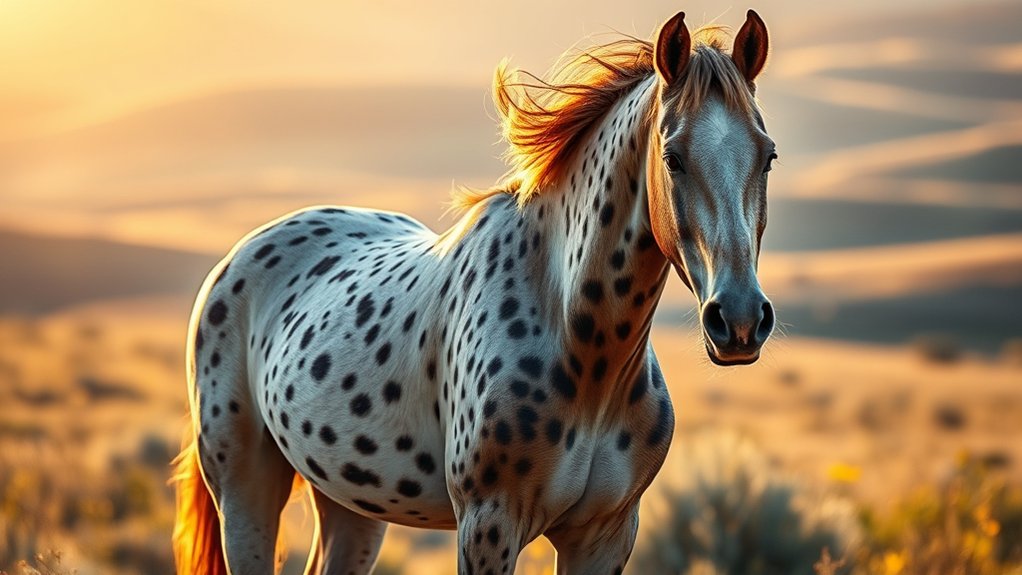
Although you might recognize an Appaloosa horse by its striking spotted coat, this breed is defined by more than just its colorful patterns. Developed by the Nez Perce tribe in the 1700s, the Appaloosa stands between 14.2 and 16 hands tall and weighs 950 to 1,200 pounds.
Its distinctive traits include a variety of coat patterns, such as leopard spots and blankets, combined with mottled skin around the muzzle and eyes. You’ll also notice striped hooves and the visible white sclera, which are unique identifiers of the breed.
These physical characteristics, alongside a strong, versatile build and gentle temperament, make the Appaloosa suitable for multiple riding disciplines. Understanding these technical features helps you appreciate the breed’s heritage and function beyond its spotted coat.
What Makes Appaloosa Coats So Unique?
You’ll find that the unique look of an Appaloosa coat comes from the leopard complex (LP) gene. This gene controls whether and how their distinctive spots show up.
These spots can be all over the place—sometimes dense like a leopard’s spots, other times sparse like little snowflakes. It really depends on the genetics at work.
Leopard Complex Genetics
When you examine the unique coat patterns of Appaloosa horses, you’ll find they stem from a genetic mutation known as the leopard complex (LP). This LP gene, inherited dominantly, dictates the distinctive coat patterns and physical traits.
Just one copy of the LP gene triggers these traits, shaping the horse’s appearance and health profile. Key features influenced by the leopard complex include mottled skin, striped hooves, and white sclera, all hallmark identifiers of Appaloosas.
You’ll also see a variety of coat patterns produced through interactions between the LP gene and other spotting or base color genes.
However, there are potential health concerns such as congenital night blindness and recurrent uveitis linked to the leopard complex mutation.
Grasping this genetic inheritance helps you understand the biological basis behind the breed’s signature look.
Distinctive Spot Patterns
Because the leopard complex mutation (LP) governs the genetic framework of Appaloosa coat patterns, you can observe a remarkable diversity in their spotted and blanket markings. This mutation controls multiple spotting genes that overlay base coat colors, producing distinct spot patterns like leopard spots, blankets, and snowflakes.
In addition to coat patterns, LP influences physical traits such as mottled skin, striped hooves, and the characteristic white sclera around the eyes, all hallmark features of spotted horses.
Each Appaloosa’s unique combination of these traits results in highly variable and identifiable appearances.
When you study these horses, you’ll notice that the leopard complex not only defines their visual diversity but also links their coat patterns to genetic markers, making their spotted coats both scientifically intriguing and visually striking.
What Genetic Traits Define Appaloosas?
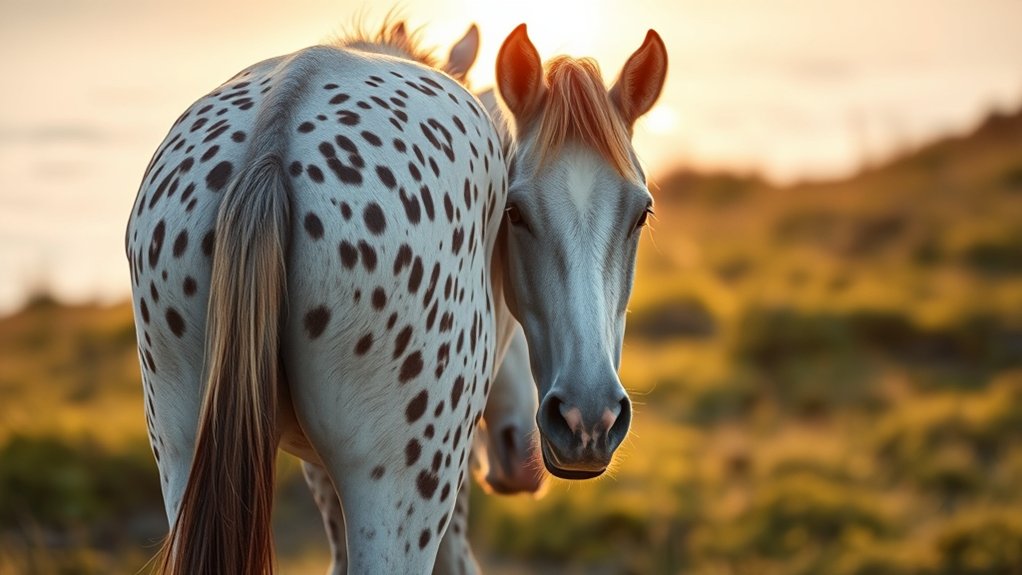
You’ll find that the leopard complex mutation, or the LP gene, is the main genetic factor behind Appaloosa coat patterns. This mutation doesn’t just create those distinctive spots; it also influences other traits like mottled skin and striped hooves.
Leopard Complex Mutation
Although the leopard complex mutation (LP) defines the distinctive coat patterns of Appaloosas, it also influences several unique physical traits and health considerations. The LP gene, a dominant mutation, not only creates the breed’s characteristic spotting but also affects other anatomical features.
You’ll notice these hallmark traits in horses carrying the LP gene: mottled skin, especially around the muzzle and eyes, which contrasts with normal pigmentation; striped hooves displaying alternating light and dark bands, unique to LP carriers; and white sclera visible around the eyes, enhancing the breed’s expressive look.
However, the leopard complex mutation also links to congenital stationary night blindness, a non-progressive vision impairment present from birth.
Genetic testing can confirm LP status, enabling you to predict coat patterns and manage health risks effectively.
Coat Pattern Genetics
When you examine the genetic basis of Appaloosa coat patterns, the leopard complex mutation (LP) stands out as the primary determinant. The LP gene, a dominant allele, controls pigment cell distribution during coat development. This produces distinctive patterns like leopard, blanket, and snowflake.
This mutation also correlates with hallmark physical traits such as mottled skin, striped hooves, and white sclera, which you’ll notice around the eyes. Genetic testing identifies the presence of the LP gene, enabling you to predict and select for specific coat patterns effectively.
Understanding these genetic markers is essential for breeding programs aiming to preserve or enhance the unique appearance of Appaloosas. The interplay of the leopard complex with other genetic factors results in the rich diversity of Appaloosa coat patterns you observe.
How Did the Nez Perce Tribe Shape the Appaloosa?
Because the Nez Perce tribe prioritized intelligence, agility, and endurance, they meticulously bred horses with distinctive spotted coat patterns, laying the foundation for the Appaloosa breed. This selective breeding focused on preserving key horse traits that suited their cultural and practical needs.
The Nez Perce carefully bred horses for intelligence, agility, endurance, and their iconic spotted coats.
The Nez Perce’s foundation stock combined wild and domesticated horses, ensuring a robust gene pool. Their detailed knowledge of lineage allowed precise control over coat patterns and behavioral traits.
You can appreciate their influence through these factors:
- Rigorous selection for intelligence and stamina enhanced the breed’s versatility.
- Maintenance of lineage records preserved unique Native American horse traits.
- Integration of spotted coat patterns established the Appaloosa’s signature appearance.
Their breeding created a technically advanced and culturally significant horse breed.
How Did the Nez Perce War Affect the Breed’s History?
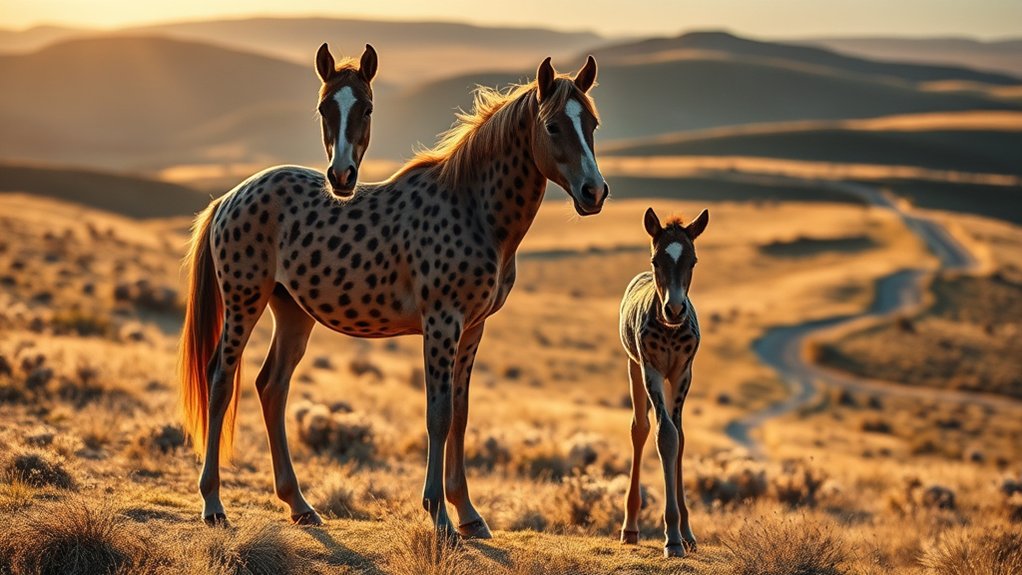
The Nez Perce tribe’s meticulous breeding practices established a resilient Appaloosa lineage, but the Nez Perce War of 1877 disrupted this progress considerably.
During the conflict, U.S. government forces seized and dispersed numerous Nez Perce horses, drastically reducing their population and threatening the breed’s continuity. These horses, renowned for their distinctive spotted coat patterns, symbolized Nez Perce cultural identity.
The breed history reflects how this loss impeded heritage preservation efforts, as many bloodlines fragmented or vanished. Despite the turmoil, some Nez Perce horses with unique genetic traits survived, forming the foundation for the breed revival.
Understanding this period highlights the critical impact the Nez Perce War had on the survival and evolution of the Appaloosa breed you recognize today.
How Was the Appaloosa Breed Revived and Recognized?
You’ll see, the Appaloosa breed came close to disappearing in the late 1800s because land seizures disrupted Native American horse populations. But then, in the 1930s, breeders stepped in to bring the breed back by focusing on preserving its unique coat patterns and traits.
Things really took off in 1938 when the Appaloosa Horse Club was formed. This group set up formal breed standards and a registry, which were crucial for getting the breed officially recognized.
Near Extinction Challenges
Although the Appaloosa breed faced near extinction in the late 1800s due to U.S. government land seizures and the forced displacement of Native American tribes, dedicated preservation efforts emerged by the 1930s when only a few horses remained.
You should understand that the breed revival relied heavily on organized conservation efforts to stabilize and protect the Appaloosa’s unique characteristics.
Key actions included establishing the Appaloosa Horse Club in 1938 to formalize breed standards and create a breed registry. They also focused on protecting distinctive coat patterns and physical traits to maintain breed integrity.
Plus, promoting awareness and breeding programs nationwide helped increase population numbers.
These focused efforts ensured the Appaloosa’s survival and official recognition, reversing the near extinction threat caused by historical displacement of Native American tribes.
Revival Efforts Timeline
Because the Appaloosa breed faced near extinction by the late 1800s, dedicated enthusiasts initiated revival efforts in the 1930s to preserve its distinctive coat patterns and physical traits. The Appaloosa Horse Club, founded in 1938, became the central organization for breed preservation.
It established breed standards and secured formal recognition, ensuring the breed’s sustainability and growth.
| Year | Event |
|---|---|
| 1930s | Revival efforts begin |
| 1938 | Appaloosa Horse Club founded |
| 1947 | Headquarters moved to Idaho |
| Post-1947 | Breed recognition and registration |
You can see how these milestones shaped the breed’s trajectory, turning revival efforts into lasting breed preservation and global recognition.
Appaloosa Club Formation
When enthusiasts recognized the urgent need to preserve the Appaloosa’s unique traits, they incorporated the Appaloosa Horse Club in December 1938 with five charter members. This organization spearheaded breed recognition by focusing on preserving the distinctive coat patterns and physical characteristics that nearly disappeared.
You’ll find the club’s headquarters in Moscow, Idaho, since 1947, solidifying its central role in breed preservation.
Key steps in the Appaloosa Horse Club’s formation and impact include:
- Establishing clear registration standards centered on the foundation stallion and coat patterns
- Purchasing a dedicated national headquarters building in 1974 to support organizational growth
- Promoting breed recognition nationally through structured preservation and documentation efforts
Through these technical and precise measures, the Appaloosa Horse Club revived and secured the breed’s legacy.
What Are Common Health Issues in Appaloosas?
If you own or care for an Appaloosa, you need to be vigilant about specific health concerns that frequently affect the breed. Appaloosas exhibit a genetic predisposition to eye health issues, most notably equine recurrent uveitis (ERU), an inflammatory condition that can cause blindness if untreated.
The leopard complex mutation (LP), responsible for their distinctive coat patterns, increases their susceptibility to ERU and congenital stationary night blindness, impairing low-light vision. Regular veterinary examinations are vital to detect and manage these eye disorders early.
Furthermore, the breed’s mottled skin, particularly pink-skinned areas, heightens their risk for sunburn and subsequent skin cancers.
Implement protective measures like UV-blocking fly masks and sunblock to mitigate these risks and preserve your Appaloosa’s ocular and dermatological health.
How Are Appaloosas Used in Riding and Work?
Managing an Appaloosa’s health guarantees they remain capable and reliable across various roles. This versatile breed excels in both riding and work because of its muscular build, agility, and calm temperament.
You’ll find Appaloosas performing effectively in multiple disciplines, including trail riding and western pleasure. Their steady gait and endurance really help with long-distance performance.
They’re also great for ranch work and cattle herding, using their strength and responsiveness for precise livestock management.
Plus, in competitive events like barrel racing and reining, they show off their speed and agility under pressure.
How to Care for an Appaloosa Horse
Although Appaloosas are hardy horses, caring for their unique physical traits requires specific attention to maintain their health and appearance. Regular grooming is vital to preserve their distinctive coat patterns and prevent skin issues, especially in lighter-colored horses vulnerable to staining.
Provide effective UV protection using sunscreen or UV-resistant fly sheets to guard their mottled and pink skin against sunburn and skin cancer.
Meticulous hoof care is necessary, as their striped hooves need routine inspection and maintenance to avoid problems.
A balanced diet rich in quality hay, grains, and supplements supports their overall health and coat condition.
Also, monitor eye health closely, as the breed is prone to recurrent uveitis. Prompt veterinary intervention is essential to prevent vision loss and maintain ocular well-being.
Why Appaloosas Make Great Horses for All Riders
Because Appaloosas combine a gentle temperament with notable intelligence, they stand out as ideal horses for riders across all skill levels. Their calm disposition makes them beginner-friendly, while their loyalty guarantees a strong bond with you.
You’ll find Appaloosas are versatile, excelling in disciplines ranging from trail riding to competitive events. Their sturdy build and endurance contribute to their reliability, giving you confidence in diverse riding conditions.
Key reasons Appaloosas make great horses for all riders include:
- Gentle and calm nature that supports rider confidence and safety
- Loyal temperament creating a dependable partnership
- Versatile abilities adaptable to multiple equestrian activities
Choosing an Appaloosa means you get a reliable, calm, and versatile horse that suits both novices and experienced riders alike.
Frequently Asked Questions
How Much Does an Appaloosa Horse Typically Cost?
You’ll typically pay between $1,000 and $10,000 for an Appaloosa horse, influenced by Appaloosa genetics, coat patterns, and adherence to breed standards. Horses with prized Appaloosa color variations and strong historical origins command higher prices.
Well-trained ones showing ideal Appaloosa temperament traits are costlier, while younger or untrained horses usually fall at the lower end.
What Is the Average Lifespan of an Appaloosa?
You can expect an Appaloosa’s average lifespan to be around 30 years, thanks to its hardy genetic traits and temperament characteristics.
Their unique color variations and horse coat patterns arise from specific genes, influencing breeding considerations that affect longevity.
Historical origins highlight selective breeding for resilience, which contributes to their lifespan.
Are Appaloosas Good With Other Animals?
Imagine you’re introducing your Appaloosa to a curious dog; their social behavior traits and herd instincts make such interactions with dogs typically calm and friendly.
You’ll notice their grooming habits often include mutual nibbling with other animals, indicating compatibility with cats too.
Their dietary preferences don’t cause conflicts, so they usually coexist well on farms.
With proper introductions, you’ll find Appaloosas adapt smoothly, showing excellent compatibility with various animals.
Can Appaloosas Compete in Western and English Riding Disciplines?
Yes, you can confidently compete with Appaloosas in both Western and English riding styles. Their distinctive color patterns reflect a breed history rooted in versatility.
Their calm temperament supports focused training across disciplines.
Pay close attention to grooming needs to maintain coat health, and guarantee proper saddle fit tailored to each riding style for peak performance.
This precision lets you maximize their natural athleticism in varied competitive environments.
What Are the Best Training Methods for Young Appaloosas?
You should start with halter breaking to establish control, then focus on ground manners using consistent, gentle training techniques.
Incorporate desensitization methods early to reduce spookiness.
Use positive reinforcement like treats and praise to encourage cooperation.
Once groundwork is solid, gradually introduce riding exercises emphasizing balance and responsiveness.
Keep sessions short and frequent to maintain engagement and prevent fatigue.
Always monitor for health issues that could impact training progress.
Conclusion
When you choose an Appaloosa, you’re embracing a living tapestry of genetics and history woven with the Nez Perce’s legacy. Their unique coat patterns are nature’s precise code, while their resilience echoes through every stride.
Caring for these horses demands your detailed attention to genetics and health, but rewards you with versatility and spirit. In every gallop, the Appaloosa carries a story, complex, vibrant, and ready for your next ride.