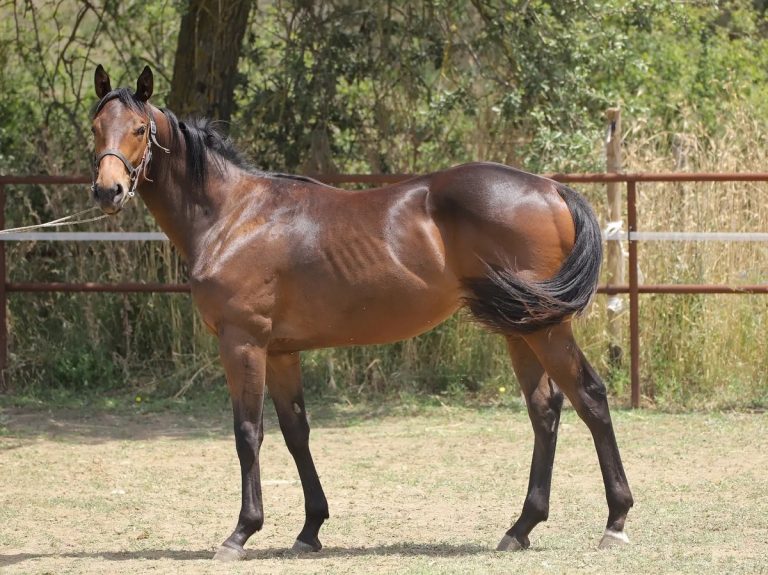
What Is a Friesian Horse?
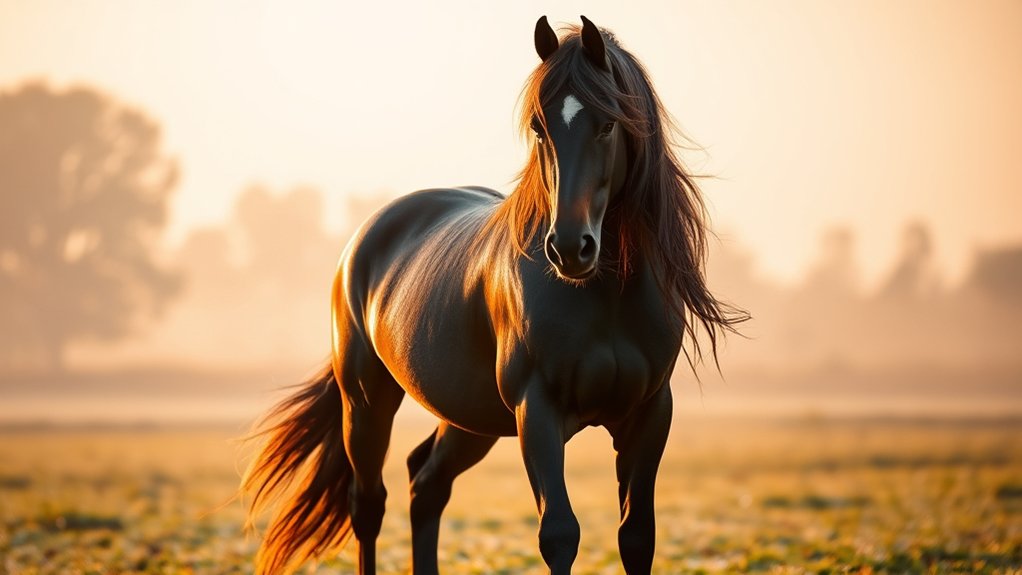
You’re looking at a Friesian horse, a distinct black breed standing 15.2 to 16 hands tall. It’s known for its muscular build, high-set arched neck, and long flowing mane with feathered legs.
Originating from the Netherlands, Friesians have a calm temperament and excel in dressage, driving, and leisure riding. Strict breed standards require a solid black coat and careful genetic screening for health.
If you want to understand their unique history and care, more details await.
What Is a Friesian Horse?
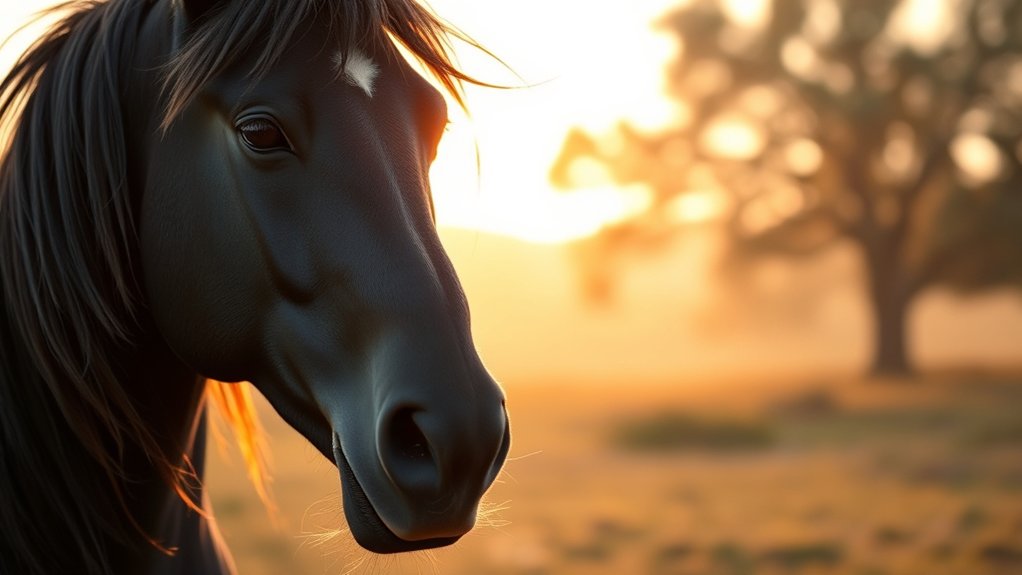
What sets a Friesian horse apart is its distinctive origin and physical characteristics. This breed, originating from Friesland in the Netherlands, is instantly recognizable by its glossy black coat and muscular build.
You’ll notice its high-set, arched neck coupled with feathered lower legs, contributing to the breed’s signature elegant silhouette. The Friesian’s noble, expressive face and small ears complement a flowing mane and tail that often reach the ground.
When you watch a Friesian move, you’ll see the high-stepping trot and smooth, harmonious gait that define its regal presence. Standing between 15.2 and 16 hands tall, this breed maintains a balance of power and grace, making it ideal for dressage, driving, and other equestrian disciplines requiring both strength and refined movement.
How Did Friesian Horses Originate and Evolve?
Although Friesian horses are best known for their striking appearance today, their origins trace back to Friesland in the northern Netherlands as early as the 11th century. The breed origin reflects a complex historical development, starting with ancestors used as medieval war horses.
Friesian horses, famed for their beauty, originate from Friesland in the 11th century with medieval war horse ancestors.
Over time, European crossbreeding with Arabian and Andalusian horses during the Crusades and the Eighty Years’ War refined their elegance and performance. By 1879, Friesians were recognized as a distinct breed and selectively bred to preserve key qualities.
Key points in Friesian historical development include:
- Utilization as robust medieval war horses documented since the 4th century.
- Crossbreeding efforts enhancing agility and nobility.
- Evolution from versatile workhorse to specialized carriage and dressage horse.
You can see how Friesland’s unique environment shaped this iconic breed.
What Are the Key Physical Traits of Friesian Horses?
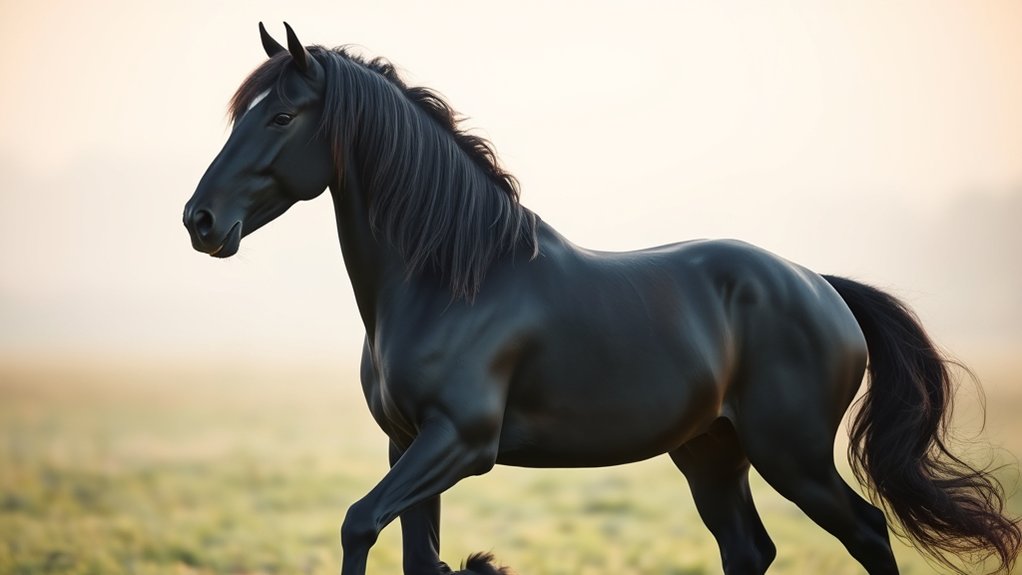
When you examine a Friesian horse closely, you’ll notice its distinctive physical traits that set it apart from other breeds. Typically standing between 15.2 and 16 hands, the Friesian boasts a solid black coat, with a white star on the forehead as the only acceptable marking.
Its noble, high-set arched neck flows seamlessly into a straight, long head. The long mane and tail are left uncut, often reaching the ground, enhancing its majestic appearance.
Feathering, which is abundant long hair, covers the lower legs from mid-leg downward, adding to its distinctive look.
Its compact build displays well-defined musculature, supporting both strength and agility. These precise characteristics combine to create the Friesian’s unmistakable silhouette and refined presence within equine breeds.
Why Is the Black Coat Important for Friesian Horses?
You’ll notice that the black coat is a key part of what makes Friesian horses stand out. It’s not just about looks—it actually helps identify purebred Friesians from other horses.
Breed organizations take this seriously and have strict rules about the color. They even use genetic testing to make sure only horses with a solid black coat qualify as true Friesians.
Historically, this consistent black color has been a big part of the breed’s noble image. It’s helped keep the tradition alive and maintain the special significance that Friesians hold.
Breed Identity Marker
Because the Friesian horse breed adheres to strict color standards, the solid black coat serves as a critical breed identity marker. This black coat distinguishes a purebred Friesian by excluding any white markings, which are disallowed under breed standards.
The uniform black coloration reinforces the breed identity, ensuring the Friesian maintains its characteristic noble and elegant appearance.
Genetic testing supports this by verifying the horse’s color purity, preventing non-standard colors such as chestnut foals from being recognized as purebred.
The black coat, combined with the breed’s distinctive flowing mane and feathered legs, creates the iconic Friesian look.
- Strict exclusion of white markings under breed standards
- Genetic testing confirms black coat purity for breed identity
- Black coat preserves the Friesian’s historic, noble appearance
Genetic Color Standards
The solid black coat not only defines the Friesian’s visual identity but also reflects strict genetic color standards upheld by breed registries. According to official breed standards, a purebred Friesian must exhibit a uniform black coat colour, with white markings and chestnut hues disqualifying registration.
Since 1991, occasional chestnut foals have appeared, yet genetic testing is rigorously applied to confirm black coat alleles and guarantee breed purity. This testing verifies the absence of dilution or alternate color genes, maintaining the Friesian’s distinctive appearance.
Historical Color Significance
Why does the black coat hold such importance for Friesian horses? The black coat carries deep historical significance, symbolizing nobility and elegance inherent to the breed.
Breed standards, strictly enforced by the FPS, mandate a solid black coat without white markings. These standards reflect the breed’s aristocratic heritage and visual identity.
You should understand that white markings and chestnut coats are non-standard and often disqualify Friesians from official inspections. Selective breeding and genetic testing ensure the preservation of the uniform black coloration.
The black coat is consistently represented in historical documents and artworks, reinforcing its association with nobility.
Maintaining this black coat aligns with preserving the breed’s traditional appearance and upholding its prestigious lineage.
What Common Genetic Health Issues Affect Friesians?
You should know that Friesian horses are genetically prone to a few health issues, like dwarfism, hydrocephalus, and aortic rupture. These conditions mean they need careful monitoring.
Taking care of their health means catching problems early and stepping in quickly to reduce risks such as megaesophagus and metabolic syndromes.
Genetic Disorders Overview
Although Friesian horses are admired for their striking appearance and versatility, they carry a predisposition to several serious genetic disorders that impact their health and longevity. These congenital conditions stem from the breed’s limited gene pool, making breed health management essential.
You should be aware of the following primary genetic disorders:
- Dwarfism: Characterized by a normal-sized head, broad chest, long back, and short limbs, affecting about 0.25% of Friesians.
- Hydrocephalus: A severe condition leading to fluid accumulation in the brain, often resulting in stillbirth or euthanasia, occurring in roughly 0.25% of foals.
- Connective tissue abnormalities: These increase the risk of aortic rupture, a sudden, often fatal event.
DNA testing is available to identify carriers of dwarfism and hydrocephalus, enabling more responsible breeding practices to improve overall breed health.
Health Concerns Management
Since Friesian horses carry genetic predispositions to disorders like dwarfism, hydrocephalus, and connective tissue abnormalities, implementing proactive health management is essential. You must prioritize regular veterinary care to detect signs early and mitigate risks.
Genetic testing plays a critical role in identifying carriers of dwarfism, a condition marked by disproportionate limbs and spine. This allows you to make informed breeding decisions.
Hydrocephalus, though rare, demands vigilance due to its severe neurological impact.
Moreover, the risk of aortic rupture linked to collagen defects necessitates cardiovascular monitoring.
Incorporating holistic health management protocols, including routine screenings and targeted genetic testing, helps you minimize the prevalence and severity of these genetic disorders in Friesians.
This approach ensures better longevity and well-being for your horse, safeguarding against sudden fatal events and chronic complications.
How Are Friesian Horses Trained and Used Today?
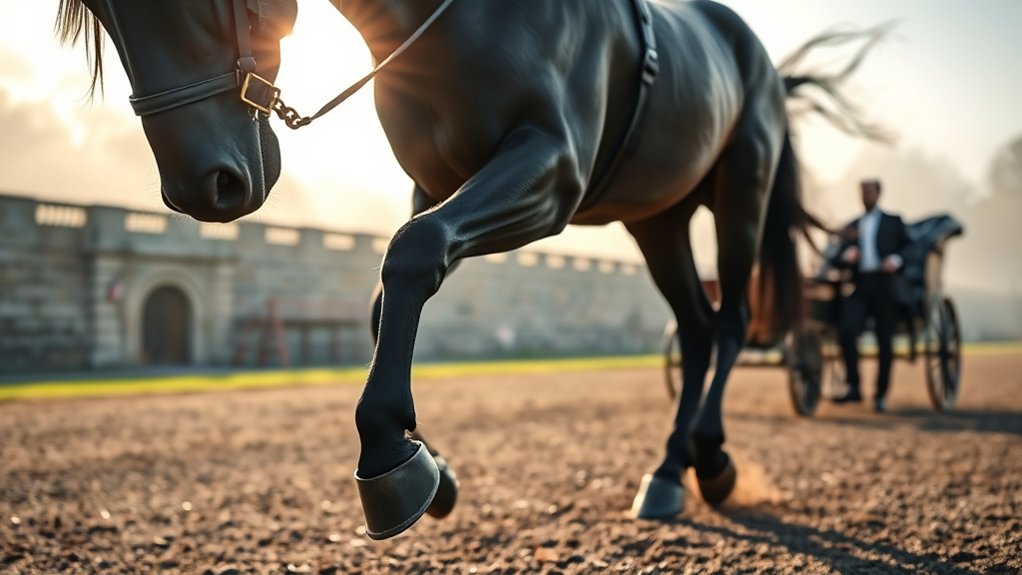
How do trainers develop the Friesian horse’s distinctive high-stepping trot and responsiveness? They use targeted training techniques focusing on collection, impulsion, and obedience. These are essential for peak performance in dressage and harness driving.
Regular participation in keuring events ensures the horse meets rigorous breed standards in conformation and movement. You’ll find Friesians excel in competitive dressage, showcasing elevated gaits and precise movements; harness driving, emphasizing control and elegant carriage; and recreational riding, suitable for riders of all skill levels due to their calm temperament.
This multifaceted training approach enhances the Friesian’s versatility and grace, making them prized for both performance and leisure. Their consistent responsiveness and refined movement come from disciplined, progressive training tailored to their natural abilities.
Why Are Friesians Popular in Movies and Events?
The Friesian horse’s training not only sharpens its movement for competitive arenas but also enhances traits that make it highly sought after in visual media and public events. You’ll notice Friesian horses display a majestic gait characterized by a high-stepping trot, which adds dynamic motion to cinematic and ceremonial presentations.
Their flowing manes and feathered legs contribute to an elegant presence that commands attention on screen and in exhibitions. This dramatic appearance, combined with a calm temperament, ensures reliable performance under demanding conditions.
Furthermore, their historical association with nobility and medieval grandeur makes them ideal for roles requiring regal authenticity. When you work with Friesian horses, you harness these combined attributes to captivate audiences and elevate the visual impact of movies and events.
How Does Friesian Horse Registration and Breeding Work?
When you register a Friesian, you do it through the KFPS studbook. To get started, the dam needs to be listed, and the sire has to pass the keuring inspections.
These inspections are pretty thorough—they look closely at conformation and movement to make sure the breeding stock meets high standards. On top of that, DNA parentage testing is done to verify the lineage.
Once all that’s in place, foals get birth year-specific naming codes. This system helps keep the lineage records accurate and organized, making it easier to track each horse’s pedigree over time.
Registration Process Overview
Where does the Friesian horse registration journey begin? It starts with the KFPS, which maintains the official studbook established in 1879.
For registration, the mare must be listed in the main studbook, and breeding must involve an approved stallion.
DNA testing plays an essential role, verifying parentage and screening for genetic disorders.
Afterward, horses undergo keuring evaluations, where conformation, movement, and adherence to breed standards determine approval.
Key steps in the registration process include:
- Verification through DNA testing and identification (tongue tattoo or microchip).
- Evaluation at keuring events assessing physical traits and movement.
- Official entry into the studbook only after meeting strict breed standards and receiving approval.
This precise process ensures the Friesian breed’s integrity and quality through controlled registration.
Breeding Approval Criteria
Registration hinges on strict breeding approval criteria that maintain the Friesian breed’s integrity and quality. You must guarantee the dam is listed in the main studbook and the sire is approved after passing rigorous keuring inspections.
These inspections evaluate conformation, movement, and adherence to breed standards. Parentage confirmation relies on DNA testing, and horses receive identification via tongue tattoos or microchips.
The KFPS studbook enforces these processes, forbidding dual registration and maintaining breed purity. Exceptional horses earn predicates like star or sport for superior quality.
| Criteria | Description |
|---|---|
| Conformation | Structural correctness |
| Movement | Gait fluidity and strength |
| DNA Testing | Parentage verification |
| Identification | Tongue tattoo or microchip |
Where Are Friesian Horse Associations Worldwide?
Although Friesian horses originate from the Netherlands, their breed associations have established a global presence to maintain rigorous standards and support breeders worldwide. The Koninklijke Vereniging Het Friesch Paarden-Stamboek (KFPS) in the Netherlands remains the primary authority for breed registration and preservation.
In North America, the Friesian Horse Association of North America and the Friesian Horse Society oversee breed registration and promote standards. Numerous international societies further global breed preservation efforts.
Key Friesian Horse Associations Worldwide:
- KFPS (Netherlands): Central registry and breed preservation authority.
- Friesian Horse Association of North America and Friesian Horse Society (North America): Responsible for breed registration and breeder support.
- Australian Friesian Horse Society and Association of the Friesian Horse Studbook of Southern Africa: Regional registries ensuring adherence to breed standards.
These organizations coordinate to uphold Friesian breed integrity internationally.
What Are Essential Friesian Horse Care and Maintenance Tips?
Maintaining the health and performance of Friesian horses requires attentive care tailored to their unique physiological traits and genetic predispositions. Prioritize regular veterinary check-ups to monitor genetic health risks like dwarfism and aortic ruptures.
Implement consistent hoof maintenance with proper trimming to support feathering and prevent issues. Manage diet carefully, emphasizing forage analysis and avoiding high-starch grains to control obesity and laminitis.
Ensure daily exercise and turnout to foster muscle development and mitigate connective tissue disorders. Monitor body condition vigilantly, using grazing muzzles or slow feeders as needed for weight control.
| Care Aspect | Key Details |
|---|---|
| Genetic Health | Regular vet exams for hereditary conditions |
| Hoof Maintenance | Frequent trimming, feathering care |
| Diet Management | Balanced forage, limit starch intake |
| Exercise | Consistent turnout, muscle support |
| Breed Characteristics | Monitor weight, use grazing controls |
Frequently Asked Questions
How Much Does a Friesian Horse Typically Cost?
You’ll typically pay between $15,000 and $30,000 for a Friesian horse, though cost factors like breeding standards and Friesian horse history influence price.
Exceptional horses, especially famous Friesians with proven bloodlines, can exceed $50,000.
Half-breds or less distinguished horses cost less.
Remember, grooming tips and dressage training add ongoing expenses.
When investing, consider lineage, training level, and health to understand the true value of your Friesian.
Can Friesian Horses Be Ridden by Beginners?
Yes, you can ride Friesian horses as a beginner, but you’ll need to focus on proper training requirements and master essential riding techniques first. Their temperament traits are calm and cooperative, which helps, but safety considerations are vital due to their powerful gaits.
Start with beginner tips like using experienced supervision and correct saddle fitting to guarantee control and comfort.
Consistent practice with these elements will enhance your riding experience safely and effectively.
What Is the Average Lifespan of a Friesian Horse?
You can expect a Friesian horse to live around 16 to 20 years on average, with some reaching their early twenties.
To maximize lifespan, you must manage their Friesian temperament carefully, meet specific horse dietary needs, and apply suitable training methods.
Breeding considerations help minimize genetic health concerns like dwarfism.
Regular grooming requirements and vigilant veterinary care are essential to address health concerns, ensuring your Friesian thrives in a healthy environment.
How Do Friesian Horses Behave Around Children?
You’ll find Friesian horses exhibit a gentle temperament and strong social behavior, making them ideal for child safety during interactions. Their playfulness encourages positive engagement, while their protective instincts provide an added layer of security around children.
These horses possess refined interaction skills, allowing them to respond calmly and patiently to young riders. However, always supervise to guarantee safe, respectful handling that matches their size and strength.
Are Friesian Horses Suitable for Trail Riding?
When it comes to trail riding, Friesians are up to the task. Thanks to a calm Friesian temperament and impressive horse stamina, you’ll enjoy excellent trail riding comfort.
Their strong build boosts horse endurance and terrain adaptability, handling varied landscapes with ease.
While feathered legs need extra care, proper training minimizes riding difficulty. If you condition them well, Friesians will carry you smoothly, making them a reliable choice for adventurous trails.
Conclusion
You’ll appreciate the Friesian horse for its striking black coat, powerful build, and graceful movement. You’ll understand its rich history and genetic challenges, and you’ll recognize why it captivates filmmakers and equestrians alike.
You’ll commit to proper care, informed breeding, and dedicated registration to preserve this noble breed. By valuing these traits, you guarantee the Friesian horse continues to thrive, perform, and inspire across generations and disciplines.