Why Horses Can’t Vomit
You can’t make a horse vomit because their anatomy includes an exceptionally strong lower esophageal sphincter acting as a one-way valve, combined with a shallow-angle esophageal entry that prevents backward flow. Their stomach placement and muscular structures resist any upward pressure, making vomiting impossible.
These evolutionary adaptations support continuous grazing and rapid digestion but increase risks like colic. Understanding these factors is key to managing horse health and preventing complications related to digestive distress.
Why Horses Can’t Vomit: Basic Anatomy
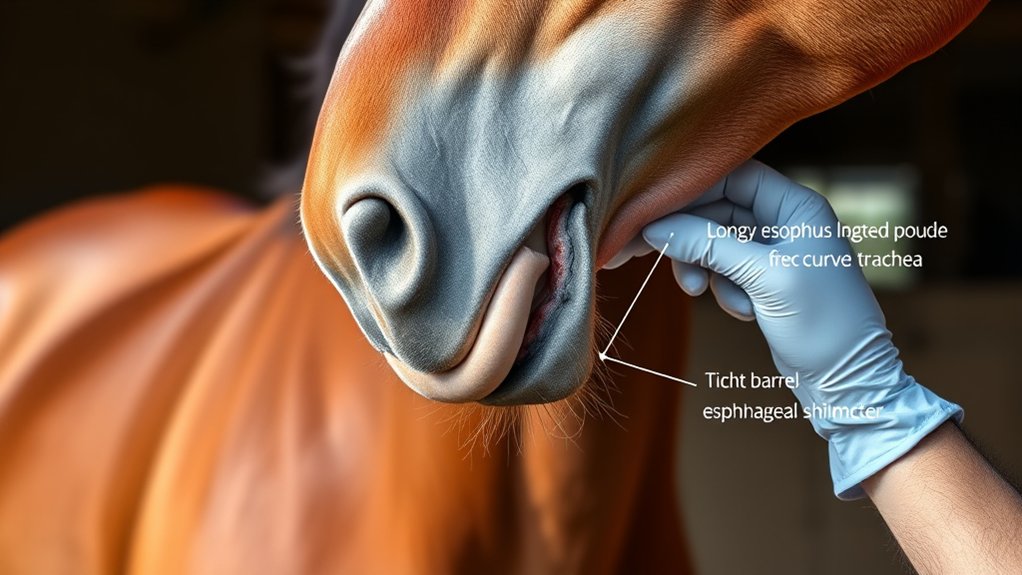
Although you might expect all mammals to have the ability to vomit, horses can’t because their lower esophageal sphincter functions as an exceptionally strong one-way valve. This valve prevents any retrograde movement of stomach contents into the esophagus.
In equine digestive anatomy, the esophagus joins the stomach at a shallow angle, further inhibiting reflux. Moreover, the esophageal lining lacks adaptations to withstand exposure to acidic gastric contents, making regurgitation potentially harmful.
The horse’s stomach and diaphragm structure physically restrict the upward movement necessary for vomiting. These combined anatomical features ensure unidirectional flow through the digestive tract, reflecting evolutionary adaptations for continuous grazing.
Understanding these precise structural characteristics explains why horses can’t vomit despite sharing mammalian traits with species that can.
How the Cardiac Sphincter Prevents Vomiting
When you consider the horse’s inability to vomit, the cardiac sphincter plays an essential role by acting as a robust, one-way valve at the stomach’s entrance. This muscular structure closes tightly after food passes through the esophageal entry, forming an effective stomach barrier.
Its strength surpasses that of many other animals, making it highly resistant to backward pressure that typically initiates vomiting. The cardiac sphincter’s design guarantees unidirectional flow, effectively preventing stomach contents from refluxing into the esophagus.
This tight closure, combined with the anatomical configuration at the esophageal entry, is imperative in the horse’s digestive system. Therefore, the cardiac sphincter functions as a critical mechanism to prevent vomiting, maintaining digestive integrity and explaining why horses can’t expel stomach contents orally.
How Esophagus Angle and Muscle Strength Stop Vomiting

Because the esophagus joins the horse’s stomach at a shallow, nearly horizontal angle, it creates a natural barrier that prevents stomach contents from flowing backward. This esophageal angle plays a vital role in stopping vomiting by minimizing the likelihood of reflux.
Furthermore, the lower esophageal sphincter in horses exhibits exceptional muscle strength, functioning as a highly effective one-way valve. This sphincter remains tightly closed once food passes into the stomach, preventing any upward movement of contents.
Together, the shallow esophageal angle and the powerful lower esophageal sphincter form a robust defense mechanism within the horse’s digestive system, making vomiting physiologically impossible.
This structural design is an evolutionary adaptation that safeguards the digestive tract from disturbances caused by reverse flow.
How Horses’ Stomachs Resist Vomiting Pressure
Even if pressure builds inside the stomach, horses’ anatomy prevents vomiting by combining muscular strength, structural positioning, and neural control.
The lower esophageal sphincter in the equine digestive system functions as a robust one-way valve, designed to prevent stomach contents from moving upward. Its connection to the esophagus at a shallow angle enhances this valve’s ability to remain closed under pressure.
Moreover, the stomach’s deep placement within the rib cage creates a physical barrier against compression and retrograde movement.
Neural pathways responsible for triggering vomiting are weak or underdeveloped in horses, further decreasing the likelihood of this reflex.
Together, these factors establish a high-pressure barrier that effectively resists the force needed to induce vomiting, safeguarding the digestive tract’s integrity in horses.
What’s the Difference Between Vomiting and Regurgitation in Horses?
You need to tell the difference between vomiting and regurgitation by paying close attention to the signs and symptoms. Vomiting is an active process where the horse uses forceful abdominal contractions.
On the other hand, regurgitation is more of a passive event—it’s when food or saliva comes back up without those muscle movements.
Now, here’s the important part for horses: they actually can’t vomit because of their anatomy. So, if you see something coming up, it’s usually regurgitation.
This is a big deal because regurgitation often points to problems with the esophagus. Recognizing this can help you understand what’s really going on with your horse.
Vomiting Versus Regurgitation
How do vomiting and regurgitation differ in horses? Vomiting is an active process involving coordinated contractions of the diaphragm, abdominal muscles, and soft palate to forcibly expel stomach contents.
In contrast, regurgitation is passive, where material moves back up the esophagus without muscular effort.
Horses can’t vomit because their lower esophageal sphincter is exceptionally strong, preventing stomach contents from reversing.
This sphincter’s tight seal is vital for horse health, as it stops reflux.
Regurgitation may occur if esophageal muscles become flaccid, but it lacks the forceful expulsion characteristic of vomiting.
When you observe material exiting a horse’s mouth or nostrils, it’s typically regurgitation or choke, not true vomiting.
Understanding this distinction helps you accurately assess equine digestive issues.
Signs And Symptoms
Distinguishing between vomiting and regurgitation in horses hinges on recognizing their specific signs and symptoms. Horses can’t vomit due to a strong lower esophageal sphincter, so any expulsion of stomach contents is physiologically impossible.
Regurgitation, however, is passive; material flows back from the esophagus without muscular effort. You’ll notice signs like fluid or feed oozing gently from the nostrils or mouth, lacking the forceful contractions typical of vomiting.
True vomiting involves coordinated reflexes such as deep inspiration, vocal cord closure, and diaphragm contraction. These are actions horses can’t perform.
Furthermore, choking may mimic vomiting but presents differently, with coughing and nasal discharge, not forceful expulsion.
Understanding these distinctions helps you accurately interpret clinical signs when evaluating equine digestive distress.
What Happens When a Horse’s Stomach Becomes Overfull
When a horse’s stomach gets overfull, it puts pressure on the cardiac sphincter. Because of the way this sphincter is angled, it closes tightly, which means the horse can’t vomit or have any reflux.
While that might sound like a good thing, the downside is that the stomach distends, and this swelling raises the risk of the esophagus or stomach actually rupturing.
Stomach Distension Effects
Although a horse’s stomach is relatively small, it can become dangerously overfull, pressing against the diaphragm and surrounding organs. This stomach distension increases intra-abdominal pressure, impairing blood flow to the stomach wall and risking tissue damage or necrosis.
Since horses can’t vomit due to the steep angle of their esophagus and a strong cardiac sphincter, excess gastric contents can’t be expelled. As a result, the horse experiences severe discomfort and pain, often showing colic symptoms, which indicate distress in the digestive system.
You must understand that this pressure buildup requires prompt veterinary intervention, such as stomach tubing, to relieve the distension and prevent life-threatening complications. Recognizing these effects is vital for managing equine digestive health effectively.
Risks Of Overfilling
If a horse’s stomach becomes overfull, the steep entry angle of the esophagus causes the cardiac sphincter to close tightly, preventing any chance of vomiting. This strong lower esophageal sphincter acts as a one-way valve, stopping reflux even under significant stress.
Overfilling elevates pressure inside the stomach, which can lead to severe complications such as rupture or intense colic if not addressed promptly. The excessive volume or gas buildup intensifies this pressure, pushing back against the esophageal opening and reinforcing the sphincter’s closure.
Because the horse can’t relieve this pressure by vomiting, immediate veterinary intervention is essential to decompress the stomach safely and prevent life-threatening outcomes. Understanding these risks underscores why careful feeding and monitoring are vital to avoid overfilling.
How No Vomiting Ability Impacts Colic Risk and Treatment
Because horses can’t vomit, they face a higher risk of severe colic caused by the inability to expel gas, buildup, or impactions from the stomach. This inability to vomit means their digestive system can become dangerously distended, increasing colic risk and potential stomach rupture.
You must recognize that horses can’t relieve gastric pressure naturally, so early detection of symptoms like bloating is critical.
Treatment relies heavily on veterinary decompression techniques, such as passing a nasogastric tube to manually release gas and fluid.
Since toxins and excess gas can’t be expelled through vomiting, managing pain and addressing underlying causes promptly is essential.
Understanding this unique limitation helps you appreciate why colic in horses demands immediate professional intervention to prevent life-threatening complications.
Why Horses Evolved to Lose Vomiting Ability
When you examine the horse’s anatomy, you’ll find a strong lower esophageal sphincter and a shallow esophageal entry angle into the stomach. These are key features that prevent vomiting. This evolutionary adaptation optimized their anatomical structure to retain food, reducing the need to expel toxins through vomiting.
The grazing lifestyle favored continuous intake and rapid digestion. This made vomiting unnecessary and risky.
| Feature | Function | Evolutionary Benefit |
|---|---|---|
| Lower esophageal sphincter | Prevents reflux/vomiting | Maintains digestion stability |
| Shallow esophageal angle | Limits stomach contents’ exit | Reduces aspiration risk |
| Continuous grazing habit | Minimal toxin buildup | Less need for vomiting |
| Rapid digestion | Efficient nutrient absorption | Supports active lifestyle |
| Food retention anatomy | Prevents regurgitation | Enhances predator evasion |
These adaptations collectively prevent vomiting, ensuring survival and digestive efficiency.
How Grazing Habits Influence Vomiting Ability in Horses
Although horses can’t vomit, their unique grazing habits play a crucial role in this limitation. Horses consume small amounts of forage continuously, which reduces the ingestion of large toxin loads that would necessitate vomiting.
This grazing behavior aligns with the evolutionary development of a strong lower esophageal sphincter, a critical component of their digestive system that prevents regurgitation.
Moreover, the esophagus enters the stomach at a shallow angle, creating a one-way flow that supports constant feeding without backflow.
The small stomach capacity further encourages frequent, moderate intake rather than binge eating, minimizing the need for rapid toxin expulsion.
Together, these adaptations in grazing habits and the digestive system explain why horses lack the physiological mechanism to vomit effectively.
Essential Vomiting and Digestive Health Tips for Horse Owners
Since horses lack the ability to vomit, you must prioritize vigilant management of their diet and monitor for early signs of digestive distress. Understanding the equine digestive system is essential for vomiting prevention and overall equine health.
Because horses cannot vomit, careful diet management and early detection of digestive issues are crucial.
Provide a consistent, forage-based diet that supports continuous grazing. Avoid sudden feed changes that may trigger colic. Maintain proper hydration to facilitate digestive function and reduce impaction risks.
Watch for subtle colic symptoms such as restlessness, pawing, or decreased appetite. Seek immediate veterinary care when these occur.
Because the strong lower esophageal sphincter prevents reflux, toxins or blockages can rapidly become life-threatening.
Frequently Asked Questions
Can Horses Choke if They Can’t Vomit?
Yes, horses can choke despite their inability to vomit. Their unique anatomy and digestive process, including a long esophagus and specialized stomach, prevent regurgitation.
An equine diet high in dry or coarse feed can increase choke risk.
While the vomeronasal organ aids in scent detection, it doesn’t impact digestion or vomiting.
Understanding these factors helps you manage feeding practices to reduce choke incidents and guarantee equine health.
How Do Vets Treat Horses With Severe Stomach Distress?
Imagine a horse showing severe colic symptoms. Vets immediately use veterinary diagnostic tools like ultrasounds to assess the issue. They consider the horse’s digestive anatomy to place a nasogastric tube, relieving pressure and removing fluids.
Treatments often address equine gastric ulcers and include analgesics and muscle relaxants.
Colic prevention strategies, such as careful feeding and hydration, are discussed to avoid recurrence.
Close monitoring guarantees timely intervention and recovery.
What Are Signs a Horse Needs Immediate Medical Attention?
You need to watch for signs like sudden refusal to eat or drink, excessive rolling, or pawing, which indicate urgent issues. Equine dental health problems can cause feed refusal.
Dehydration worsens distress, so hydration importance is critical.
Stress management techniques reduce colic risk, but if your horse shows rapid abdominal swelling or abnormal posture, seek immediate care.
Parasite prevention also plays a role in maintaining overall gastrointestinal health, preventing emergencies.
Are There Breeds More Prone to Digestive Issues?
Yes, certain horse breed predispositions impact digestive health genetics, making some more prone to issues. Draft horses and Warmbloods show breed-specific colic risks due to size and equine digestive anatomy.
Miniature horses and ponies face impaction risks from small stomach capacity. Obesity-prone breeds like Morgans carry metabolic disorder risks.
Understanding these breed-specific factors helps you anticipate and manage digestive problems effectively in your horse’s care routine.
Can Diet Changes Prevent Colic in Horses?
You might think a sudden switch from sweet hay to crunchy grain is a horse’s idea of a tasty surprise, but it’s a one-way ticket to colic. You can prevent this by managing dietary fiber carefully, adjusting feeding frequency, and ensuring constant water intake.
Supporting natural grazing habits helps maintain gut balance.
Gradual diet changes let their microbiome adapt, reducing digestive upset and keeping colic risks low.
Conclusion
Now that you understand why horses can’t vomit thanks to their unique cardiac sphincter, esophagus angle, and stomach structure, how will you adjust your care routine? Recognizing this limitation is vital because it increases colic risk and influences treatment choices.
By appreciating your horse’s grazing habits and anatomy, you can better prevent digestive issues. Isn’t it essential to tailor your management strategies to protect their delicate digestive system?