How to Approach a Horse in 7 Steps
To approach a horse safely, start by calmly observing its body language to gauge mood. Approach slowly from the shoulder at an angle, avoiding sudden moves.
Gain attention through gentle eye or ear contact, then call its name softly to build trust. Use two hands to make calm contact on the shoulder.
Watch the horse’s reactions and adjust accordingly. When leaving, gently push off the shoulder and step back carefully.
Following these steps will help you connect with confidence and care.
Why Reading a Horse’s Body Language Is Key to Safety
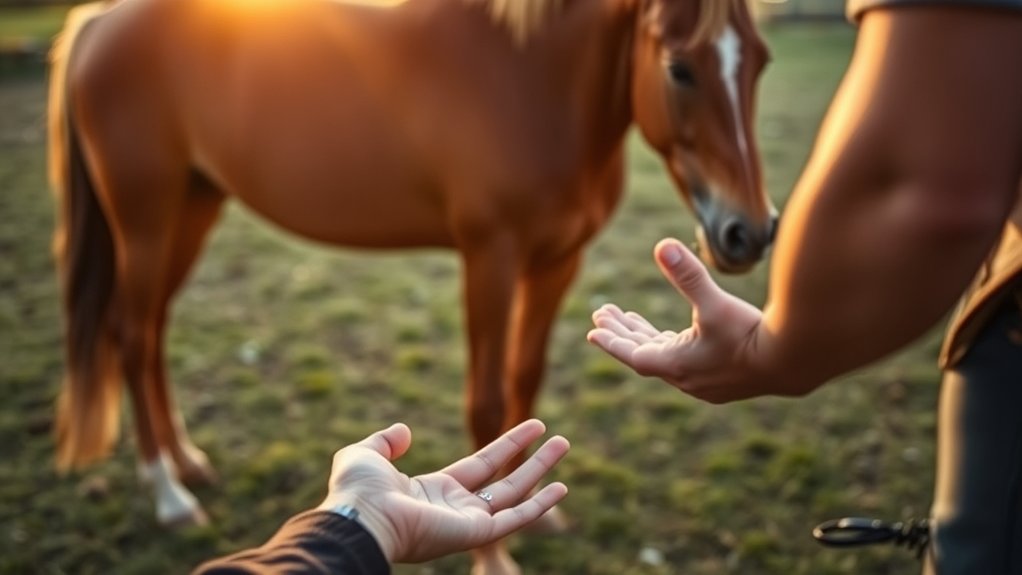
Because horses communicate primarily through body language, reading their signals is essential for your safety. You’re always going to encounter subtle cues like tail swishing, ear position, and eye contact that reveal their emotional state.
Horses speak through subtle body language—watch their tail, ears, and eyes to understand their feelings.
Noticing these signs helps you determine if a horse is calm, alert, or agitated, so you can adjust your behavior accordingly. For example, recognizing impatience or discomfort early lets you avoid provoking defensive reactions.
By understanding body language, you guarantee the horse is aware of and comfortable with your presence. Being attentive to these signals fosters trust and promotes safer interactions.
When you’re always going to be aware of what the horse is telling you, you reduce risks and create a positive experience for both of you.
Approach the Horse Safely From Its Shoulder
When you’re approaching a horse, try to come up near its shoulder. This spot is great because the horse can easily see and hear you there.
Just call its name or use some calm, gentle words to get its attention. That way, the horse knows you’re around and feels more comfortable.
Doing this helps build trust and keeps both you and the horse safe while you’re together.
Position Near Shoulder
How do you make sure a horse feels safe as you approach? Focus on positioning near its shoulder, respecting its shoulder anatomy and saddle placement. This area is less threatening and allows you to gently handle the mane if needed. Here’s how to approach:
- Approach slowly from the side near the shoulder to avoid startling the horse.
- Keep one eye or ear on the horse, ensuring it notices your presence calmly.
- Use both hands to softly reach the shoulder, establishing a secure and soothing connection.
- Speak softly as you move closer, observing the horse’s body language for any discomfort.
This respectful approach helps the horse feel secure, making your interaction safe and positive.
Gain Horse Attention
Why is gaining a horse’s attention vital before moving closer? It guarantees the horse feels safe and aware of your presence, preventing startle reactions.
Approach the horse slowly from its shoulder, where it can see you clearly. Use verbal cues like calling its name to capture its focus, just as you’d during feeding routines or horse grooming sessions.
Confirm the horse’s attention by ensuring at least one eye or ear points toward you. When the horse acknowledges you, place both hands gently on its shoulder to establish a connection.
This careful approach mirrors exercise techniques, where clear communication and trust are essential.
Gain the Horse’s Attention With Eye or Ear Contact
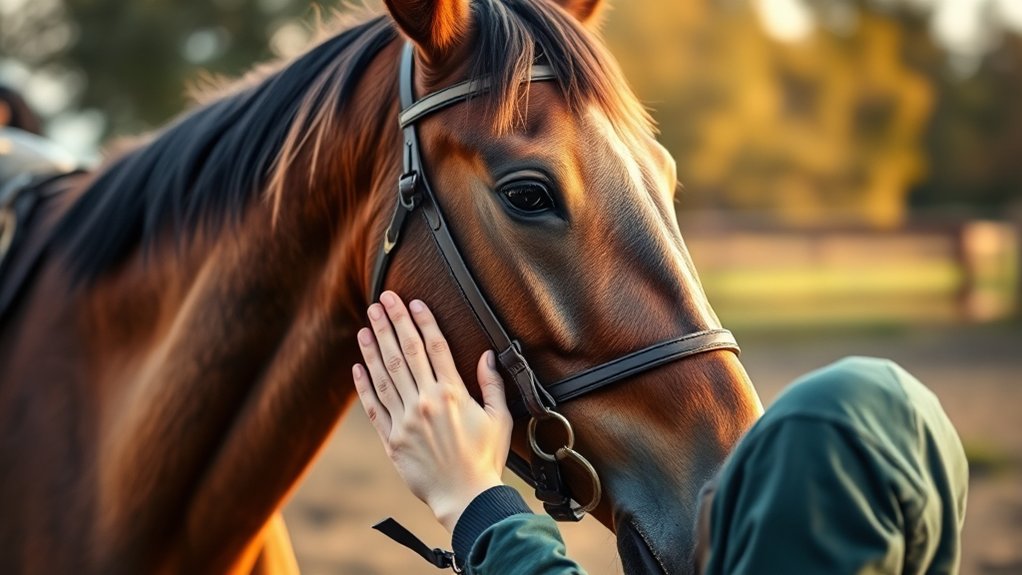
Before approaching a horse, you need to gain its attention through eye or ear contact. This signals acknowledgment and helps build trust. Horses communicate a lot through their facial expressions, especially ear movements and eye contact cues.
If a horse’s ears are pointed toward you and its eyes meet yours, it’s alert and ready for interaction. Without this connection, the horse may be unaware of your presence, making your approach unsafe.
Follow these steps to gain attention:
- Observe the horse’s ears for forward or rotating movements indicating focus on you.
- Look for direct eye contact, showing the horse acknowledges you.
- Avoid sudden movements that might divert its attention.
- Wait patiently until both ear and eye cues confirm readiness.
Call the Horse’s Name to Calmly Introduce Yourself
When you call a horse by its name, you create an immediate, calming connection that helps the animal recognize and trust you. Use gentle calling with a steady, soft tone to convey calmness through your horse vocalizations. Avoid any sudden or loud sounds that might startle the horse.
Repeat the horse’s name softly to encourage name recognition, which reassures the horse and strengthens your bond. Before approaching, watch for eye and ear contact to verify the horse is focused on you and receptive.
Calling the horse’s name acts as a clear verbal cue that complements your body language, making the introduction smoother and safer. This thoughtful communication shows empathy and respect, essential for building trust with any horse.
Handle the Horse Safely Using Two Hands on the Shoulder
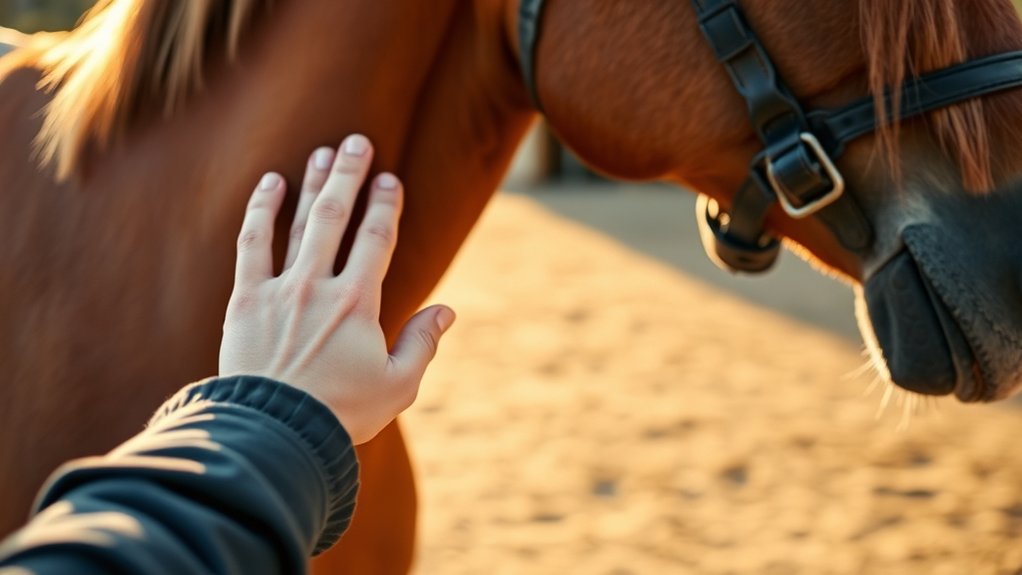
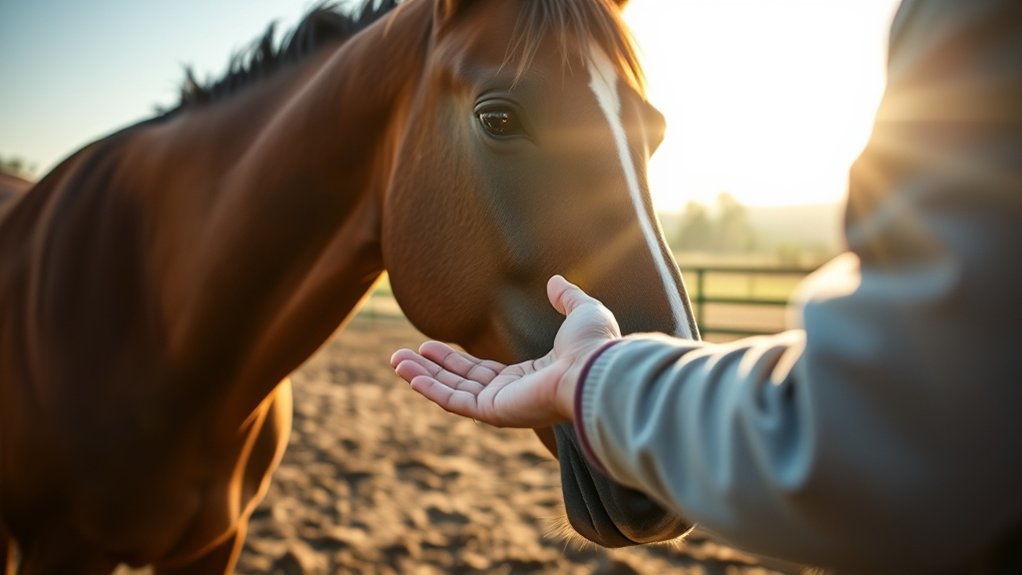
When you place both hands gently and evenly on the horse’s shoulder, you create a calm connection without startling it. This steady contact helps the horse understand what you’re trying to do and builds trust.
Just keep your touch soft and steady as you guide the horse’s attention. Then, once it feels comfortable, slowly remove your hands.
Proper Hand Placement
Although approaching a horse can feel intimidating, placing both hands gently on its shoulder is crucial for establishing initial contact and trust. Proper hand placement guarantees you communicate calmness and control while respecting the horse’s space.
Keep these tips in mind for effective hand positioning:
- Use two hands to steady the horse’s shoulder with relaxed grip firmness.
- Align your hands at a comfortable height matching the shoulder to avoid startling.
- Coordinate your hand movements smoothly to follow the horse’s natural responses.
- Maintain gentle pressure, allowing the horse to feel secure without restriction.
Establishing Contact Safely
How do you guarantee safe contact while approaching a horse? Start by approaching from the shoulder area, where the horse feels most secure. Use both hands to gently rest on the shoulder, establishing a calm connection.
Before touching, verify the horse is attentive. Look for eye or ear contact to confirm awareness. Approach gradually to avoid startling your horse. This is crucial for safe horse grooming, feeding safety, and tack handling.
Maintaining a calm, gentle demeanor helps your horse relax, building trust and cooperation. This careful, deliberate approach prevents sudden reactions and ensures a positive experience for both of you.
Pay Attention to the Horse’s Reactions and Adjust Your Approach
As you approach a horse, closely observe its body language to gauge comfort and awareness. This helps you adjust your approach to align with the horse’s mood and avoid startling it. Whether you’re preparing for horse grooming, responding to feeding cues, or reading stall behavior, these signals guide your actions.
- Watch ear and tail positions. Swishing tails or pinned ears signal discomfort.
- Notice eye contact and ear orientation to ensure the horse is aware and receptive.
- Detect signs of tension or agitation. If present, pause and give the horse space to relax.
- Continuously monitor reactions, adjusting speed or direction to maintain calm and trust.
Depart Safely by Pushing Off and Stepping Back
Once you’ve tuned into the horse’s signals and guaranteed it’s calm, you need to leave the interaction safely. Gently push off the horse’s shoulder with both hands to signal your intention to depart. This subtle cue, familiar from horse grooming or tack fitting sessions, prevents startling the animal.
After pushing off, take two deliberate steps backward, maintaining eye contact and awareness of the horse’s body language. This careful retreat mirrors the patience required during feeding routines, ensuring the horse stays relaxed.
Only once you’ve created a safe distance should you turn away, avoiding sudden movements that might spook it. Departing with calm precision respects the horse’s sensitivity and strengthens your trust, making every interaction from grooming to feeding more positive and secure.
Frequently Asked Questions
What Should I Wear When Approaching a Horse?
When approaching a horse, you should wear proper footwear like sturdy, closed-toe shoes or boots. This helps protect your feet during horse grooming or handling.
Choose long pants and avoid loose clothing to prevent distractions or accidents. Neutral-colored clothes help keep the horse calm.
Using safe approach techniques, such as moving slowly and speaking softly, complements your attire. This guarantees both your safety and the horse’s comfort throughout grooming or any interaction.
Can Children Approach Horses Safely Alone?
No, children shouldn’t approach horses alone because understanding horse behavior takes experience. You need to recognize signs like ear or eye focus to guarantee the horse is calm and receptive.
Maintaining a safe distance is essential to prevent startling the horse or risking injury. Always have an experienced adult supervise, guiding you to approach gently and confidently so both you and the horse stay safe and comfortable during the interaction.
How Do I Know if a Horse Is Friendly?
You’ll know a horse is friendly by reading its body language: relaxed ears pointed toward you, soft eyes, and a calm posture.
If it nudges gently or follows you, that’s a good sign.
Use safe grooming techniques, like approaching slowly and stroking the neck first.
Always watch for warning signs like pinned ears, tense muscles, or a swishing tail that mean discomfort or agitation.
Respect these signals to keep both you and the horse safe.
What if a Horse Startles While I’M Near It?
When a horse startles near you, remember, “Slow and steady wins the race.” Stay calm and avoid sudden moves to prevent escalating fear.
Use calming techniques like soft voices and slow gestures while watching horse body language carefully.
Keep safety equipment handy, like a helmet and gloves, to protect yourself.
Give the horse space, letting it regain composure before you cautiously re-establish gentle contact.
Your patience helps build trust and safety.
Is It Safe to Approach a Horse From Behind?
No, it’s generally unsafe to approach a horse from behind because horse behavior makes them more likely to startle or kick if they can’t see you.
For your safety, use approach techniques that let the horse see and hear you clearly, like coming from the front or side.
If you must approach from behind, always take safety precautions. Speak softly or gently touch the horse first to alert them and avoid frightening them.
Conclusion
Approaching a horse calmly and confidently isn’t just tradition. It’s proven to build trust and prevent accidents. Studies show horses respond best to clear, gentle signals, making your careful approach key to safety.
By reading their body language and respecting their space, you create a bond that’s both safe and rewarding. Remember, every horse is different, so stay attentive and adjust as needed.
With practice, your respectful approach will become second nature.