How to Trim Horses’ Feet in 5 Steps
To trim your horse’s feet effectively, start by calming the horse and inspecting the hooves carefully for damage or infections. Clean them thoroughly with a hoof pick and brush, focusing on debris around the frog.
Next, trim the hoof wall at a consistent 45° angle, maintaining balance. Pare away only excess frog and sole material without over-trimming.
Finally, rasp the edges smooth to prevent chipping and promote health. These precise steps guarantee ideal hoof function and longevity. You can explore each technique further for best results.
Prepare Your Horse and Inspect Hooves for Health
Before you begin trimming, make sure to approach your horse calmly and secure it in a quiet area to minimize sudden movements.
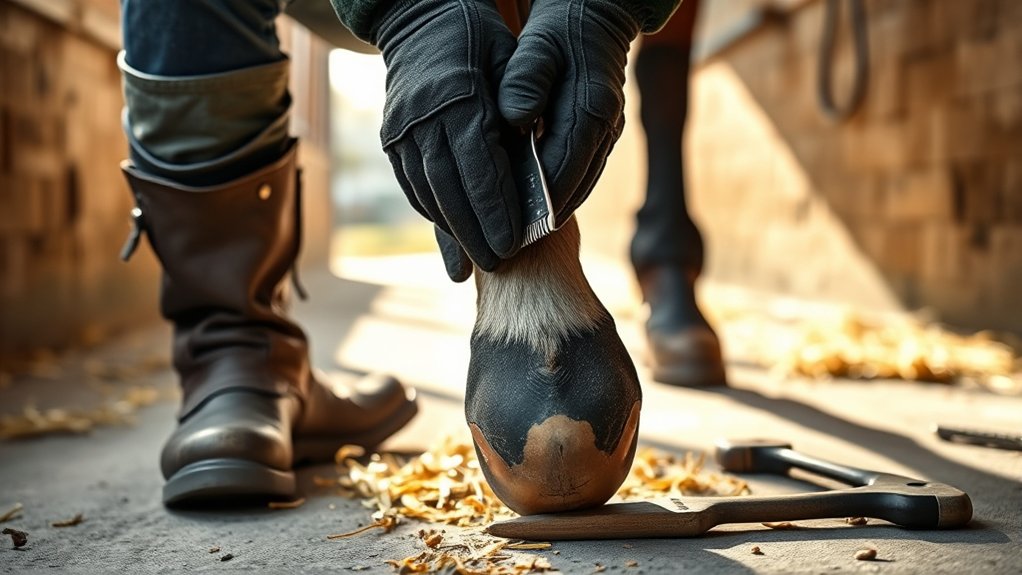
Start by using a hoof pick to perform thorough hoof cleaning, focusing on debris removal from collateral grooves and around the frog. This step is critical to accurately inspect hooves for overall hoof health.
Carefully examine the hoof condition, paying close attention to hoof cracks, chips, or flares along the hoof wall.
Assess the sole health and the frog for any abnormalities or signs of infection such as foul odors, swelling, or bruises.
Confirm the hoof is dry and free from excess moisture or mud, as this affects your ability to evaluate the structure accurately before trimming.
This initial preparation sets the foundation for safe and effective hoof care.
Clean Hooves Thoroughly to Remove Dirt and Debris
Although you’ve already inspected the hooves, you’ll need to clean them thoroughly using a hoof pick to remove all dirt, manure, and stones from the collateral grooves and sole.
Thoroughly clean hooves with a hoof pick to remove dirt, manure, and stones from grooves and sole.
Focus on soil removal around the frog area, where embedded debris can harbor bacteria and impair hoof hygiene.
Use the hoof pick carefully to avoid damaging sensitive structures while extracting foreign objects. After picking, apply circular brushing with a stiff-bristled brush to eliminate remaining hoof dirt and surface mud, ensuring no debris remains.
This meticulous cleaning process not only reveals cracks or abscesses but also promotes circulation and prepares the hooves for effective trimming.
Consistent hoof maintenance through thorough cleaning is essential for overall hoof health and prevents complications during the trimming procedure.
Trim the Hoof Wall for Balance and Comfort
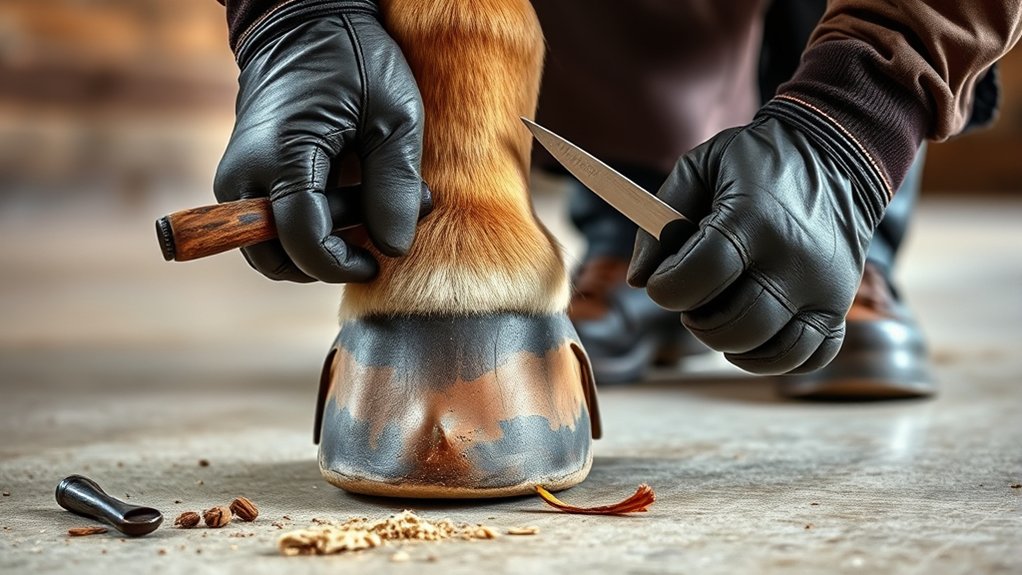
When you trim the hoof wall, you remove excess length to restore balance and guarantee proper weight distribution from toe to heel. Begin by evaluating the hoof shape to identify overgrowth and uneven areas.
Use sharp nippers to make precise cuts, gradually reducing the hoof wall in small, controlled sections. Aim for a consistent 45° angle to promote proper breakover and avoid discomfort.
Be cautious not to trim too much at the toe or sides, as this can disrupt balance and cause strain.
Continuously check the alignment of the hoof wall with the overall hoof structure to maintain ideal hoof health. Regular, precise trimming is essential for effective hoof care, ensuring comfort and longevity for your horse.
Pare Excess Frog and Sole Hoof Material Carefully
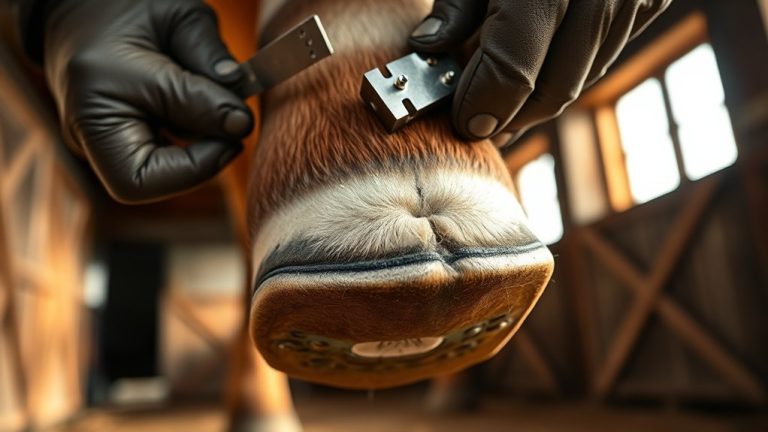
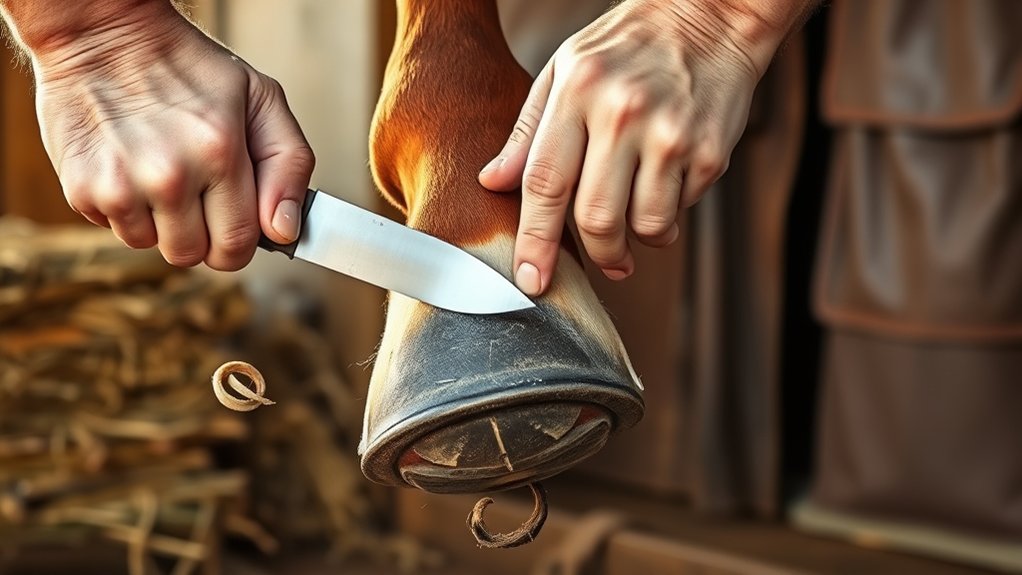
After trimming the hoof wall to establish proper balance, turn your attention to the frog and sole. Use a sharp hoof knife to carefully pare away only dead, exfoliating, or overgrown material from these areas.
Focus on removing soft, loose, or flaking tissue without cutting into healthy tissue within the hoof capsule. Minimal sole trimming around the frog helps preserve natural shock absorption and blood circulation essential for hoof health.
Avoid over-trimming, as excessive removal can cause soreness and sensitivity, compromising the hoof’s structural function.
Gradually refine the frog and sole by targeting only non-viable material, maintaining the hoof’s natural form and function.
Precise trimming guarantees you support the horse’s comfort and long-term hoof integrity without damaging living tissue.
Smooth the Hoof to Prevent Chipping and Promote Health
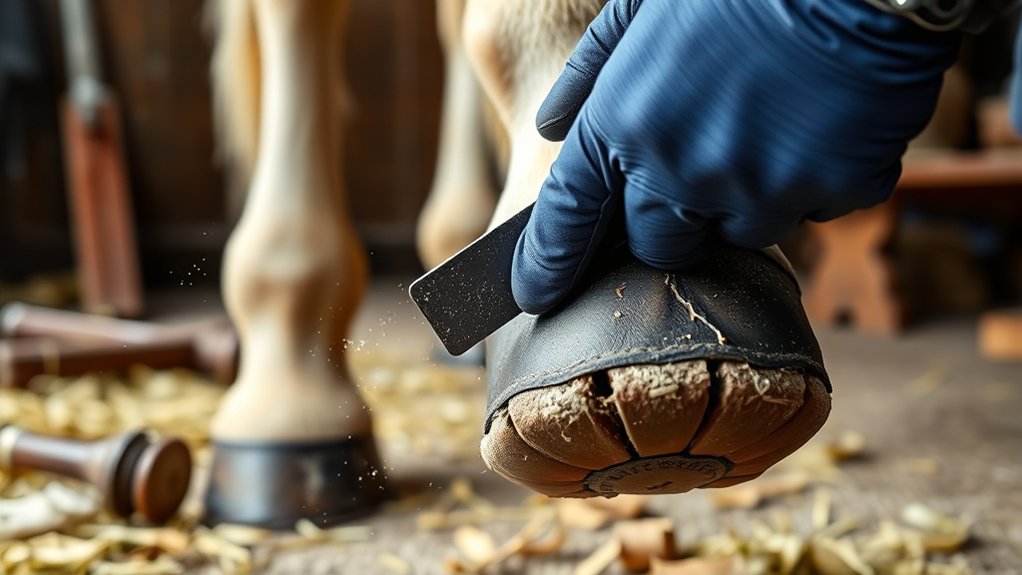
Since uneven or sharp hoof edges increase the risk of chipping and injury, you should carefully rasp the hoof to create a smooth, rounded surface. Proper rasping removes sharp edges that catch on terrain, preventing damage and promoting hoof health.
A smooth hoof surface encourages natural wear and supports circulation, which is essential for hoof maintenance. Consistent hoof trimming with a rasp maintains hoof balance and shape, distributing weight evenly to prevent cracks and splits.
| Hoof Trimming Aspect | Benefit |
|---|---|
| Rasping | Removes sharp, uneven edges |
| Smooth Edges | Prevent chipping |
| Hoof Surface | Promotes circulation |
| Hoof Balance | Distributes weight evenly |
| Hoof Shape | Supports long-term integrity |
Incorporate rasping into your hoof care routine to optimize hoof health and prevent chipping.
Frequently Asked Questions
How Often Should I Trim My Horse’s Hooves?
You should trim your horse’s hooves every 6 to 8 weeks to maintain ideal hoof health and shape.
If your horse experiences rapid hoof growth or lives in soft terrain, increase the trimming frequency to every 4 to 6 weeks.
Regular barefoot trimming prevents hoof cracks, reduces hoof sensitivity, and minimizes hoof disease risks.
Stick to a consistent trimming schedule and prioritize trimming safety to guarantee balanced hoof shape and overall soundness.
What Tools Are Best for Hoof Trimming?
For effective hoof care and trimming techniques, you’ll need sharp trimming tools like stainless steel nippers and rasps to manage hoof growth precisely.
A hoof pick clears debris, ensuring you avoid hoof cracks.
Use a hoof stand for stability, enhancing trimming safety.
Understanding hoof anatomy helps you perform barefoot trimming properly.
Maintaining a consistent trimming schedule supports ideal hoof health and prevents damage during the trimming process.
Always wear protective gear to stay safe.
Can I Trim Hooves if My Horse Is Lame?
Think of your horse’s lame hoof as a delicate clockwork. One wrong move can disrupt the entire mechanism. You shouldn’t trim hooves if your horse is lame without expert guidance.
Proper trimming techniques and understanding horse anatomy are essential. They help maintain hoof health, balance, and prevent hoof infections or cracks.
Barefoot trimming or natural trimming demands precise knowledge of hoof growth and trimming safety. Always consult a professional to protect your horse’s recovery and hoof integrity.
How Do I Know When a Hoof Needs Trimming?
You know a hoof needs trimming when hoof growth causes the hoof wall to extend beyond 1/8 inch above the sole or disrupts hoof balance. Watch for hoof cracks, changes in frog condition, or hoof shape abnormalities like curling.
Increased hoof sensitivity, a strong digital pulse, or discomfort after shoe removal also signal issues. Regularly assess sole health and hoof wall integrity to maintain the best possible function and prevent lameness.
Should I Trim Hooves Differently in Winter Versus Summer?
You should trim hooves differently in winter versus summer because seasonal hoof changes considerably affect hoof condition. Studies show hooves can expand up to 5% in moisture-rich winter, demanding delicate winter hoof care to avoid over-trimming.
In summer, temperature effects and moisture impact dry hooves, increasing risks of hoof cracking. Seasonal trimming techniques must adapt to environmental influences and climate considerations, ensuring balanced hooves through summer hoof adjustments and winter maintenance.
Conclusion
By trimming your horse’s feet regularly, you help maintain ideal hoof health and prevent lameness, which affects nearly 20% of horses annually. Following these five precise steps ensures balanced, comfortable hooves, reducing the risk of injury and infection.
Remember, clean and well-maintained hooves support your horse’s overall performance and longevity. Consistent, careful trimming isn’t just routine; it’s vital hoof care grounded in veterinary best practices.