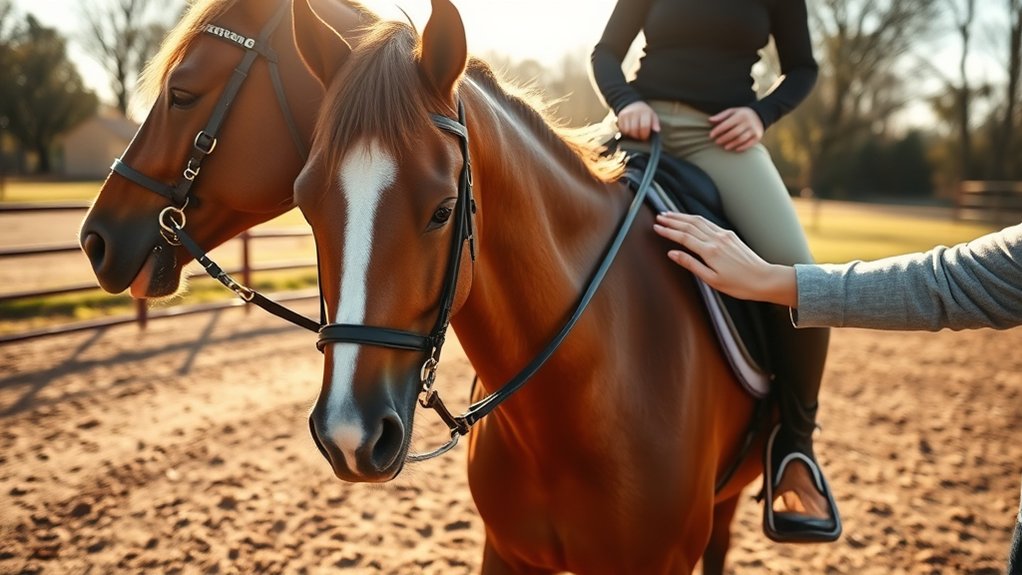
How to Train Your Horse in 5 Steps
To train your horse effectively, start by building trust with calm, consistent interactions. Teach clear cues like eye contact and following through gentle, patient exercises.
When connection falters, reconnect using simple, gentle guidance to restore focus. Progress only once your horse shows relaxed confidence in foundational skills.
Gradually introduce obstacles, encouraging curiosity without pressure to boost engagement. Follow these steps patiently, and you’ll create a confident, attentive partner.
Keep exploring these principles to deepen your training success.
Build a Strong Connection With Your Horse Through Trust and Calmness
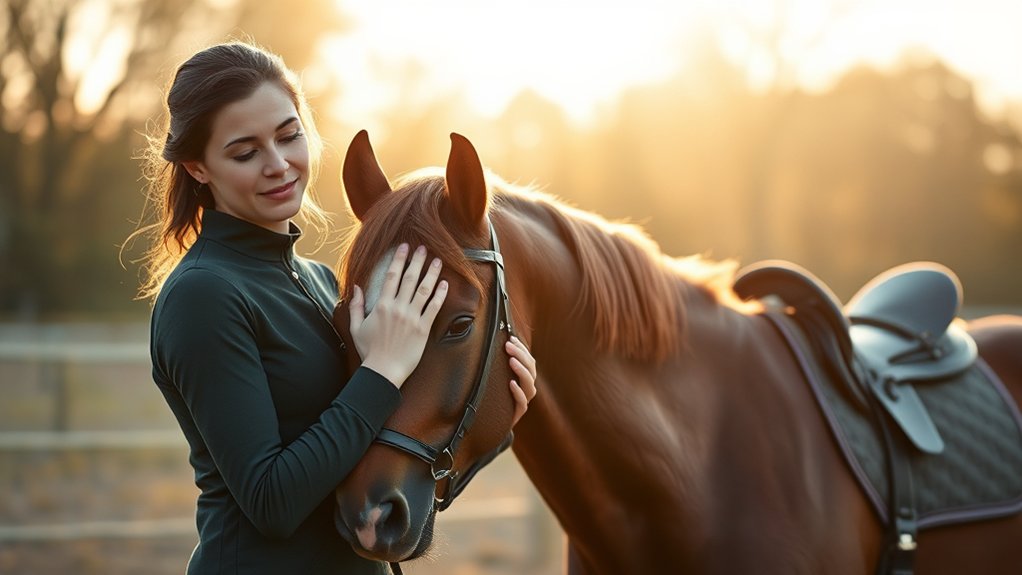
Although training your horse involves many skills, building a strong connection through trust and calmness lays the essential foundation. You start by prioritizing calmness and clarity over pressure, creating an environment where your horse feels safe and confident.
Building trust requires consistent, heart-centered interactions. Using gentle cues and a relaxed demeanor encourages your horse to participate willingly.
Trust grows through gentle cues and a calm presence, inviting your horse to engage willingly.
Focus on simple groundwork exercises like yielding and following to reinforce understanding before moving to advanced tasks.
Patience is key; rushing can undermine your efforts. By consistently reinforcing calm, respectful behavior, you develop a deep connection that supports all future training.
Teach Your Horse Eye Contact and Following Your Cues Consistently
Once you’ve established trust and calmness with your horse, the next step is teaching it to maintain eye contact and consistently follow your cues. Eye contact strengthens your connection and guarantees responsiveness. Here’s how to do it effectively:
- Use your energy to encourage your horse to look at you, rewarding any eye contact to reinforce the behavior.
- Practice “look at me” and “follow me” exercises regularly, increasing distance and duration gradually.
- Introduce obstacles and varied environments to challenge your horse’s focus and ability to follow cues.
- When connection weakens, use simple recovery techniques by encouraging eye contact and following to restore focus.
Patience and consistency in these steps build a reliable and attentive partnership with your horse.
Reconnect With Your Horse Using Simple Cues and Gentle Guidance

When your horse begins to drift away, use clear, consistent physical cues like gentle pressure or focused energy to guide it back into connection. Reestablish eye contact by softly encouraging your horse to look at you with relaxed body language and steady attention.
Embrace the Liberty Connection by reinforcing calm, heart-centered interactions such as gentle grooming or soothing touch, which build trust and willingness. If your horse’s connection weakens, simplify your cues and slow your movements to help it feel safe and regain confidence.
Practice patience, allowing your horse to voluntarily choose to reconnect through positive, relaxed guidance. This thoughtful approach deepens your bond and encourages your horse to engage willingly, laying a strong foundation for continued training and mutual respect.
Progress When Your Horse Is Confident With Foundational Skills
Before you introduce new challenges, make sure your horse consistently shows comfort and willingness with foundational skills like maintaining eye contact and following your energy. Building on this confidence is key to steady progress.
You’ll want to:
- Reinforce these behaviors through repetition and positive reinforcement to deepen trust.
- Watch for relaxed body language and enthusiastic participation as signs your horse is ready.
- Avoid rushing into complex tasks until your horse is calm and engaged with basics.
- Only introduce gradual challenges once foundational skills are solid, ensuring your horse feels secure.
Introduce Obstacles Gradually to Build Confidence and Engagement
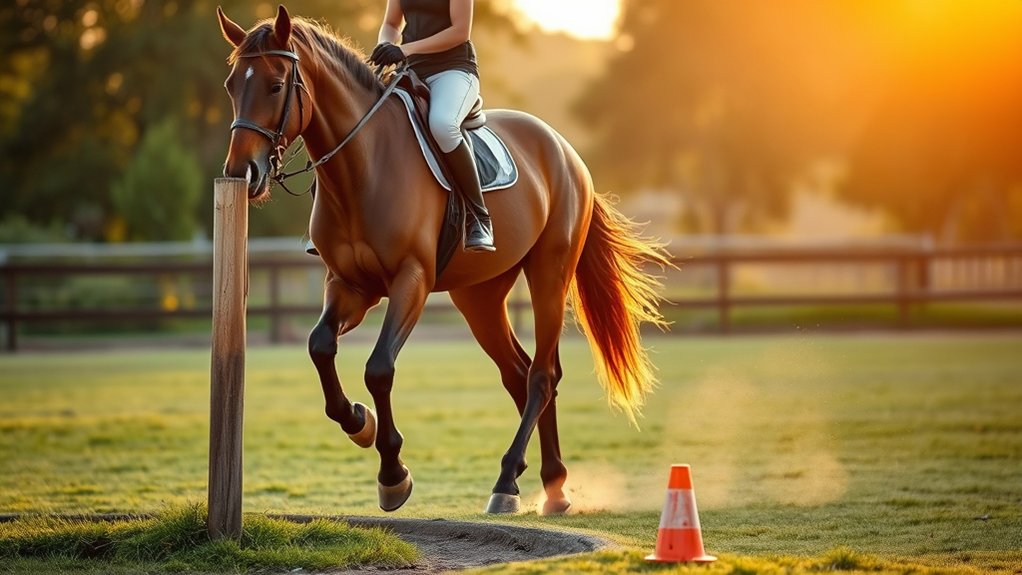
Although introducing new challenges can be intimidating for your horse, gradually exposing them to obstacles like tarps, cones, or streams helps build their confidence without overwhelming them.
Start by asking your horse to calmly approach and investigate each obstacle, rewarding their curiosity and calm behavior.
Use a step-by-step approach. Begin with stationary contact, then progress to moving over or through the obstacle as trust grows.
Avoid rushing or applying pressure. Instead, reinforce positive associations through patience and consistent exposure.
By asking your horse for gentle engagement and rewarding their willingness, you foster focus and confidence.
This gradual introduction guarantees your horse feels safe and engaged, preparing them to handle new challenges confidently and willingly.
Frequently Asked Questions
What Type of Equipment Is Best for Beginner Horse Training?
For beginner horse training, you’ll want soft, adjustable equipment like a halter or cavesson paired with a long lead rope. These tools support effective training techniques by ensuring your horse stays comfortable and responsive.
Avoid harsh bits or complicated gear, as they can cause resistance.
Using cotton or nylon ropes gives you good control without overwhelming your horse, helping you build trust and clear communication from the start.
How Often Should I Train My Horse Each Week?
You’ll want to work with your horse three to five times per week, weaving in training consistency to foster steady progress. Keep sessions short and sweet, around 15 to 30 minutes, to sustain their spirit and avoid strain.
Don’t forget to sprinkle in rest days; one or two weekly breaks help prevent burnout.
Daily groundwork, even brief, builds bonds and reinforces learning, keeping your horse engaged and enthusiastic for each encounter.
What Are Signs of Stress or Discomfort in a Horse?
You’ll notice signs of stress or discomfort in your horse through behaviors like tail swishing, pinned-back ears, and rapid breathing. Watch for body tension or stiff posture, flared nostrils, and lip licking. They all signal unease.
Repeated pawing or shifting weight often means your horse’s feeling anxious. If your horse suddenly stops or tries to back away, it’s best to address their horse wellness promptly to keep them comfortable and healthy.
Can Diet Affect My Horse’s Learning Ability?
Yes, diet has a significant nutritional impact on your horse’s learning ability. When you provide balanced nutrients, including essential minerals like magnesium and B-vitamins, you support ideal brain function and memory.
Avoiding excessive sugars and starches prevents hyperactivity that can distract your horse.
Consistent feeding routines and proper hydration also stabilize energy and enhance focus, making your training sessions more effective and your horse more responsive.
How Do I Handle Aggressive Behavior During Training?
Think of behavior management like tuning a delicate instrument. When your horse acts aggressively, stay calm and use soft, consistent cues to set clear boundaries without escalating tension.
Revert to basic exercises like “look at me” to rebuild trust. Avoid punishment; instead, reward calmness to encourage cooperation.
Be patient, keep sessions short, and address any fear or pain causing the aggression.
Gradually, you’ll restore harmony and control.
Conclusion
By building trust and staying calm, you’ll create a bond stronger than steel with your horse. Keep teaching clear cues and reconnect gently to deepen that connection.
Once your horse masters the basics confidently, introduce obstacles slowly to keep them engaged and growing. Remember, training isn’t a race, it’s a steady journey toward harmony.
With patience and consistency, you’ll transform your horse into a willing partner, making every ride feel like pure magic.