How Often Do Horses Need Their Hooves Trimmed?
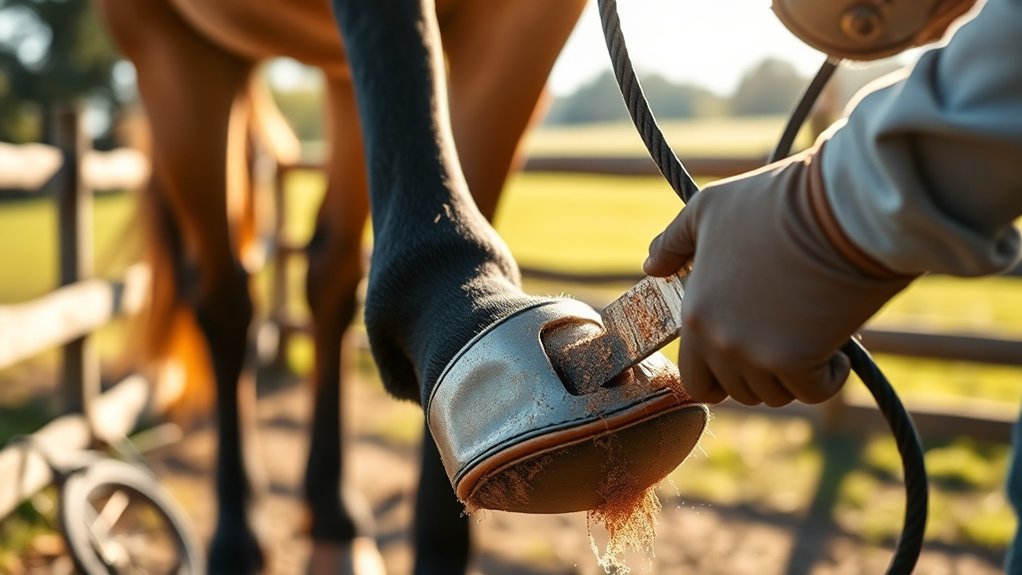
You should trim your horse’s hooves every 6 to 8 weeks to maintain proper balance, shape, and hoof health. More active horses or those in soft environments may need trims every 4 to 6 weeks due to faster growth or slower natural wear.
Regular trimming prevents cracks, uneven wear, and lameness, while avoiding over-trimming preserves natural protection. Monitoring hoof condition helps adjust timing for peak care.
Understanding environmental and activity factors can further maximize your horse’s hoof maintenance.
Why Is Routine Hoof Trimming Essential?
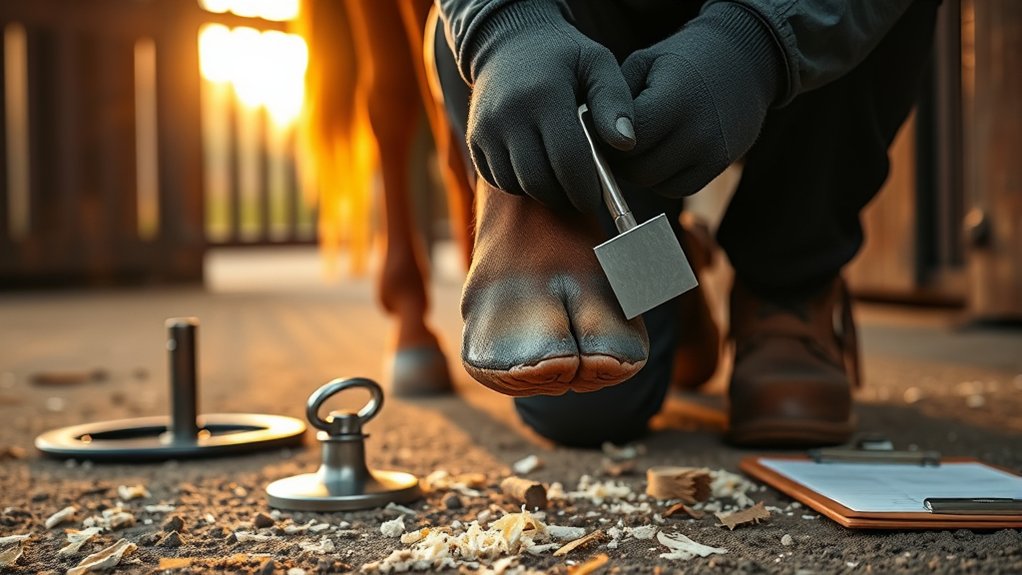
Although some may overlook it, routine hoof trimming plays an indispensable role in maintaining your horse’s comfort and mobility. By engaging in regular hoof care, you prevent overgrowth that leads to discomfort and mobility issues.
Proper hoof trimming ensures the hoof retains its correct shape and balance, which supports an even weight distribution and a healthy gait. Neglecting this care can cause cracks, flaring, and uneven wear, increasing the risk of lameness.
Proper trimming maintains hoof shape and balance, preventing cracks and uneven wear that lead to lameness.
Importantly, consistent trimming stimulates healthy hoof growth, preserving the integrity of internal structures. Without regular hoof trimming, hooves become misshapen or excessively long, raising the likelihood of injury and long-term complications.
Prioritizing regular hoof care is crucial to maintain a healthy hoof and optimize your horse’s overall soundness.
How Often Should You Trim Your Horse’s Hooves?
You should trim your horse’s hooves every 6 to 8 weeks to keep them balanced and avoid problems like cracking or lameness.
That said, how often you trim can depend on things like how fast your horse’s hooves grow, how active they are, and the environment they live in.
It’s a good idea to check their hooves regularly so you can adjust the timing and make sure they stay healthy.
Trimming Frequency Guidelines
When managing your horse’s hoof care, trimming every 6 to 8 weeks generally maintains ideal balance and health. This regular trimming interval prevents excessive growth that can cause cracking, flaring, or lameness.
For active or younger horses, you should shorten the interval to every 4 to 6 weeks to accommodate faster hoof wear and growth.
Horses kept on softer or non-abrasive surfaces also often require more frequent trims, as natural wear decreases.
Regular inspection of your horse’s hooves is essential to identify uneven wear or overgrowth, allowing you to adjust trimming schedules accordingly.
Sticking to these trimming frequency guidelines ensures your horse maintains excellent hoof structure and function, reducing the risk of complications associated with overgrown or improperly balanced hooves.
Factors Influencing Trimming
Maintaining an effective trimming schedule requires understanding several factors that influence hoof growth and wear. You need to assess these key elements to optimize trimming intervals:
- Hoof growth rate: Individual horses vary. Those on soft, lush pastures often experience accelerated hoof growth, so they need more frequent trims.
- Activity level: Horses in regular work typically require trims every 6 weeks to maintain balance and prevent overgrowth.
- Environmental conditions: Dry or abrasive terrain can change hoof wear rates, either slowing or speeding up growth. This impacts how often you should trim.
Regular inspections are essential to adjust trimming intervals based on your horse’s specific hoof condition and environment. This helps keep hooves healthy and functional without over- or under-trimming.
How Does Environment Affect Hoof Growth and Trimming?
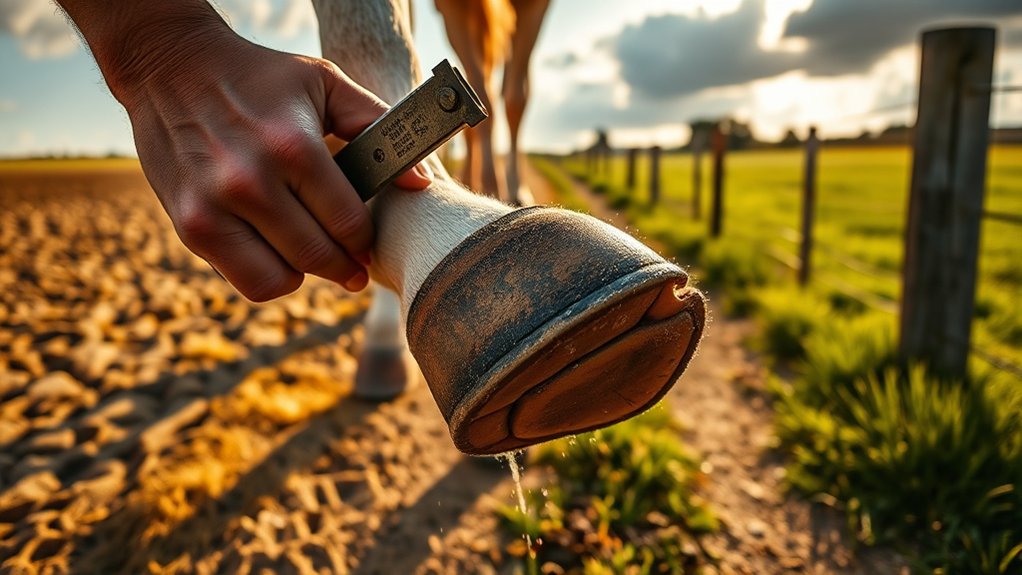
You’ll notice that ground conditions have a big impact on natural hoof wear, which in turn affects how often you need to trim.
For example, dry, rocky terrain usually helps wear down hooves naturally, so trims aren’t needed as often.
On the other hand, soft, moist pastures can make hooves grow faster, meaning you’ll have to trim more frequently.
Ground Conditions Impact
Although hoof growth is influenced by genetics and nutrition, ground conditions play a crucial role in determining trimming frequency and hoof health. The type of terrain directly affects hoof wear, impacting how often you’ll need to trim.
Consider these factors:
- Abrasive, rocky ground accelerates natural hoof wear, reducing trimming frequency due to the constant erosion of the hoof wall.
- Soft, moist environments slow hoof wear, so you’ll need more frequent trims to prevent overgrowth and keep the hoof shape right.
- Dry, arid conditions promote tougher hooves but can cause rapid overgrowth if trims are neglected, which means regular maintenance is important.
Understanding these ground conditions helps you tailor your hoof care schedule effectively. This way, you minimize health risks and optimize trimming intervals based on the environment your horse encounters.
Natural Wear Variations
Ground conditions directly shape how a horse’s hooves wear down naturally, which in turn influences trimming schedules. In abrasive environments like deserts or rocky terrain, you’ll notice more even hoof wear, often reducing trimming frequency.
Conversely, horses on soft, non-abrasive surfaces such as lush pastures or indoor stalls experience slower hoof wear, necessitating more attentive trimming.
The environment also affects hoof growth patterns: dry, rough conditions promote natural shedding of the sole and frog, while moist settings encourage overgrowth.
Since ground conditions impact hoof strength and shape, softer environments typically require you to trim more frequently to maintain proper balance.
Unlike wild horses that naturally wear hooves daily, domestic horses rely on scheduled trims due to reduced natural hoof wear caused by less abrasive surroundings.
Trimming Frequency Adjustments
Because environmental conditions directly influence hoof growth and wear, you must adjust trimming frequency to maintain ideal hoof health. The interplay between terrain, moisture, and hoof wear dictates how often you should schedule trims.
Consider these factors:
- Horses on soft, moist pastures exhibit slower hoof wear, typically requiring trimming every 6 to 8 weeks.
- In contrast, horses in dry, abrasive, or rocky environments experience accelerated hoof wear, necessitating trims every 4 to 6 weeks.
- Wet or muddy conditions soften hooves and increase bacterial risk, demanding more frequent inspections and possibly shorter trimming intervals.
What Are the Key Signs Your Horse Needs a Trim?

When your horse’s hooves develop long, flaring, or cracked walls that distort their natural shape, it’s a clear sign they need trimming. Overgrown hooves compromise balance and lead to uneven wear patterns, which can alter weight distribution during movement.
Long, flaring, or cracked hooves that distort shape signal the need for trimming to maintain balance and proper movement.
You should also watch for changes in gait. Stiffness, hesitation, or lameness often indicate that the hooves are too long or unbalanced.
Misshapen hooves, such as those with widened or narrowed shapes, further signal the need for professional trimming.
Moreover, visible issues like hoof cracks or soreness during walking suggest the trim is overdue.
Recognizing these key signs early helps prevent discomfort and structural problems, maintaining your horse’s overall soundness and performance.
How Can You Inspect Your Horse’s Hooves Between Trims?
Although professional trims set the foundation for hoof health, you need to conduct regular inspections between sessions to catch early signs of wear or damage. Consistent hoof inspection is essential to effective hoof care and maintaining your trimming schedule.
To thoroughly inspect your horse’s hooves between trims:
- Pick out debris and check for cracks, thrush, or uneven wear patterns that might indicate the need for adjustment.
- Examine collateral grooves and sole thickness to detect excessive thinning or structural compromise.
- Assess hoof shape and balance, making sure the hoof wall shows no flaring, chipping, heat, or tenderness that could signal inflammation.
What Happens If You Trim Your Horse’s Hooves Too Much or Too Little?
If you trim your horse’s hooves too much, you could end up thinning the sole and harming some of the sensitive parts inside. This can make your horse sore and even raise the chances of an abscess.
But if you don’t trim enough, the hooves can grow too long. That can cause uneven weight distribution and put extra stress on the joints.
Keep an eye out for signs like flared hooves or lameness. These clues will help you make sure your horse’s hooves stay balanced and healthy.
Effects Of Overtrimming
Because maintaining the proper hoof structure is critical, trimming your horse’s hooves too much or too little can lead to serious complications. Overtrimming disrupts hoof health by thinning the sole and collateral grooves, which compromises natural protection and weakens hoof balance.
You’ll notice increased soreness, abscess formation, and even risk of hoof collapse if you remove too much callus or naturally exfoliating sole. Over-trimmed hooves often become tender, causing lameness or uneven gait.
Specifically, you should be aware that:
- Excessive trimming reduces the hoof’s resilience and protective layers.
- It heightens sensitivity, leading to pain and structural instability.
- It can cause chronic issues like abscesses and compromised weight distribution.
Maintaining precise, balanced trimming intervals is vital to avoid these effects and ensure peak hoof function.
Risks Of Undertrimming
While overtrimming poses significant risks to hoof integrity, undertrimming presents its own set of challenges that can equally compromise your horse’s soundness.
Undertrimming allows hooves to overgrow, causing uneven weight distribution and subsequent strain on tendons and ligaments.
Excessively long or flared hoof walls increase the likelihood of cracks and chipping, while untrimmed heels or sole contribute to hoof imbalance.
This imbalance disrupts proper breakover, altering gait mechanics and stressing joints.
Furthermore, undertrimming creates an environment prone to hoof infections such as thrush and abscess formation by trapping debris and moisture.
If you neglect timely trimming, you risk discomfort, compromised structural support, and potential hoof collapse.
Maintaining an appropriate trimming schedule is essential to prevent these issues and preserve your horse’s long-term soundness.
Signs To Watch
Although maintaining a proper trimming schedule is crucial, trimming your horse’s hooves too frequently or too sparingly can produce distinct signs that indicate imbalance. Monitoring hoof wear patterns and hoof health helps you adjust trimming frequency to optimize comfort and function.
Watch for these signs:
- Over-trimming: Thin soles and collateral grooves lead to increased sensitivity and bruising risk, indicating excessive trimming frequency.
- Under-trimming: Overgrown hooves with flaring or cracking cause uneven hoof wear and altered gait, signaling insufficient trimming.
- Structural weakening: Tender hooves and increased injury susceptibility point to repeated over-trimming compromising hoof integrity.
How Should You Adjust Trimming Based on Your Horse’s Activity?
When you adjust trimming schedules based on your horse’s activity, you guarantee ideal hoof health and performance. Horses with high activity levels, such as daily exercisers or those on abrasive surfaces, require their hooves trimmed every 4 to 8 weeks. This helps manage accelerated hoof growth and prevent overgrowth-related issues.
Conversely, horses in light work or kept on softer terrain often need trims every 8 to 12 weeks, reflecting slower hoof wear.
For less active or older horses, hoof growth slows further, allowing intervals up to 10 to 12 weeks if hoof condition remains stable.
Regular inspections aligned with your horse’s activity level help you determine when to trim. This way, you respond precisely to changes in hoof growth and maintain ideal hoof integrity.
How Does Nutrition Support Healthy Hoof Growth and Trimming?
Since hoof health depends largely on the quality of horn growth, you must provide your horse with proper nutrition to support this process. Essential hoof growth requires a balanced diet rich in vital nutrients that influence the strength and integrity of the hoof wall.
Focus on these three important components:
- Biotin, Zinc, and Methionine: These nutrients are necessary for keratin synthesis, enhancing hoof horn hardness and resilience.
- High-Quality Forage and Supplements: Make sure your horse receives nutritious hay and targeted vitamin and mineral supplementation to prevent deficiencies that cause brittle or slow-growing hooves.
- Hydration: Consistent access to clean water maintains cellular function and hoof tissue hydration, which is indispensable for healthy growth.
When Should You Consult a Professional Farrier?
How do you know it’s time to call a professional farrier? If you notice uneven wear, cracks, or overgrowth in your horse’s hooves, immediate consultation is essential. A farrier’s expertise is vital when hooves become misshapen or if your horse shows discomfort during movement.
Regular hoof trimming every 6 to 8 weeks helps maintain proper hoof health, but unexpected issues require prompt attention.
Excessively long, chipped, or abnormal growth patterns signal the need for a farrier’s assessment.
Furthermore, if you observe lameness, swelling, or tenderness around the hoof, contact a farrier immediately, as these symptoms often indicate underlying problems.
Timely intervention by a professional farrier prevents complications and ensures your horse’s hooves stay balanced and pain-free.
How to Prevent Common Hoof Trimming Mistakes
Although regular hoof trimming is essential for maintaining hoof health, mistakes during the process can cause serious damage. To prevent over-trimming and hoof damage, you should focus on these key practices:
- Assess Hoof Balance Accurately: Always evaluate the hoof’s natural shape and wear before trimming to maintain proper hoof balance. Avoid trimming on a fixed schedule without considering the hoof’s current condition.
- Trim Conservatively: Remove only the necessary amount of sole and hoof wall. Over-trimming can thin the sole, damage collateral grooves, and destabilize support structures.
- Avoid Uneven Cuts: Make sure the trim is even across the hoof to prevent uneven weight distribution and gait issues. Pay special attention to heels and bars to preserve shock absorption and structural integrity.
Frequently Asked Questions
What Tools Are Essential for Basic Hoof Trimming at Home?
For basic hoof trimming at home, you’ll need essential trimming tools like an electric hoof trimmer such as the Hoof Boss. It offers precision for maintaining hoof health.
Start with a hoof pick to clean debris thoroughly.
Use a coarse grinding disc to remove excess material and a finer disc for smoothing.
Don’t forget protective gloves and eye protection for safety.
Proper lighting and a stable surface are vital to guarantee effective hoof care.
How Can Weather Changes Impact Hoof Trimming Schedules?
You’ll notice that seasonal variations substantially impact hoof trimming schedules. Higher moisture levels during rainy seasons soften hooves, reducing trimming frequency.
While dry, arid conditions harden them, requiring more frequent trims.
Temperature effects also play a role. Colder weather slows hoof growth, so you can trim less often in winter.
Monitoring these environmental changes helps you adjust your trimming routine precisely to maintain ideal hoof health.
Are There Specific Hoof Care Products That Aid Trimming?
Wondering which hoof care products can make trimming easier? You’ll find trimming aids like moisturizers and hoof oils vital for maintaining the right moisture balance and preventing cracks.
Hoof supplements containing biotin, iodine, and zinc promote stronger, healthier hoof growth, supporting a resilient hoof wall and sole.
For brittle hooves, specialized hoof hardeners work well.
Don’t forget therapeutic topical treatments; they’re essential for managing issues like thrush or abscesses during trimming sessions.
Can Hoof Trimming Affect a Horse’s Performance in Competitions?
Yes, hoof trimming directly affects your horse’s performance in competitions. Proper trimming frequency aligns with natural hoof growth, ensuring balanced hooves and correct angles. This balance reduces strain on joints and tendons, minimizing injury risks.
If you neglect trimming or trim unevenly, it negatively impacts gait and agility, decreasing performance.
Consistent, precise trimming supports soundness, allowing your horse to move efficiently and maintain endurance during competitive events.
What Are the Costs Associated With Professional Hoof Trimming Services?
Imagine a farrier’s tools clicking rhythmically as they shape your horse’s hooves.
Professional hoof care routines usually cost between $30 and $70 per trimming session.
Trimming frequency and additional services like shoeing or corrective care affect costs, which can rise to $150 or more.
Cost factors include your horse’s size, hoof condition, and visit regularity.
Bundling services often release discounts, helping you manage expenses while maintaining the best hoof health.
Conclusion
So, unless you want your horse auditioning for a “hoof horror” show, keep up with regular trims. Ignoring hoof care won’t turn your horse into a wild stallion, just a lame one.
Trim every 6-8 weeks, adjust for activity and environment, and watch for signs of distress. Remember, your farrier isn’t just a hoof artist; they’re your horse’s health lifeline. Skip the DIY disasters; your horse’s hooves will thank you.