How To Clean Horse Brushes – Step-by-Step Guide
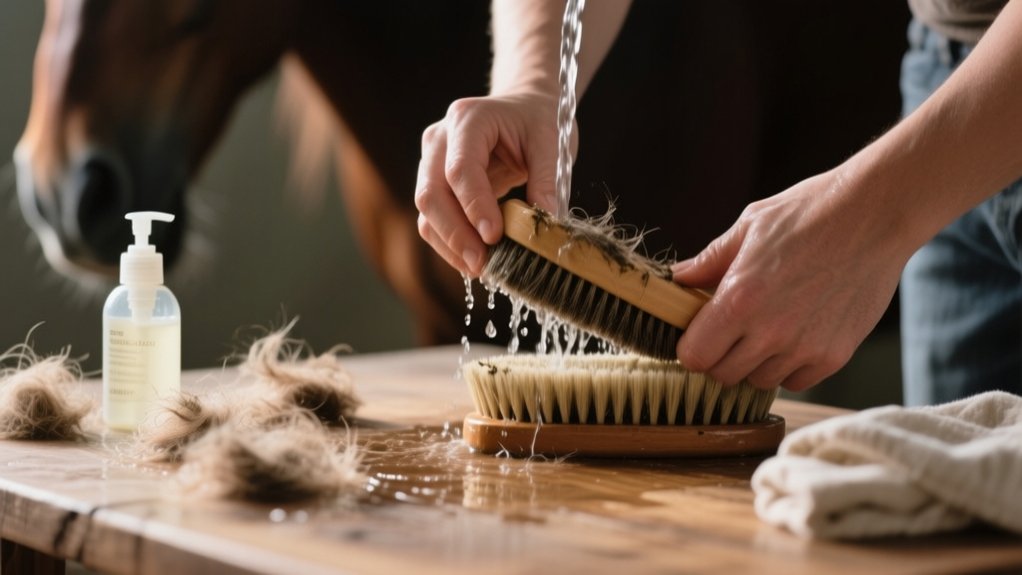
Start by selecting the right brushes for your horse’s coat and area. Remove loose hair and dirt by tapping and using a comb or fingers. Soak brushes in warm, soapy water for 10-15 minutes to loosen oils, then gently scrub bristles, focusing on the base.
Rinse thoroughly and shake off excess water. Air dry with bristles down in a well-ventilated spot to prevent mold. Disinfect brushes after skin issues and regularly for hygiene.
Keep going to discover tailored care tips for different brush materials and situations.
Select Brushes To Clean Based On Your Horse’s Coat
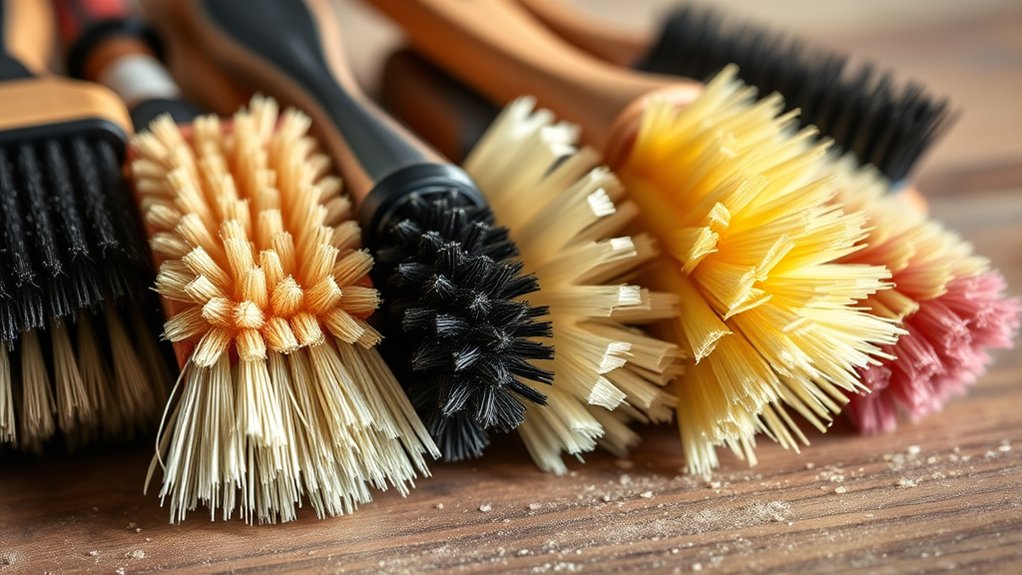
When selecting brushes to clean based on your horse’s coat, you’ll want to tailor your choices to both the coat type and the specific areas you’re grooming.
For sensitive spots like the face and legs, opt for softer brushes to avoid irritation. Use stiffer brushes on the body and neck to effectively break down dirt.
It’s also a good idea to have separate brushes for the mane and tail. This helps prevent dirt and oils from transferring between those areas.
Match the bristle type to the coat length—longer, softer bristles suit long-haired coats, while shorter, firmer ones work best on short-haired coats.
Natural bristles offer gentle cleaning, and synthetic bristles handle more vigorous dirt removal.
Don’t forget to regularly inspect your brushes and replace any that show wear. This keeps them effective and hygienic.
Remove Loose Hair And Dirt Before Washing
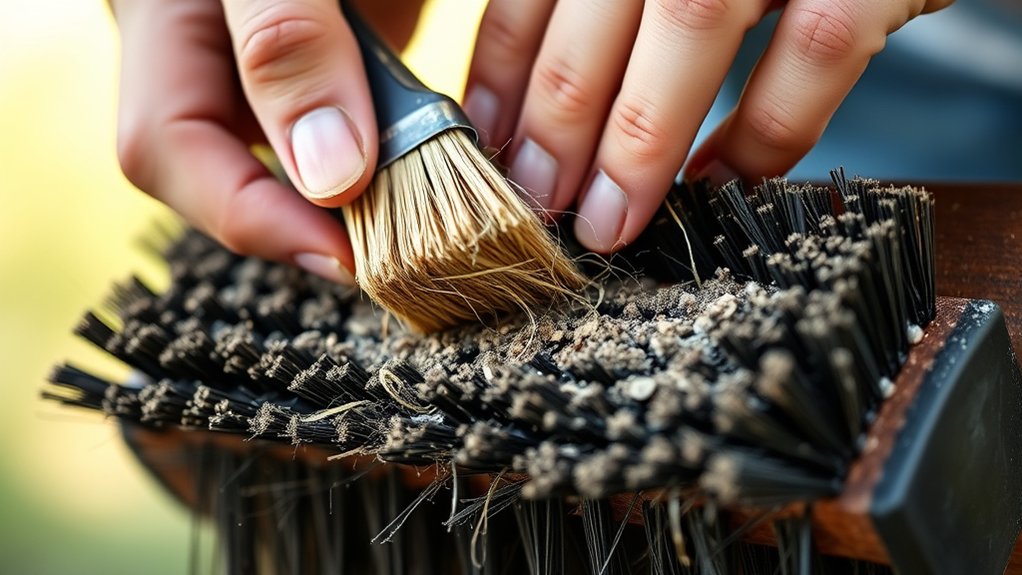
After choosing the right brushes based on your horse’s coat, the next step is to clear away any loose hair and dirt trapped in the bristles. Start by tapping the brush gently against a hard surface outdoors to dislodge surface debris.
Then, use your fingers or a curry comb to pull out hair and dirt embedded in the bristles.
For densely packed or intricate brushes, a metal comb or specialized cleaning tool works best to extract stubborn debris.
Shake the brush thoroughly to remove anything loosened during this process.
Taking the time to brush away loose hair and dirt ensures your brushes are ready for a more effective wash, maintaining hygiene and prolonging their usability.
Don’t skip this step. It’s vital for a thorough clean.
Soak Brushes In Warm Soapy Water To Loosen Oils
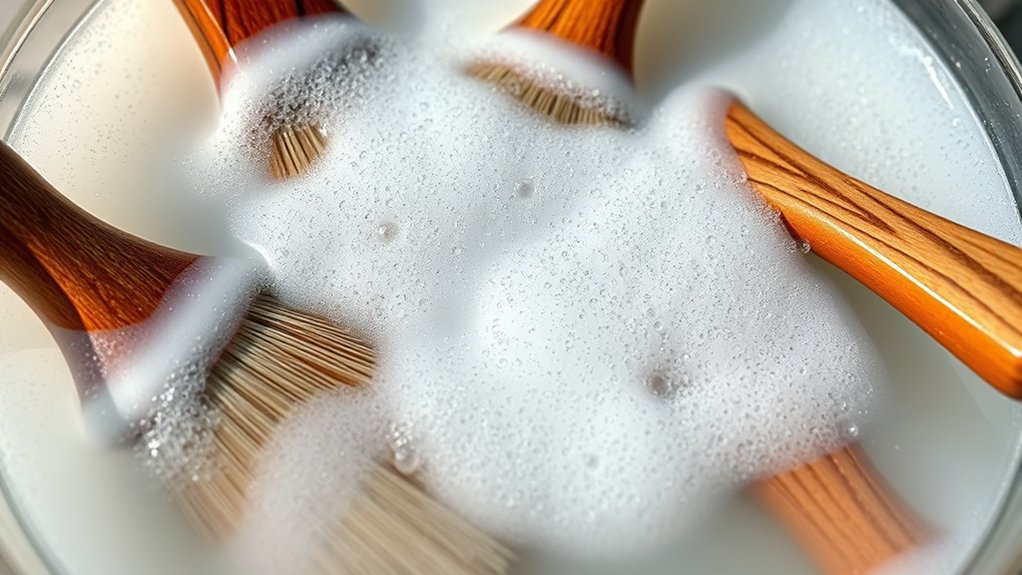
Since oils and grime can cling stubbornly to horse brush bristles, soaking them in warm soapy water is vital to break down buildup effectively. Begin by filling a basin or bucket with warm water and adding a mild soap or specialized brush cleaner.
Soaking horse brushes in warm, soapy water is essential to effectively break down stubborn oils and grime.
Submerge your brushes fully, making sure the bristles are completely covered.
Let them soak for 10 to 15 minutes to soften dirt, sebum, and embedded hair. While soaking, gently agitate the brushes to help dislodge oils and debris from both bristles and handles. This step makes sure grime loosens without damaging the bristles.
Once soaking is complete, rinse the brushes thoroughly with clean water to wash away soap residue. Proper soaking gets your brushes ready for the next cleaning phase, improving overall hygiene and brush longevity.
Scrub Bristles Gently To Remove Stubborn Buildup
Choose a soft-bristled brush or sponge so you can gently scrub away any stubborn buildup without damaging the bristles.
It’s best to focus on the base of the bristles since that’s where dirt tends to hide.
You might want to grab a smaller brush, like a toothbrush, for more precise cleaning.
Just be careful not to press too hard, because that can weaken or deform the bristles over time.
Choosing The Right Brush
When you pick the right brush, you’ll find it much easier to remove stubborn dirt and hair buildup from your grooming tools. Opt for a stiff-bristled scrub brush designed to clean other brushes effectively. The firm bristles help dislodge embedded debris, especially near the base where dirt accumulates most.
Make sure the brush is sturdy enough to withstand regular use without damaging your horse brushes. Avoid brushes with overly soft bristles, as they won’t remove buildup thoroughly. Also, steer clear of harsh chemical cleaners that can degrade the fibers or leave harmful residues.
Regularly inspect your cleaning brush for wear and replace it if bristles become misshapen or broken. This way, your grooming tools stay in top condition after every clean. It’s a simple step that makes a big difference!
Effective Cleaning Techniques
Although cleaning horse brushes might seem straightforward, applying gentle scrubbing techniques guarantees you remove stubborn dirt without damaging the bristles. Start by soaking your brushes in warm water mixed with a mild detergent to loosen buildup.
Use a soft brush or cloth to scrub the bristles gently, focusing especially at their base, where dirt and sebum tend to accumulate.
A small brush, like a toothbrush, works perfectly for this detailed cleaning. Just apply enough pressure to dislodge grime without harming the bristles or brush base.
Once clean, rinse thoroughly with fresh water to wash away any detergent and debris.
Finally, shake off excess water and let your brushes air dry completely before storing. This method assures your brushes stay effective and hygienic for every grooming session.
It’s a simple routine that really makes a difference!
Avoiding Brush Damage
Cleaning your horse brushes thoroughly helps remove dirt and buildup, but how you scrub the bristles makes all the difference in keeping them in good shape. Always scrub gently to avoid damaging the fibers. This keeps the brush effective and protects your horse’s coat.
Use a soft brush or cloth to tackle stubborn dirt, applying just enough pressure without fraying or breaking bristles. Avoid harsh abrasives and aggressive scrubbing motions. These can weaken bristles over time.
After cleaning, inspect your brushes regularly for signs of wear. Replace them if bristles become frayed or lose their shape.
Rinse Thoroughly And Remove Excess Moisture
Since dirt, hair, and sebum build up quickly on horse brushes, you’ll want to rinse them thoroughly with warm water after each use. Start by using a stiff-bristled brush or your hand to scrub away any stubborn debris during rinsing. Make certain to wash out all soap or shampoo residues completely to avoid causing skin irritation to your horse.
Once rinsed, remove excess moisture by shaking or gently squeezing the brushes. Focus on these key steps:
- Rinse under warm running water to loosen buildup
- Scrub firmly to dislodge stuck dirt and hair
- Make sure no soap remains to prevent irritation
- Shake or squeeze out as much water as possible
This careful rinsing and moisture removal keep your brushes clean and ready for the next grooming session. It’s a simple routine, but it really makes a difference for your horse’s comfort and hygiene.
Air Dry Brushes Completely To Prevent Bacteria
After rinsing your horse brushes thoroughly, you’ll want to let them air dry completely in a well-ventilated space to prevent moisture buildup. Moisture trapped in bristles or handles encourages bacteria and mold growth, which compromises your horse’s hygiene.
Make sure every part of the brush, including the bristles and handles, is fully dry before storing or reusing.
Avoid heat sources like hairdryers since they can damage brush materials and create a breeding ground for bacteria by unevenly drying or overheating components.
Regularly check your brushes before each use to confirm they’re dry. This way, you won’t transfer bacteria between grooming sessions.
Proper air drying keeps your brushes sanitary and safe. It reduces the risk of infections and helps maintain grooming effectiveness over time.
Clean Brushes Based On Their Material
When you’re cleaning wooden brushes, it’s best to use warm water and mild soap. Just be careful not to soak the handle, since that can cause it to crack.
Now, if you have synthetic brushes, go ahead and rinse them thoroughly. You can also use a cloth or a smaller brush to get rid of any dirt or hair that’s stuck in there.
Wooden Brush Care
Although wooden brushes require gentle care to maintain their durability, you can effectively clean them by hand washing with warm water and mild detergent.
Avoid soaking the wooden handle to prevent brittleness. Use a stiff brush or toothbrush to scrub the bristles, removing dirt, hair, and sebum buildup thoroughly.
Rinse well to eliminate all soap residue. After washing, shake out excess water and air dry the brush bristles facing down to keep moisture from seeping into the wood.
Keep an eye on the handle’s condition, inspecting for cracks or splinters. Replace the brush if the wood shows damage or degradation.
Remember these key steps for wooden brush care:
- Hand wash with warm water and mild detergent
- Avoid soaking the wooden handle
- Air dry with bristles facing downward
- Inspect handle regularly for damage
Synthetic Brush Cleaning
Since synthetic brushes are designed to resist moisture better than wooden ones, you can clean them by rinsing thoroughly with warm water to remove dirt, hair, and sebum.
Apply a mild shampoo or soap to the bristles, lathering well to break down oils and residues that build up over time. Be careful not to submerge the handle if it’s plastic or rubber, as soaking can damage these materials.
After washing, shake off excess water and let the brush air dry with the bristles facing down. This prevents moisture from seeping into the handle and causing deterioration.
Regularly cleaning your synthetic brushes maintains their performance and helps stop bacteria from accumulating.
It keeps both your brush and horse healthy, so it’s definitely worth the effort.
Disinfect Brushes After Skin Diseases And Regular Use
Because horse brushes can harbor harmful pathogens after grooming horses with skin diseases, you should immediately wash and disinfect them using warm water and an appropriate solution. This prevents spreading mites, lice, fungi, or bacteria to other horses.
Start by thoroughly rinsing brushes to remove debris, then soak or spray them with a disinfectant that covers all bristles and handles.
After disinfecting, rinse again to eliminate chemical residues and dry completely to avoid mold growth.
Don’t forget to regularly disinfect brushes used for routine grooming to maintain hygiene.
Keep your brushes in a clean, dry place separate from unclean tools to prevent re-infection.
Remember these key steps: Use warm water and suitable disinfectants promptly. Guarantee complete coverage of disinfectant on brush surfaces. Rinse well and dry thoroughly before storage. Store brushes separately and in a dry environment.
Frequently Asked Questions
How Often Should I Replace My Horse Brushes?
You should replace your horse brushes every 6 to 12 months or sooner if the bristles wear out, fall out, or lose their shape.
Make it a habit to check them regularly. This helps prevent any damage to your horse’s coat and keeps grooming hygienic.
Taking good care of your brushes means your horse stays clean and comfortable. So, don’t wait too long to swap them out!
Can I Use a Washing Machine to Clean Horse Brushes?
You shouldn’t use a washing machine to clean horse brushes, as it can damage bristles and handles. Instead, hand wash them with warm water and mild soap.
After washing, soak the brushes in disinfectant for a thorough clean. This helps keep your brushes in good shape and makes them last longer. It’s a simple step that really pays off!
What Type of Soap Is Safest for Brush Cleaning?
For safe, spotless scrubbing, choose mild, pH-neutral soaps without harsh scents or chemicals. You’ll want disinfectant soaps like chlorhexidine or benzalkonium chloride, or specialized equine shampoos to protect bristles and guarantee thorough, gentle cleaning.
These options help keep your brushes clean without damaging them. It’s all about finding that balance between effective cleaning and gentle care. So, stick to those mild and specialized soaps for the best results.
How Do I Store Brushes to Keep Them Clean?
You should store brushes in a clean, dry grooming box with separate compartments to avoid cross-contamination. Keep them away from moisture, and regularly disinfect the storage. Label sections to maintain organization and hygiene effectively.
This way, everything stays neat and clean. It also makes finding the right brush quick and easy. Just a little effort goes a long way!
Are Natural Bristle Brushes Better Than Synthetic Ones?
Think of natural bristle brushes like a soft handshake. They’re gentle and nourishing. But you need to clean them carefully to avoid bacteria.
Synthetic brushes feel more like a firm grip. They last longer and are great for sensitive skin.
Conclusion
Cleaning your horse brushes regularly might seem time-consuming, but it’s really important for your horse’s health and coat condition. By following these simple steps, you’ll keep brushes free from dirt, oils, and bacteria that can cause skin issues.
Even if you think your brushes look clean, buildup can hide beneath the surface. Taking a few extra minutes to clean them thoroughly makes sure your grooming routine stays effective and hygienic. This way, you’re protecting your horse’s skin and coat.