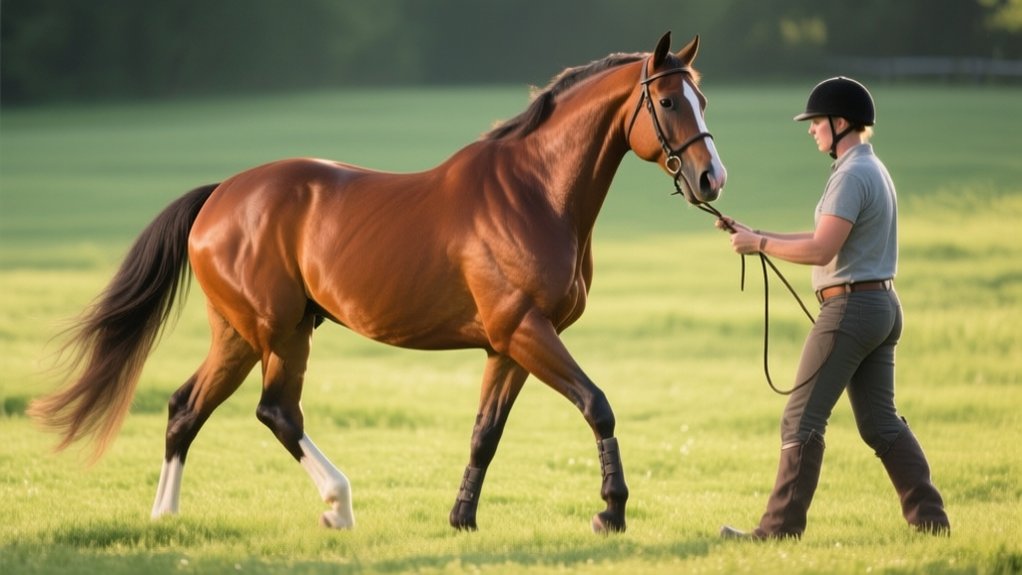
How Are Tennessee Walking Horses Trained – Simple Breakdown
You start training Tennessee Walking Horses by gently introducing them to new environments and handling routines. Use calm, consistent care to build trust. Slowly introduce equipment like the bridle and bit, encouraging relaxation through soft exercises and positive reinforcement.
Focus on steady, gentle cues to promote natural, relaxed movement and flexible gaits. Always prioritize kindness and avoid harmful practices like soring.
If you want to truly understand their training and welfare, there’s much more to explore.
Setting the Stage: Preparing Your Tennessee Walking Horse for Training
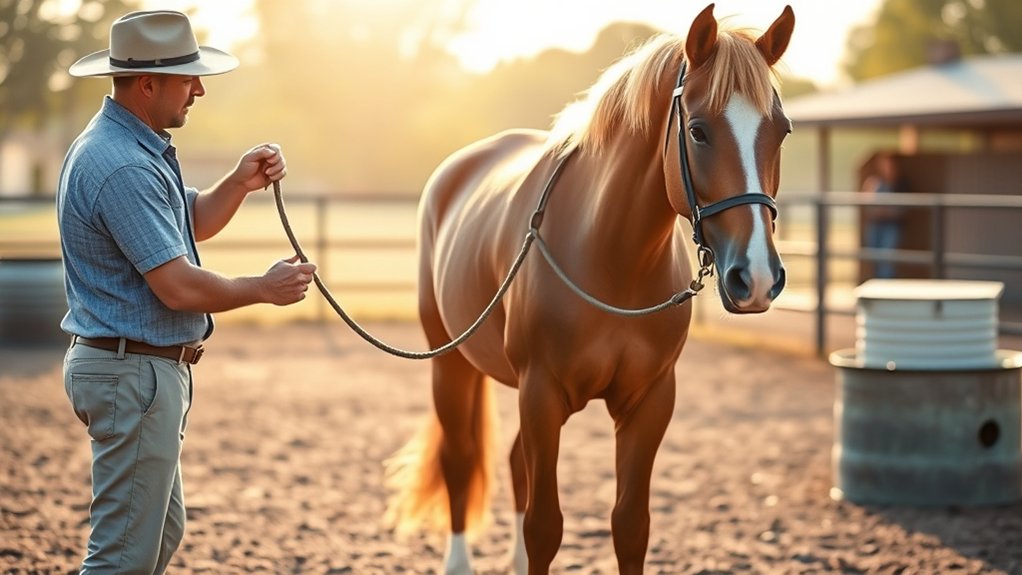
Before you begin formal training, it’s essential to prepare your Tennessee Walking Horse by gradually introducing it to its environment and handling routines. Start by acclimating your horse to the herd, water sources, barn, and feeding areas to build familiarity and confidence.
Establish consistent handling routines like haltering, leading, and cross-tying to create a cooperative foundation.
Introduce foot trimming and cross-tying slowly, allowing your horse to remain calm and steady.
When you begin bridling, focus on getting your horse comfortable with the bit and basic flexion exercises.
Always use positive reinforcement—it really helps keep things smooth.
Pay close attention to developing a relaxed topline and spine during bit introduction.
Be patient to minimize resistance and guarantee a smooth progression into formal training.
Taking your time here makes all the difference!
Building Trust With Your Tennessee Walking Horse
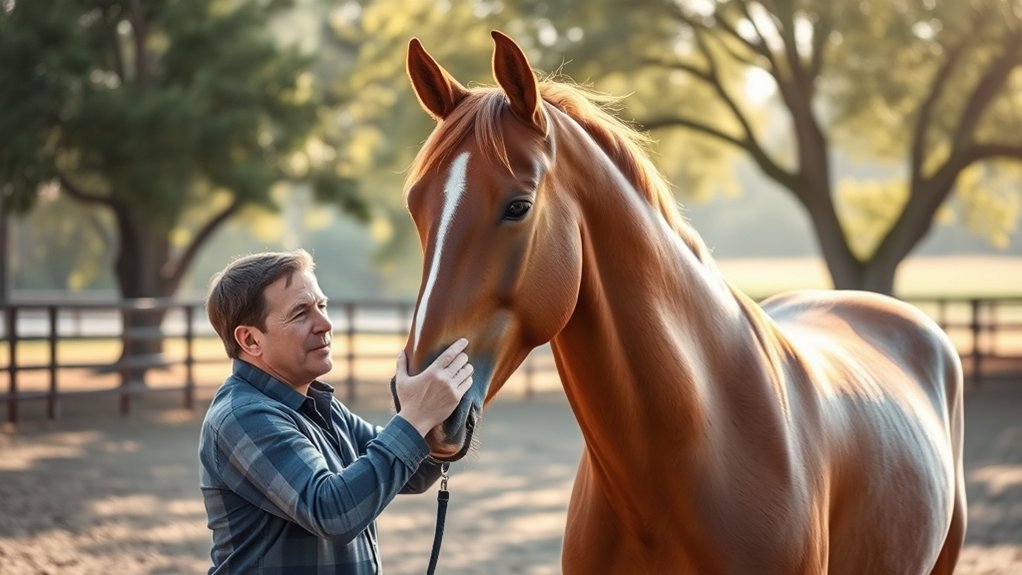
When you handle your Tennessee Walking Horse consistently and gently during haltering, leading, and cross-tying, you create a foundation of safety that builds trust. This consistent, calm approach reassures your horse and helps it feel secure in your presence.
Gradually introducing new experiences, like groundwork exercises such as free lunging and responding to voice commands, strengthens your communication and mutual understanding.
Reward calm behavior with positive reinforcement, so your horse associates training with good experiences.
Patience and calm energy during each interaction are essential. Rushing or showing frustration can undermine trust.
How to Gently Introduce the Bridle and Bit
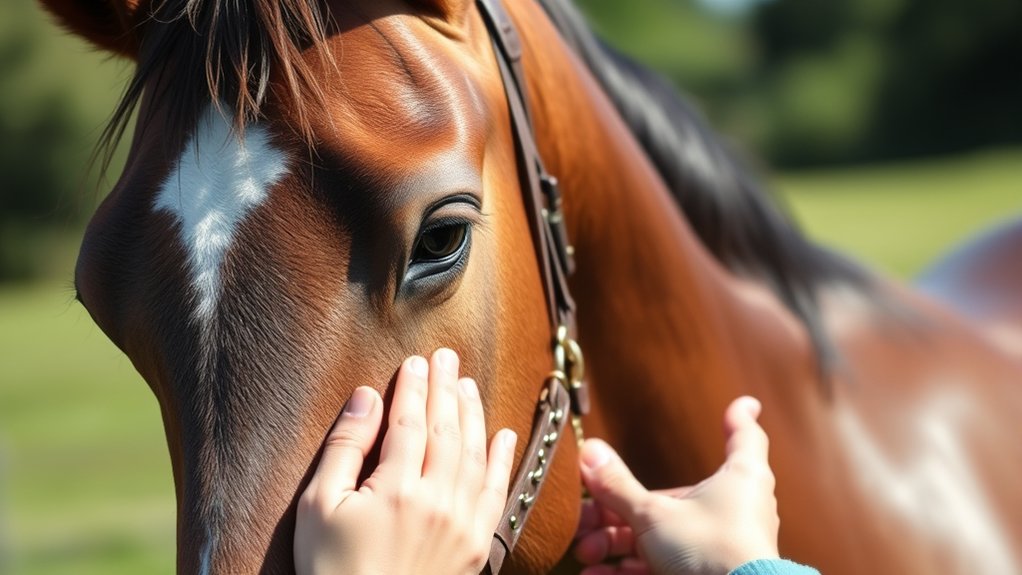
Building trust through gentle handling and consistent, calm interactions sets the stage for introducing the bridle and bit. Begin in a quiet space where your horse feels safe and is already comfortable with haltering and leading.
Gradually let your horse taste and accept the bit, ensuring it remains relaxed and shows no signs of resistance.
Use positive reinforcement to create a calm, pleasant association with the bridle and bit.
To guide you through this process:
- Introduce the bit slowly, allowing the horse to explore it with its mouth.
- Start with light exercises like flexions and neck stretches to encourage acceptance.
- Observe your horse closely, ensuring it maintains a relaxed topline throughout.
Patience and careful observation help your horse accept the bit comfortably.
Teaching Relaxation and Steady Contact
As you introduce light contact with the bit, focus on helping your Tennessee Walking Horse accept it calmly by using gentle cues paired with positive reinforcement.
Teach your horse to follow your hands softly, gradually increasing contact while keeping the connection relaxed and steady.
Try incorporating exercises like flexions and neck stretches to encourage relaxation and ease with consistent contact.
Build a trusting, calm relationship so your horse willingly accepts steady contact without resistance during movement.
Always watch for signs of tension, rewarding your horse’s patience and calmness to reinforce this behavior over time.
This approach fosters a relaxed, responsive partnership that’s essential before moving on to more advanced training stages.
Consistency and patience are key to teaching relaxation and steady contact effectively.
Keep at it, and you’ll see your horse become more comfortable and connected with your cues.
Encouraging Natural Gaits in Tennessee Walking Horses
You’ll want to focus on promoting relaxed movement to help your Tennessee Walking Horse find comfort in its natural rhythm.
Building trust and steady contact between you and the horse encourages responsiveness to subtle cues.
At the same time, encouraging balanced flexion supports smooth, effortless gait shifts that showcase their distinctive style.
Promoting Relaxed Movement
When you encourage a Tennessee Walking Horse to move with relaxed, natural gaits, you set the foundation for smooth, effortless performance. Promoting relaxed movement relies on gentle cues and consistent, positive reinforcement.
You’ll want to focus on groundwork like lunging and leading exercises to develop softness and responsiveness.
Gradually introducing bit contact and flexions helps the horse move without tension, easing into your signals. Exercises such as neck extensions and flexions improve the topline’s relaxation, which is critical for fluid gaits.
Remember, patience and calm handling are essential throughout.
Here’s how to promote relaxed movement effectively:
- Use gentle, consistent cues paired with positive reinforcement.
- Incorporate groundwork exercises like lunging and leading for softness.
- Gradually introduce bit contact and flexion exercises to ease tension.
Building Trust And Contact
Promoting relaxed movement sets the stage for building trust and establishing effective contact with your Tennessee Walking Horse. Begin by handling your horse gently and consistently, creating a safe environment where it feels comfortable.
Introduce the bit gradually. Let your horse taste and accept it before encouraging relaxed flexion exercises. Use light, steady rein contact during flexions and neck extensions to foster softness and responsiveness.
Focus on helping your horse maintain a relaxed topline and spine. Reward any effort to soften and stretch into contact without resistance. Patience and consistency are key here.
Keep reinforcing your horse’s willingness to accept light connection. This steady approach builds confidence in contact and encourages your horse to develop its natural gait with ease and trust.
Encouraging Balanced Flexion
How can you encourage your Tennessee Walking Horse to move with balanced flexion and natural rhythm? Start by introducing gentle lateral exercises that promote relaxation and suppleness in the neck and jaw.
Gradually add light contact during flexion so your horse learns to follow the bit without resistance, fostering natural gait development.
Remember, patience and consistency are key. Always reward soft, relaxed responses and avoid any force that might cause tension.
Here are three effective steps to encourage balanced flexion:
- Use side flexions and neck extensions outside the saddle to improve flexibility.
- Gradually progress exercises with proper timing to maintain balance.
- Reinforce relaxed, soft responses consistently to support natural gait rhythm.
With these methods, your horse will move with ease and balanced flexion.
Applying Positive Reinforcement and Patience Throughout Training
Although training a Tennessee Walking Horse can be challenging, applying positive reinforcement and patience will make the process smoother and more enjoyable for both you and the horse.
Use treats or praise immediately after the horse performs a desired action to reinforce correct gait, flexion, and relaxation cues.
Consistent, patient handling helps your horse feel secure, reducing resistance and promoting calm responses.
Move gradually, allowing your horse to master each step before advancing. This approach builds confidence and fosters a willing attitude.
Employ gentle, calm methods to prevent frustration and help your horse associate training with positivity.
By combining these techniques, you create an environment where trust grows, making training both effective and rewarding for you and your Tennessee Walking Horse.
It’s all about patience and kindness—stick with it, and you’ll see great results.
Keeping Training Safe: Say No to Soring and Harmful Practices
You should know that soring—which means using chemicals or devices to cause pain and make a horse’s gait look exaggerated—is both illegal and very harmful. There are laws, like the Horse Protection Act of 1970, and USDA inspectors who try to stop this kind of abuse.
That said, enforcement isn’t always easy. But once you understand these protections, you can commit to training methods that focus on your horse’s well-being without using any harmful practices.
Understanding Soring Practices
Because soring involves deliberately causing pain to Tennessee Walking Horses to exaggerate their gait, it’s essential to understand why this practice is both harmful and illegal. Soring uses painful chemicals, burns, cuts, or devices like chains to create inflammation, forcing unnatural movement. This damages the horse’s legs and causes lasting suffering.
Here’s what you need to know about soring:
- It’s illegal under the Horse Protection Act of 1970 because it’s cruel.
- Inspectors detect soring by watching the horse’s gait and feeling its legs. But some trainers try to hide it using anesthetics or intimidation.
- Even with laws in place, soring still happens. That’s because enforcement is limited, and deceptive tactics keep being used.
Legal Protections and Enforcement
Preventing soring requires a strong framework of legal protections and vigilant enforcement to keep training safe for Tennessee Walking Horses. The Horse Protection Act of 1970 makes it illegal to intentionally cause pain to these horses to exaggerate their gait.
The USDA’s APHIS inspects horses before shows, using gait observation and physical palpation to detect soring. However, enforcement struggles with limited resources and some trainers’ deceptive tactics, like using anesthetics or punishment to mask signs.
Despite these challenges, soring remains a concern, leading to criminal charges and ongoing legislative efforts, such as the PAST Act, aimed at stronger protections.
Organizations like TWHBEA, NWHA, and FOSH support humane training by promoting flat-shod or barefoot riding. They help you choose ethical practices that prioritize the horse’s well-being.
It’s all about making sure these beautiful horses are treated with kindness and respect.
Frequently Asked Questions
What Breeds Are Tennessee Walking Horses Commonly Crossed With?
You’ll commonly find Tennessee Walking Horses crossed with Standardbreds, Morgans, American Saddlebreds, and Thoroughbreds. These crosses enhance their gait, stamina, elegance, and speed.
That makes them really versatile for riding, showing, and performance events. It’s a great way to bring out the best in each breed.
How Long Does It Take to Fully Train a Tennessee Walking Horse?
Wondering how long it takes to fully train a Tennessee Walking Horse? You’ll spend about 6 to 12 months, depending on their age and experience.
During this time, you’ll patiently build their gait, manners, and responsiveness with consistent, ethical training. It’s all about taking things step by step and really understanding your horse.
With dedication and the right approach, your Tennessee Walking Horse will develop into the well-trained companion you’re hoping for.
What Is the Typical Diet for a Tennessee Walking Horse in Training?
You’ll feed your Tennessee Walking Horse high-quality hay, pasture, and specially formulated grain to support energy and muscle. Don’t forget minerals, vitamins, and constant fresh water.
Make sure to adjust portions based on your horse’s age, workload, and condition. This way, you can keep them healthy and performing their best.
Are Tennessee Walking Horses Suitable for Beginner Riders?
Think of Tennessee Walking Horses as gentle clouds beneath your feet. They’re perfect for beginners. Their smooth gait helps you build balance and confidence.
This is especially true when you have proper instruction and a well-trained, patient horse by your side. It makes learning to ride a lot more enjoyable and less intimidating. Give it a try!
How Do Tennessee Walking Horses Perform in Competitions?
You’ll see Tennessee Walking Horses perform smooth, rhythmic gaits like the running walk and flat walk in competitions. Judges reward their consistency, obedience, and elegance, focusing on their natural movement rather than exaggerated styles.
It’s all about showcasing what makes these horses unique. They don’t go for flashy moves but rather a steady, graceful performance that highlights their natural talent. That’s what really impresses the judges and the crowd alike.
Conclusion
Training your Tennessee Walking Horse is like planting a garden. You’ll need patience, trust, and gentle care to help them flourish. By building a strong bond, introducing tack softly, and encouraging their natural gaits with positive reinforcement, you set the stage for success.
Remember, keeping training safe and kind ensures your horse will walk with confidence and grace. Stay consistent, be patient, and watch your horse bloom into the partner you both deserve.