How Many Horses Died in the Civil War?
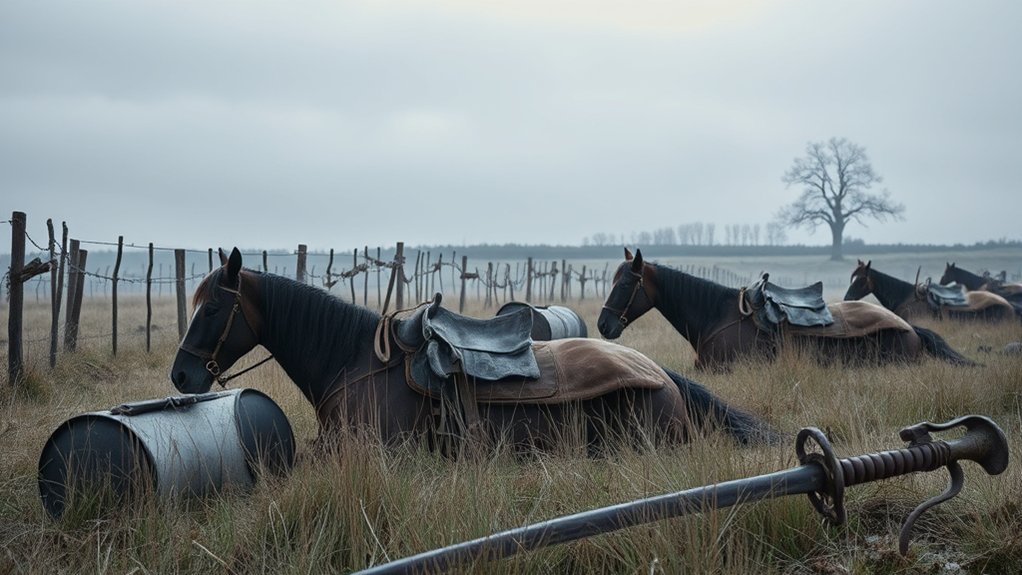
You’ll find that about 1.5 million horses and mules died during the Civil War due to battle injuries, disease, and exhaustion. This number even surpasses human casualties. These animals were crucial for cavalry, artillery, and supply operations but faced extreme risks like overwork and poor care.
Battles such as Stones River and Gettysburg caused massive horse losses. This toll reflects both the essential military roles horses filled and the harsh conditions they endured. It reveals a complex story behind their sacrifice.
How Many Horses Died During the Civil War?
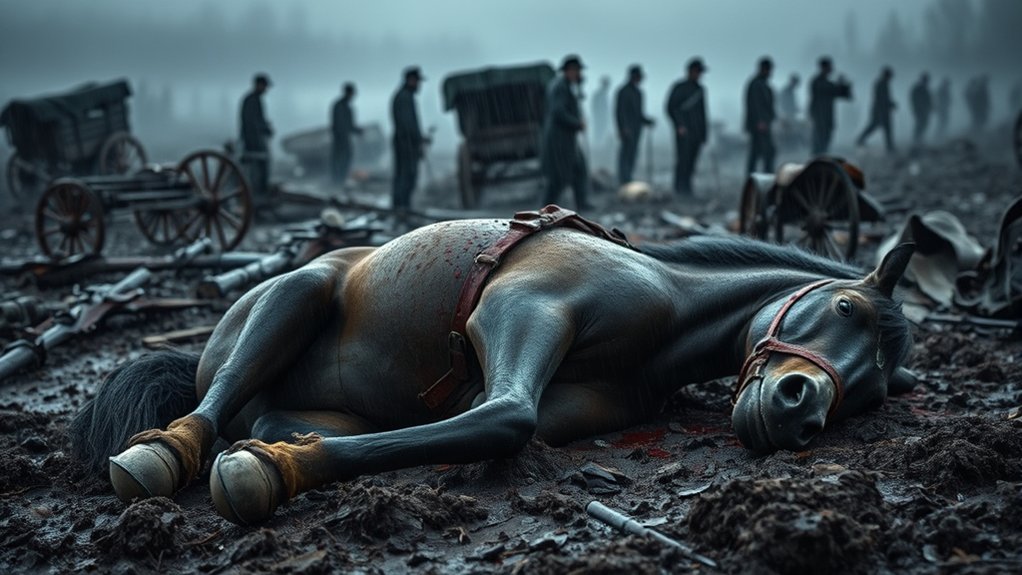
Although often overlooked, the scale of equine casualties during the Civil War was staggering, with an estimated 1.5 million horses and mules dying from battle, disease, or exhaustion.
You should recognize that about 970,000 horses and mules were wounded, killed, or died from disease, a number exceeding human casualties in the war.
Civil War horses, especially those assigned to artillery and cavalry units, faced significant risks in combat across hundreds of battles.
Historical records and memorials confirm the extensive loss of these animals, underscoring their crucial role and the toll the conflict exacted on them.
This data highlights how horses weren’t only essential assets but also suffered immense loss, reflecting the broader human and animal costs of the Civil War.
Why Were Horses So Essential in Civil War Battles?
You really depended on horses to keep cavalry units moving quickly for scouting and charges, which made them absolutely essential on the battlefield. Plus, horses hauled artillery and ammunition, so firepower could get exactly where it was needed without any holdups.
On top of that, mounted officers used horses to stay connected and in command, which had a big impact on how well troops coordinated and responded during fights.
Critical Cavalry Mobility
Because cavalry units depended on rapid movement and coordinated maneuvers, horses were indispensable for Civil War battles. You’d find that each cavalry regiment required about 1,200 horses to sustain operational mobility.
When horses died, the unit’s ability to follow commands, respond to bugle calls, and maneuver in tight formations diminished considerably. This was especially critical for Confederate forces, whose limited resources made horse losses even more impactful.
You’d see that effective reconnaissance and swift repositioning hinged entirely on the horses’ endurance and agility. Without them, cavalry units struggled to perform charges, flank enemies, or scout ahead, directly reducing battlefield effectiveness.
Therefore, the survival and health of horses weren’t just logistical concerns; they were central to maintaining cavalry mobility and combat readiness.
Artillery Transportation Needs
When artillery units needed to move quickly across challenging terrain, horses provided the essential power and mobility that made such maneuvers possible. Artillery transportation depended heavily on cavalry horses, with a six-gun battery requiring around 120 horses to operate guns, caissons, and limbers effectively.
Each gun needed a horse for every crew member, emphasizing the logistical complexity involved. Rapid deployment and repositioning of heavy artillery across diverse terrains relied on these horses, making their supply and care critical to battlefield success.
Both Confederate and Union forces recognized that without the sustained use of horses, swift artillery movement would be impossible, severely limiting battlefield effectiveness.
Communication And Command
Artillery relied heavily on horses not only to move guns and equipment but also to maintain communication across the battlefield. Horses carried messengers and couriers, making sure orders reached their destinations quickly.
You’d see cavalry units and mounted officers depending on horses to coordinate troop movements and adjust strategies in real time. Signal systems used horse-mounted buglers and riders to deliver critical commands during chaotic engagements.
Without horses, communication breakdowns would be frequent, slowing responses and risking defeat. The speed and mobility horses provided were essential for effective command and control.
Sadly, many horses were killed during these operations, showing their frontline role in communication. Understanding this helps explain why horses were indispensable in Civil War battles, not just as transport but as crucial communication links.
What Roles Did Horses Play That Put Them at Risk?
You have to understand that horses serving in cavalry and artillery units were right in the thick of it, putting them directly in harm’s way. They were exposed to enemy fire and all the trauma that came with being on the battlefield.
Take artillery horses, for example—they faced constant shelling and were pushed to the point of exhaustion.
Then there were the cavalry mounts, who risked getting injured during those intense charges and skirmishes.
Because of these roles, horses weren’t just vulnerable to combat wounds; they also had to endure the chaotic and dangerous conditions that war brought with it.
Cavalry And Artillery Duties
Although horses were invaluable in cavalry and artillery units during the Civil War, their roles exposed them to severe risks on the battlefield. Cavalry horses moved in formation under fire, following commands that often placed them in harm’s way.
Artillery horses, numbering around 120 per six-gun battery, hauled heavy cannons and ammunition, making them prime targets. This constant exposure led to massive casualties among horses, especially in major battles like Gettysburg.
| Unit Type | Role | Risk Factors |
|---|---|---|
| Cavalry | Mounted combat, scouting | Vulnerable to gunfire |
| Artillery | Hauling equipment | Targeted during engagements |
| Cavalry | Rapid maneuvers | Formation under heavy fire |
| Artillery | Ammunition transport | High exposure to shellfire |
| Cavalry | Charge and pursuit | Direct combat injuries |
Your understanding of these roles reveals why over 1.5 million horses suffered casualties.
Battlefield Hazards And Trauma
When horses carried soldiers and heavy equipment into battle, they faced constant danger from direct attacks and the chaos around them. Horses pulling artillery and wagons were especially vulnerable to shellfire, gunfire, and explosions. This led many to be wounded or killed.
The intense noise and sights caused psychological trauma. That increased the risk of injury because horses often behaved erratically.
Large battles like Chickamauga and Perryville saw hundreds of horses wounded or killed amid the confusion.
On top of that, overwork, accidents, disease, and inadequate care made battlefield hazards even worse. These factors created harsh conditions.
It’s clear horses played critical but perilous roles, exposing them to high mortality rates during the Civil War.
Understanding these risks helps explain why so many horses were wounded or died in combat.
How Did Horse Breeds Affect Survival and Performance?
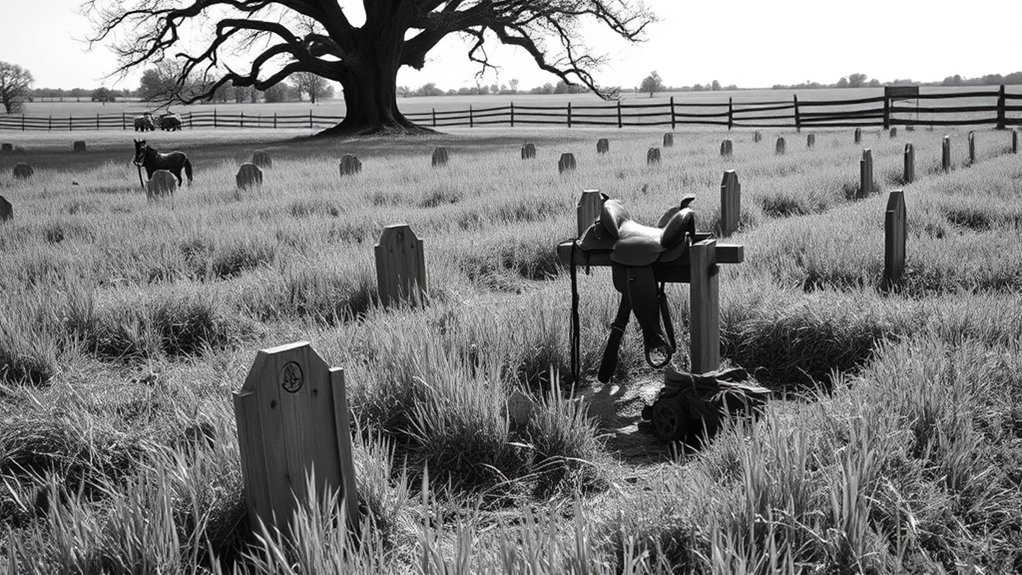
Since different horse breeds possessed unique traits, their survival and performance in the Civil War varied considerably. Thoroughbreds, prized for speed and stamina, excelled in cavalry charges and rapid maneuvers. This often enhanced their survival by allowing quicker retreats or advances.
Morgans, known for versatility and endurance, served effectively in both combat and logistical roles. This increased their resilience under diverse battlefield conditions. You can see how these breed-specific qualities influenced horses’ tolerance to battlefield stress, ability to follow commands, and recovery from injuries.
American Saddlebreds, with calm temperaments, were typically reserved for officers or ceremonial duties. Sometimes this extended their service life. Therefore, breed traits directly impacted a horse’s operational effectiveness and longevity, shaping their overall performance and survival during the war.
Main Causes of Horse Deaths During the Civil War
Understanding the roles and strengths of various horse breeds during the Civil War reveals why their welfare was so critical to military operations. Many horses died from overwork, disease, starvation, and battle wounds.
Overwork was a primary cause, as horses endured extreme exhaustion from long marches and heavy loads without adequate rest.
Insufficient feeding and harsh conditions led to malnutrition, increasing vulnerability to disease.
Moreover, large-scale battles inflicted heavy casualties on horses, particularly artillery horses, who often died in significant numbers during engagements like Stones River.
Collectively, disease, wounds, starvation, and overwork accounted for the deaths of an estimated 1.5 million horses and mules throughout the war.
These factors highlight the immense strain placed on equine resources, reflecting their indispensable and perilous role in Civil War military campaigns.
How Did Horse Deaths Compare to Human Casualties?
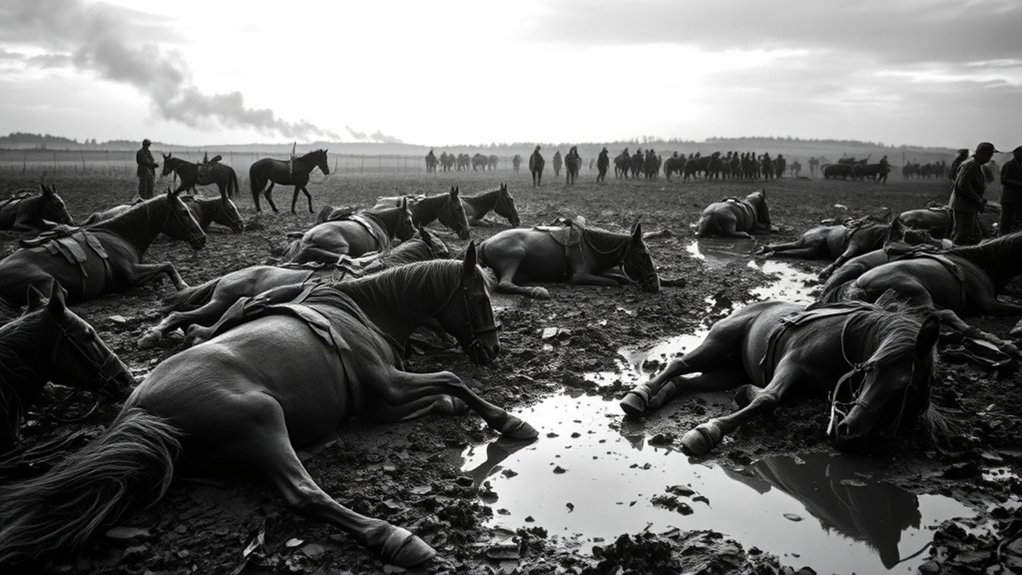
Although you might expect human casualties to outnumber those of animals, the Civil War actually claimed more than 1.5 million horses and mules, surpassing the roughly 970,000 human military deaths.
These animal casualties included those wounded, killed, or dying from disease, highlighting the extensive toll the war took on horses.
When you compare horse deaths to human casualties, you see that animals faced significant risks from overwork, injury, and illness, often proving more vulnerable than soldiers.
This disparity emphasizes not only the sheer scale of animal suffering but also how critical horses were to military operations.
Understanding these numbers helps you grasp the full impact of the war, revealing that animal casualties, while less discussed, were a substantial and tragic component of the conflict’s human and material cost.
Which Civil War Battles Had the Highest Horse Death Tolls?
You’ll find that battles like Stones River and Gettysburg had some of the highest horse death tolls. Thousands of animals were killed or wounded, especially those pulling artillery.
These losses had a big impact on military operations because horses were essential for mobility and moving supplies. When you understand the scale and impact of these casualties, it really highlights how vital horses were on the battlefield.
Battles With Highest Casualties
Several Civil War battles resulted in staggering horse casualties, with some engagements claiming tens of thousands of equine lives. At the Battle of Stones River, over 32,000 horses and mules were killed, wounded, or captured. This marked one of the highest recorded animal casualties.
You’ll also find significant horse casualties at Gettysburg, where many horses, including notable ones like Decatur, sustained fatal wounds.
The Battle of Chickamauga caused thousands of horse casualties as well, reflecting the intense combat conditions.
Perryville added to the toll, with Confederate horses such as Dixie killed in action. These figures reveal that some battles had horse casualties exceeding 1,700 in a single military branch, underlining the extensive impact of warfare on equine populations during the Civil War.
Artillery Horse Deaths
When you examine the toll on artillery horses during the Civil War, battles like Stones River and Gettysburg stand out for their exceptionally high casualties. At Stones River, over 32,000 horses and mules served, with nearly 3,000 artillery horses killed, disabled, or captured, indicating severe losses.
Gettysburg reported more than 1,700 artillery horse casualties in a single engagement, reflecting intense combat conditions. Furthermore, Perryville saw significant horse deaths within both Confederate and Union artillery units.
Battles such as Chickamauga and Second Winchester further contributed to the high death toll, with horses succumbing to wounds, overwork, and disease. These data show how artillery horses faced some of the highest casualties among military animals, underscoring their critical yet vulnerable role in Civil War battles.
Impact On Military Operations
Although horses were essential to Civil War military operations, their high death tolls in key battles severely impacted combat effectiveness. The loss of horses not only hindered mobility but also disrupted supply lines and artillery deployment.
Understanding which battles caused the greatest horse casualties helps you grasp the operational challenges faced by both sides.
Key battles with significant horse casualties include:
- Battle of Chickamauga: around 1,100 horses killed
- Battle of Stones River: nearly 3,000 horses and mules dead, wounded, or captured
- Battle of Gettysburg: over 1,700 horses lost in artillery units alone
- Battle of Shiloh: some artillery units lost almost all their horses
These losses forced commanders to adjust tactics, often limiting cavalry charges and artillery effectiveness.
How Were Civil War Horses Cared For, and Why Did Many Still Die?
Even with strict military regulations guiding their care, Civil War horses often faced shortages of food and supplies that hurt their well-being. Despite scheduled feeding and grooming, many horses died from disease, exhaustion, or battle wounds.
Logistical challenges meant there wasn’t enough nourishment, which made horses more vulnerable to illness. Loud noises and battlefield chaos also affected their health and behavior, adding to the high mortality.
| Factor | Description | Impact on Horses |
|---|---|---|
| Nutrition | Limited food and feed shortages | Weakness, illness |
| Disease | Common infections and epidemics | High death rates |
| Overwork | Heavy workloads and long marches | Exhaustion, injury |
| Battle Injuries | Wounds from combat | Fatal or debilitating |
| Stress | Exposure to noise and trauma | Behavioral issues, death |
These factors combined to cause many horse deaths despite care efforts.
Where Are Memorials Honoring Civil War Horses Today?
Because Civil War horses played an essential role in the conflict, several memorials across the United States honor their service and sacrifice. These memorials recognize the 1.5 million horses and mules used, many of which were killed, wounded, or died from disease.
You can find memorials to Civil War horses in various locations, each emphasizing their symbolic and historical significance.
Key memorials include:
- The Civil War Horses Memorial at the Virginia Museum of History & Culture, Richmond (dedicated 1997)
- Memorials in Middleburg, VA; Fort Riley, KS; Four Oaks, NC; and Murfreesboro, TN
- Public sculptures such as Robert E. Lee on Traveller
- The Civil War Horse Monument
These memorials provide tangible recognition of the crucial roles horses played during the war.
Why Remembering Civil War Horse Casualties Matters in History
When you consider the full scope of the Civil War, it’s vital to include the casualties suffered by horses and mules, which numbered around 1.5 million. Civil War horse casualties reveal the extensive animal suffering and highlight the broader human cost beyond soldier fatalities.
These losses affected logistics, mobility, and soldiers’ daily lives, underscoring the critical role horses and mules played.
The vital roles of horses and mules shaped logistics, mobility, and daily life for soldiers throughout the war.
By remembering these casualties, you gain a more thorough understanding of the war’s impact.
Memorials honoring these animals remind us of their sacrifices and reinforce the importance of compassion for all victims of conflict.
Recognizing Civil War horse casualties also prompts reflection on ethical and historical lessons about the overlooked costs of war on non-human life.
Frequently Asked Questions
How Were Horses Transported to Battlefields During the Civil War?
You’d see horses transported to battlefields using battlefield logistics that combined wagons, caissons, and specialized trains. Horse breeding programs assured a steady supply of strong animals ready for this movement.
Handlers managed loading and unloading carefully, maintaining horses’ condition during long trips over rough terrain. These logistics networks efficiently moved horses from farms and stables to front lines, supporting military operations with well-prepared mounts.
What Was the Average Lifespan of a Warhorse During the Conflict?
You’ll find that the average lifespan of a warhorse during the Civil War was roughly 4 to 7.5 months in active service.
Despite advances in horse breeding aimed at producing stronger mounts, the intense cavalry tactics, including charges and rapid movements, often led to exhaustion, injury, or death.
These factors, combined with disease and poor care, drastically shortened a horse’s service life under wartime conditions.
Did Either Side Have Specialized Veterinary Units for Horses?
You might expect a Civil War veterinary “app” to keep horses healthy, but neither side had specialized veterinary units. Instead, army surgeons and some civilian vets provided limited veterinary care, while horse training focused on battlefield readiness.
Quartermaster departments handled procurement but lacked dedicated veterinary support, which meant horses often suffered from wounds and disease without expert treatment.
This absence of formal veterinary units contributed considerably to high equine mortality.
Were Horses Ever Used for Non-Combat Purposes in the Civil War?
Yes, horses were used extensively for non-combat purposes during the Civil War. While cavalry tactics relied on horse breeding for speed and endurance, many horses pulled wagons, ambulances, and supply trains.
This logistical role was vital, moving food, ammunition, and wounded soldiers. Analyzing military records shows that horses supported both combat and essential support functions, highlighting their versatility beyond direct battlefield engagement.
How Did Weather Conditions Affect Horse Survival in the War?
You’ll find that weather conditions severely impacted horse survival by compromising horse nutrition and health. Harsh winters and hot summers stressed horses, limiting access to quality feed and clean water.
Poor nutrition weakened their immune systems, making diseases more lethal. Moreover, inconsistent horse breeding practices failed to produce resilient animals adapted to extreme climates, further reducing survival rates.
Conclusion
As you picture the hundreds of thousands of horses charging into battle, their strength and speed fueling the chaos, it’s clear they were more than just animals. They were essential warriors. Despite care efforts, many succumbed to wounds, exhaustion, and disease.
Understanding their immense sacrifices deepens your grasp of the Civil War’s harsh realities. It reminds you that the toll extended beyond soldiers to these indispensable creatures who shaped history’s course.