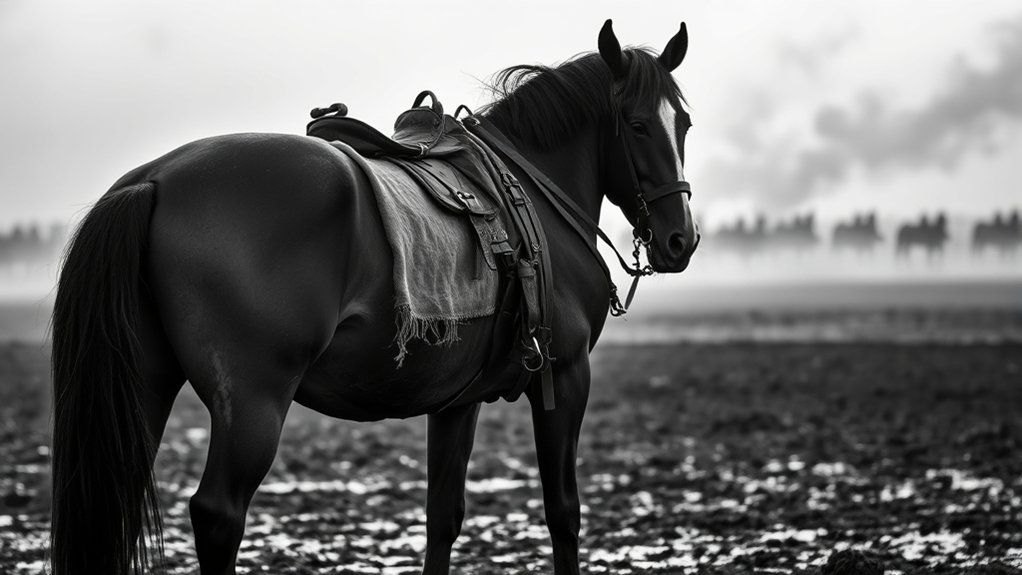
What Is a War Horse?
A war horse is a horse trained specifically for combat, playing a key role in military history through strength and resilience. You’ll find various types, from heavy destriers to agile coursers and hardy ponies, each suited for distinct battlefield roles.
These horses underwent rigorous training to handle chaos and noise, supported by technological advances like saddles and stirrups that improved control. Their impact shaped cavalry tactics profoundly.
Exploring further reveals notable warhorses and how mechanization changed their role.
What Is a War Horse? Definition and Origins
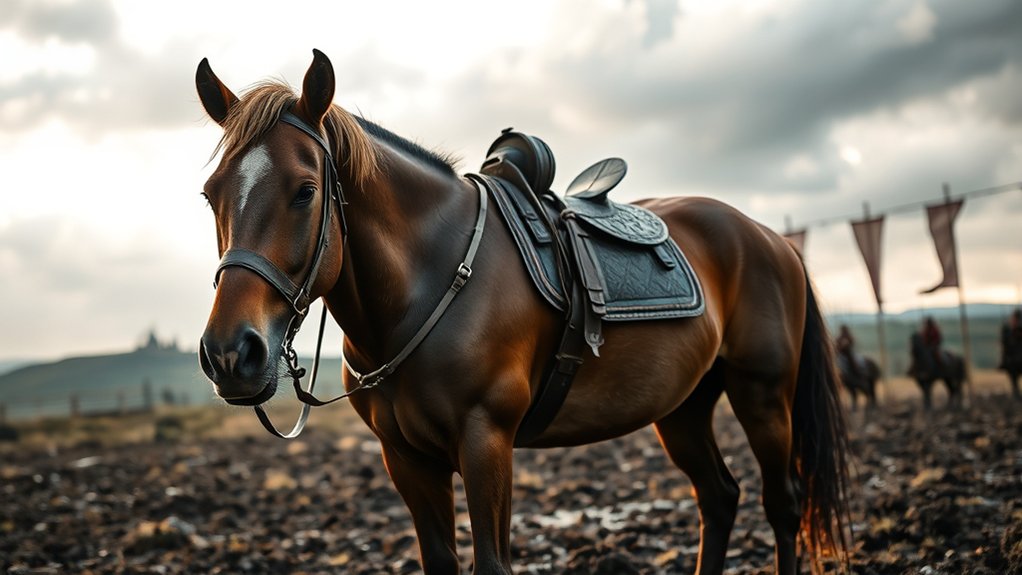
What exactly defines a warhorse, and how did it become integral to military history? A warhorse is a horse specifically trained for combat or military purposes. You’ll find that this designation extends beyond just the animal; it can also metaphorically describe an experienced soldier or veteran.
The origins of the warhorse trace back to ancient Eurasian societies between 4000 and 3000 BC when horses first entered warfare. Over time, technological innovations like the saddle and stirrup enhanced a warhorse’s effectiveness, improving rider stability and combat capability.
These advancements allowed militaries to exploit the speed, strength, and agility of the warhorse, embedding it deeply in the fabric of warfare strategy and history. Understanding this foundation clarifies why the warhorse became a pivotal asset in battles across centuries.
Types of War Horses and Their Roles (Including Ponies and Other Equids)
Although warhorses are often imagined as a singular type of majestic steed, they actually encompass a variety of breeds and equids, each tailored to distinct military functions. Destriers, known for their large size and strength, served as primary mounts for knights, often armored to withstand combat.
Warhorses were diverse breeds, each designed for specific military roles, with destriers as armored knight mounts.
In contrast, coursers offered speed and agility, suitable for swift attacks or pursuit. Ponies such as Highland and Dales were valued for endurance and versatility, performing reconnaissance or pack duties.
Moreover, mules and donkeys supported logistical roles, carrying supplies with notable stamina.
The conformation and size of war horses varied greatly, reflecting their specialized purposes from heavy cavalry mounts to light skirmishers and transport animals. Understanding these distinctions clarifies how war horses contributed strategically across different military contexts.
How War Horses Were Trained for Battle
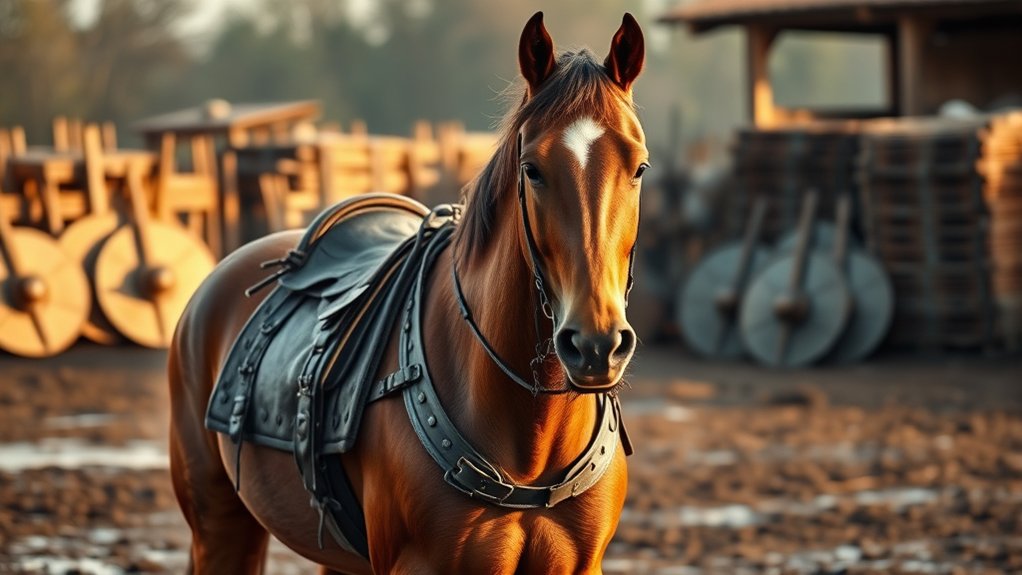
Understanding the varied roles and physical traits of war horses sets the stage for appreciating the rigorous training they underwent to perform effectively in battle. You’d find that this training involved acclimating horses to chaos and weaponry without panic, guaranteeing they remained reliable under extreme stress.
Key aspects of this training included:
- Conditioning horses to tolerate loud noises, sudden movements, and battlefield commotion through controlled exercises that reinforced calm responses.
- Teaching horses to respond promptly to commands while maintaining balance and agility with limited reins during combat maneuvers.
- Training horses to use natural defenses like kicking, striking, biting, and habituating them to sights and sounds typical of warfare.
This systematic approach, documented as early as 1350 BC, guaranteed war horses achieved readiness to face the unpredictable environment of battle.
Technologies That Changed War Horse Use
You’ll notice that innovations in riding equipment, like the stirrup and solid-treed saddle, drastically improved a rider’s stability and control in battle.
At the same time, advances in harness and collar design—such as the horse collar and breastcollar—made it easier for horses to pull heavier loads more efficiently.
Together, these technologies really changed the way war horses were used on the battlefield and in logistics.
Riding Equipment Innovations
How did innovations in riding equipment transform the role of war horses on the battlefield? Riding equipment innovations enhanced rider stability, control, and combat effectiveness, fundamentally changing mounted warfare. Three key developments stand out:
The Roman solid-treed saddle (2nd century AD) evenly distributed rider weight, improving balance and reducing fatigue during combat.
Paired stirrups, emerging in China around 322 AD, provided riders with leverage to wield weapons more effectively and maintain stability.
The spread of stirrups to Europe via Vikings (9th–10th centuries) revolutionized cavalry tactics by enabling heavier armor and more aggressive maneuvers.
Early bridles and bits (3500–3000 BC) laid groundwork for these advances, but the combination of saddle and stirrups marked a decisive technological leap in war horse utilization.
Harness And Collar Advances
Although riding equipment like saddles and stirrups greatly enhanced mounted combat, advances in harness and collar technology played an equally crucial role in expanding the war horse’s capabilities.
The invention of the horse collar in 5th-century China allowed horses to pull heavier loads without choking, considerably boosting their effectiveness.
When this harness innovation reached Europe by the 9th century, it improved the efficiency of mounted units and transport wagons, increasing battlefield mobility.
Additional improvements, such as the breastcollar and breeching, enhanced power transfer and control from horses to chariots and wagons.
These harness advancements, combined with riding equipment, transformed the war horse into a more versatile and powerful asset in warfare, optimizing both force application and endurance under combat conditions.
How War Horses Shaped Cavalry Tactics
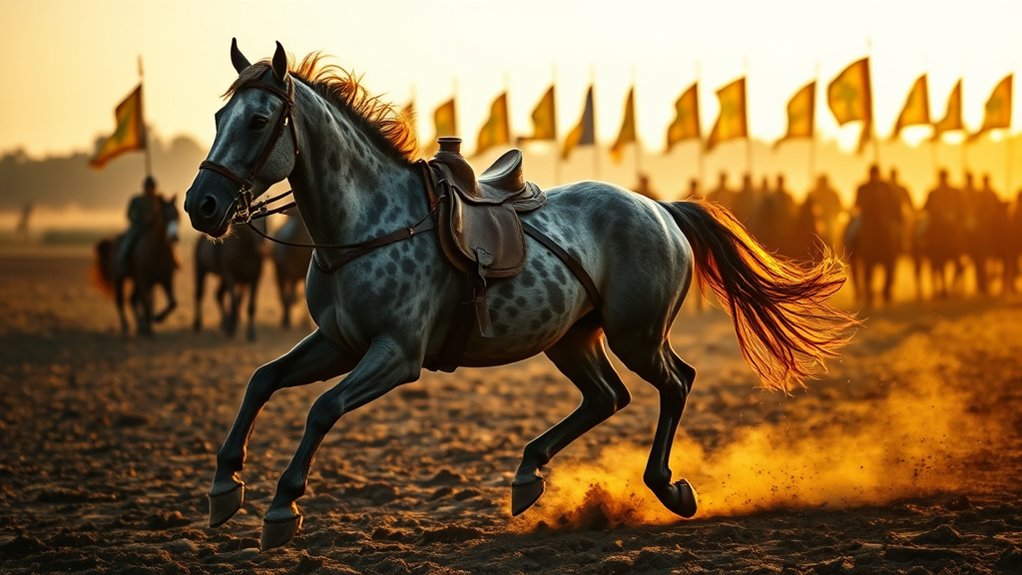
You’ll see how innovations in cavalry mobility—like the introduction of the stirrup and the rise of mounted archers—directly influenced battlefield strategies. These changes made rapid flanking and surprise attacks possible in ways that hadn’t been seen before.
Because of that, commanders had to rethink how they coordinated charges and reconnaissance. It really opened up a whole new range of tactical possibilities.
Cavalry Mobility Innovations
Why did cavalry tactics evolve so dramatically over centuries? The answer lies in key cavalry mobility innovations that made mounted warfare way more effective. You can point to three major technological advances:
First, the stirrup, invented in 4th century China, gave riders stability and leverage. This allowed for more controlled combat maneuvers.
Next, the solid-treed saddle, developed by the Romans, helped spread the rider’s weight evenly. That improved horse control and endurance.
Finally, harness improvements like the horse collar and breastcollar boosted horses’ pulling power. This meant they could carry heavier loads and support logistics better.
Together, these innovations transformed how mounted units operated, making them more mobile, stable, and combat-efficient. As you explore cavalry mobility innovations, you see how each advancement set the stage for more sophisticated tactics over time.
Impact on Battle Strategies
Because war horses dramatically increased speed and mobility, they reshaped cavalry tactics by enabling rapid maneuvers and surprise attacks that infantry alone couldn’t achieve. You see, mounted cavalry could execute flanking movements and reconnaissance with agility previously impossible on the battlefield.
The introduction of heavily armored warhorses accelerated the rise of shock tactics, like massed cavalry charges, which disrupted enemy lines effectively. You also benefit from tactics combining bows and lances, transforming static infantry warfare into dynamic, flexible engagements.
However, you should note that as mechanized units emerged post-World War I, warhorses’ tactical role declined, shifting cavalry’s battlefield importance.
Ultimately, understanding how war horses influenced mounted cavalry reveals their pivotal role in evolving war tactics, emphasizing speed, surprise, and adaptability.
War Horses in Warfare Around the World
How did war horses shape combat strategies across different cultures? War horses played pivotal roles worldwide, adapting to diverse warfare needs. You’ll notice three key ways they influenced combat:
- Mobility and Tactics: In East Asia and the Mongol Empire, war horses enabled swift mounted archery. This boosted speed and range in battle.
- Adaptation to Terrain: African armies like the Zulu used local breeds for reconnaissance and rapid assaults. They optimized horses for their environment.
- Specialized Roles: Medieval Europe favored heavy cavalry with heavily armored war horses. These horses delivered powerful charges in close combat.
Notable War Horses and Their Stories
You’ll find that famous warhorse legends reveal just how important these animals were in historic battles. They often showed incredible bravery and resilience.
When you look at their heroic contributions, it’s easier to see how war horses actually influenced military strategies and outcomes.
Famous Warhorse Legends
Five war horses stand out in history for their remarkable contributions and enduring legacies on the battlefield. Each famous warhorse represents unique qualities that made them indispensable during combat.
- Sergeant Reckless, a Marine Corps horse in the Korean War, carried supplies and engaged in frontline action, earning multiple medals for bravery.
- Copenhagen, the Duke of Wellington’s mount at Waterloo, demonstrated resilience by surviving intense fighting while maintaining composure.
- Warrior survived brutal clashes like the Battle of the Somme and Passchendaele, earning the Dickin Medal for exceptional courage.
These examples highlight how famous warhorses combined endurance, loyalty, and bravery, shaping military history.
Understanding their roles offers insight into the critical support horses provided beyond mere transportation, emphasizing their status as partners in warfare.
Heroic Battle Contributions
What makes a war horse truly heroic goes beyond its physical strength. It lies in the extraordinary acts of endurance and bravery demonstrated under extreme conditions. Take Warrior, a notable war horse from World War I, whose heroic battle contributions include surviving multiple attacks at the Battles of the Somme and Passchendaele.
Warrior earned the Dickin Medal for bravery, serving from August 1914 until December 1918. This symbolizes resilience and sacrifice.
You should also consider the massive losses at the Battle of Verdun in 1916, where 97 horses were killed by naval gunfire in a single day. This really underscores the peril these animals faced.
Recognizing such war horses helps you appreciate the essential, courageous roles they played amid the brutal realities of war.
Historical Warhorse Impact
The bravery and endurance of individual war horses like Warrior highlight the broader impact these animals had throughout military history. Warrior, a horse used in WWI, survived multiple attacks and earned the Dickin Medal, showing the resilience war horses exhibited.
You can appreciate their significance through three key points:
- Horses were used extensively in battle, enduring harsh conditions and significant casualties from shellfire, gas, and disease.
- Notable horses like Warrior symbolize the strength and endurance essential to military operations.
- Memorials, such as the Animals in War Memorial in London, honor these animals’ sacrifices, recognizing their pivotal role and the deep human-animal bond forged in conflict.
Understanding these aspects helps you grasp the profound historical impact of war horses.
The Decline of War Horses in Modern Warfare
Although war horses played a crucial role in military history for centuries, their importance sharply declined after World War II as mechanized vehicles replaced them on the battlefield. You’ll find that horses used in combat became less practical due to advances in technology, which favored tanks, trucks, and aircraft for transportation and combat support.
Maintaining mounted units proved costly and inefficient compared to mechanized forces, prompting armies to retire or repurpose their horses. By the late 20th century, horses used in warfare were nearly obsolete, limited mainly to ceremonial or specialized reconnaissance roles in certain regions.
This shift reflects how evolving military needs and logistical considerations rendered traditional cavalry tactics and the horses that supported them largely irrelevant in modern combat scenarios.
The Legacy of War Horses Today
As mounted units faded from active combat, their significance shifted toward symbolic and supportive roles. You’ll notice the legacy of war horses lives on in several key ways that preserve their historical importance.
- Ceremonial and cultural military events continue to feature horses, symbolizing valor and tradition.
- Memorials like London’s Animals in War Memorial honor the service and sacrifice of equine soldiers.
- Organizations such as the Brooke Hospital for Animals support working horses in conflict zones, reflecting advances in veterinary care and animal welfare.
Why Ponies and Other Equids Also Served in Warfare
When larger horses proved too cumbersome or unsuitable for certain terrains, armies turned to ponies and other equids to fulfill crucial logistical and support roles. Ponies like Highland and Dales breeds carried supplies, artillery, and communication gear, leveraging their smaller size and endurance.
You’ll find that mules, hybrids of horses and donkeys, offered greater hardiness and calmness. They excelled in rugged environments where horses struggled.
They consistently served as reliable pack animals from ancient times through modern warfare, transporting essential materials across difficult landscapes.
During World War II, ponies and mules played indispensable roles in reconnaissance and logistics, especially where vehicles couldn’t operate effectively. Their use highlights how ponies and other equids remained essential in warfare, complementing larger horses until mechanized transport eventually rendered them less necessary.
Frequently Asked Questions
How Do Modern Athletes Earn the Nickname “Warhorse”?
You earn the nickname “warhorse” through a historical metaphor that links your endurance and resilience to battle-hardened soldiers.
By consistently performing at a high level despite injuries and setbacks, you show mental toughness and leadership.
This metaphor highlights your reliability and longevity in competition.
Your ability to motivate teammates and maintain a competitive edge over many years solidifies your status as a modern athletic warhorse.
Can “Warhorse” Describe Someone Outside Military or Sports Contexts?
Yes, you can use “warhorse” outside military or sports contexts, thanks to its strong cultural symbolism. It represents resilience, experience, and persistence.
So when you describe someone as a warhorse in politics, arts, or business, you highlight their long-standing dedication and ability to endure challenges.
This metaphorical use captures their veteran status and unwavering commitment. It makes a powerful label that transcends physical combat to emphasize enduring strength in various fields.
What Psychological Traits Define a “Warhorse” Personality?
You exhibit personality resilience when you consistently bounce back from setbacks, maintaining focus and motivation.
A “warhorse” personality shows mental toughness, emotional stability, and adaptability, allowing you to endure prolonged stress without losing composure.
You demonstrate perseverance by tackling challenges head-on, using your experience to navigate difficulties.
Your strong work ethic and confidence help you sustain effort over time, making you a reliable and steady presence in demanding situations.
Are There Famous Fictional Characters Called “Warhorses”?
Like a steadfast beacon in history’s fog, famous fictional warhorses embody historical symbolism tied to loyalty and endurance.
You’ll find characters like Joey from Michael Morpurgo’s *Warhorse* who symbolize the silent suffering and valor of animals in war.
These warhorses aren’t just background; they carry narratives that reveal wartime’s emotional toll, illustrating bravery and tragedy through their eyes.
They enrich your understanding of conflict beyond human experience.
How Is the Term “Warhorse” Used in Business or Politics?
In business or politics, you use “warhorse” to highlight resilience built from extensive experience. You’ll see it describing veteran leaders or enduring companies that weather challenges over time.
This term emphasizes business resilience, showing how long-standing strategies or figures persist despite setbacks. When you call someone or something a warhorse, you’re acknowledging their proven ability to navigate tough environments with reliability and strength.
That makes them valuable assets in competitive arenas.
Conclusion
You can see how war horses, like the famous Black Beauty who carried knights through countless battles, were more than just animals. They were essential partners shaping cavalry tactics. Their training, strength, and adaptability made them indispensable until technology rendered them obsolete.
Even ponies and other equids played key roles, proving that diverse breeds met diverse battlefield needs. Understanding their impact helps you appreciate the evolution of warfare and the enduring legacy war horses left behind.