Is Clover Bad For Horses – The Truth
Clover isn’t bad for horses when it’s well-managed. It offers valuable protein, vitamins, and minerals.
However, moldy or damp clover can cause slobbers. That’s a condition caused by a fungal toxin, which leads to excessive drooling. You’ll want to watch out for wet pastures and poorly dried hay because they increase the risks.
Proper pasture care, drying, and storage prevent problems. Plus, recognizing symptoms helps you act quickly. Keep going to understand how to manage and prevent clover-related health issues effectively.
Why Clover Is Usually Safe and Nutritious for Horses
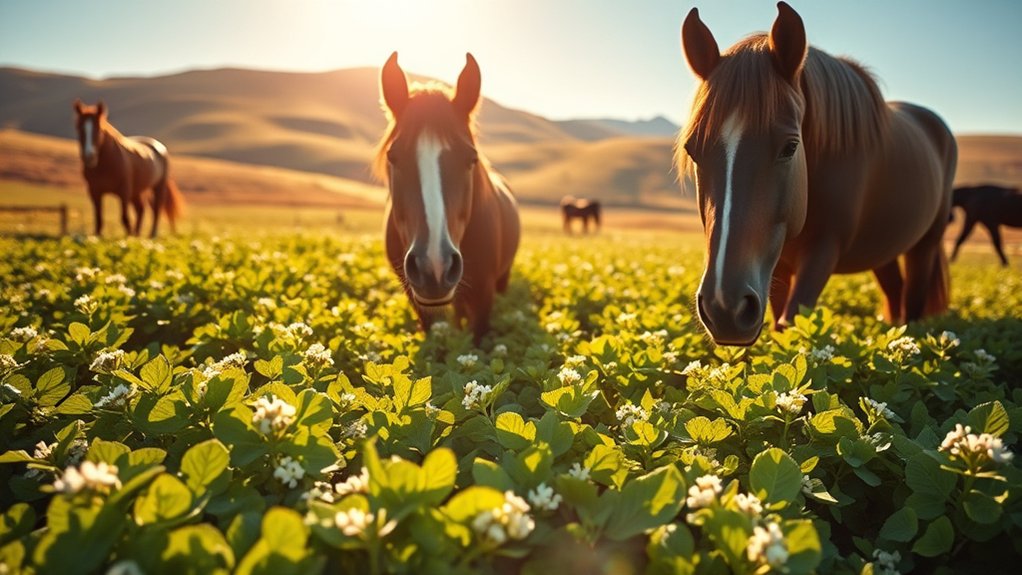
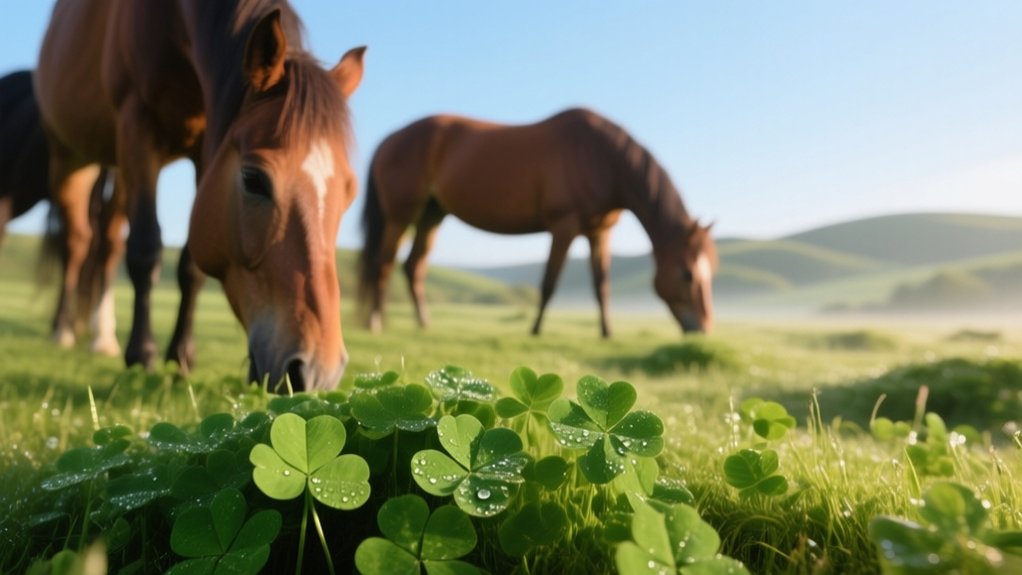
Although some concerns exist, clover is generally safe and nutritious for horses when managed properly. You’ll find clover is a rich source of protein, vitamins, and minerals that support your horse’s health and growth.
Clover is a nutritious, protein-rich forage that supports your horse’s health when managed properly.
When clover is harvested and dried correctly, it reduces the risk of fungal toxins such as slaframine.
Grazing on healthy, well-maintained clover pastures usually poses no health risks to horses. To keep clover safe, regular pasture management and monitoring are essential.
By controlling clover growth and inspecting for mold or fungal contamination, you guarantee your horse benefits from this forage without issues.
Overall, when you manage clover carefully, it serves as a valuable and nutritious part of your horse’s diet. It’s really about staying on top of things and making sure the clover stays healthy.
That way, your horse can enjoy all the good stuff clover has to offer.
What Makes Clover Cause Slobbers in Horses
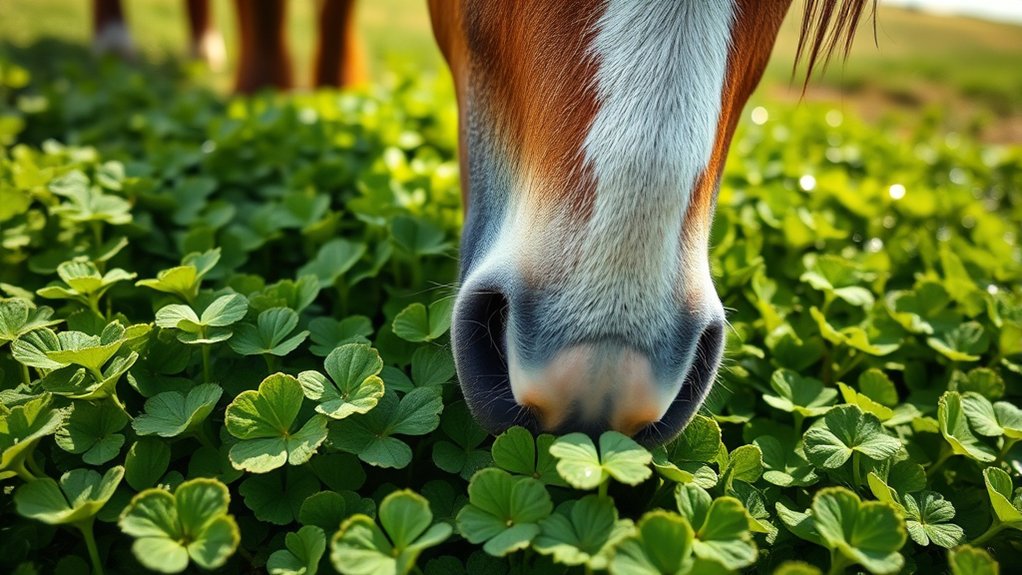
You might notice your horse slobbering after eating clover that’s been infected by a specific fungus. This fungus produces a toxin called slaframine. It tends to thrive in damp, humid conditions, especially on clover that’s mature or hasn’t been dried properly.
So, when the weather’s wet and the clover isn’t at its best, that’s when the fungus gets a foothold.
Knowing this helps explain why only certain clover causes your horse to salivate excessively. It’s not just any clover—it’s the ones affected by this fungus in the right conditions.
That’s why you might see slobbering only sometimes, depending on where and when your horse is grazing.
Fungal Toxin Effects
When clover becomes infected by the fungus Rhizoctonia leguminicola, it produces a toxin called slaframine that triggers excessive salivation in horses. This toxin stimulates the salivary glands, causing horses to drool profusely without developing ulcers or mouth wounds.
You’ll often notice horses slobbering while remaining bright and alert, as slaframine affects salivation but not overall health.
Slaframine production increases under damp, humid conditions that encourage fungal growth on mature or poorly dried clover. If your horses consume infected clover or hay with high slaframine levels, they may develop slobbers.
To safeguard your horses, guarantee proper hay storage and avoid grazing them on clover heavily infected by this fungus. Understanding these fungal toxin effects helps you manage risks associated with clover consumption in horses.
Environmental Growth Conditions
Understanding the environmental conditions that encourage fungal growth on clover is key to preventing slobbers in horses. Fungi like Rhizoctonia leguminicola produce slaframine, the toxin causing slobbers. You’ll find that damp, humid weather and wet or dew-covered pastures create ideal conditions for these fungi.
Additionally, mature clover or hay that’s poorly dried and stored in moist environments increases the risk of fungal contamination.
| Environmental Factor | Effect on Clover | Risk Level for Slobbers |
|---|---|---|
| High Humidity | Promotes fungal growth | High |
| Improper Drying | Fungal contamination | Moderate to High |
| Wet Pastures | Toxin production increases | High |
Managing these conditions helps reduce slobbers in your horses effectively. It’s all about keeping things dry and monitoring the weather to keep those fungi at bay.
Recognizing Symptoms of Clover Slobbers
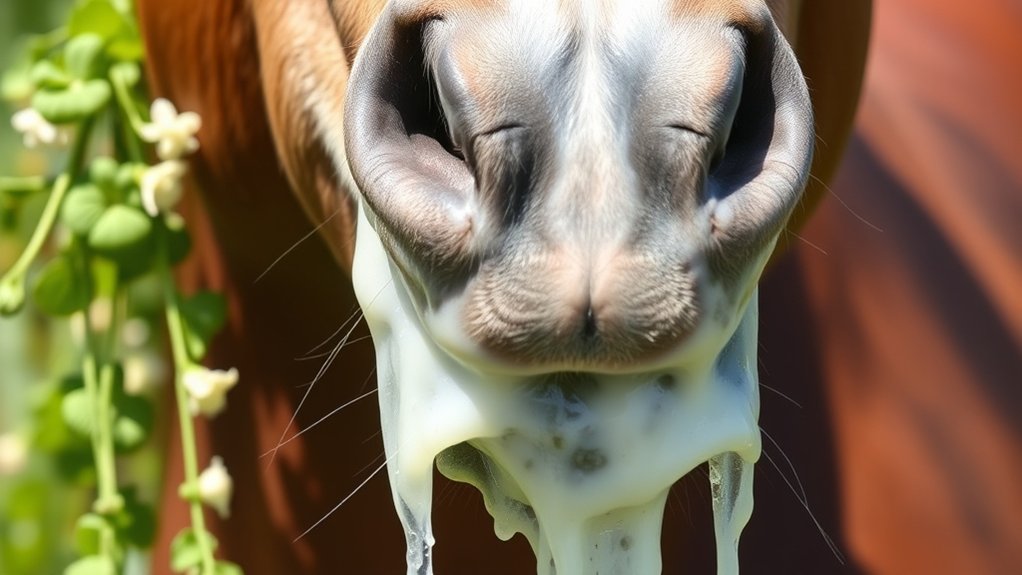
How can you tell if your horse is suffering from clover slobbers? Watch for excessive, clear salivation that drips from the mouth, often soaking bedding or feed. You might notice wet patches on the chest or legs and foam around the lips.
Mild tearing and occasional mild diarrhea can also occur. Unlike choke, horses with clover slobbers usually swallow normally without distress. This distinction is important when observing your horse’s behavior.
The drooling typically resolves within 24 to 48 hours once you remove the clover-containing forage from their diet. Monitoring these symptoms promptly helps you manage the condition effectively and prevent unnecessary concern.
Recognizing these signs early ensures your horse’s comfort and aids in quick recovery.
How to Tell Clover Slobbers Apart From Serious Issues?
You can tell clover slobbers apart from serious issues by noticing that your horse stays alert and doesn’t show any signs of pain or trouble swallowing.
Unlike choke, clover slobbers cause clear drool without any mouth ulcers or bad smells.
If you see the symptoms getting worse or if your horse starts having difficulty swallowing, it’s best to call your vet right away.
Key Signs To Watch
Although clover slobbers can cause noticeable drooling and mild irritation, you should focus on specific signs that distinguish it from more serious health issues. Clover slobbers typically produce excessive clear drooling that resolves quickly once you remove the affected forage.
To identify key signs, watch for brightness and alertness. Horses with clover slobbers stay responsive and swallow normally. Also, check for the absence of mouth ulcers or wounds, since serious issues often cause visible injuries.
You won’t usually see systemic symptoms like fever, weakness, or labored breathing with clover slobbers. Look for wet patches on the chest, mild tearing, or foam around the lips—these are common but not critical.
If drooling sticks around with other symptoms, it’s best to consult a veterinarian promptly to rule out serious conditions.
Differences From Choke
While clover slobbers cause excessive drooling, the key difference from choke lies in how your horse behaves and swallows. With clover slobbers, caused by fungal toxins, your horse remains alert and can swallow normally. They show no signs of mouth ulcers or wounds.
Drooling typically starts soon after grazing or feeding on contaminated hay. In contrast, choke causes difficulty swallowing, gagging, and may result in feed coming from the nostrils. Horses with choke often exhibit visible neck stretching, pawing, and anxiety. These signs aren’t seen with slobbers.
To tell them apart, watch if your horse swallows comfortably with slobbers or struggles with obstruction symptoms like gagging and nasal discharge in choke. This distinction helps you address the issue appropriately and promptly.
How to Manage Clover-Induced Drooling in Horses
When clover-induced drooling occurs, promptly removing the affected clover or contaminated hay from your horse’s environment is essential to prevent further exposure. Next, focus on supportive care to help your horse recover effectively. Here’s how to manage the situation:
- Provide unlimited access to clean, fresh water to prevent dehydration caused by excessive salivation.
- Offer high-quality hay to maintain nutrition during recovery.
- Monitor your horse closely for symptom improvement within 24-48 hours after removing the clover.
- Consult a veterinarian if symptoms persist beyond a few days or worsen, ensuring proper diagnosis and treatment.
Preventing Clover Slobbers With Smart Pasture Care
Managing clover-induced drooling effectively involves more than just treating symptoms. It requires proactive steps to reduce your horse’s exposure to the toxins in clover.
Start by regularly testing your pasture for high levels of red, white, or alsike clover, especially during damp, humid conditions.
Rotate grazing areas to prevent overexposure to clover-rich patches. This helps lower the risk of slobbers.
Also, manage pasture moisture by ensuring proper drainage to inhibit the fungal growth that produces the toxin.
Mow or cut clover before it flowers to reduce toxin formation and minimize ingestion.
Additionally, store hay in a dry, well-ventilated environment to prevent mold or fungal contamination that could cause slobbers.
These smart pasture care practices help safeguard your horse’s health by limiting contact with harmful clover toxins.
When to Call the Vet About Clover Slobbers
If your horse starts drooling excessively after grazing on clover, it’s important to watch the situation closely and be ready to call the vet. Clover slobbers can be mild or more serious, so knowing when to get professional help really matters.
Reach out to your vet if you notice any of these signs: excessive drooling along with trouble swallowing or mouth ulcers. Also, if several horses in the herd are slobbering, it might mean the forage is contaminated.
If the drooling doesn’t get better or actually worsens after 48 hours of removing clover, that’s another reason to call the vet. And if you see other symptoms like fever, colic, weakness, labored breathing, or signs of choke such as nasal discharge or distress, don’t wait.
Getting a vet involved early means your horse can get the right diagnosis and treatment, which helps avoid serious problems from clover toxicity.
Frequently Asked Questions
Can Clover Affect Horses Differently Based on Their Age or Breed?
Yes, clover affects horses differently based on age and breed. Younger horses tend to be more vulnerable. Some breeds, like drafts, may react adversely due to genetics.
Are There Specific Clover Species Safer Than Others for Horses?
You’ll find white clover safer for horses compared to red and alsike clover, which pose higher risks like toxicity and photosensitivity.
Always identify clover species in pastures to manage and protect your horse’s health effectively. It’s a simple step that can make a big difference. Staying informed helps you keep your horse safe and healthy.
How Does Clover Compare Nutritionally to Other Common Forages?
Imagine clover as a power-packed smoothie. It’s richer in protein, calcium, and digestible energy than ryegrass or fescue. You’ll find it really boosts your horse’s nutrition.
Just remember to balance it wisely. Too much clover can lead to digestive issues. So, while it’s great, moderation is key.
Can Horses Build Immunity to Clover Toxins Over Time?
You can’t build immunity to clover toxins like slaframine. Repeated exposure still causes symptoms, so you must manage grazing and forage carefully.
Don’t rely on natural tolerance development over time. It’s important to keep an eye on what your horse is eating to prevent any toxic effects.
Is It Safe to Feed Clover Hay Versus Fresh Clover Pasture?
You can safely feed clover hay if it’s properly dried and stored to prevent fungal growth.
Fresh clover pasture poses higher risks, especially when lush or infected. So, hay generally reduces exposure to harmful toxins compared to grazing.
It’s a safer option for your animals when managed right. Just make sure to check the hay quality before feeding.
Conclusion
Think of clover as a lush green meadow. It’s mostly safe and nutritious, but there are hidden patches that can cause your horse to slobber. By recognizing these signs and managing your pasture wisely, you can keep your horse healthy and comfortable.
Just like a careful gardener tends to every leaf, staying vigilant and knowing when to call your vet makes all the difference. This way, clover remains a beneficial part of your horse’s diet, not a source of worry.