How Much Does Horse Feed Cost Per Month – The Real Numbers
You’ll typically spend between $200 and $400 per month feeding your horse, depending on hay quality, grain type, supplements, and your horse’s size and activity level. Hay usually accounts for $40 to $120 monthly, while grain and specialty feeds add to that cost.
Seasonal changes and regional availability can further influence prices. Managing precise feeding and nutritional balance helps control expenses. Understanding these factors will give you a clearer picture of your horse’s feeding budget and care requirements.
Typical Monthly Horse Feed Costs: What to Expect
Although monthly horse feed costs vary by region and feed quality, you can generally expect to spend between $200 and $400. This range reflects factors like hay prices, grain types, and supplement needs.
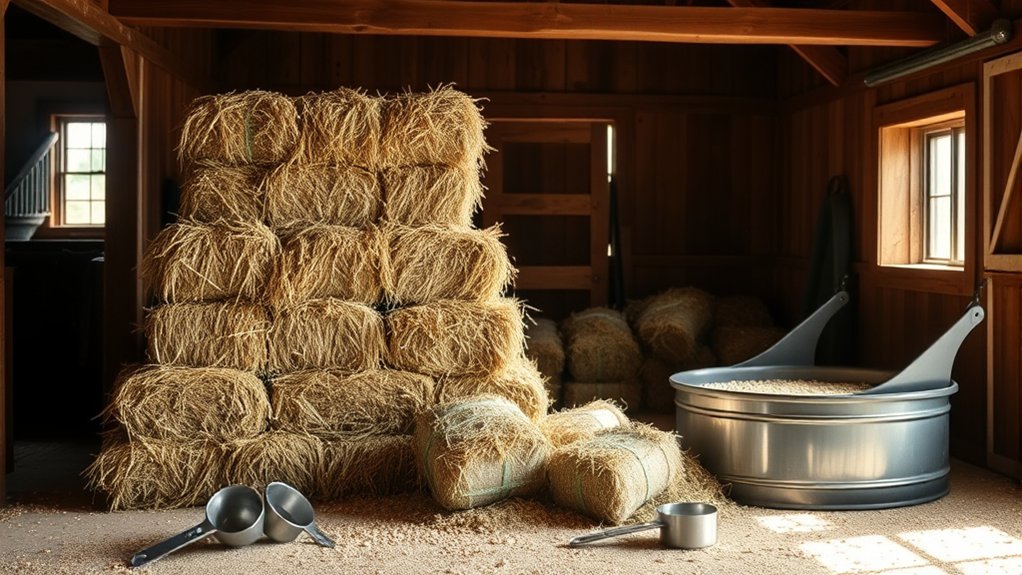
Horses consume roughly 10-20 pounds of hay daily, totaling about 12 bales monthly, which makes up the bulk of feed expenses.
If your horse has a high activity level or specific health concerns, specialized diets and supplements will increase costs. Premium feeds tailored to nutritional requirements also add to your monthly outlay.
However, if your horse has consistent pasture access, you might lower your feed costs markedly, sometimes dropping below $200 per month.
Understanding these variables helps you budget accurately and adjust feeding strategies based on your horse’s needs and local market conditions. It’s all about finding the right balance for your horse and your budget.
How Much Hay Does a Horse Eat Each Month and What Does It Cost?
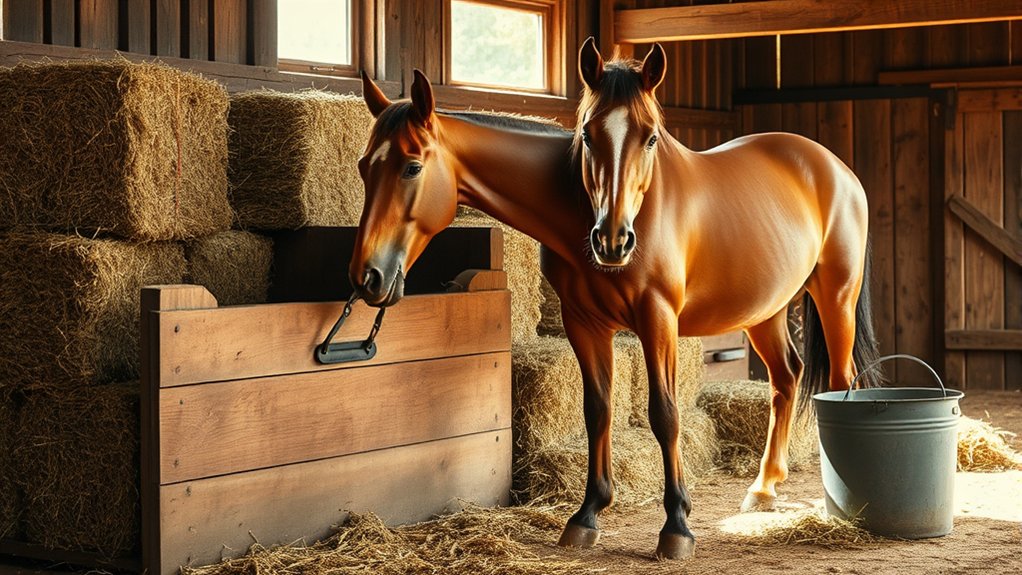
You’ll usually need somewhere between 12 and 20 bales of hay each month. It really depends on your horse’s size and how active they are.
Now, when it comes to price, hay can cost anywhere from $4 to $19 per bale. That range mostly comes down to the quality of the hay and how easy it’s to find where you live.
Knowing these details can help you figure out what your monthly hay expenses might look like.
Of course, the exact amount can change a lot depending on your horse’s specific needs and whether they’ve access to pasture.
Monthly Hay Consumption
When managing a horse’s diet, understanding its monthly hay consumption is essential because a typical 1,000-pound horse eats between 12 and 20 bales of hay each month.
This range depends on factors like the horse’s size, activity level, and pasture availability. Horses consume 1.5-2% of their body weight in forage daily, equating to roughly 20 pounds of hay per day.
Over a month, this totals about 360 to 600 pounds of hay, or 12 to 20 standard 50-pound bales.
The cost of hay varies widely, but monthly expenses generally fall between $40 and $120 or more, depending on bale price and consumption.
Access to pasture can reduce reliance on hay, therefore lowering these monthly costs considerably.
Hay Cost Factors
Since hay consumption directly impacts your horse’s monthly feed costs, understanding the variables involved is essential. An average horse consumes 300-600 pounds of hay monthly, depending on pasture availability and nutritional needs. Hay prices vary considerably by quality and region, ranging from $4 to over $19 per 50-pound bale.
High-quality hay costs more but ensures proper nutrition and health. Your monthly hay expenses typically range from $40 to $120.
| Factor | Range/Amount |
|---|---|
| Monthly hay consumption | 300-600 lbs |
| Cost per 50-lb bale | $4 – $19+ |
| Monthly hay cost | $40 – $120 |
Thinking about these factors will help you budget accurately for your horse’s feeding needs. It’s always good to keep an eye on hay quality and prices where you live. That way, you can make sure your horse gets the best without breaking the bank.
How Does Horse Size and Breed Affect Feeding Costs?
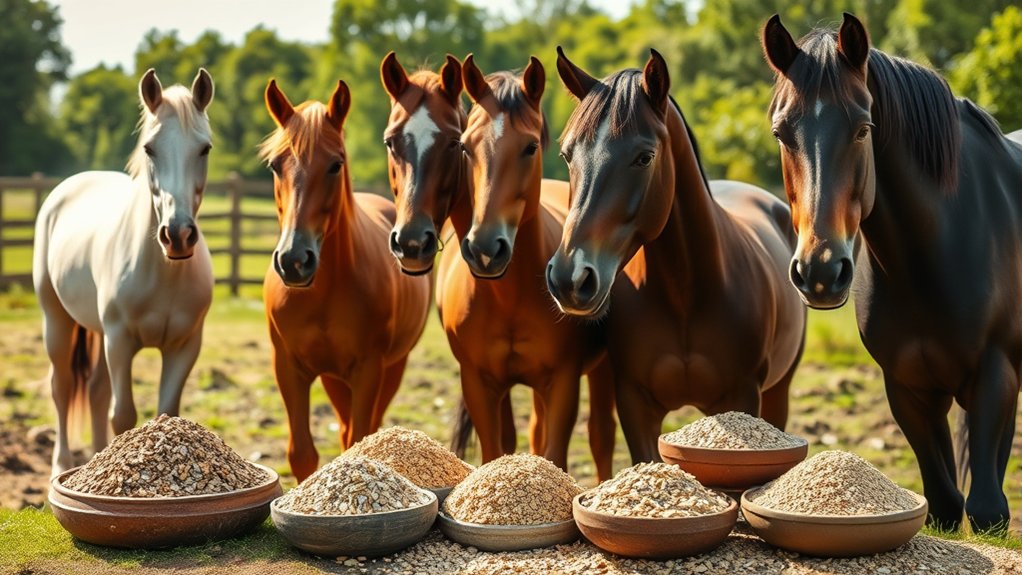
You’ll notice that a horse’s size plays a big role in how much feed it needs. Larger breeds naturally require a lot more daily forage and grain compared to smaller ones.
Then, there’s the breed itself—different breeds have different metabolic rates. For example, Thoroughbreds tend to burn energy faster and need higher-calorie diets, which can bump up your monthly feeding costs.
Breed Nutritional Needs
Although horse size varies widely across breeds, it directly affects the amount and type of feed required, which in turn influences your monthly feeding costs. Larger breeds like draft horses consume 2-3% of their body weight daily. They demand more hay and grain, which raises expenses.
Smaller breeds, such as ponies, require only 1-1.5% of their body weight, reducing feed costs.
Beyond size, breed-specific nutritional needs play a vital role. Some breeds need specialized diets tailored to metabolism, activity level, or health conditions.
For example, highly active or performance breeds often require premium feeds or supplements, increasing your budget.
Understanding these breed-based nutritional demands helps you anticipate and manage feed expenses accurately. This way, you ensure your horse’s health without overspending.
Size Influences Feed Quantity
When determining monthly feeding costs, horse size plays an essential role because larger breeds consume substantially more feed than smaller ones.
For example, a 1,000-pound horse consumes about 20 pounds of hay daily, while a 1,200-pound draft breed may need 24 pounds. This increased feed volume directly raises your monthly expenses.
Consider these points: Larger breeds require more daily feed, increasing costs proportionally.
Smaller horses or ponies consume 20-30% less hay and concentrate, lowering their feed bills.
Breed-specific nutritional needs can demand specialized, sometimes costlier, feed types.
Daily caloric and nutrient requirements tied to size and breed determine total monthly feed amounts.
Understanding these factors helps you estimate precise feeding budgets based on your horse’s size and breed characteristics.
It really makes planning your expenses a lot easier.
Metabolic Rate Variations
Beyond size, a horse’s metabolic rate and breed characteristics play a major role in determining feed costs. Larger breeds like draft horses consume roughly 50% more feed daily than smaller breeds, which notably raises monthly expenses.
Metabolic rate differences also affect intake. Energetic breeds such as Arabians require more calories, which increases feed costs compared to calmer breeds like Clydesdales. For example, a 1,200-lb horse typically eats about 15% more feed than a 1,000-lb counterpart.
Activity levels influence feeding needs too. Active or working breeds can cost 20-30% more monthly.
Plus, breed-specific dietary requirements, like high-energy rations for Thoroughbreds versus low-calorie feeds for ponies, directly impact your budget.
Understanding these metabolic and breed factors really helps you accurately estimate monthly feed costs.
Comparing Horse Feed Prices: Local Hay vs. Specialty Feeds
Since managing horse feed costs is essential for any owner, comparing local hay and specialty feeds provides valuable insight into budgeting.
Local hay costs between $4 and $19 per bale and usually requires about 12 bales monthly. This makes it the more economical choice for most horse owners.
Local hay, priced $4–$19 per bale, typically requires 12 bales monthly, making it an affordable feed option.
Specialty feeds are priced from $20 to $80 per bag. They include fortified mixes for horses with specific needs but come at a higher expense because of processing and transport.
When evaluating your options, consider the cost per bale or bag, monthly quantity requirements, nutritional adequacy for your horse’s condition, and regional availability with associated logistics.
Choosing local hay typically lowers your monthly feed bill unless your horse needs the targeted nutrition specialty feeds provide.
This comparison helps you optimize your budget without compromising your horse’s health.
How Do Supplements and Grain Affect Your Monthly Feed Bill?
Although local hay forms the bulk of your horse’s diet, adding supplements and grain can markedly increase your monthly feed bill. Supplements typically cost between $0.40 and $5 daily, translating to $12 to $150 monthly, depending on type and dosage.
Grain prices vary from $15 to $60 per 50-pound bag, with daily costs influenced by your horse’s size and activity.
Incorporating these feeds can raise your total monthly expenses by 10% to 50%. This is especially true for older or working horses with higher nutritional demands.
However, over-supplementing or feeding too much grain risks digestive problems and unnecessary cost increases without improving health outcomes.
To manage your budget effectively, tailor supplement and grain quantities precisely to your horse’s specific dietary requirements. This way, you can keep costs in check and ensure your horse stays healthy.
What to Expect When Feeding High-Activity and Special-Needs Horses
When feeding high-activity and special-needs horses, you’ll need to account for considerably increased nutritional demands that elevate monthly feed costs. These horses require more feed by weight and often specialized formulations to support their unique needs. Here’s what you can expect:
- Daily feed intake rises to 2-3% of body weight, significantly increasing monthly quantities.
- Higher-quality grains and concentrates replace basic hay, raising per-unit feed expenses.
- Specialized supplements or therapeutic diets add $50-$150+ monthly.
- Frequent veterinary or nutritional consultations for diet adjustments increase overall costs.
You’ll also invest more time managing these diets, ensuring proper nutrient balance and monitoring health. This precision feeding optimizes performance and well-being but inevitably raises your monthly feed budget beyond standard maintenance levels.
It might seem like a lot, but keeping up with these needs really pays off in your horse’s health and activity. So, be ready for the extra effort and cost—it’s all part of giving your horse the best care possible.
How Overfeeding or Underfeeding Affects Health and Feed Costs
If you overfeed your horse, you could end up with obesity-related problems like laminitis and joint strain. These issues not only affect your horse’s health but can also lead to higher veterinary bills.
On the other hand, underfeeding your horse might cause weight loss and a weaker immune system. This means your horse could get sick more often and need costly treatments.
Health Risks From Overfeeding
How does overfeeding impact your horse’s health and your feed costs? Overfeeding increases the risk of obesity, which can lead to laminitis, joint strain, and metabolic disorders. These health issues often mean higher veterinary expenses.
Eating too much grain or calories can also cause digestive problems like colic and ulcers. These conditions usually require costly treatments.
To manage these risks, keep a few key points in mind:
- Obesity makes horses more prone to laminitis and joint problems.
- Metabolic disorders from overfeeding often mean frequent medical care.
- Digestive issues like colic raise the chance your horse will need hospitalization.
- Extra calories also bump up your feed budget more than necessary.
Keeping an eye on how much you feed can really help your horse stay healthy and save you money.
Consequences Of Underfeeding
While overfeeding poses significant health risks and increases feed costs, underfeeding can be just as harmful to your horse’s well-being and your budget. Insufficient nutrition leads to weight loss, weakened immunity, and poor coat condition. All of these issues can really compromise your horse’s health.
Underfed horses are more likely to develop digestive problems like colic and ulcers because they don’t get enough fiber and nutrients. When energy levels drop, performance suffers and behavior can change too.
Plus, if underfeeding goes on too long, it can cause muscle wasting and stunt growth in young horses.
These health issues often mean more trips to the vet and extra treatments, which can add up over time. To keep your horse healthy and avoid costly medical problems, it’s important to provide a balanced diet that meets all their nutritional needs without falling short.
Impact On Feed Expenses
Because feeding practices directly influence your horse’s health, they also have a significant impact on your monthly feed expenses. Overfeeding leads to obesity, which can increase the need for costly supplements and veterinary care.
On the other hand, underfeeding causes nutritional deficiencies, resulting in expensive treatments.
Both extremes disrupt digestive health and elevate the risks of colic and laminitis, which come with high veterinary costs. So, to keep those expenses in check, you really need to balance your horse’s feed accurately.
Consider these key points:
- Overfeeding raises feed and supplement costs because of obesity-related health needs.
- Underfeeding triggers costly health interventions from weight loss and deficiencies.
- Digestive disturbances from improper feeding increase veterinary bills.
- Properly balanced diets reduce waste, lower supplement use, and minimize health risks.
How to Balance Feed Quality With Your Budget
Although higher-quality feeds come with a steeper price, they deliver essential nutrients that help prevent costly health problems in your horse.
Investing in quality feed supports your horse’s health and helps avoid expensive medical issues.
To balance feed quality with your budget, focus on nutrient-dense options tailored to your horse’s specific needs. Avoid excessive low-quality feed that offers little nutritional value.
Incorporate good-quality hay or pasture to reduce dependence on expensive concentrates. This can help manage overall feed costs without compromising nutrition.
Regularly monitor your horse’s weight and health to adjust feed quantity and quality accordingly. This prevents waste and ensures your horse stays in ideal condition.
Consulting an equine nutritionist can guide you toward affordable yet effective feed options. They can help align dietary requirements with your financial constraints.
This strategic approach maximizes feed efficiency while minimizing unnecessary expenses.
How to Adjust Horse Feeding Costs by Season and Location
When you factor in seasonal and geographic variables, horse feeding costs can vary a lot throughout the year. To adjust your budget accurately, keep these key points in mind:
Hay prices may spike up to 50% in winter because of increased demand and reduced harvest yields.
In regions with abundant spring and summer forage, you can cut feed costs by 20-30% by relying more on pasture.
Winter feeding often requires extra grain or supplements, which adds 10-15% to your monthly expenses.
Mild climates with year-round pasture access can halve your feeding costs compared to harsh winter zones.
Tips for Creating a Cost-Effective Feeding Plan for Your Horse
Adjusting your horse’s feeding costs by season and location sets the foundation for a more strategic approach to managing expenses. To create a cost-effective feeding plan, balance high-quality forage with supplements tailored to your horse’s specific nutritional needs.
Tailor your horse’s feeding costs by season and location for a smarter, balanced, and cost-effective nutrition plan.
Regularly monitor your horse’s weight and health to accurately adjust hay, grain, and supplement quantities, minimizing waste.
Purchase hay in bulk or via subscription to reduce costs while maintaining quality. When possible, incorporate pasture grazing to decrease reliance on hay and concentrates, lowering overall feed expenses.
Consult an equine nutritionist to optimize the diet, preventing costly overfeeding or underfeeding.
By applying these precise strategies, you guarantee your horse’s nutritional requirements are met efficiently. This way, you keep monthly feed costs manageable without compromising health.
It’s all about being smart and attentive to your horse’s needs.
Frequently Asked Questions
What Equipment Is Needed for Storing Horse Feed Safely?
You need waterproof, rodent-proof, airtight containers like plastic or metal bins, placed on raised platforms. Use secure storage sheds or feed rooms, and clean containers regularly to prevent mold, pests, and spoilage. This helps keep your horse feed safe and fresh.
It’s a good idea to check the storage area often to make sure it stays dry and clean. Keeping everything organized makes it easier to spot any problems early on. That way, your horses always get the best quality feed.
How Often Should Feeding Equipment Be Cleaned?
Think of feeding equipment like a battlefield. You should clean it daily to prevent bacterial armies from invading.
Scrub buckets weekly with hot water and detergent. Deep clean monthly to keep your horse healthy and your equipment lasting longer.
Keeping a regular cleaning routine really makes a difference. It’s simple but super important for your horse’s well-being.
Can Feeding Schedules Affect a Horse’s Behavior?
Yes, feeding schedules directly affect your horse’s behavior. Irregular or inconsistent timings can cause agitation, pacing, or cribbing.
You’ll see calmer, more stable behavior when you provide consistent, multiple small meals throughout the day. It really makes a difference!
What Are Common Signs of Feed Allergies in Horses?
You’ll notice hives, swelling, itching, especially on the face or legs. Digestive issues like diarrhea, colic, poor coat, respiratory problems, or recurring laminitis can also signal feed allergies.
Sudden symptom spikes after feed changes are key indicators. Keep an eye on your horse’s reaction whenever you switch up their feed. It often helps to catch allergies early.
How Does Water Quality Impact Feed Consumption?
Poor water quality reduces your horse’s water intake, which can lead to dehydration and lower feed consumption. When water is contaminated or tastes off, horses may simply avoid drinking enough.
This can disrupt digestion and cause electrolyte imbalances. It also tends to diminish their appetite, which is never good.
All of this together ultimately impairs nutrient absorption and feed efficiency. So, keeping water clean and fresh really matters for your horse’s overall health and feeding habits.
Conclusion
When it comes to feeding your horse, remember that “you get what you pay for.” Balancing quality feed with your budget is essential to maintaining your horse’s health and controlling costs. By understanding how breed, size, and season affect consumption, you can make informed choices.
Avoid overfeeding or underfeeding to keep expenses predictable. With careful planning and smart feed selection, you’ll create a cost-effective feeding strategy that supports your horse’s well-being without breaking the bank.