Is a Horse a Herbivore?
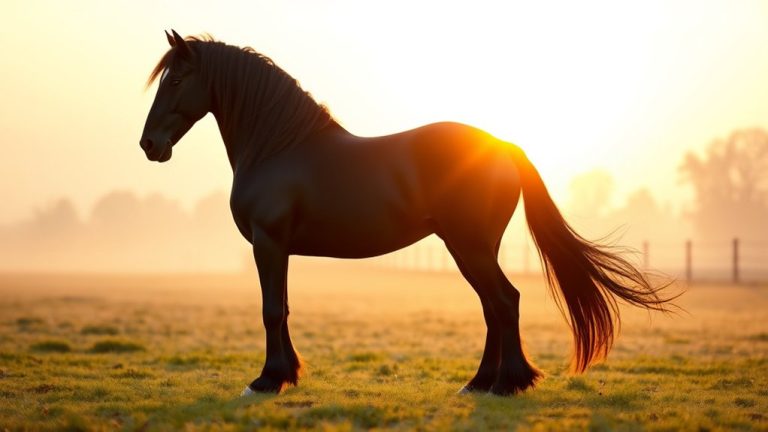
Yes, a horse is a strict herbivore with teeth and a digestive system specialized for processing fibrous plant material. You’ll notice their large, flat molars grind tough grasses, while their elongated gut ferments fiber to extract nutrients.
Horses naturally graze small amounts throughout the day on grasses and herbs, obtaining essential vitamins and minerals. Feeding meat disrupts their digestion and poses serious health risks.
Understanding their unique biology helps you provide ideal nutrition and care.
What Does It Mean to Be a Herbivore?
Although you might think of herbivores simply as plant-eaters, being a herbivore involves specialized adaptations. As a herbivore, you rely primarily on plant material like grasses, leaves, and fruits for nutrition.
Your digestive system is uniquely designed to extract nutrients from fibrous plant fibers, which are difficult to break down. One key adaptation is fermentation within your gut, where microbial symbionts help decompose cellulose, a major component of plant cell walls.
This fermentation process allows you to access energy and nutrients that would otherwise be unavailable. To maintain efficient digestion and nutrient absorption, you typically consume food in small, frequent meals, ensuring continuous fermentation and breakdown of plant material.
These traits define what it means to be a herbivore beyond simply eating plants.
How Do Horses’ Teeth Show They Are Herbivores?
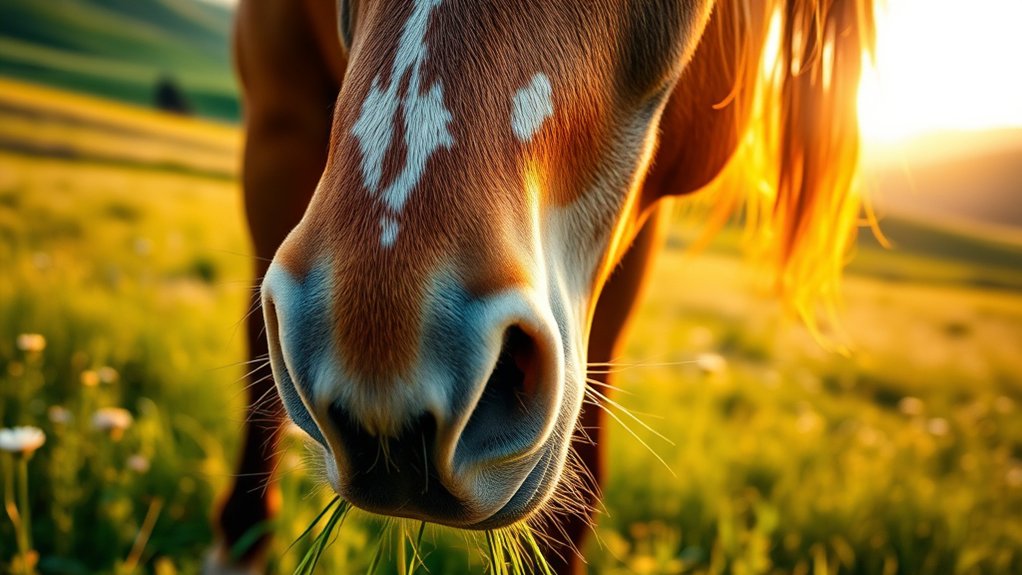
When you examine a horse’s teeth, their specialized structure clearly reveals their herbivorous nature. Horses have large, flat incisors perfectly suited for grazing and efficiently biting off plant material.
A horse’s large, flat incisors are perfectly designed for grazing and biting off plant material.
Their molars are broad and ridged, designed to grind fibrous plant fibers thoroughly, which aids in breaking down tough vegetation.
You’ll notice they lack sharp canines, which carnivores use to tear flesh, further confirming their plant-based diet.
The shape and wear patterns of their teeth reflect continuous grazing behavior, constantly wearing down and adapting to processing grasses and other plants.
This dental arrangement, optimized for grinding rather than tearing, provides clear evidence that horses evolved as herbivores, relying exclusively on plant matter for nutrition.
Their teeth are a direct indicator of their herbivorous lifestyle.
Why Are Horses’ Digestive Systems Suited to Plants?
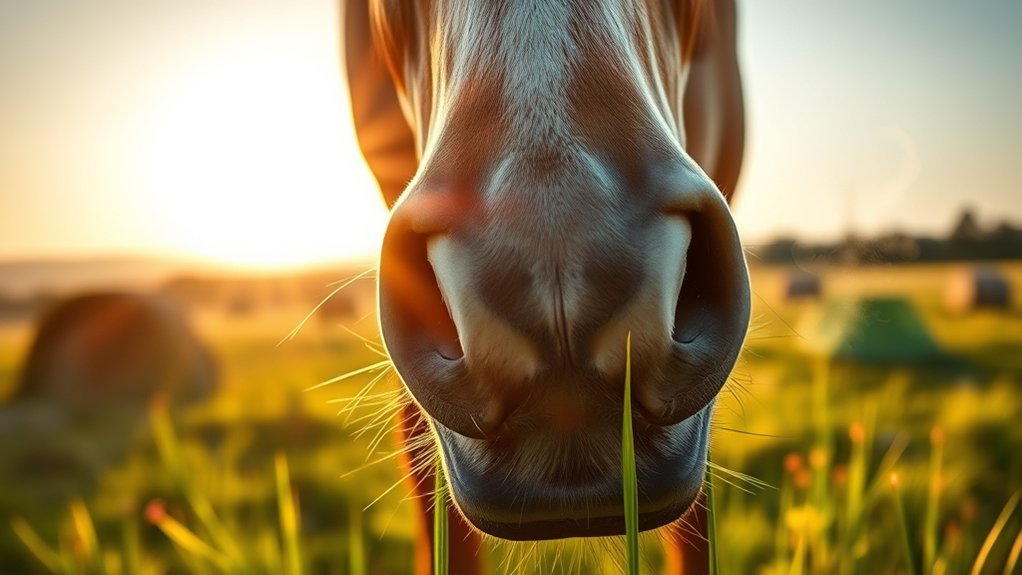
The teeth of horses not only reflect their herbivorous diet but also work in tandem with a digestive system specially adapted to process plant material. Their elongated digestive tract is designed to maximize digestion of fibrous plant fibers.
Key features include:
- A large intestine that facilitates fermentation and breakdown of tough fibers.
- A well-developed cecum acting as a fermentation chamber, allowing microbial digestion of cellulose.
- Absence of a gall bladder, which suits their low-fat, high-fiber diet and streamlines digestion.
These anatomical adaptations enable efficient extraction of nutrients from plant material, supporting continuous grazing.
Understanding these points clarifies why horses’ digestive systems are optimized for processing fibrous plants rather than animal matter, confirming their herbivorous nature.
What Do Horses Naturally Eat in the Wild?
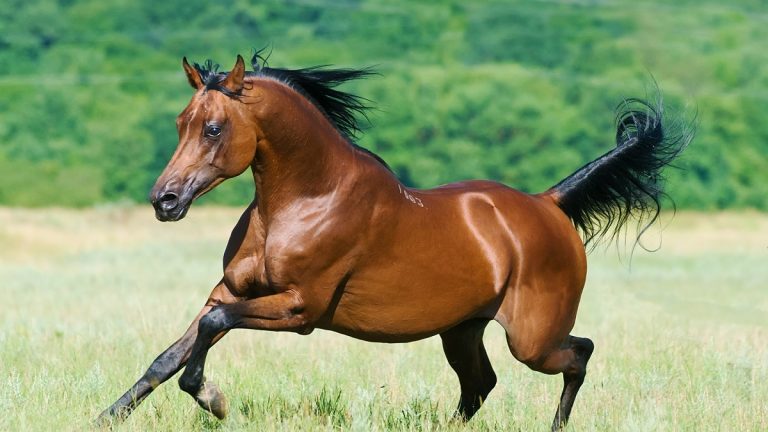
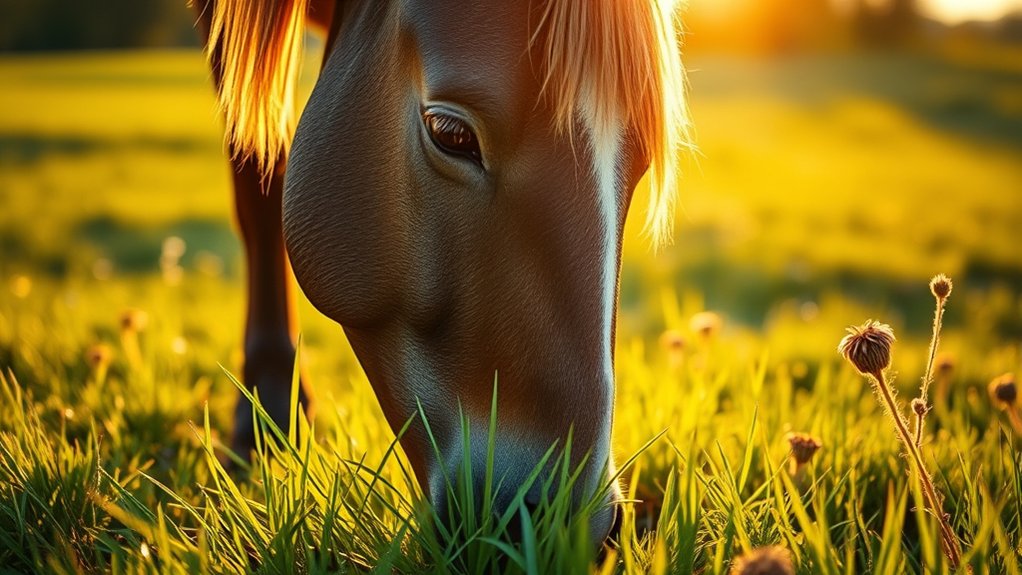
When you watch wild horses, you’ll notice they mostly graze on grasses, herbs, and low-growing plants that suit their teeth and digestive system.
They don’t just eat one big meal; instead, they nibble small amounts all day long to help break down the fibrous stuff they eat.
Every now and then, they might snack on shrubs and leaves, but for the most part, their diet is completely plant-based.
Wild Horse Diet
How do wild horses sustain themselves in their natural habitats? Wild horses primarily graze and forage on fibrous plant material like grasses and herbs. Their teeth, featuring large flat incisors and grinding molars, efficiently process these tough plants.
They spend most of their day feeding, consuming about 1-2% of their body weight daily. You should note three key aspects of their diet and behavior:
- Wild horses graze on low-growing plants to obtain necessary nutrients.
- Their side-positioned eyes provide nearly 360-degree vision, enabling predator detection while eating.
- They rely on fibrous plant material for energy, supporting quick, high-speed escapes.
This diet and adaptive behavior enable wild horses to thrive in diverse environments while maintaining herbivorous nutrition.
Natural Forage Choices
Although wild horses primarily rely on grasses and herbs as their main food sources, they continuously graze throughout the day to meet their nutritional needs. Their natural forage consists mainly of fibrous plant material, which their specialized teeth and digestive system efficiently process.
When grass is scarce, they may browse leaves, shrubs, and bark, but their herbivorous diet remains consistent with grazing habits.
| Natural Forage Type | Emotional Connection |
|---|---|
| Grasses | The foundation of life’s rhythm |
| Herbs | Nature’s delicate nourishment |
| Shrubs & Bark | Resilience in scarcity |
Understanding their natural forage choices deepens your appreciation of horses as dedicated herbivores, adapted by evolution for continuous grazing on fibrous plants.
What Nutrients Do Horses Get From Plants?
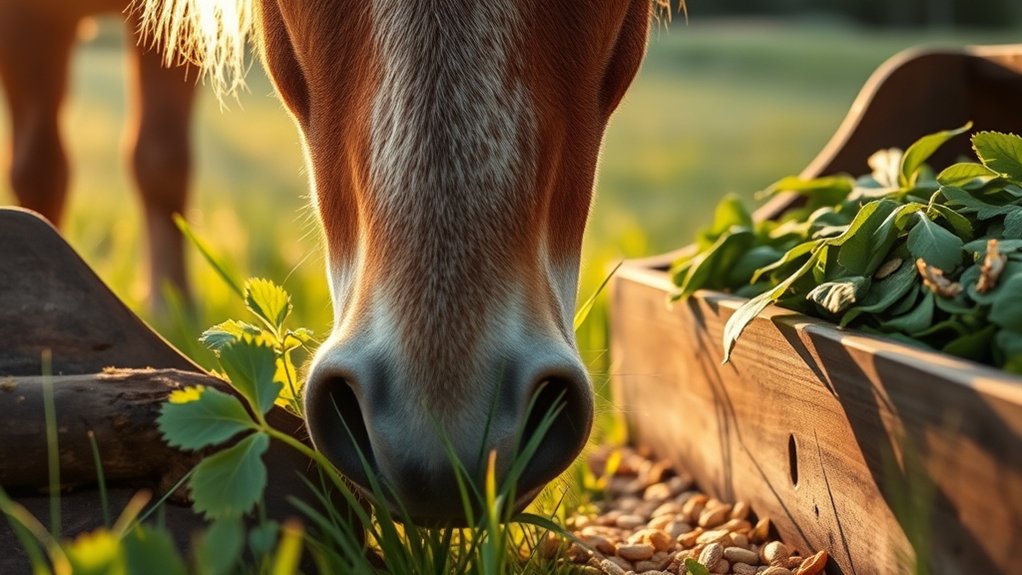
What essential nutrients do horses gain from their plant-based diet? Horses extract crucial amino acids, carbohydrates, fats, vitamins, and minerals from plants like grass and hay. Their specialized teeth and digestive system efficiently grind and ferment fibrous plant material, supplying necessary dietary fiber and energy.
Plants provide horses with:
Plants provide horses with essential vitamins, minerals, and fiber crucial for their health and digestion.
- Vitamins: Green forage offers vitamin A, while gut microbes produce B-vitamins during fiber fermentation.
- Minerals: Calcium and phosphorus from plants support bone health and metabolic functions.
- Fiber: High fiber content aids digestion and maintains healthy gut motility.
This nutrient profile guarantees horses meet their physiological needs solely through plant consumption.
Understanding these components highlights how plants fulfill horses’ dietary requirements naturally and effectively.
Why Is Meat Not Part of a Horse’s Natural Diet?
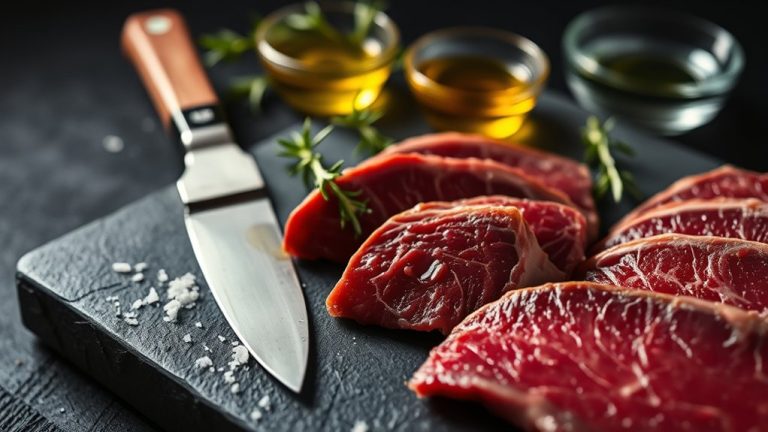
Since horses have evolved with teeth and digestive systems specialized for processing fibrous plants, meat doesn’t fit into their natural diet. As herbivores, they rely on plant materials like grasses and hay.
Their digestive system ferments fiber in the hindgut, which is ill-equipped to handle high-protein animal matter. Meat lacks dietary fiber and contains excess protein, disrupting fermentation and causing digestive issues like ulcers or colic.
| Aspect | Herbivore Digestive System |
|---|---|
| Primary diet | Fibrous plant materials |
| Teeth | Flat, grinding surfaces |
| Digestive tract | Hindgut fermentation |
| Meat digestion | Inefficient or harmful |
| Health impact of meat | Stomach ulcers, colic risks |
This table highlights why meat isn’t natural for horses.
Can Horses Eat Meat? What Happens Next?
Even though horses can digest meat to extract nutrients like amino acids and fats, their bodies aren’t designed to handle it regularly. As natural herbivores, horses have digestive systems specialized for fibrous plant material, not meat.
If you feed horses meat, here’s what typically happens: They can break down protein and fat but won’t obtain necessary fiber. Their gut microbiome may become disrupted, increasing digestive issues.
Occasional meat intake won’t fulfill their nutritional requirements and may cause stomach discomfort. While horses can process some meat nutrients, relying on it can lead to problems because their teeth, gut flora, and digestive enzymes are optimized for plant digestion.
What Are the Health Risks of Feeding Meat to Horses?
Although horses can digest some animal proteins, feeding them meat introduces several serious health risks. Their digestive systems aren’t designed to process high-protein animal matter, making them prone to gastric ulcers and colic when meat is consumed.
Meat lacks dietary fiber essential for maintaining gut motility, which further disrupts digestion. You also risk exposing your horse to harmful pathogens like salmonella and listeria present in raw meat, which can cause severe infections.
Contaminated meat may introduce botulism toxins, often fatal to horses. Excessive meat intake disturbs the delicate balance of the equine gut microbiome, increasing gastrointestinal disturbances.
How to Feed a Balanced Herbivore Diet for Horse Nutrition
When you provide a balanced herbivore diet for your horse, you focus primarily on high-quality forage like grasses and hay. These supply essential fiber for proper digestion. Forage should make up 50-100% of your horse’s daily intake, forming the foundation of their nutrition.
To maintain ideal health, follow these key feeding routines: Offer fresh, clean water continuously to support digestion and nutrient absorption. Introduce any dietary changes gradually to prevent digestive disturbances.
Guarantee minerals like calcium and phosphorus are balanced, ideally in a 2:1 ratio, with supplementation as needed.
Concentrates or grains can be added sparingly, tailored to your horse’s activity level. By prioritizing forage and stable feeding routines, you meet your horse’s herbivore diet requirements effectively and safely.
What Are Safe Treats and Supplements for Herbivorous Horses?
Alongside a well-balanced forage-based diet, providing safe treats and supplements can enhance your horse’s nutrition and enjoyment.
Enhance your horse’s nutrition and enjoyment with safe treats and thoughtful supplements alongside a balanced forage diet.
For herbivorous horses, safe treats include carrots, apples, pumpkins, and watermelons, offered in moderation to prevent digestive upset.
Avoid high-sugar fruits like grapes and bananas, as they increase risks of colic and obesity.
Commercial horse treats are formulated to be safe, free from mold, dust, and foreign objects, making them suitable additions.
Supplements such as fish oil deliver omega-3 fatty acids that support skin, joint, and overall health.
However, these should be introduced gradually and only with veterinary approval.
When managing plant-based diets, always monitor your horse closely for adverse reactions when introducing new treats or supplements to maintain *ideal* digestive health and wellbeing.
Frequently Asked Questions
How Much Water Do Horses Need Daily?
You should provide your horse with 5 to 10 gallons of water daily to meet its hydration needs. This amount can increase to 20 gallons during hot weather or intense exercise.
Monitoring your horse’s drinking behavior is essential for proper hydration. Make sure it drinks regularly and doesn’t become dehydrated.
Offering water at least twice a day, especially after feeding or activity, supports ideal water intake and overall health.
Can Horses Survive on Only Hay Without Fresh Grass?
Yes, horses can survive on only hay without fresh grass because their digestion efficiently processes fibrous forage. Hay’s nutritional value provides essential fiber, vitamins, and minerals needed for energy and gut health.
However, since horses naturally have grazing habits, relying solely on hay may raise health concerns like nutrient deficiencies or dehydration. You’ll need to monitor their diet closely and supplement with salt, vitamins, and plenty of water to maintain ideal health.
How Often Should Horses Be Fed Throughout the Day?
Imagine the steady rhythm of the sun, rising and setting as your horse grazes calmly. You should feed your horse every 4 to 6 hours, aligning with natural grazing habits.
Horse feeding schedules thrive on 3 to 4 small meals daily, using proper feeding equipment to guarantee consistency.
Incorporate dietary supplements as needed to balance nutrition.
This routine supports digestion, prevents ulcers, and keeps your horse healthy and content throughout the day.
What Signs Indicate a Horse Is Not Digesting Food Properly?
You’ll notice digestive discomfort if your horse shows colic symptoms like pawing or pacing. Abnormal stool, such as loose, grainy, or very dry manure, signals poor digestion.
Weight loss despite proper feeding is another red flag. Watch for reluctance to eat or excessive salivation, as these indicate food isn’t processing correctly.
Promptly attending to these signs helps prevent serious gastrointestinal issues and guarantees your horse’s digestive health remains stable.
Are There Specific Plants That Are Toxic to Horses?
Yes, there are specific plants toxic to horses, so you must focus on toxic plant identification to protect equine digestive health. Plants like ragwort, yew, foxglove, oleander, and black walnut shavings pose serious risks.
Understanding horse dietary restrictions helps you choose safe forage options and manage pastures effectively. Always inspect grazing areas thoroughly, removing harmful plants to maintain your horse’s health and prevent digestive complications.
Conclusion
You know horses are herbivores by their teeth, digestion, and natural diet. You see, their teeth grind plants, their digestive system ferments fiber, and they thrive on grasses and hay.
You shouldn’t feed them meat because it disrupts their digestion and risks health problems. Instead, you should provide balanced plant-based nutrition, safe treats, and proper supplements.
By respecting their herbivorous nature, you guarantee your horse stays healthy, happy, and strong every day.