What Does Horse Mean?
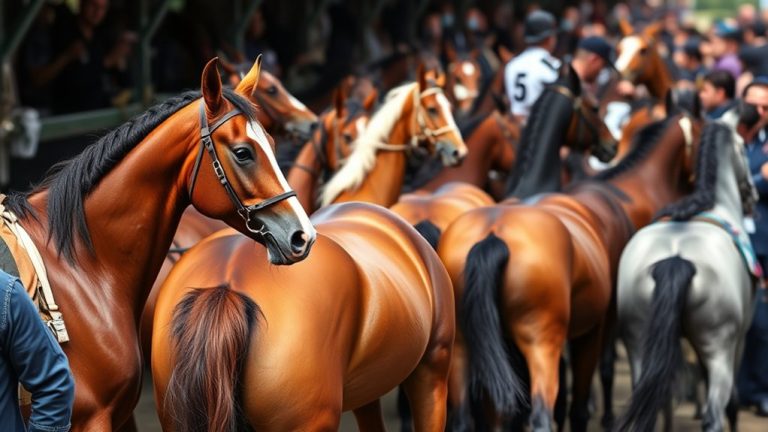
A horse is a strong, graceful herbivore known for speed and endurance, perfectly designed with hooves and long legs for swift movement. Its name comes from ancient roots meaning “to run,” reflecting its natural agility.
Horses carry deep cultural symbolism worldwide, representing freedom, power, and connection to nature. They come in various breeds, sizes, and temperaments, used in sports, work, and therapy.
Exploring their history, anatomy, and roles reveals a rich, fascinating story waiting to unfold.
What Is a Horse? Basic Definition and Characteristics
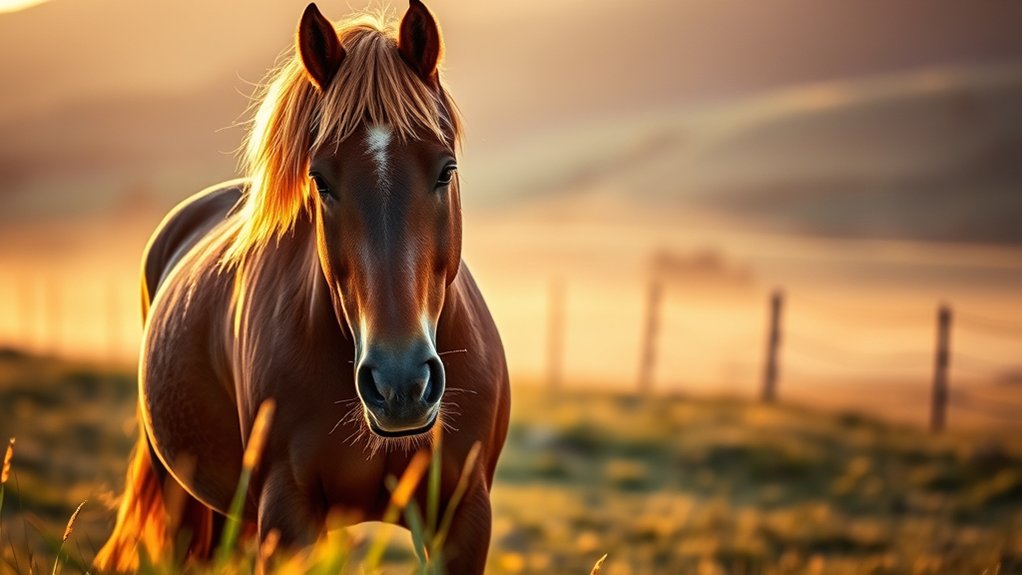
Although you might know horses as majestic animals used for riding or racing, they’re actually large, solid-hoofed herbivores scientifically called Equus caballus.
As a horse, you’ll notice it has long legs and a narrow mane, with each limb ending in a single weight-bearing digit known as a hoof.
These hoofs are essential for movement and support, allowing the horse to travel swiftly and endure various terrains.
Horses typically live 25 to 30 years, though some surpass 40.
They’re social creatures, living in herds led by a dominant mare, communicating through vocal sounds, body language, and grooming.
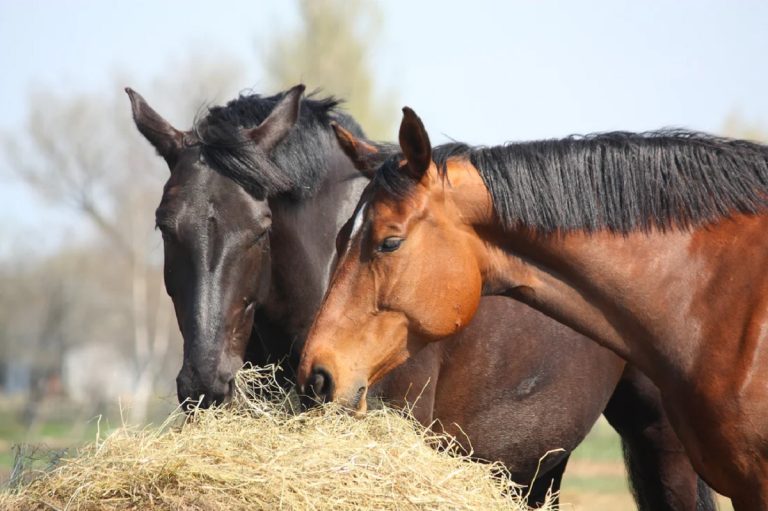
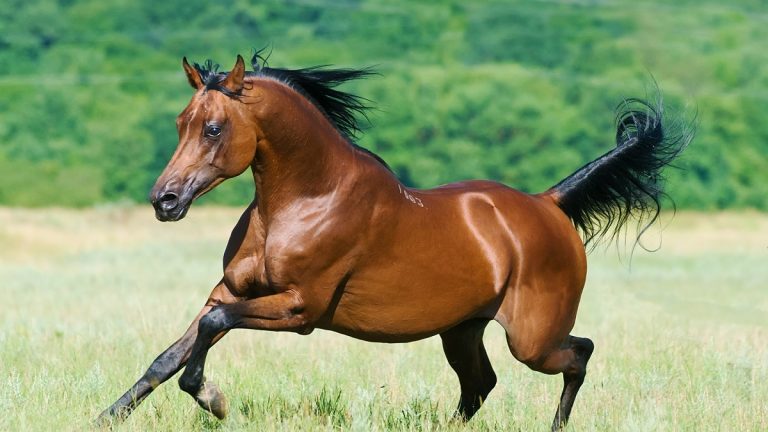
You’ll find horses in many breeds, sizes, and coat colors, including bay, chestnut, black, and gray, all sharing these defining characteristics.
How Did the Word “Horse” Originate? Etymology and History
You’ll find that the word “horse” comes from the Old English “hors.” It’s linked to Germanic roots that mean “to run.”
This connection shows how it ties to other Indo-European languages, like the Latin word “currere.”
When you understand these origins, it really reveals how deeply the term is embedded in early language and culture.
Old English Origins
- “Horse” appeared in English before the 9th century. It’s derived from Old English “hors.”
- The word is linked to Proto-Germanic hros and connected to the Proto-Indo-European root h₁éws.
- Cognates exist in Old High German and Old Norse.
The word’s form and meaning have stayed remarkably consistent. This reflects its lasting importance in early English society.
Related Language Roots
Tracing the word “horse” beyond Old English reveals its deep roots in the Germanic language family, where similar terms like “Hest” in Old Norse and Dutch appear. You’ll find that the etymology of “horse” likely ties to an ancient root meaning “to run,” reflecting the animal’s swift nature.
This Germanic root probably stems from a common ancestor in the broader Indo-European family, highlighting the horse’s significance across ancient societies.
As you explore cognates across various languages, you notice the word’s widespread historical usage, emphasizing its importance.
Importantly, despite phonetic similarities, “horse” is unrelated to French or Latin origins, standing firmly within the Germanic and Indo-European lineage, which underscores its distinct linguistic heritage.
What Are the Different Types and Breeds of Horses?
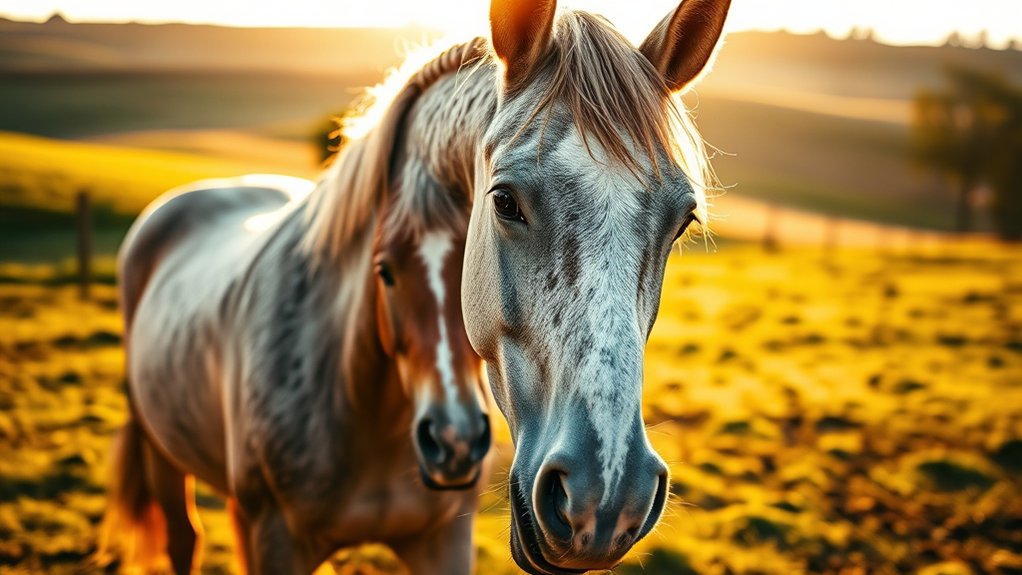
How do you distinguish one horse breed from another? You focus on their unique physical conformation, temperament, and purpose, all defined by strict breed standards.
Distinguishing horse breeds relies on unique conformation, temperament, and purpose guided by strict breed standards.
Horse breeds fall into categories like hot bloods, cold bloods, and warmbloods, each developed for specific tasks such as racing, draft work, or riding.
You’ll notice differences in size, gait, and overall appearance. Key factors include speed and endurance in hot bloods (e.g., Arabians), strength and calmness in cold bloods (e.g., Shires), and versatility in warmbloods (e.g., Hanoverians).
There are also distinctive gait patterns and temperaments to consider.
Plus, recognition by breed registries and organizations plays a big role in identifying and preserving these breeds.
How Are Horses Measured and Classified by Size?
When you measure a horse, you always start at the withers, which is the highest point of the shoulders. The unit used is called “hands,” where one hand equals four inches. Horses’ height is expressed in these hands, a traditional measurement that helps standardize size classification.
Typical riding horses stand between 14 and 16 hands tall and weigh 380 to 550 kilograms. Heavy draft horses exceed 16 hands, sometimes reaching 18 hands and over 700 kilograms.
Ponies are classified by being under 14.2 hands, though exact standards vary by country and organization.
At the opposite end, miniature horses such as Thumbelina can be as small as 17 inches tall, weighing about 26 kilograms.
This system of measurement guarantees clear size classification across horse types.
What Are Horses Used for in Sports and Work?
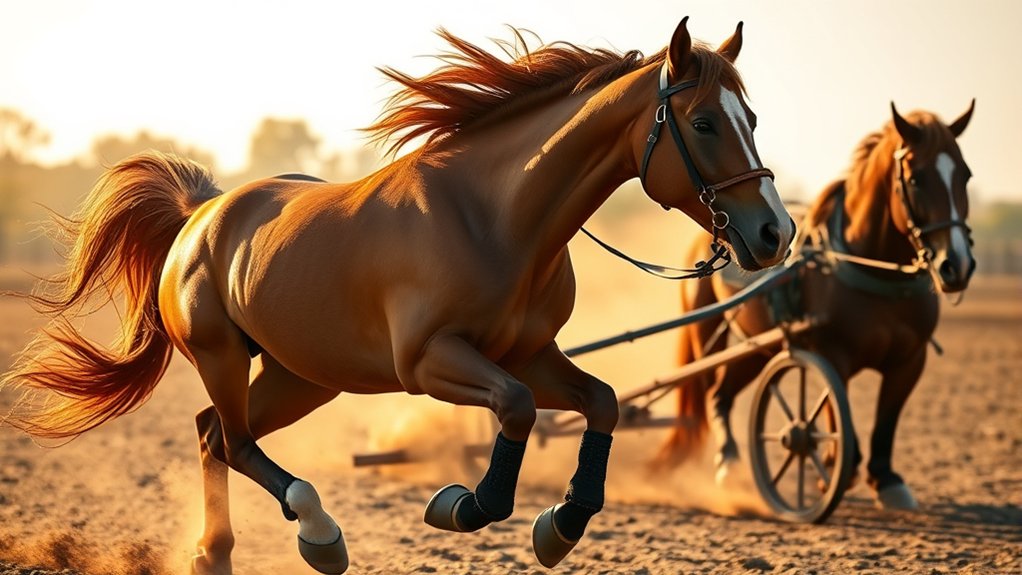
A horse’s versatility shines through in both sports and work, where its speed, strength, and training play essential roles. When you think about horses in sports, their agility and discipline become obvious.
In work, their power and reliability stand out. You’ll find horses contributing in many areas:
Racing, show jumping, dressage, and rodeo highlight horses’ athleticism in sports. Polo and eventing require horses’ specialized skills and endurance.
Horses showcase exceptional athleticism and endurance in sports like racing, show jumping, dressage, rodeo, polo, and eventing.
Historically, horses pulled plows, wagons, and carriages in agricultural and transportation work. Police forces use horses for patrolling and crowd control due to their trainability.
Therapeutic riding programs utilize horses to aid mental and physical rehabilitation.
Whether in sports or work, horses remain invaluable partners, displaying remarkable adaptability and strength.
How Is “Horse” Used in Idioms and Everyday Language?
Horses have long influenced language, inspiring idioms that capture their characteristics and cultural significance. In everyday language, you’ll encounter phrases like “hold your horses,” urging patience before action, and “back the wrong horse,” which stems from horse racing and means supporting an unsuccessful option.
When you hear something “from the horse’s mouth,” you know the information is trustworthy, coming directly from the source. Similarly, “look a gift horse in the mouth” advises against scrutinizing a gift too closely, reflecting the practical wisdom of evaluating a horse’s age by its teeth.
Finally, “horse around” describes playful, sometimes rowdy behavior. These idioms show how horses have deeply embedded themselves in our speech, linking their qualities to human experiences and communication.
What Are the Main Physical Features and Anatomy of Horses?
Although you mightn’t realize it, the horse’s anatomy is uniquely adapted for speed, strength, and endurance. As a fully mature animal, a horse’s physical features enable a wide range of movements critical for survival and work.
The horse’s anatomy is expertly designed for speed, strength, and endurance essential to its survival and work.
You’ll notice the horse’s mouth is designed for grazing with strong teeth suited to a fibrous diet.
Key aspects include:
- Approximately 205 bones, with no collarbone, allowing flexible limb movement
- Height measured at the withers, typically 14 to 17 hands (1 hand = 4 inches)
- Hooves made of keratin that protect distal phalanges and need regular care
- Unique leg structure with “knees” composed of carpal bones, not true knees
- Muscles only above knees and hocks, with tendons and ligaments providing precise limb function
These features combine to create the horse’s remarkable physical capabilities.
How Do Horses Grow and Age?
You’ll notice horses go through clear life stages—from foal to yearling, and then adult. Each stage has its own distinct growth patterns.
They’re usually considered adults around four years old, but their skeletons actually keep maturing until they’re about six.
If you want to estimate a horse’s age, checking their teeth is a reliable way to do it. Their teeth show predictable wear patterns that change over time, making it easier to figure out how old they are.
Horse Life Stages
When a foal is born, it can usually stand and walk within just a few hours, demonstrating remarkable early development.
As you care for a horse, understanding its life stages helps you tailor horse grooming, training, and nutrition effectively. Here’s a quick overview:
- Foal: Rapid growth, requires gentle handling and specialized nutrition.
- Yearling: Begins basic horse training; still developing coordination and strength.
- Adult: Fully mature; ideal time for advanced training and consistent grooming.
- Senior: Needs adjusted nutrition and careful grooming to maintain health.
- Lifespan: Domestic horses typically live 25-30 years, sometimes longer with proper care.
Age Measurement Methods
Since horses grow and age in distinct stages, understanding how to measure their age accurately is essential for proper care and training. You can estimate a horse’s age by examining its teeth, focusing on wear patterns and the eruption of permanent teeth.
Skeletal development finishes around six years, influencing stable management and nutrition plans. Proper horse grooming also supports healthy development at each stage.
| Age Group | Key Indicators |
|---|---|
| Foal | Milk teeth, small frame |
| Yearling | Erupting permanent teeth |
| Adult | Full skeletal maturity |
| Racing Age | Officially ages Jan 1/Aug 1 |
Knowing these methods helps you tailor equine nutrition and grooming to keep your horse thriving throughout its life.
How Do Horses Influence Culture and Symbolism?
Although horses have served practical roles throughout history, their influence extends deeply into culture and symbolism worldwide. You’ll find horse symbolism woven through diverse cultural representations and mythological significance, reflecting values like freedom, strength, and nobility.
Consider these key influences:
Consider these key influences that showcase the horse’s deep cultural and symbolic significance worldwide.
- In ancient Egypt and medieval Europe, horses symbolized power and progress through chariots and cavalry.
- Native American cultures view horses as spiritual freedom and a connection to nature.
- Norse mythology’s Sleipnir embodies heroism and the god of war.
- Chinese art celebrates the horse for perseverance, vigor, and success.
- Globally, horses represent societal development, conquest, and mobility due to their transportation role.
When you explore these facets, you see how horses transcend utility, becoming enduring cultural and symbolic icons.
Where to Find Resources on Horses and Horse Terminology?
You can find reliable horse terminology in extensive dictionaries like the Oxford Dictionary of Horses, which are great for detailed definitions. Also, specialized resources such as the Equine Science Center offer a lot of useful information.
If you’re looking online, platforms like the American Horse Council provide handy glossaries that cover industry-specific terms.
For those wanting to dive deeper, academic textbooks and museum archives are excellent sources—they offer both authoritative and historical perspectives on horse language and concepts.
Horse Terminology Sources
Where can you find reliable and detailed resources on horse terminology? To deepen your understanding of horse nutrition, equine health, and riding techniques, you’ll want sources that are both accurate and extensive. Consider these key places:
Specialized dictionaries like the Oxford Dictionary of Equine Terms offer precise definitions.
Online platforms such as TheHorse.com provide glossaries and in-depth articles on anatomy, breeds, and riding.
Academic textbooks and veterinary publications deliver scientific terminology and insights.
Breed associations publish terminology guides tailored to specific breeds and disciplines.
Digital encyclopedias like Britannica include thorough entries covering historical and current horse terminology.
Using these resources ensures you grasp essential terms with clarity, whether you’re studying nutrition, health, or riding techniques.
Horse Reference Materials
Building a solid foundation in horse terminology often starts with accessing reliable reference materials that provide clear definitions and contextual information. You can turn to the Cambridge Dictionary for detailed definitions, pronunciation, and usage examples that clarify equine terms.
The Oxford English Dictionary offers rich etymology and historical context, deepening your understanding of horse-related language.
For practical insights into horse nutrition, equine health, and breeding practices, the American Horse Council supplies industry reports and resources tailored to U.S. horse breeds and care.
Online platforms like Equine World UK and Horse & Hound feature glossaries and articles that explain horse equipment and terminology.
Moreover, specialized publications such as “The Horse” magazine provide extensive guides on breeds, care, and terminology used in equestrian sports.
Frequently Asked Questions
How Do Horses Communicate With Each Other?
You’ll notice horses communicate mainly through horse body language, using ear positions, tail movements, and facial expressions to send clear signals.
Their vocal communication like neighs and snorts helps express excitement or warnings.
You’ll also see grooming and nuzzling, which reinforce social bonds and establish social hierarchy within the herd.
What Are Common Health Issues in Horses?
You might think regular horse grooming alone prevents health issues, but it’s more complex. Common problems include laminitis, equine colic, respiratory troubles, dental pain, and skin infections.
To keep your horse healthy, focus on balanced equine nutrition, meticulous hoof care, and consistent grooming. These practices work together to reduce risks, promote comfort, and support your horse’s overall well-being.
Ensuring these aspects are maintained helps your horse stay strong and sound for years.
How Do Horses Sleep and Rest?
You’ll find that horses use both standing and lying down horse sleeping positions to rest. Their resting habits during the day involve short, frequent naps rather than long sleep sessions.
Thanks to a special leg-locking mechanism, they can doze standing up without tiring.
Their sleep cycle lasts about 2 to 3 hours daily, with most deep REM sleep happening when they lie down. This balance keeps them alert yet well-rested.
What Is the Typical Diet of a Horse?
Imagine you’re horse grooming, feeling the sleek coat as you prepare your horse for a ride. To keep that energy, their diet is mainly forage, about 1.5-2% of their body weight in hay or pasture daily.
You’ll add grains like oats during equine training for extra fuel.
In horse breeding, nutrition’s key, so fresh water and minerals keep them strong and healthy, supporting every gallop and stride.
How Do Horses Adapt to Different Climates?
You’ll notice horses use climate-specific adaptations like growing thicker coats in cold areas or shedding for hot climates to regulate their temperature.
Their environmental survival strategies include conserving water in deserts and developing stronger legs for mountainous terrain.
Regional herd behaviors also shift. Horses in tropical zones often stay active during cooler parts of the day.
These combined adaptations help horses thrive, no matter where they live.
Conclusion
Think of a horse as a bridge, strong yet graceful, connecting history, culture, and utility. Just like you’d trace a river back to its source, understanding a horse’s origin, breeds, and roles deepens your appreciation.
As you explore its anatomy and symbolism, you’ll see how this majestic creature carries stories across time. It guides your journey through knowledge with power and elegance.
Embrace this connection, and the horse will always lead you forward.