How To Jump A Horse – Easy Guide
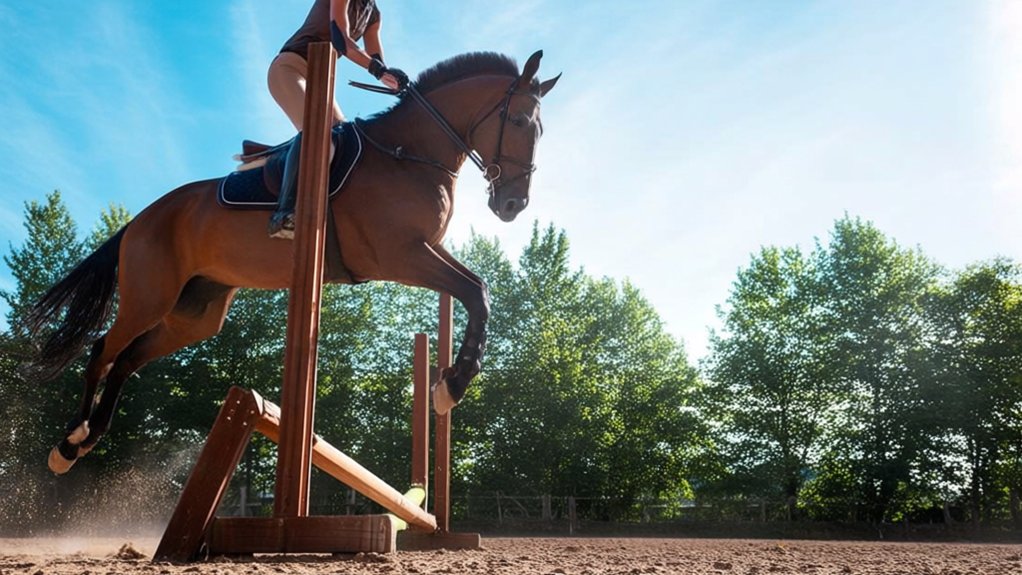
To jump a horse safely, start by mastering the two-point position. Lean slightly forward with heels down and core engaged. Approach the jump confidently by maintaining a steady canter.
Focus on your takeoff point and use your legs for balance. Land smoothly by absorbing impact with your hips. Keep steady contact throughout the jump.
Build strength with ground poles and small jumps. Always prioritize proper tack and safety gear. With practice, you’ll develop the skills and confidence needed for successful jumping.
How to Get Into the Two-Point Jumping Position
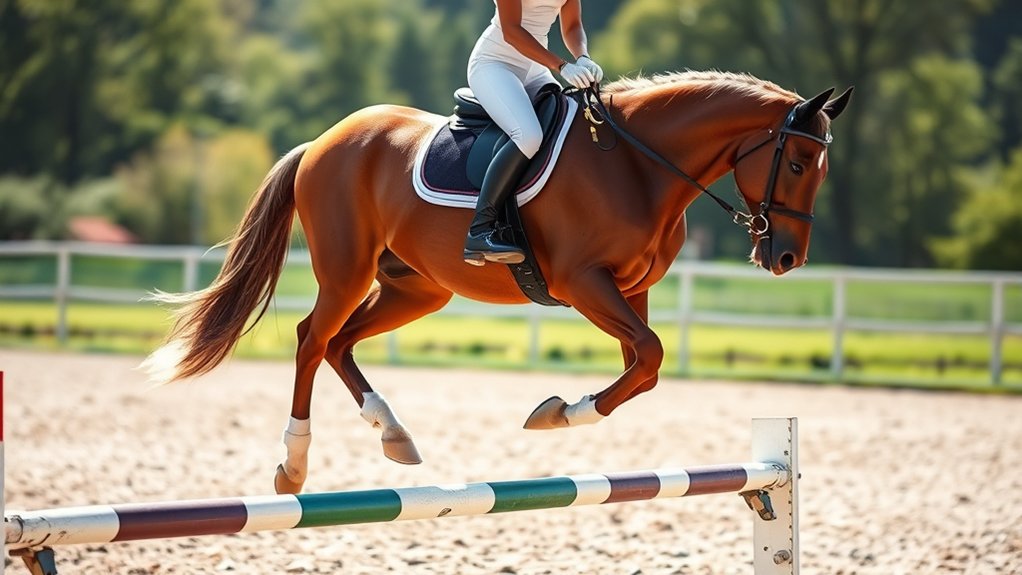
When you’re preparing to jump, shift your weight slightly forward out of the saddle into the two-point position, leaning over your horse’s neck. Keep your heels down and your legs slightly bent to maintain balance and allow quick adjustments.
Support your upper body with a strong core, ensuring your hands stay forward and relaxed to follow your horse’s movement smoothly. To develop a consistent two-point position, practice in front of mirrors or over ground poles, which helps you build comfort and precision.
Engage your core and keep hands relaxed to follow your horse’s rhythm with precision.
Incorporate lifting out of the saddle during trotting and cantering exercises to strengthen your stability and endurance in this position.
Mastering these elements sets a solid foundation for effective jumping technique. You’ll find it gets easier the more you practice.
How to Approach and Take a Jump Confidently
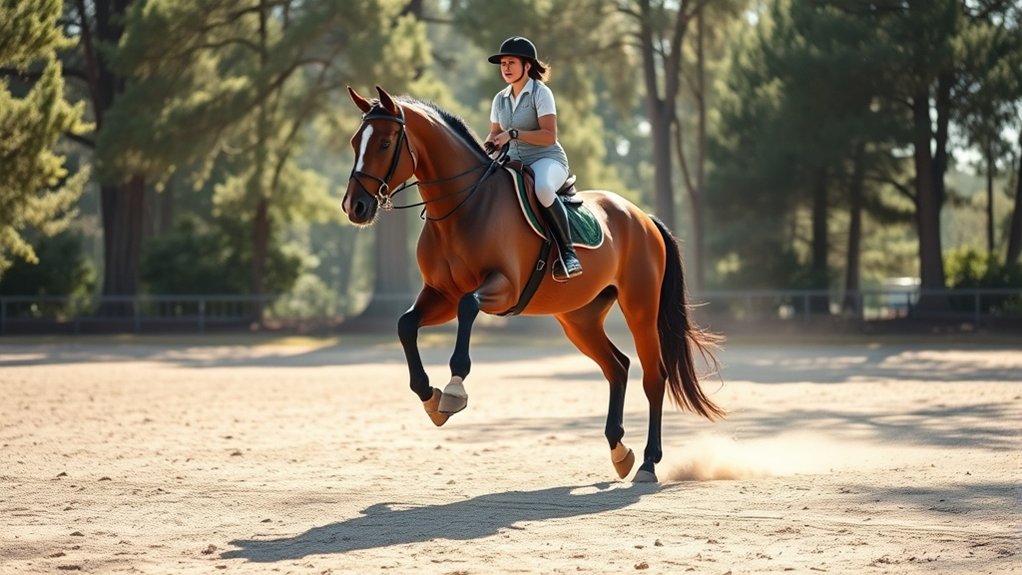
You want to make sure your horse is lined up straight with the jump.
Keeping a steady rhythm is key because it helps you both stay balanced.
Try to stay centered in your seat, and as you get closer to the jump, get ready to lean forward just a bit.
Timing your takeoff just right will really help you clear the jump with confidence and safety.
Aligning Horse and Rider
Although approaching a jump can feel intimidating, maintaining a steady, balanced canter along a straight line guarantees proper alignment between you and your horse. Focus on a consistent rhythm and approach the jump at a right angle to help your horse clearly see the obstacle.
Keep your eyes fixed on the takeoff point and look through the jump to guide your horse’s trajectory accurately. Use your legs to stay connected, supporting your horse’s movement without creating backward or excessive tension.
As you near the jump, prepare your body to follow by leaning slightly forward during takeoff. This alignment ensures a confident, effective jump while allowing you to return smoothly to balance upon landing.
Proper alignment is crucial to a successful and safe jump. It really makes all the difference when you’re out there riding.
Maintaining Balanced Position
How exactly do you maintain a balanced position to approach and take a jump confidently? First, adopt a steady, forward-leaning half seat to help your horse lift into the jump with balanced momentum. Keep your eyes focused on the top of the jump to stay aligned and anticipate takeoff accurately.
Make certain your heels are down and your legs remain securely against the horse’s sides. This provides essential support and stability. Your hands should move forward, following the horse’s head in a straight line to avoid any pulling or restriction.
Approach the jump at a controlled, steady canter. This builds your confidence and creates a smooth, balanced rhythm. Consistently practicing these elements ensures a safe, effective jump every time.
Timing The Jump
When approaching a jump, maintaining a steady, consistent canter while keeping your horse on a straight line sets the foundation for a successful takeoff.
You need to visualize the jump early and focus on a precise takeoff point to help your horse judge the distance accurately.
Keep your eyes up, looking toward the landing spot or the next obstacle to guide your approach confidently.
Maintain a forward, slightly inclined position, staying balanced to encourage a smooth jump.
Just before the jump, initiate a slight half halt to help your horse lift its front end.
- Canter steadily with balanced rhythm
- Visualize and focus on takeoff point early
- Keep eyes up, looking ahead
- Use a half halt to prepare for lift-off
How to Land and Recover After a Jump
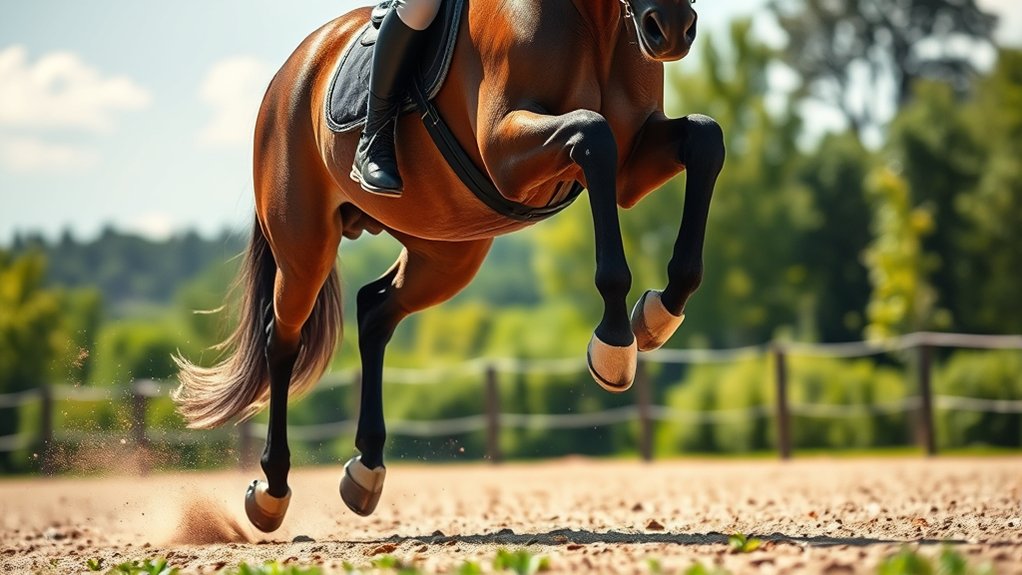
Once you’ve cleared the jump, absorb the impact by gently closing your hips and reinforcing your lower leg contact with the horse. Maintain a secure, balanced seat to help your horse recover smoothly and prepare for the next movement.
Keep your eyes forward, focusing on the upcoming obstacle or direction to sustain rhythm and momentum.
Immediately reinforce a steady, controlled canter or walk after landing to stabilize your horse and prevent rushing or stumbling. Use your reins and body language to communicate calmness and reassurance, aiding your horse in a proper recovery.
Building Your Balance and Comfort for Jumping
To build your balance and feel more comfortable when jumping, start by mastering the two-point position at both walk and trot. This really helps to strengthen your core.
Then, try incorporating ground poles into your practice. They’re great for improving your eye coordination and body control as you go over fences.
Plus, don’t forget to work on building your leg strength—that stability will boost your confidence throughout your jumps.
Mastering Two-Point Position
Although mastering the two-point position can feel challenging at first, practicing it at a walk or trot on trusted horses will build your confidence and muscle memory.
This position is essential for maintaining balance and comfort when jumping. Focus on keeping your weight centered over the horse’s center of gravity, with your heels down and hips slightly forward.
Hold the position through a full stride to increase stability. To practice effectively, use ground poles to mimic jump approach and small cross rails for simulated jumping.
Keep a consistent heel-down posture and gradually ease back into the saddle after each attempt.
These steps help you develop control and comfort, preparing you for real jumps without compromising balance or tiring prematurely. With time, it’ll start to feel much more natural. Just keep at it!
Using Ground Poles
When you incorporate ground poles into your riding routine, you actively develop rhythm, timing, and stride control essential for jumping. Placing poles on the ground allows you to practice riding at walk, trot, and canter, improving both your and your horse’s coordination and confidence.
By counting strides between poles, you establish a consistent approach, which is vital for preparing to clear actual jumps. Ground poles also train your eye to focus properly and judge distances more accurately. This enhances your precision when riding toward fences.
This steady practice builds your balance and comfort, so you feel secure in the saddle before progressing to jumping exercises. Using ground poles is a foundational step that makes your shift to jumping smoother, safer, and more controlled.
Building Leg Strength
Mastering ground poles sharpens your timing and coordination, but your leg strength plays a key role in maintaining stability and control throughout jumps.
Building strong, steady legs helps you stay balanced and comfortable in the saddle, especially when landing or steering fences. Focus on exercises and riding techniques that enhance your core and leg endurance.
To build leg strength effectively, try these strategies:
- Perform squats and lunges off the horse to enhance muscle strength.
- Practice flatwork emphasizing deep heel position and secure leg contact.
- Ride trot and canter over ground poles to develop coordination and muscle tone.
- Maintain half-seat and two-point positions for extended periods to build endurance.
Doing these steps will help you maintain control and confidence. That way, your jump approach feels smoother and safer.
Training Your Horse to Jump Safely
Before you introduce your horse to higher jumps, focus on building a solid foundation with ground poles and small cross rails. These teach your horse proper approach, rhythm, and build confidence.
Always maintain a consistent approach line and a straight, balanced ride to promote safety and correct technique.
Only increase jump height and complexity once your horse is comfortable and in control at lower levels. Practice smooth takeoff and landing, emphasizing balance and fluid transitions to prevent strain.
Additionally, regularly check and adjust your saddle and tack to ensure comfort and safety during training.
Essential Jumping Equipment for Beginners
Building on your horse’s readiness to handle jumps safely, equipping yourself with the right gear is key to a successful jumping experience. Safety and control depend on both your equipment and your horse’s tack. Here’s what you need to focus on:
An approved ASTM helmet to protect your head during jumps. Riding boots with a 1-inch heel to keep your foot secure in the stirrup. An English saddle with a shallow seat and shorter flaps for better balance and close contact.
Wear an ASTM helmet, riding boots with a 1-inch heel, and an English saddle for safety and control.
Well-maintained tack, including girths, stirrup leathers, and reins, inspected regularly for safety and comfort.
Also, use adjustable jump cups and standards to hold rails securely at beginner-friendly heights. Proper equipment guarantees safety, control, and confidence as you start jumping. It really makes a difference when you have the right setup.
How to Boost Confidence and Improve Your Jumping Skills
Although jumping can feel intimidating at first, boosting your confidence starts with solid groundwork. Begin by mastering flatwork and small ground pole exercises to build trust and familiarity with your horse.
Consistent practice of proper jumping position and clear body language reduces anxiety and leads to smoother, more secure jumps. Gradually increase jump height and complexity, making sure you succeed at each step to reinforce your abilities.
Supplement your training by watching instructional videos and seeking advice from experienced trainers. This helps clarify techniques and gives you reassurance.
Most importantly, keep a calm, positive mindset and celebrate small successes. This approach helps you conquer fear and develop a resilient, confident attitude that will consistently improve your jumping skills.
Frequently Asked Questions
What Breeds Are Best Suited for Jumping?
You’ll find Dutch Warmbloods, Holsteiners, and Trakehners excel at jumping due to their athleticism. Thoroughbreds, Quarter Horses, and Arabians can also succeed with training.
But it’s important to focus on conformation and temperament over breed alone. These factors often make a bigger difference than the breed itself. So, keep that in mind when choosing your jumper.
How Do I Care for My Horse’s Legs After Jumping?
You should check your horse’s legs for swelling or heat immediately after jumping. It’s important to catch any signs of injury early.
Apply cold therapy to help reduce inflammation and soothe the legs. Using supportive wraps can provide extra protection and stability.
Try to avoid strenuous activity right after jumping to give your horse time to recover. Also, make sure to clean the hooves regularly to prevent any infections or injuries.
Taking these simple steps can really help promote proper recovery and keep your horse feeling great!
Can Jumping Help Improve My Horse’s Overall Fitness?
Think of jumping as your horse’s personal fitness coach. It boosts cardiovascular health, strengthens muscles, and sharpens coordination.
You’ll see improved endurance and balance, which helps your horse perform longer and reduces the risk of injury.
It’s a great way to keep your horse fit and ready for whatever comes next!
What Are Common Health Risks Associated With Jumping?
You risk joint strain, tendon and ligament injuries, muscle fatigue, and falls if your horse jumps improperly or overexerts.
Horses with existing conditions like lameness or laminitis face higher complications, so it’s really important to monitor their health closely. Just keep an eye on how they’re doing to avoid bigger problems down the line.
How Often Should I Schedule Jumping Practice Sessions?
Think of jumping practice like watering a delicate plant. Too often, and it wilts. Too little, and it won’t grow.
Schedule 2-3 sessions weekly, allowing rest days for recovery. Adjust as your horse gains strength and skill.
Conclusion
Mastering horse jumping is about embracing the art of graceful flight, not just clearing obstacles. By perfecting your two-point position, approaching with assurance, and landing smoothly, you’ll build both your balance and confidence.
Remember, training your horse carefully and using the right equipment turns challenges into opportunities. With patience and practice, you’re not just jumping—you’re elevating your partnership and skill to new heights.
Keep aiming higher, safely and confidently.