Why Are Horses Slaughtered – The Truth
You might not realize that horses are mostly slaughtered to manage end-of-life care and economic realities, not just for meat demand. Transport and processing often cause stress and injuries, despite some humane regulations.
Bans on slaughter create tough challenges for owners, sometimes leading to neglect or illegal actions. Humane euthanasia and rescue options exist but aren’t always accessible.
Understanding these factors gives you a clearer, more compassionate view of why horse slaughter persists worldwide.
What Is Horse Slaughter and Why It Happens
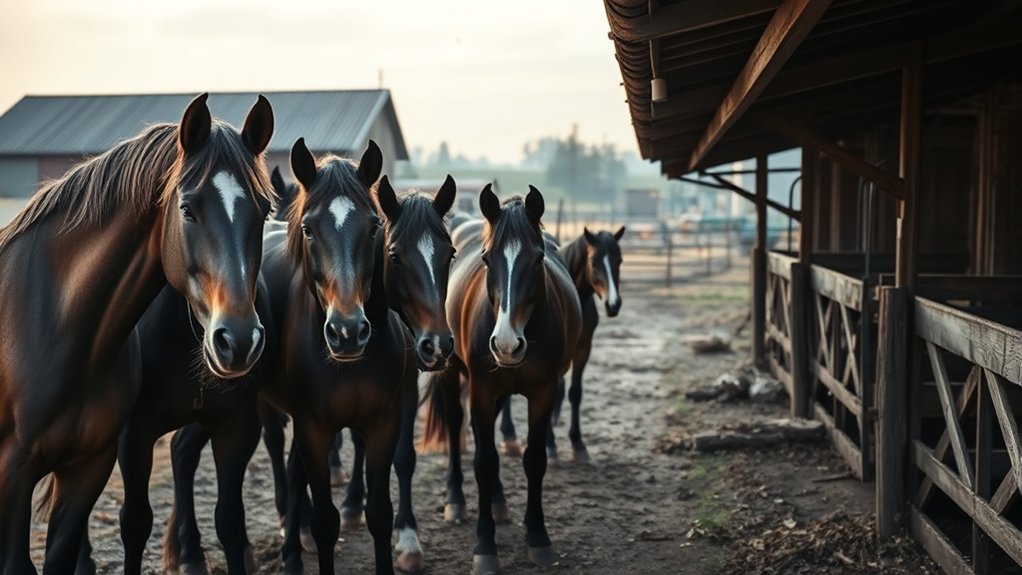
Although horse slaughter is a controversial practice, it involves killing horses for meat through legal or illegal means, often under harsh conditions. Horses are usually bought at auctions and then transported long distances in overcrowded trucks. During this journey, many suffer injuries or even die.
Horse slaughter involves harsh conditions, including long transport in overcrowded trucks causing injury and death.
When they arrive, the slaughter process may include methods like captive bolt or multiple strikes, with some horses tragically hung while still conscious. USDA regulations require humane euthanasia and inspections, but violations still happen at certain facilities.
Despite bans in the U.S., horse slaughter continues abroad.
Around seven million horses are slaughtered worldwide each year. Understanding these facts helps you grasp why horse slaughter persists and why there’s an urgent need for compassion in addressing this issue.
How Horses Are Transported to Slaughter
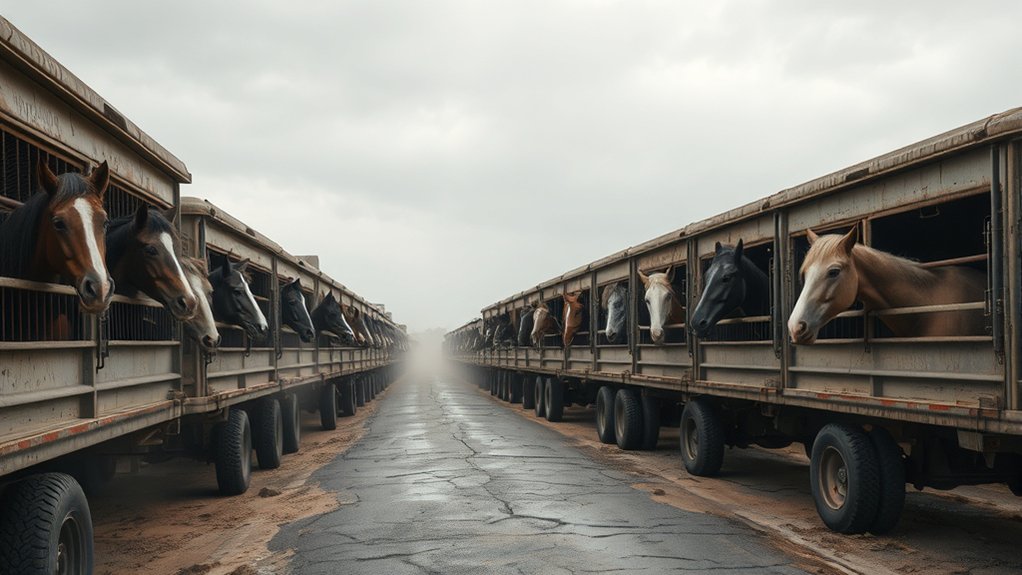
When horses are transported to slaughter, you’ll often find them packed tightly into trucks or trains. Sometimes, they go days without enough food, water, or rest.
It’s important to know that many suffer injuries or extreme stress because of poor conditions and rough handling. Even though there are regulations meant to protect them, those rules are often ignored.
Unfortunately, this leaves horses exhausted and harmed before they even reach the slaughterhouse.
Transport Conditions Reality
Because horses rely heavily on their natural flight instinct, transporting them to slaughter poses significant challenges that often result in distress and injury. You should know that many horses are crammed into overcrowded cattle trucks or trains, sometimes traveling for days without food or water.
During these journeys, they frequently suffer broken bones, lacerations, and other injuries caused by rough handling and inadequate facilities. Even though agencies like the DOT and USDA have regulations to guarantee humane transport, violations happen regularly and often go unpunished.
Tragically, many horses die in transit from dehydration, exhaustion, or untreated injuries. Understanding these harsh realities is vital because it highlights the serious welfare concerns horses face long before reaching slaughterhouses.
This really shows why we need better oversight and care during transport.
Animal Welfare During Transit
Transporting horses to slaughterhouses involves harsh realities that many people don’t fully realize. You should know that horses are often crammed into overcrowded cattle trucks or trains, sometimes traveling for days without food or water. This leads to exhaustion, dehydration, and injuries.
Many horses don’t survive the journey, succumbing to the brutal conditions or trauma from rough handling. You’ll find that horses are sometimes dragged or improperly loaded, causing additional stress and physical harm.
Despite regulations meant to protect them, these are frequently ignored, worsening their suffering.
Horses’ natural flight instinct also makes calm, humane handling during loading difficult, increasing their distress. Understanding these facts highlights the urgent need for greater compassion and improved practices during transit.
It’s really important we pay attention to this and push for better treatment.
Regulatory Compliance Challenges
Although regulations exist to protect horses during transit to slaughterhouses, compliance often falls short, putting these animals at serious risk. You’ll find horses crammed into overcrowded trucks or trains, sometimes traveling for days without food or water. These harsh conditions cause injuries, exhaustion, and dehydration.
Despite laws by the DOT and USDA, shipments often exceed legal time limits and ignore humane handling requirements. Enforcement is weak, leaving horses vulnerable throughout their journey.
| Issue | Impact |
|---|---|
| Overcrowding | Injuries, stress |
| Extended travel times | Exhaustion, dehydration |
| Multiple loading events | Increased stress, harm |
| Weak enforcement | Frequent regulation violations |
| Poor arrival condition | Compromised welfare |
You deserve to know the harsh realities horses face during transport.
How Horse Slaughter Works and Is Regulated
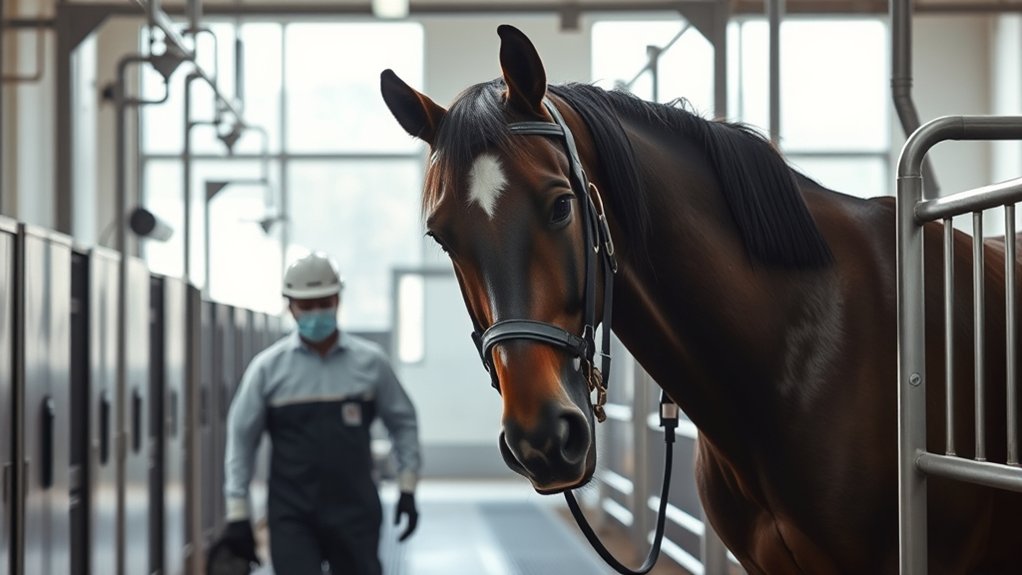
When horses arrive at slaughterhouses, they go through a process meant to make them unconscious quickly and as humanely as possible. This is usually done using captive bolt stunning or chemical sedation.
You should know that USDA veterinarians keep a close eye on this part to make sure the horses are actually brain dead before anything else happens.
Even though there are rules in place to stop mistreatment, inspections are still really important because violations can and do occur.
Slaughter Process Overview
How exactly does the horse slaughter process work, and what regulations are in place to oversee it? Horses are transported in overcrowded conditions, often for days without food or water. This can lead to injuries and even deaths during transit.
At slaughterhouses, they’re dragged from trucks and hung alive, sometimes while still conscious. Methods like bashing their heads or multiple strikes are used to render them unconscious.
The USDA regulates the process, with veterinarians supervising euthanasia to confirm horses are brain dead before processing begins. Laws mandate humane treatment during transport and slaughter, and inspectors can halt operations if standards aren’t met.
Despite these measures, horses can remain conscious for several minutes.
Unfortunately, inhumane or illegal practices still occur, raising serious animal welfare concerns you should be aware of.
Regulatory Oversight
Because horse slaughter raises significant animal welfare concerns, regulatory oversight plays a crucial role in monitoring every step of the process. The USDA and AVMA set strict standards to guarantee humane euthanasia, with veterinarians supervising methods like captive bolt stunning. Inspectors can halt processing if guidelines aren’t met.
They also check for illegal drug residues and stolen horses to prevent abuse and criminal activity. However, you should know that despite these rules, violations happen. Horses often endure overcrowded, stressful transport conditions, breaching DOT and USDA regulations.
Reports of prolonged suffering, improper handling, and chemical contamination raise questions about enforcement effectiveness. While regulations exist to protect horses, gaps remain that you must be aware of when understanding the realities of horse slaughter.
Debunking Common Myths About Horse Slaughter
Although many people believe horse slaughter involves systemic cruelty, the truth is that USDA and AVMA-approved methods guarantee humane euthanasia in licensed facilities.
You might’ve seen videos claiming abuse, but most come from outside the U.S. and don’t reflect the strict regulations here. Licensed plants operate under constant inspection to prevent mistreatment and theft, and there’s no evidence of widespread abuse in these facilities.
You can trust that horses aren’t slaughtered while conscious. USDA supervision ensures they’re brain dead before processing begins.
Misinformation often fuels myths about cruelty, but regulated horse slaughter prioritizes animal welfare, ensuring the process is humane and controlled.
Understanding these facts helps you see beyond common misconceptions. It’s important to look at the facts and not just what you might hear or see online.
When you do, it’s clear that the system is designed to protect the animals and make sure everything is done properly.
How Horse Slaughter Bans Affect Owners and Horses
When horse slaughter bans took effect in the U.S., many owners found themselves facing tough decisions without legal, humane options for end-of-life care. You might struggle with increased costs and decreased horse values, making it harder to cover expenses.
Without a legal way to responsibly dispose of unwanted horses, some owners resort to illegal slaughter or abandonment, which raises concerns about neglect and abuse.
Local governments and rescue groups also feel the strain, managing more neglected horses with limited resources. These bans, while well-intentioned, have unintentionally led to more horses suffering due to lack of affordable end-of-life solutions.
Understanding these challenges is essential to addressing the complex realities horse owners face under current regulations.
Humane Alternatives to Horse Slaughter
Facing the challenges created by horse slaughter bans means exploring humane options that respect both the animal’s welfare and the owner’s circumstances. You can turn to responsible euthanasia performed by licensed veterinarians using USDA-approved methods to guarantee a painless, dignified death.
Exploring humane options ensures a painless, dignified death while respecting both horse welfare and owner needs.
State-regulated processing facilities accepting horses for humane destruction reduce suffering linked to transport and poor handling.
Adoption programs run by rescue groups and breed associations offer another path, finding permanent homes without slaughter.
It’s essential to educate yourself on end-of-life planning and the real costs of caring for aging or unrideable horses to manage them responsibly.
Additionally, supporting affordable, humane euthanasia services provides a practical, ethical option when long-term care isn’t possible.
These alternatives prioritize compassion while addressing owners’ needs effectively.
Frequently Asked Questions
What Are the Long-Term Environmental Impacts of Horse Slaughter?
You’ll see long-term environmental impacts like soil and water contamination from blood, tissues, and chemical residues. These pollutants harm ecosystems, spread disease, and worsen ecological balance.
This is especially true when combined with emissions from transportation and waste processing. The effects add up over time, making the problem even bigger. It’s definitely something to keep in mind when thinking about horse slaughter.
How Does Horse Slaughter Affect Local Communities Economically?
You lose millions and jobs when horse slaughter stops, hurting rural economies. Property values drop, tax revenue falls, and managing unwanted horses becomes costly. These changes strain local services and disrupt livelihoods tied to the industry.
It’s a tough situation for the community. When the industry suffers, everyone feels the impact — from businesses to families depending on those jobs. Finding solutions that support both horses and people is really important.
Are There Psychological Effects on Workers in Horse Slaughterhouses?
Yes, you can experience psychological distress, including trauma, guilt, and compassion fatigue. Repeated exposure to animal suffering may lead you to feel depressed, anxious, or develop PTSD.
These effects can profoundly impact your mental health over time. It’s important to recognize these feelings and seek support if you need it. Taking care of your emotional well-being matters just as much as your physical health.
What Role Do International Trade Laws Play in Horse Meat Export?
You might think international trade laws are an endless maze, but they actually allow horse meat exports despite bans. These laws create loopholes letting countries profit while raising serious welfare and health concerns you can’t ignore.
It’s kind of surprising, right? On one hand, there are bans against horse meat, but on the other, trade laws make it possible to keep exporting. So, the debate gets pretty complicated with money and ethics tangled together.
How Can Consumers Identify if Horse Meat Is in Their Food?
You can spot horse meat by checking for unusual labels or off-brand packaging. Testing for equine DNA or banned drug residues like phenylbutazone helps. But staying vigilant about product sources protects your health and choices.
It’s a good idea to pay attention to where your food comes from. Sometimes, the packaging might not tell the whole story. So, being cautious can make a big difference.
Conclusion
You might think horse slaughter is a quick fix for unwanted animals, but the reality is far more complex. While horses face long transports and uncertain fates, the bans meant to protect them sometimes leave owners with no good options.
Ironically, what’s intended as humane often complicates care. Understanding the facts helps you see that compassion isn’t about shortcuts. It’s about finding better, kinder solutions for these noble creatures.