What Are Andalusian Horses Known For – Here’s the Answer
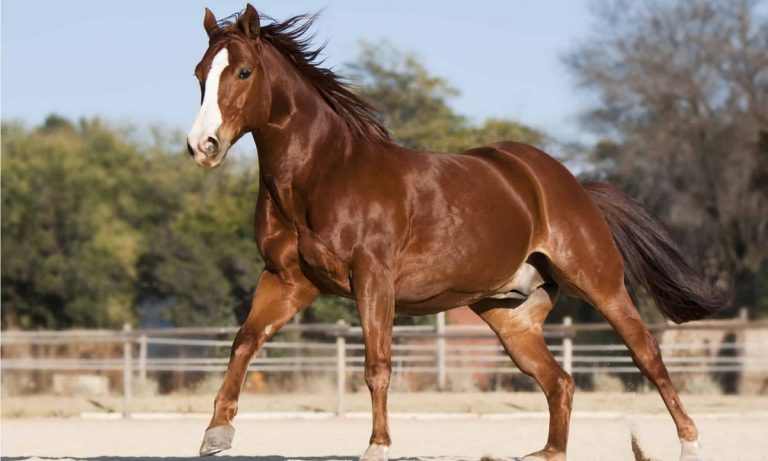
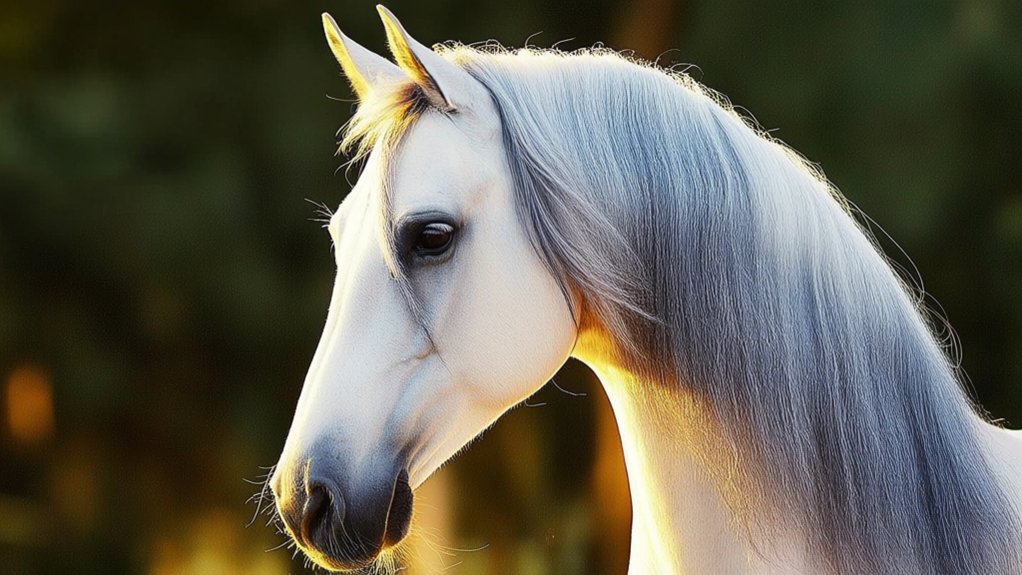
You know Andalusian horses for their striking appearance, with unique coat colors like grey, bay, and rare shades such as cremello. They combine fluid, powerful movement with elegant, muscular conformation and an expressive, arched neck.
Their noble, sensitive temperament makes them highly responsive and ideal for precise rider communication. They excel in classical dressage and cultural traditions.
That said, they’re also prone to metabolic and genetic health challenges you should manage carefully. Keep exploring to understand their full heritage and needs.
What Makes an Andalusian Horse’s Appearance Unique?
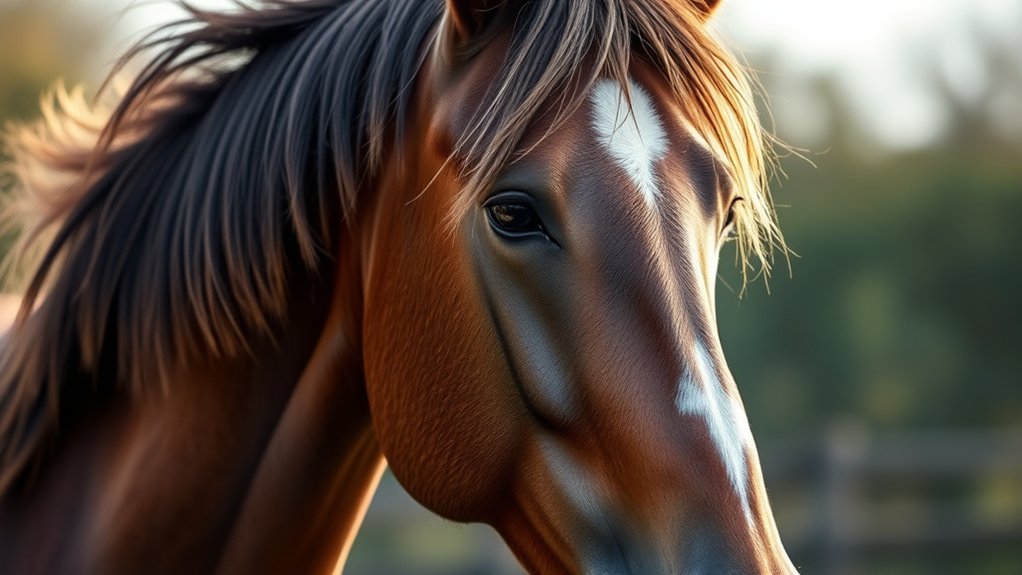
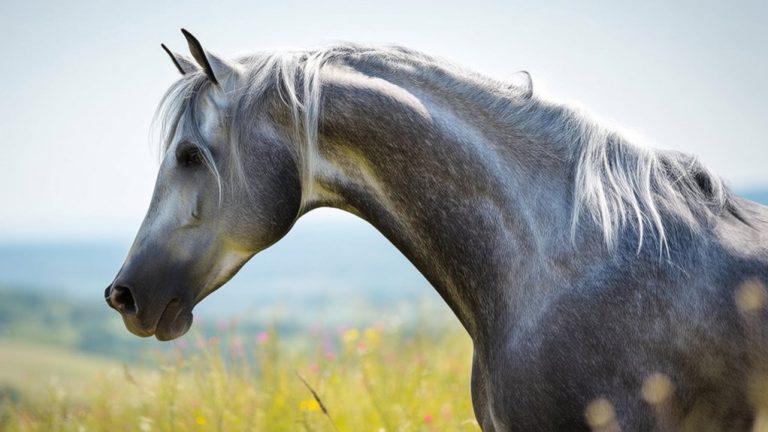
Although you might first notice their striking coat colors, commonly grey, bay, or black, Andalusian horses distinguish themselves through a combination of elegant physical traits. You’ll see a rectangular, lean head with a straight or slightly convex profile that sets the breed apart.
Their long, gracefully arched neck features a pronounced crest, especially in stallions, emphasizing their regal bearing.
When you examine their body, well-defined withers lead to a strong, muscular back and powerful hindquarters, all contributing to a noble silhouette. The rounded croup flows smoothly into a medium-length, low-set tail, balancing the overall form.
Their legs are proportionate and clean, lacking excessive bone, which aids in agility and refinement.
These precise characteristics create the unique Andalusian profile you can instantly recognize. It’s pretty easy to spot once you know what to look for!
How Do Andalusian Horses Show Strength and Elegance?
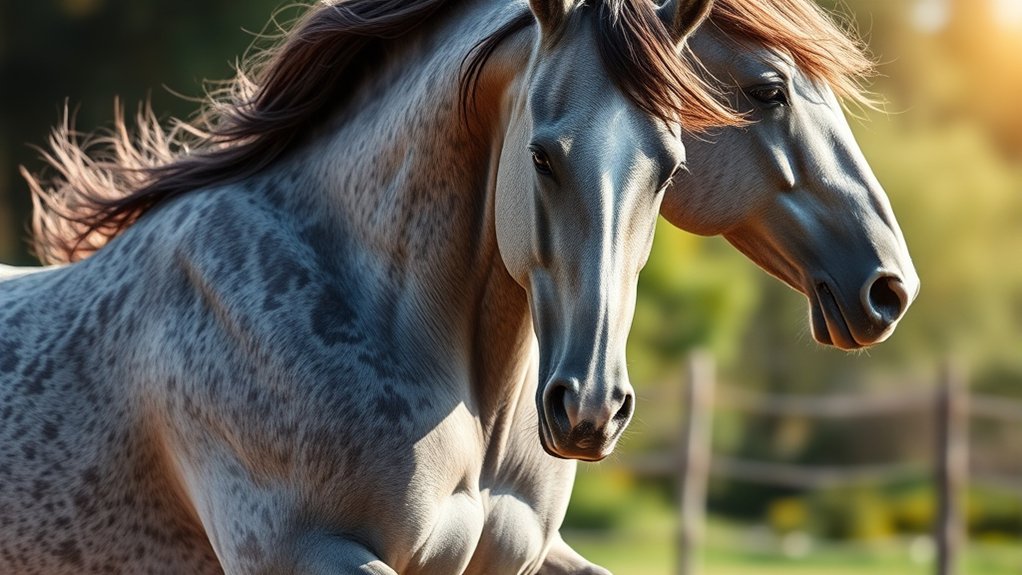
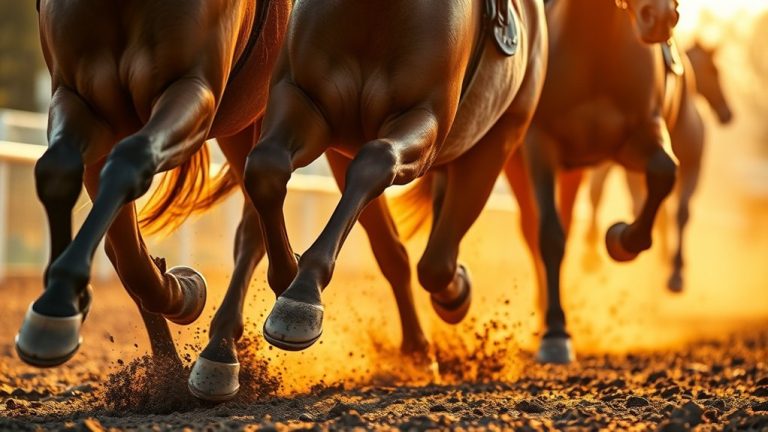
When you observe an Andalusian horse in motion, you’ll notice how its balanced conformation seamlessly blends strength with elegance. Its muscular build, particularly in the hindquarters and neck, provides powerful propulsion and stability essential for advanced disciplines like dressage.
The breed maintains an upright carriage paired with an expressive, refined head and proud stance, which projects natural nobility.
You’ll also see how the thick, flowing mane and tail accentuate its majestic silhouette. As it performs collected, precise movements, the horse demonstrates remarkable control and refined grace.
It effortlessly combines physical power with fluidity.
This harmonious synthesis of muscular strength and elegant poise defines the Andalusian’s distinctive presence. It’s what makes this breed admired for both athletic capability and aesthetic beauty.
Why Is Andalusian Horse Temperament Special for Riders?
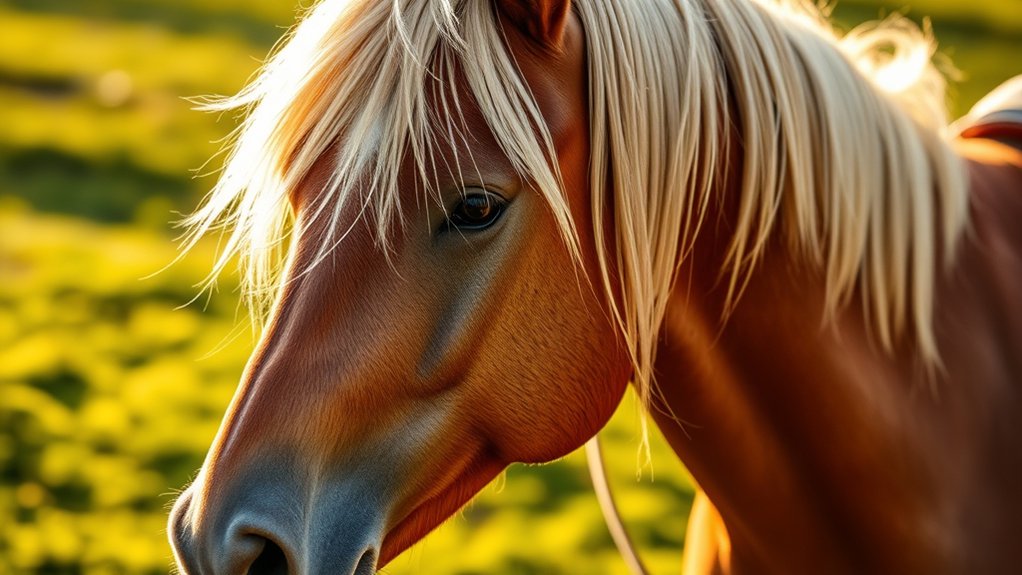
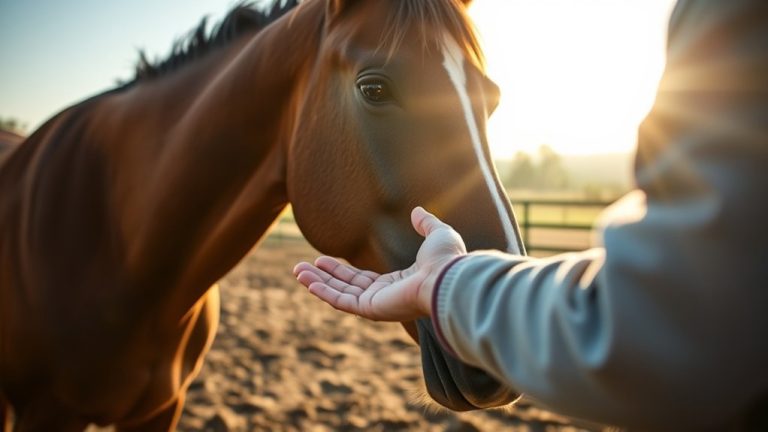
You’ll notice the Andalusian’s noble and sensitive nature creates a unique bond. They respond instantly to subtle cues, which is pretty amazing.
Their temperament has been finely tuned through selective breeding, making them highly trainable and eager to work with you. Because they’re so responsive, you can enjoy precise communication and real harmony every time you ride.
Noble And Sensitive Nature
Because Andalusian horses combine a noble, calm demeanor with a keen sensitivity, they respond instantly and accurately to subtle rider cues. You’ll find their temperament ideal for nuanced communication, making every movement purposeful and refined. This noble nature fosters trust, while their sensitivity guarantees they’re emotionally attuned and highly trainable.
| Attribute | Rider Benefit |
|---|---|
| Noble Disposition | Builds a trusting, respectful bond |
| Keen Sensitivity | Enables precise response to aids |
| Emotional Attunement | Enhances rider-horse communication |
When you ride an Andalusian, their gentle yet spirited personality offers a unique blend of calmness and alertness. This lets you execute complex riding techniques with finesse and confidence. It’s really something special to experience.
Responsive And Eager Work
What makes Andalusian horses stand out in disciplines requiring precision and finesse is their exceptional responsiveness paired with a keen willingness to work. Thanks to their noble, sensitive temperament, these horses react promptly and accurately to your aids, allowing seamless communication.
Their enthusiasm drives them to perform complex movements in classical dressage and other precision tasks with energetic commitment.
Selective breeding has refined their intelligence and willingness, making them adaptable partners whether you’re a novice or an experienced rider. This natural sensitivity and readiness to engage enable you to build trust and harmony, essential for high-level performance.
Ultimately, the Andalusian’s temperament ensures you get a responsive, versatile athlete motivated to meet the demands of competitive and traditional riding alike.
What Disciplines Do Andalusian Horses Excel In?
Although Andalusian horses possess a noble temperament and striking appearance, their true distinction lies in their diverse performance capabilities across multiple equestrian disciplines. You’ll find they excel in classical dressage, demonstrating natural collection, rhythmic, elegant movement, and heightened responsiveness.
Their agility and balance make them standout competitors in working equitation, where precise, controlled maneuvers are essential. In doma vaquera, Andalusians showcase versatility in traditional Spanish cattle herding, performing tasks with skill and composure.
Additionally, their well-proportioned conformation and grace shine in in-hand exhibitions, highlighting classical riding techniques. Beyond ridden work, their adaptability suits driving and carriage competitions, where their steady temperament and dynamic movement deliver impressive performances.
This multifaceted aptitude confirms why Andalusians remain highly valued across varied equestrian arenas.
How Do Andalusians Reflect Andalusia’s Cultural Heritage?
You’ll notice Andalusian horses play a central role in local festivals like Feria del Caballo. Their presence really symbolizes regional pride and a sense of historical continuity.
Plus, these horses aren’t just for show—they’re part of daily life through traditional equestrian practices that highlight Andalusia’s cultural artistry. Their elegant movements and careful training show just how deeply connected this breed is to the community’s heritage.
Symbolism In Local Festivals
When you witness Andalusian horses taking center stage in local festivals, you’re seeing more than just an equestrian display. You’re experiencing a vivid embodiment of the region’s cultural heritage. These horses symbolize Andalusian pride and history, showcased vividly in celebrations like Feria del Caballo.
Their elaborate decorations highlight traditional craftsmanship. At the same time, their presence in parades recalls ties to nobility and classical riding. It’s pretty amazing how much meaning these horses carry in every event.
Key festival symbolism includes:
- Feria del Caballo: Horses adorned with intricate tack and accessories demonstrate Andalusian artistry and cultural identity.
- Processions and parades: The horses reflect historical connections to warfare and classical equestrian disciplines.
- Saca de las Yeguas: This event honors the breed’s wild origins, emphasizing rural heritage and natural beauty.
Through these festivals, Andalusian horses serve as living emblems of the region’s history and values. They really bring the culture to life in a way words alone can’t.
Integration In Daily Life
Because Andalusian horses play a central role beyond festivals, you’ll find their influence woven deeply into daily life across the region. Their presence extends to equestrian schools like the Real Escuela Ecuestre de Jerez, where classical riding techniques, rooted in Andalusian heritage, are rigorously preserved and taught.
From an early age, local children, especially young girls, learn horsemanship and horse care. This helps embed equine skills into community practices.
These horses symbolize regional identity and are prominently featured in events such as Feria del Caballo and Saca de las Yeguas.
But you’ll also see them in everyday rural and urban settings. This continuous interaction reflects a cultural bond that goes beyond mere tradition.
Andalusians and their horses are living custodians of Andalusia’s equestrian legacy.
What Are the Most Common Coat Colors of Andalusian Horses?
Three primary coat colors dominate the Andalusian horse breed: grey, bay, and black. Grey is historically dominant, largely due to Carthusian lineage. Most Andalusians are born dark and gradually lighten, often developing a dappled pattern with age.
Bay and black also feature prominently but less so than grey.
Here’s a breakdown of the most common coat colors:
- Grey: Ranges from light to dark, exhibiting progressive lightening and dappling over time.
- Bay: A rich reddish-brown body with black mane, tail, and lower legs, showing genetic stability.
- Black: Uniformly black hair with no dilution, less frequent but genetically significant.
Other colors like chestnut, dun, buckskin, cremello, perlino, and pearl appear rarely. These reflect the breed’s diverse genetic heritage and selective breeding efforts.
What Health Issues and Challenges Affect Andalusian Horses?
Although Andalusian horses are celebrated for their strength and elegance, they face distinct health challenges linked to their genetics and metabolism. You should monitor them closely for cresty necks and obesity due to their easy-keeping metabolism, which predisposes them to metabolic syndrome.
They also have a hereditary tendency toward melanoma. These tumors grow slowly but require veterinary attention if you notice any changes.
Inbreeding within the closed population has reduced body size and increased susceptibility to genetic disorders.
Insulin dysregulation is common, making them prone to insulin resistance and related metabolic complications.
Regular dental, hoof, and parasite care is essential because their specific conformation and genetics can worsen related health problems. With vigilant management, you can help keep these issues under control effectively.
How Does Proper Nutrition Support Andalusian Horses?
When you provide Andalusian horses with a carefully balanced diet rich in forage and controlled calories, you directly support their elegant conformation while preventing obesity and metabolic disorders such as cresty neck and metabolic syndrome.
Proper nutrition maintains their signature body proportions and enhances mental responsiveness essential for dressage.
Proper nutrition supports the Andalusian’s classic physique and sharp mental focus vital for dressage success.
To guarantee ideal health, focus on tailoring nutrient supplementation with balanced vitamins, minerals, and amino acids to preserve cognitive function and performance.
Also, managing insulin sensitivity and hereditary melanoma risks through personalized feeding regimens is important.
Don’t forget to promote digestive health by ensuring consistent hydration and making gradual dietary adjustments that sustain their natural balance.
Frequently Asked Questions
How Long Is the Average Lifespan of an Andalusian Horse?
You can expect an Andalusian horse to live around 25 to 30 years on average. With excellent care, nutrition, and veterinary support, some may reach their early to mid-30s.
They really maximize their robust genetic potential when given the right environment. So, good care can make a noticeable difference in their lifespan.
What Is the History of Andalusian Horse Breeding Programs?
You’ll find Andalusian breeding programs began in the late 15th century, with a closed studbook established in 1912. The focus has always been on strict selection for appearance, temperament, and performance. This was done to preserve breed purity and maintain classical riding traits.
Breeders really wanted to keep the essence of the Andalusian horse intact. So, they set high standards and carefully chose which horses could be part of the program. This way, the breed’s unique qualities were protected over the centuries.
How Much Does an Andalusian Horse Typically Cost?
You’ll typically pay between $10,000 and $50,000 for an Andalusian horse, depending on age, training, and pedigree.
Show-quality or imported horses with prestigious lineage can exceed $100,000. That’s usually because of verified heritage and conformation. It’s pretty common for top-notch horses to command these higher prices.
Can Andalusian Horses Be Trained for Trail Riding?
Yes, you can train Andalusian horses for trail riding by focusing on their balance, responsiveness, and endurance. Their intelligence and calm temperament really help with this.
These traits let you develop precise cues for maneuvering diverse terrains. It makes riding confidently and safely much easier. Plus, with some patience, they adapt well to the challenges of trail riding.
What Are Common Grooming Practices for Andalusian Horses?
Like a sculptor shaping marble, you’ll brush their thick mane and tail. Picking hooves daily is important to prevent debris buildup. You’ll also want to use detangling sprays to keep their hair smooth.
Bathing with mild shampoos helps keep their coat clean and healthy. Don’t forget to inspect their skin carefully for any hereditary conditions. Regular grooming not only looks great but also keeps your Andalusian horse comfortable and happy.
Conclusion
When you think of Andalusian horses, you’re picturing a perfect blend of strength and grace. They come wrapped in a coat as vibrant as Andalusia’s heritage. Their unique build, noble temperament, and versatility make them stand out in any discipline.
Like a finely tuned instrument, their health and nutrition must be carefully maintained to guarantee peak performance. When you embrace these qualities, you’ll see why Andalusians truly are the crown jewels of the equine world.