Where Did Morgan Horses Originate – Roots
You’ll find the Morgan horse’s roots firmly in New England, especially Massachusetts and Vermont, where Justin Morgan’s foundation sire, Figure, emerged in the late 1700s. The breed developed to meet tough American needs, focusing on durability, versatility, and strength.
It was influenced by English bloodlines like Thoroughbreds and Arabians. Morgans adapted to rugged landscapes with a unique blend of power and elegance. If you explore further, you’ll uncover how these horses shaped American equestrian culture and identity.
Where the Morgan Horse Really Comes From
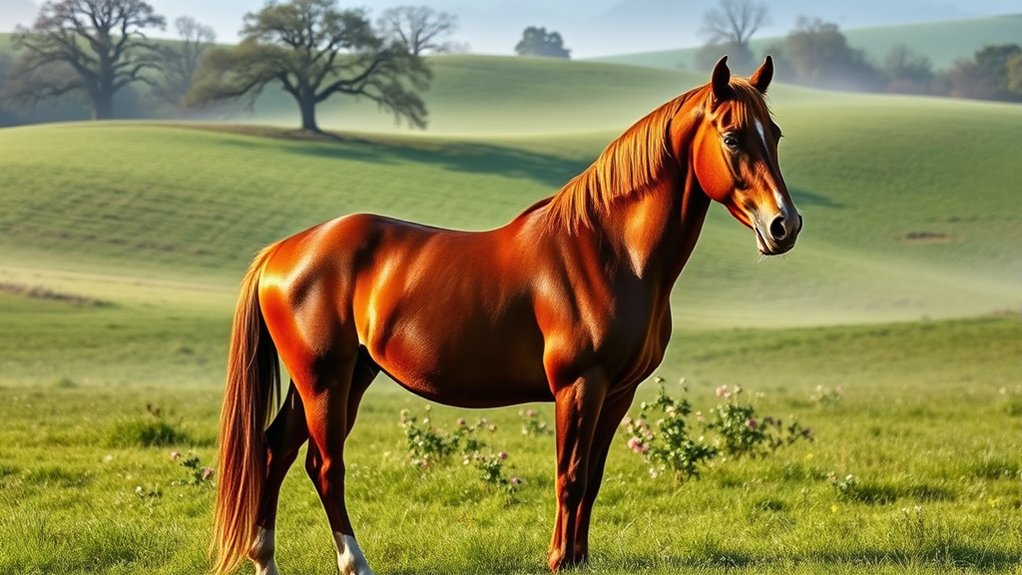
Although many might associate the Morgan horse with Kentucky, its true origins lie in New England, specifically Massachusetts and Vermont. You should know the breed traces back to a single foundation sire: Justin Morgan’s horse named Figure, born in Massachusetts in 1789.
This horse showed qualities early American breeders really valued, like strength, endurance, and versatility. These traits shaped the Morgan breed, which developed alongside evolving American horse breeding practices during the late 18th century.
While Kentucky later became prominent in horse culture, the Morgan horse’s roots firmly remain in New England’s rugged landscape. Understanding this origin helps clear up how the breed embodied the practical demands of early American life, rather than the showy associations some might assume from later regional developments.
It’s pretty interesting when you think about it!
Early Development of the Morgan Horse in America
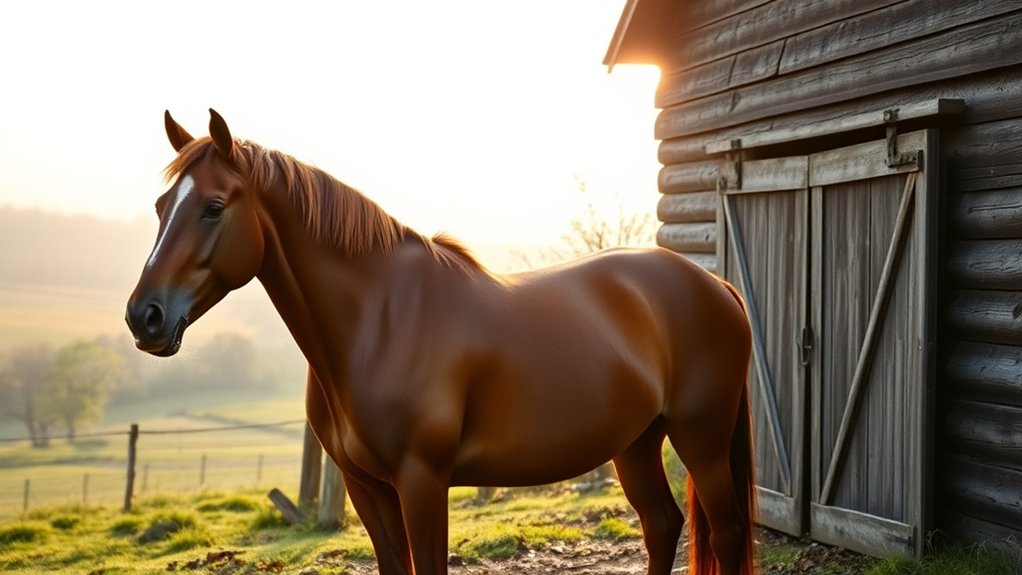
You’ll find that the Morgan horse’s early development began in Massachusetts. That’s where Justin Morgan’s bay colt, Figure, set the foundation for the breed’s strength and versatility.
His influence really shaped early American breeding practices, which focused on durability and elegance. When you understand this legacy, it helps explain why the Morgan remains such a uniquely American breed.
Origins In Massachusetts
When you explore the origins of the Morgan horse, you quickly find its roots firmly planted in Massachusetts during the late 18th century. The breed’s foundation sire, Figure, foaled in 1789, symbolizes this origin. Owned and bred by Justin Morgan, a Vermont schoolteacher, Figure became the cornerstone of the breed’s lineage.
Massachusetts served as the primary region where selective breeding focused on developing horses that were versatile, durable, and well-suited to early American needs. This selective refinement emphasized qualities like strength, endurance, and adaptability. These traits really defined the Morgan horse.
Understanding this regional development helps you appreciate how Massachusetts shaped the breed’s early identity. It also set standards that would influence its future evolution across America.
Justin Morgan’s Legacy
Since Justin Morgan’s colt Figure was born in 1789, his exceptional qualities have defined the foundation of the Morgan horse breed. As a schoolteacher in Vermont, Justin Morgan recognized Figure’s remarkable strength, endurance, and versatility. These traits remain central to Morgans today.
Figure’s influence shaped the breed’s early development, primarily in Massachusetts and Vermont, where these horses began to take form. You can trace much of the Morgan’s character and reputation back to this single sire.
The breed’s significance is underscored in the book “Justin Morgan Had a Horse,” which details Figure’s role in American equine history. Understanding Justin Morgan’s legacy helps you appreciate why Morgan horses are considered one of America’s oldest and most enduring breeds. They come directly from that original colt’s unique genetic makeup.
Early American Breeding
Figure’s remarkable qualities didn’t just define a single horse. They sparked a breeding movement that shaped an entirely new American breed. In early 19th-century Massachusetts, breeders focused on Figure’s traits to develop the Morgan horse.
You’ll find that Justin Morgan, the Vermont schoolteacher who owned Figure, was pivotal in promoting and guiding this selective breeding process. By carefully mating local workhorses, breeders emphasized endurance, strength, and a gentle temperament.
This created a horse well-suited to diverse tasks.
This methodical approach resulted in a versatile and durable breed that stood apart from others. When you study the Morgan’s early development, you see how American breeders crafted one of the nation’s first true horse breeds. It was rooted firmly in functionality and character.
Who Was Justin Morgan and Why He Matters
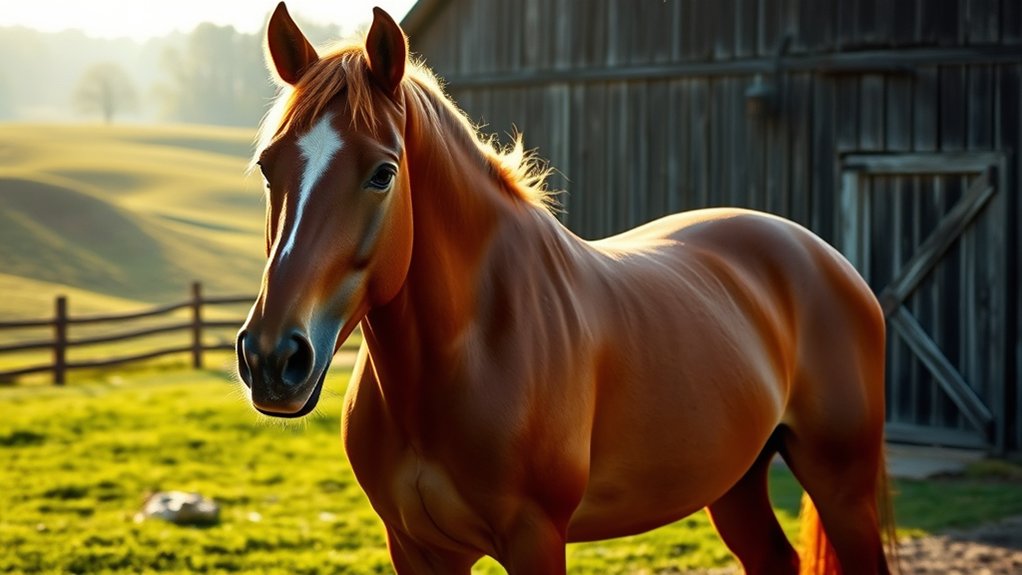
You can’t really understand Morgan horses without knowing about Justin Morgan. He wasn’t just a breeder; he was an innovator who created a lasting legacy.
His horse, Figure, became the benchmark for the breed’s strength, endurance, and temperament. Those qualities have influenced generations of Morgans.
When you look into Justin Morgan’s impact, it’s clear why this breed still holds such an important place in American equine history.
Justin Morgan’s Legacy
Although many equine breeds have storied origins, few can trace their beginnings to a single individual as clearly as the Morgan horse does to Justin Morgan.
Born in Vermont in 1789, Justin Morgan was a horse trainer and breeder who established the foundation for this enduring breed. His most famous horse, Figure, was a bay colt noted for remarkable strength, endurance, and intelligence, sired by a Thoroughbred stallion.
Justin Morgan’s careful breeding and training molded the traits that define the Morgan horse today: versatility, stamina, and a gentle temperament. His hands-on approach guaranteed consistent qualities that have stood the test of time.
By shaping these core characteristics, Justin Morgan left a tangible legacy. He secured the Morgan horse’s place as one of America’s oldest and most respected breeds.
It’s pretty amazing how one person’s dedication can have such a lasting impact, don’t you think?
Figure’s Breed Impact
Because Justin Morgan owned the small bay colt named Figure, who was born in 1789, the foundation for an entirely new horse breed was laid. Figure became the cornerstone of the Morgan horse breed, renowned for combining strength, endurance, and versatility.
His 32-year lifespan demonstrated remarkable durability, which you can see reflected in the breed today. When you study Figure’s impact, consider these key points:
- Figure’s lineage established the Morgan breed’s distinct American identity.
- His traits set a standard for strength and adaptability in horses.
- Justin Morgan’s careful breeding preserved and amplified these qualities.
Understanding Figure’s role helps you appreciate why the Morgan horse remains a symbol of resilience and versatility in equine history. It’s pretty amazing how one horse can have such a lasting influence, isn’t it?
English Horses That Influenced Morgan Horse Bloodlines
When examining the Morgan horse’s distinctive traits, it’s clear that English horses played an essential role in shaping its bloodlines. Early settlers brought Thoroughbreds, Arabians, English Jennets, and Andalusians. Each one contributed to the Morgan’s stamina, agility, and refined build.
These crosses enhanced the breed’s smooth gait, strong neck, and balanced conformation. That’s what makes Morgans so versatile and enduring.
| English Breed | Contribution | Impact on Morgan |
|---|---|---|
| Thoroughbred | Speed and stamina | Improved agility and endurance |
| Arabian | Refinement and gait | Enhanced smooth movement |
| English Jennet | Elegance and build | Developed graceful features |
| Andalusian | Strength and versatility | Balanced conformation |
Understanding these influences helps you appreciate the Morgan’s unique blend of power and grace.
Physical Traits and Natural Habitat of the Morgan Horse
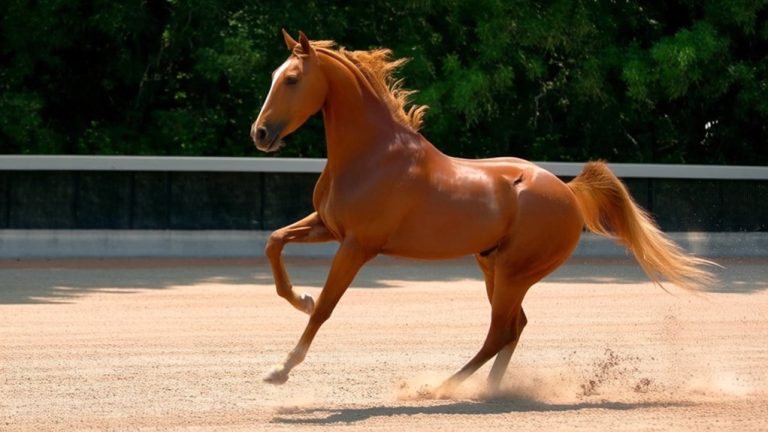
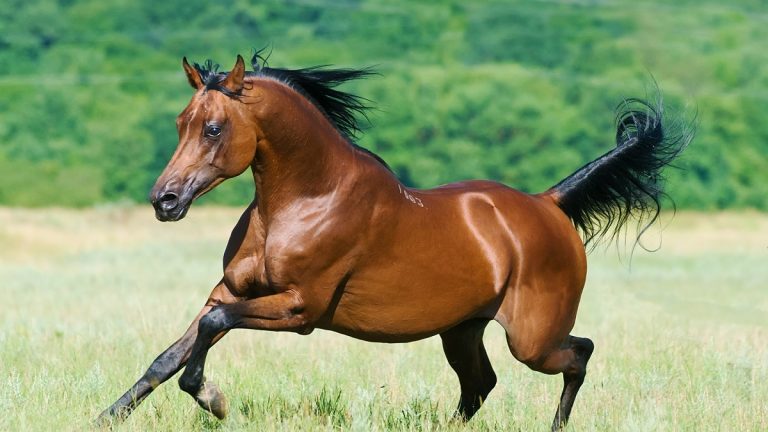
The English breeds that shaped the Morgan horse’s bloodlines have left a clear mark on its physical form and adaptability. When you observe a Morgan, you’ll notice its elegant, well-defined head and arched neck complement a compact, muscular body. Its size typically ranges between 14 and 15.2 hands high.
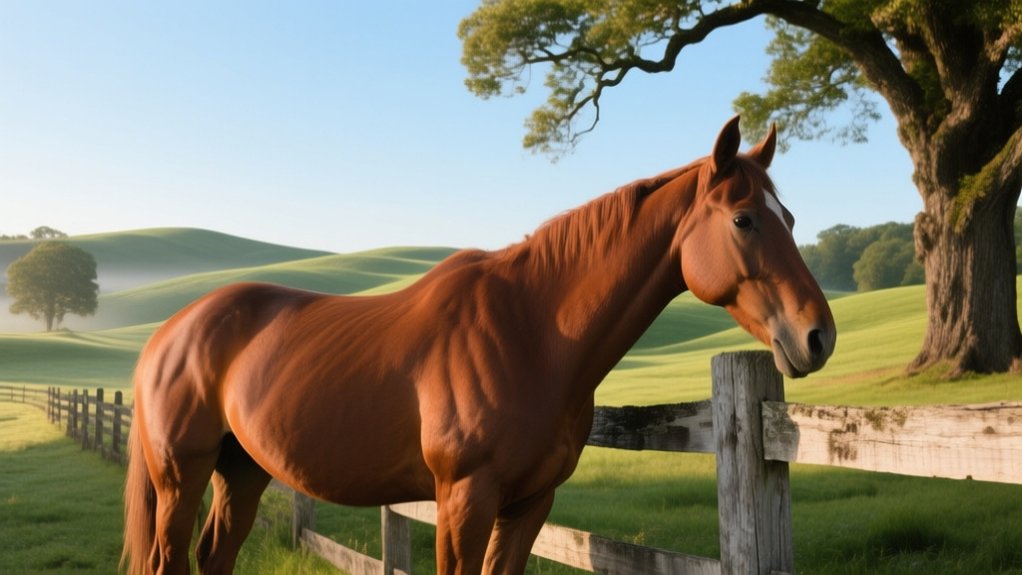
You’ll also encounter various coat colors like chestnut, black, and bay. Understanding its natural habitat helps explain its hardiness and versatility.
Historically, Morgans thrived in northeastern U.S. grasslands and open woodlands, especially in Massachusetts and Vermont. They adapted to diverse environments, reflecting their American origins. This adaptability is a big reason why they’re so versatile.
The Morgan exhibits a blend of strength, agility, and refined conformation, making it suited for multiple riding and working disciplines.
This combination of traits ensures the Morgan horse remains both elegant and resilient.
Kentucky’s Role in Morgan Horse History
Although Kentucky is widely celebrated for its horse culture, it didn’t play a direct role in the origin of the Morgan breed. The Morgans trace back to Massachusetts and Vermont in the late 18th century, where the foundational sire Figure, owned by Justin Morgan, was foaled in 1789.
Kentucky’s horse history is rich, but it centers on breeds like the Thoroughbred and Kentucky Mountain Horse, rather than Morgans.
While you’ll find Morgan horses in Kentucky today, they’re not native to the state and weren’t developed there. Understanding Kentucky’s role means recognizing it as a prominent equestrian hub without confusing it for the birthplace of the Morgan breed.
That honor remains tied to early American breeding efforts in New England.
How Morgan Horses Shaped American Equestrian Culture
Because Morgan horses combine strength, versatility, and a gentle temperament, they’ve become a cornerstone of American equestrian culture. You’ll see their influence across multiple facets of equine tradition.
First, their versatility allowed early settlers to rely on them for farming, transport, and riding, shaping rural and urban life.
Second, their strength and endurance made them ideal for both work and sport, setting standards for American riding horses.
Third, their calm disposition helped popularize recreational riding and horse shows, fostering community engagement.
The breed’s foundation, traced to Justin Morgan’s stallion Figure, underscores this lasting impact.
Today, celebrations like the Morgan Grand National & World Championship Horse Show highlight the breed’s ongoing cultural significance.
It really helps you appreciate the Morgan’s pivotal role in shaping American equestrianism.
Frequently Asked Questions
What Is the Average Lifespan of a Morgan Horse?
The average lifespan of a Morgan horse ranges from 25 to 30 years. With proper care, nutrition, and regular veterinary checkups, you can help your Morgan reach this upper lifespan limit.
Taking good care of your horse really makes a difference in their durability and overall health. It’s all about staying consistent with their routine and paying attention to their needs. This way, your Morgan can enjoy a long, happy life.
How Much Does a Morgan Horse Typically Cost?
You’ll typically pay between $3,000 and $7,000 for a Morgan horse. But show-quality or well-trained ones can easily exceed $10,000.
Prices vary based on a few things like age, training, bloodline, location, and breeder reputation. So, it really depends on what you’re looking for and where you buy.
Are Morgan Horses Good for Beginner Riders?
Morgan horses are like a steady lighthouse guiding beginners safely. You’ll find their calm temperament, smooth gait, and intelligence make them ideal for building your confidence.
They help you master various riding skills comfortably and securely. Riding a Morgan feels natural and reassuring, especially when you’re just starting out.
What Colors Do Morgan Horses Commonly Come In?
Morgan horses commonly come in bay, black, chestnut, and palomino. You’ll notice bay is most common, with its reddish-brown body and black mane. Black and chestnut can vary quite a bit.
Palomino really stands out with its golden coat. It’s a beautiful color that catches the eye. These colors give Morgan horses a lot of variety and charm.
How Do Morgan Horses Compare to Other American Breeds?
Unlike the muscular American Quarter Horse, you’ll find Morgans more refined and versatile. They excel in elegance and endurance, making them stand out.
You’ll appreciate their smooth gait and intelligence, which really sets them apart from rugged breeds like the Appaloosa or Kentucky Mountain Saddle Horse.
They bring a unique blend of grace and stamina that’s hard to match. It’s easy to see why Morgan horses have such a loyal following.
Conclusion
When you trace the Morgan horse’s roots, you uncover a story as rich and powerful as a thunderstorm. You’ll see how Justin Morgan’s legacy and English bloodlines forged a breed that shaped American equestrian culture.
From Kentucky’s rolling hills to your stables, these horses aren’t just animals; they’re living history. Understanding their origins helps you appreciate the strength, versatility, and spirit that make Morgans truly one of a kind.