Can Goats Eat Horse Feed?
You can feed goats small amounts of horse feed occasionally, but it shouldn’t replace their regular diet because horse feed lacks key nutrients goats need. Feeding too much risks digestive upset, such as bloating, diarrhea, and even toxicity from additives like rumensin.
Always introduce it slowly and monitor your goats closely. Since goats have different nutritional needs and stomachs than horses, understanding these differences helps you keep them healthy and safe. More details can help you feed smarter.
Can Goats Eat Horse Feed Safely? How Much Is Safe?
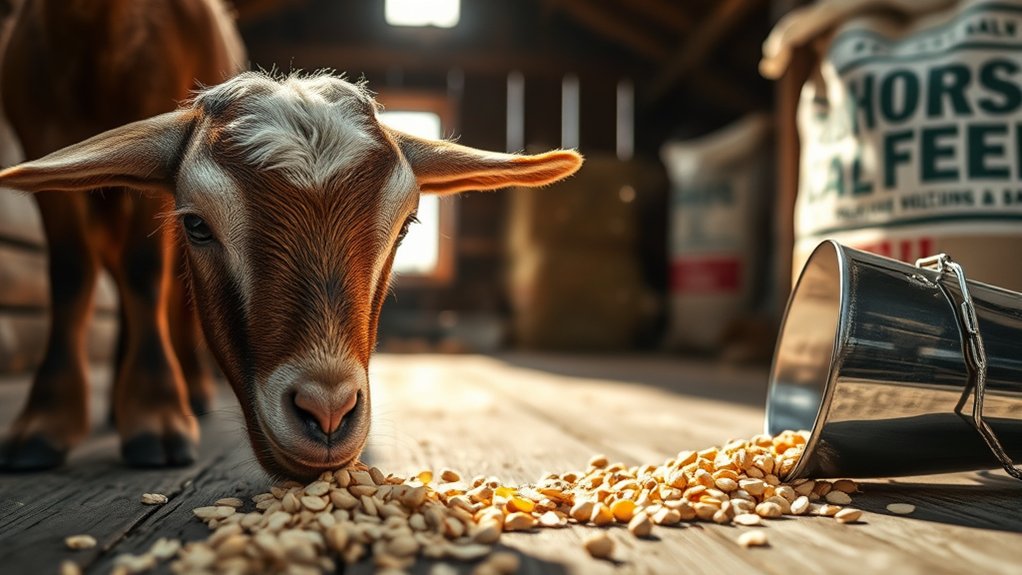
Although goats can safely eat small amounts of horse feed as an occasional treat, you shouldn’t rely on it as their main diet.
Horse feed often contains oats, corn, and added vitamins, which are generally safe in moderation, but it doesn’t provide all the essential nutrients goats need.
Feeding your goats more than a cup or two of horse feed at a time may cause digestive upset or nutritional imbalances.
You should monitor your goats closely for any signs of distress or health issues after they consume horse feed.
If you notice anything unusual, consult your veterinarian promptly.
The safest approach is to use horse feed as a supplement rather than a primary diet, keeping their total intake within safe limits to maintain their health and well-being.
How Is Horse Feed Different From Goat Feed?
When considering whether to feed your goats horse feed, it’s important to understand the key differences between horse and goat feed formulations. Horse feed is tailored to equine needs and differs markedly from goat feed, which is specially balanced for goats’ unique nutritional requirements.
Here are some key distinctions to keep in mind:
- Horse feed usually has lower protein and fat levels compared to goat feed.
- Goat feed contains higher copper levels essential for goats, while horse feed has less copper.
- The fiber sources in horse feed differ, reflecting horses’ digestive systems versus goats’.
- Horse feed may include additives like rumensin, which are harmful or toxic to goats.
Recognizing these differences helps you make safer, more informed decisions about feeding your goats.
Ingredients in Horse Feed That Affect Goats’ Health
You really need to pay close attention to what’s in horse feed before giving it to your goats. Some common ingredients, like high levels of copper, can actually be harmful to goats.
Plus, there are additives such as rumensin that might cause digestive problems.
Key Horse Feed Ingredients
Since horse feed contains a variety of ingredients designed to meet equine nutritional needs, you should understand how these components impact goats before offering it to them.
Horse feed ingredients like wheat middlings, soybean meal, and ground corn can be suitable for goats in moderation but may cause digestive issues if overfed.
Fiber sources such as beet pulp and rice bran add energy but may lack the ideal nutrient balance for goats.
Added minerals like copper and selenium benefit goats but require careful dosing to avoid toxicity.
Molasses enhances palatability but can increase sugar intake.
Key horse feed ingredients affecting goats include:
- Wheat middlings, soybean meal, ground corn
- Beet pulp and rice bran fiber sources
- Added minerals like copper and selenium
- Molasses as a sweetener and energy source
Potentially Harmful Additives
Although horse feed may seem like a convenient option, it often contains additives that pose significant risks to goats’ health. For example, rumensin is a common additive in horse feed that’s highly toxic to goats and can cause severe health problems.
Furthermore, some horse feeds have high copper levels, which can be harmful if goats consume too much. You should also watch out for medications, preservatives, and added flavorings or sweeteners, as these can lead to poisoning or disrupt your goats’ digestive systems.
Some supplements or vitamins included in horse feed may contain ingredients that goats don’t need or that might even harm them. Being aware of these additives helps you avoid feeding your goats anything that could compromise their well-being.
Why Goats Need Different Nutrition Than Horses
You need to understand that goats have different nutritional requirements than horses because of their unique digestive systems and metabolism. See, goats are ruminants, which means they digest food differently.
They actually require higher protein, certain minerals like copper, and more fiber to keep their digestion running smoothly.
Feeding them horse feed isn’t a great idea since it’s designed specifically for horses, not goats, and that can lead to imbalances.
Nutritional Differences Explained
Because goats have different metabolic and digestive needs than horses, their nutritional requirements vary profoundly. Understanding these nutritional differences helps you provide the right diet for goats instead of relying on horse feed.
Goats need higher copper and lower zinc levels, which horse feed often lacks. Their energy and protein needs lean toward forage-based diets with specific nutrient ratios. Ingredients common in horse feed, like molasses and ground grains, can be harmful in excess for goats.
Key nutritional differences include:
- Higher copper and lower zinc requirements for goats
- Forage-focused diet versus grain-heavy horse feed
- Sensitivity to additives like molasses in horse feed
- Need for mineral balances suited to goats, not horses
You should avoid feeding goats horse feed to meet their unique nutritional needs properly.
Digestive System Variations
How do goats digest such a wide variety of plant materials compared to horses? The answer lies in their unique digestive system. Goats have a complex stomach with three chambers, the rumen, reticulum, and abomasum, that work together to break down fibrous and diverse plant matter efficiently.
In contrast, horses rely mainly on a large cecum for fermentation and primarily consume grasses.
Goats are browsers, able to digest leaves, shrubs, and woody plants that horses can’t process well.
This digestive system variation means goats need different nutrients, like higher copper levels, to support their fermentation processes.
Understanding these digestive system differences is essential because feeding goats horse feed won’t meet their specific dietary needs or support their unique digestion effectively.
Risks of Feeding Too Much Horse Feed to Goats
While horse feed might seem like a convenient option, feeding too much to your goats can cause serious health problems. The risks associated with overfeeding horse feed to goats stem from ingredient imbalances and nutrient mismatches.
Excessive intake can lead to digestive issues such as bloating, diarrhea, or colic. Furthermore, goats are particularly sensitive to certain nutrients in horse feed, like copper, which can reach toxic levels if consumed in large amounts.
Overfeeding may also cause obesity and related metabolic disorders. Key risks include:
- Digestive disturbances like ruminal acidosis
- Nutrient toxicity, especially from copper
- Obesity and metabolic complications
- Deficiencies caused by lack of goat-specific nutrients
To protect your goats’ health, avoid feeding them too much horse feed.
How to Introduce Horse Feed to Goats Gradually
When introducing horse feed to your goats, start with small amounts like a few tablespoons and closely monitor their response. Mix a small portion of horse feed into their regular diet and gradually increase the ratio over several days. This helps prevent digestive upset.
Watch for signs of discomfort, bloating, or diarrhea, and guarantee fresh water is always available to aid digestion.
| Day | Horse Feed Portion | Notes |
|---|---|---|
| 1-2 | Few tablespoons | Monitor for adverse signs |
| 3-5 | Increase slightly | Continue observing goats |
| 6+ | Moderate portion | Adjust based on response |
Always consult a veterinarian if any negative reactions occur or if you plan to introduce horse feed regularly to your goats’ diet.
How to Safely Supplement Goats’ Diet With Horse Feed
If you want to safely supplement your goats’ diet with horse feed, start by offering only small amounts, about a cup or two at a time, to avoid digestive upset. Gradually introduce the feed and monitor your goats closely for any signs of discomfort.
Remember, horse feed should only supplement, not replace, their regular diet. Always check the ingredients to verify the feed doesn’t contain harmful additives like rumensin, which is toxic to goats.
To safely supplement your goats’ diet with horse feed, keep in mind:
- Use horse feed as an occasional supplement, not a primary food source
- Balance with goat-specific forage and minerals
- Avoid feeds with toxic additives such as rumensin
- Consult a veterinarian before introducing horse feed
This approach helps ensure your goats stay healthy and well-nourished.
Signs Your Goat Has Digestive Upset From Horse Feed
Since goats have sensitive digestive systems, feeding them horse feed can sometimes cause digestive upset. You might notice early signs like lethargy and a reduced appetite, indicating your goat’s gastrointestinal distress.
Goats’ sensitive digestion means horse feed may cause lethargy and loss of appetite early on.
Diarrhea, bloating, and visible abdominal swelling are common symptoms of digestive upset from improper feed digestion. Watch for colic signs such as pawing, restlessness, or teeth grinding, which signal severe digestive pain.
These symptoms suggest gas buildup or discomfort that shouldn’t be ignored. If your goat’s condition worsens or symptoms persist, seek immediate veterinary help to prevent serious complications like dehydration or intestinal blockages.
Recognizing these signs early is *essential* for protecting your goat’s health when horse feed enters their diet.
What to Do If Your Goat Eats Too Much Horse Feed
Although goats may occasionally nibble on horse feed, consuming too much can quickly lead to digestive issues that require your immediate attention. If your goat overeats horse feed, take prompt action to prevent complications.
Here’s what to do:
- Remove access to horse feed immediately to stop further intake.
- Provide plenty of fresh water and hay to help dilute the feed and support digestion.
- Monitor your goat closely for signs like diarrhea, bloating, or lethargy.
- Contact your veterinarian if symptoms worsen or persist beyond a few hours, especially if colic or severe bloating occurs.
Avoid giving any additional feed or treats until your goat fully recovers and a professional has evaluated its condition.
Quick intervention helps minimize health risks related to improper feed consumption.
Alternatives to Horse Feed for Supplementing Goat Diets
You can go for goat-specific feeds like Purina Noble Goat or Dumor Pelleted to make sure your goats get the right balance of nutrients. These are designed specifically with goats in mind, so they cover their dietary needs well.
At the same time, natural forage options like alfalfa hay or Bermuda grass are great because they provide essential fiber and protein.
Mixing these natural options with the right mineral supplements tailored for goats is a smart way to safely meet their unique dietary needs.
Goat-Specific Feed Options
When selecting feed for your goats, opting for goat-specific options like Purina Noble Goat or Dumor Pelleted guarantees they receive the right balance of protein, minerals, and vitamins tailored to their needs.
Goats would benefit from these feeds because they’re formulated to prevent common deficiencies and health issues linked to improper nutrition.
Consider these advantages of goat-specific feeds:
- Balanced amino acids, vitamins, and minerals designed for goats
- Alfalfa pellets supplying essential calcium and protein
- Specialized supplements for pregnant or lactating does and young kids
- Reduced risk of nutrient imbalances compared to horse feed
Natural Forage Alternatives
While goat-specific feeds offer a balanced nutrient profile tailored to their needs, incorporating natural forage alternatives can enhance your goats’ diet by providing fiber and a variety of vitamins and minerals. Natural forage such as fresh pasture, hay, leaves, and shrubs reduces reliance on commercial feeds while supporting digestive health.
Leguminous plants like clover and alfalfa supply high protein and calcium, essential for growth and bone strength. Browsing woody plants, including blackberry and raspberry bushes, introduces dietary variety rich in nutrients.
Integrating native grasses and wild plants further supplements nutrition and helps lower feed costs.
Employ rotational grazing and diverse forage planting to ensure your goats receive balanced nutrients naturally, avoiding potential issues linked to processed horse feed and promoting overall herd health.
Frequently Asked Questions
Can Baby Goats Eat Horse Feed?
Yes, baby goats can eat horse feed occasionally, but you need to be cautious about feeding compatibility. Horse feed isn’t formulated for their delicate digestive systems, so it should never replace their specialized kid starter feed.
You must avoid large quantities and check for harmful additives like rumensin. To keep your baby goats healthy, focus on their primary diet of milk or kid feed, only offering horse feed as a rare treat in small amounts.
Does Horse Feed Affect Goat Milk Production?
You might be surprised to learn that goats need about 30% more copper than horses for ideal milk production. When you feed horse feed, its nutritional compatibility with goats falls short, especially in minerals like copper.
This mismatch can reduce both the quality and quantity of goat milk.
To maintain peak milk yield, you should provide feed that’s specifically balanced for goats rather than relying on horse feed alone.
Are There Specific Horse Feed Brands Safe for Goats?
Yes, certain horse feed brands offer brand compatibility for goats when chosen carefully. You’ll want to pick brands like Purina Strategy or Nutrena SafeChoice, as they contain ingredients generally safe for goats in moderation.
Always check the ingredient list for additives or medicated components like rumensin, which can be harmful.
Consulting a veterinarian guarantees you select a brand that suits your goats’ nutritional needs and avoids risks associated with incompatible horse feeds.
Can Goats With Allergies Eat Horse Feed?
About 15% of goats experience allergy risks when exposed to unfamiliar feed ingredients. You shouldn’t feed horse feed to goats with allergies without vet approval, as it often contains molasses, soy, or additives that trigger reactions.
These allergy risks can worsen symptoms like itching or digestive upset.
You’ll need to identify the specific allergen first and consult your vet to confirm your goat’s safety before offering horse feed.
How Often Can Goats Have Horse Feed Treats?
You should limit giving your goats horse feed treats to once or twice a week to avoid nutritional risks. Feeding them more often can cause imbalances and digestive problems.
Keep treats small, just a cup or two, and never replace their regular forage.
Always watch for any signs of discomfort after treats, and adjust accordingly.
This way, you’ll keep your goats healthy while minimizing potential nutritional risks.
Conclusion
Feeding your goat horse feed is like mixing oil and water. It’s not a perfect blend. While small amounts might be safe occasionally, horse feed doesn’t meet goats’ unique nutritional needs and can cause digestive upset if overused.
Always prioritize goat-specific feed and use horse feed only as a careful supplement. Keep a close eye on your goat’s health. If any issues arise, consult your vet promptly to keep your herd thriving.