What Are Andalusian Horses Used For – What to Know
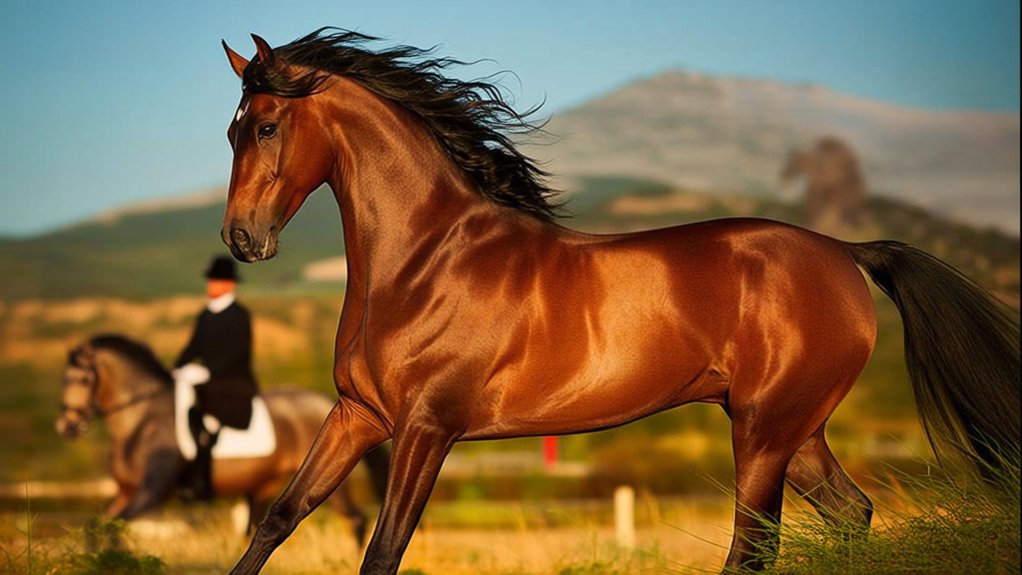
You’ll find Andalusian horses excel in classical dressage, thanks to their agility, strength, and expressive gaits. Their intelligent, responsive nature also makes them ideal for bullfighting, pleasure riding, driving, jumping, and traditional festivals.
They adapt well to working equitation and vaquera riding due to their balance and trainability. Their noble presence enhances cultural events and tourism experiences.
If you want a deeper understanding of their versatility and specialized training, there’s much more to uncover. It’s really fascinating how these horses fit into so many different activities!
What Makes Andalusian Horses Ideal for Classical Dressage
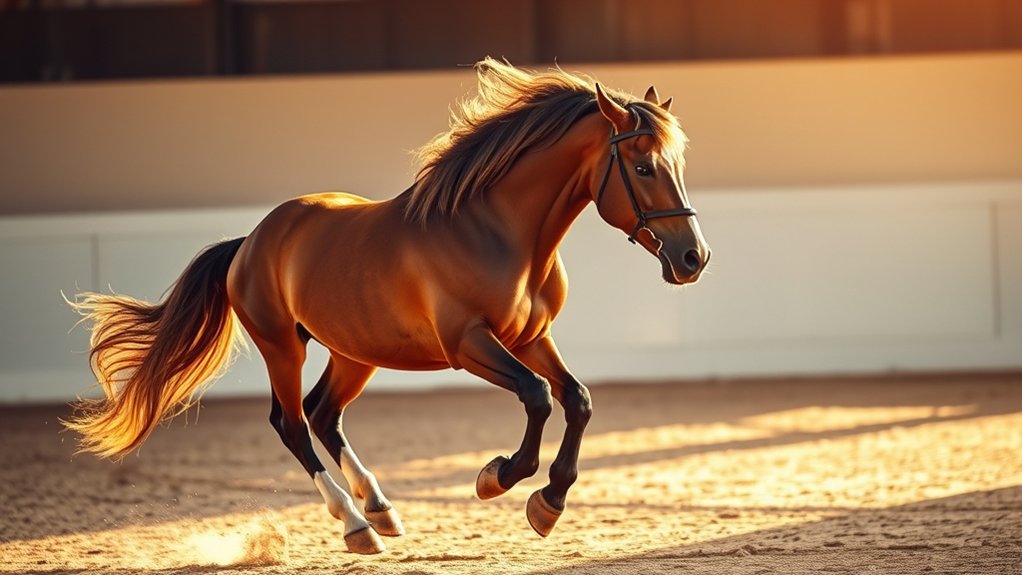
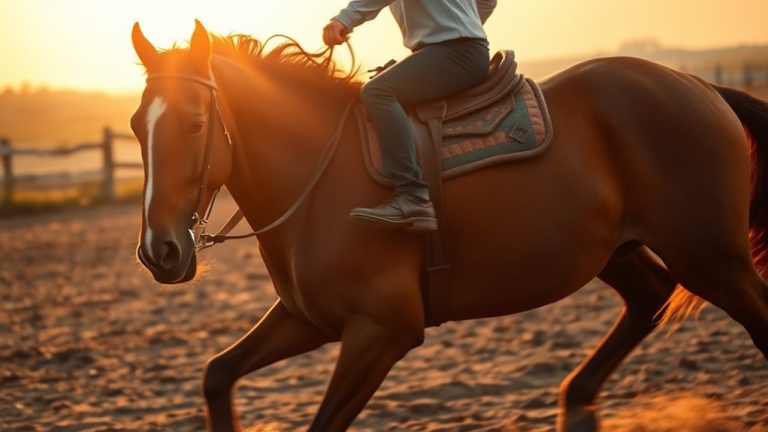
Because Andalusian horses combine expressive, high-stepping gaits with a strong, muscular build, they excel in classical dressage.
Andalusian horses’ powerful build and elegant, high-stepping gaits make them exceptional in classical dressage.
You’ll notice their collected trot and fluid movements are supported by natural flexibility and a well-arched neck, essential for executing precise dressage maneuvers.
Their muscular frame provides the balance and stability necessary during complex progressions and elevated steps.
You’ll also appreciate their intelligence and responsiveness, which enable quick adaptation to the rider’s cues, making training for intricate movements efficient.
Additionally, their noble appearance and graceful posture enhance the overall aesthetic, elevating the artistic presentation in competition.
When you work with an Andalusian, you benefit from a horse built both physically and mentally to meet the rigorous demands of classical dressage performance.
It’s a partnership where strength, elegance, and smarts all come together.
How Temperament Influences Andalusian Training and Performance
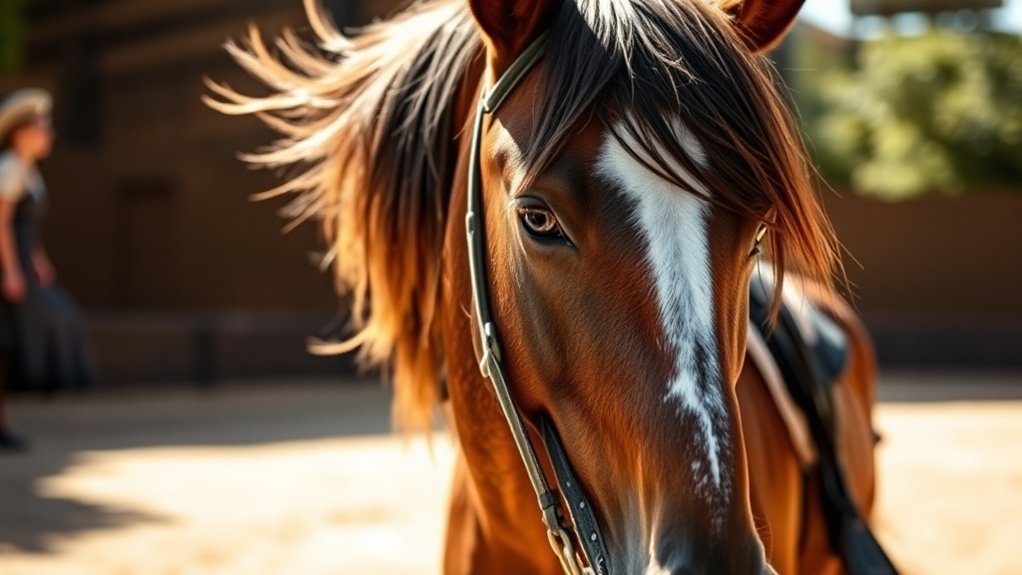
You’ll find that Andalusian horses are highly sensitive and responsive, which means they need careful, consistent training strategies that fit their individual temperaments.
Because of their noble nature, they usually respond best to positive reinforcement. But if they’re mishandled, they can get easily flustered.
Sensitivity And Responsiveness
When you handle an Andalusian horse, you quickly notice their heightened sensitivity and responsiveness to subtle rider cues. This trait makes them exceptional in disciplines like classical dressage, where precise communication is critical.
Their noble, spirited temperament means they react swiftly not only to commands but also to your emotional state. So, maintaining calm, consistent signals is essential.
Andalusians can become anxious or flustered if mishandled or subjected to harsh training, which undermines their performance. Their responsiveness varies with individual temperament and bloodline.
Some horses display a calmer demeanor, while others have more spirited energy.
Understanding and respecting this sensitivity allows you to build a deep, effective partnership. You can leverage their natural athleticism and intelligence without triggering stress or resistance.
It’s all about connection and trust.
Training Challenges And Strategies
Although Andalusian horses possess remarkable athleticism and intelligence, their sensitive and spirited temperament presents unique training challenges that require careful management. You’ll need to employ gentle, positive reinforcement techniques to build trust and confidence, as these horses respond quickly to rider cues.
Consistent, clear communication is essential to prevent confusion or anxiety during sessions. Be patient and maintain calm handling to avoid flustering the horse, especially given their tendency to become anxious if mishandled.
If you’re unbalanced or impatient, you risk undermining progress, so focus on gradual learning and mutual respect. Tailoring your approach to each horse’s individual temperament maximizes their natural talents while minimizing behavioral issues.
This way, you ensure effective training outcomes and ideal performance. It really pays off to adapt your methods and take things step by step.
Before you know it, you’ll see your horse thriving with confidence and skill.
Andalusians in Bullfighting Traditions
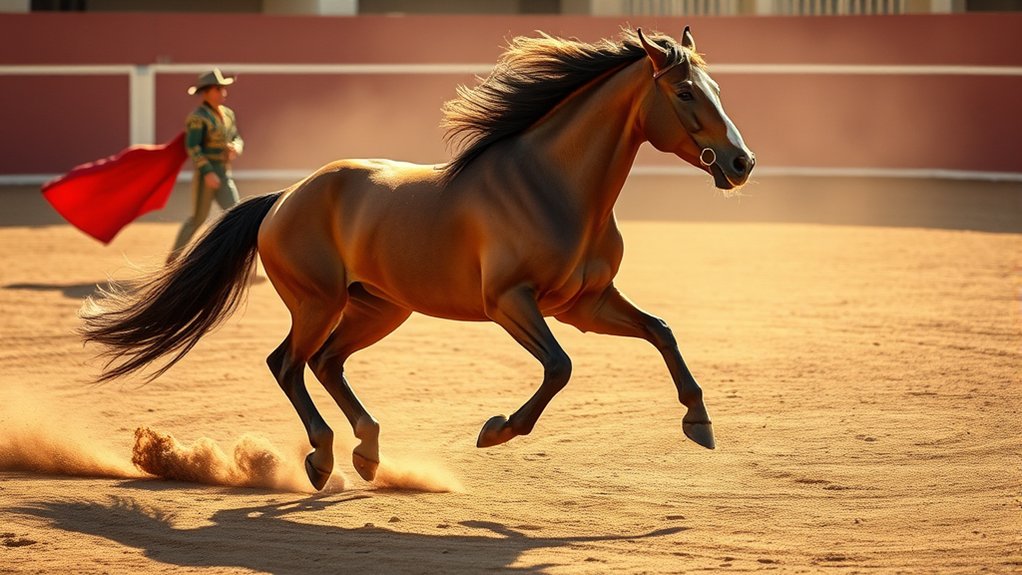
You’ll find Andalusian horses play a vital role in traditional Spanish bullfighting, especially in the rejoneo style. This is where they perform complex maneuvers right from horseback.
Their training really focuses on agility and composure because they need to handle both the bull and all the ceremonial parts of the event.
When you understand this specialized training, it becomes clear how these horses have maintained their iconic status in bullfighting traditions.
Role in Bullfighting
Because of their agility, elegance, and calm demeanor around bulls, Andalusian horses have played an essential role in bullfighting ceremonies for centuries.
You’ll find them trained as “toreros,” executing precise, controlled movements to divert or guide the bull during the event. Their natural bravery and high responsiveness enable them to perform safely in the unpredictable bullring environment.
When you see Andalusians in bullfighting parades, they’re adorned with elaborate harnesses and decorative elements, enhancing their majestic presence.
This disciplined behavior combined with their striking appearance not only supports the practical demands of bullfighting but also elevates the cultural and visual spectacle.
Understanding this role highlights the breed’s unique adaptation to one of Spain’s most traditional and technical equestrian practices.
It’s pretty amazing how these horses contribute so much more than just strength—they bring grace and tradition to the forefront.
Training for Ceremonies
When preparing Andalusian horses for bullfighting ceremonies, trainers focus on developing their agility and responsiveness to execute intricate, controlled movements with precision. You’ll need to condition the horse to respond instantly to subtle cues, ensuring flawless performance during complex routines.
Emphasizing balance and coordination is vital, as these horses must navigate sharp turns and sudden stops while maintaining an elegant posture. Their training also reinforces calmness under pressure, which is essential for the noisy, dynamic environment of bullfighting arenas.
Given their historical role as symbols of bravery and grace, you’ll highlight these traits through ceremonial drills and parade rehearsals.
Ultimately, your training regimen transforms the Andalusian into a noble participant that enhances the spectacle with both athleticism and dignified presence.
Role of Andalusians in Traditional Festivals
How do Andalusian horses contribute to the vibrancy of traditional Spanish festivals? They serve as central figures in events like Feria de Sevilla and El Rocío, participating in parades and religious processions that emphasize their agility and noble presence.
Andalusian horses shine at Feria de Sevilla and El Rocío, showcasing agility and noble grace in vibrant processions.
You’ll see them in bullfighting ceremonies, where their controlled movements highlight their training and heritage.
During Saca de las Yeguas, these horses blend horsemanship with cultural and religious significance, reinforcing local traditions.
In coastal areas like Sanlúcar de Barrameda, Andalusians take part in beach races, adding a dynamic element to summer festivities.
Their consistent involvement underscores their historical and cultural importance, making them essential to the visual and ceremonial fabric of Spanish festivals.
This role reflects both their physical capabilities and their emblematic status in Spanish heritage.
Why Andalusians Are Popular in Working Equitation and Vaquera Riding
Although mastering working equitation and vaquera riding demands exceptional agility and responsiveness, Andalusian horses consistently meet these requirements with ease. You’ll find their natural balance and flexibility vital for executing the precise maneuvers and maneuvering obstacles typical of these disciplines.
Their intelligence and trainability let you rely on them during traditional cattle herding and competitive vaquera events. Andalusians’ calm demeanor enhances rider communication, ensuring smooth execution in high-pressure situations.
Additionally, their elegant gait and striking appearance elevate the visual impact of performances, blending function with form. When you choose an Andalusian for working equitation or vaquera riding, you’re selecting a partner engineered for precision, agility, and reliability.
These qualities are essential for excelling in these demanding equestrian sports.
Why Andalusians Make Great Pleasure Riding and Hacking Horses
Because Andalusian horses combine smooth, elegant gaits with a versatile and responsive temperament, they excel as pleasure riding and hacking companions. You’ll appreciate their stable, balanced build that guarantees comfort and safety on extended trail rides.
Their intelligence fosters a strong rider-horse connection, boosting your confidence, even as a less experienced rider. Plus, their noble presence adds a cultural and visual enrichment to your riding experience.
| Attribute | Benefit |
|---|---|
| Smooth Gaits | Comfortable, elegant movement |
| Versatile Temperament | Adaptable to various riding levels |
| Responsive Nature | Enhances rider confidence |
| Strong Build | Provides stability and balance |
| Striking Appearance | Visually impressive and enriching |
This combination makes Andalusians ideal for relaxed pleasure riding and hacking.
Why Andalusians Make Great Driving and Carriage Horses
When you choose an Andalusian for driving and carriage work, you benefit from their combination of elegant movement and powerful, muscular build. This breed’s strong physique provides the stamina and strength necessary to pull carriages efficiently over long distances.
Their trainability and responsiveness allow you to execute precise cues, enhancing control and safety.
Andalusians excel in ceremonial and parade settings, where their noble appearance and graceful gait command attention.
Their calm demeanor and cooperative temperament make them reliable partners, minimizing stress during complex driving tasks.
Why Andalusians Excel in Jumping and Eventing
If you want a horse that combines agility with power, Andalusians stand out in jumping and eventing disciplines. Their powerful hindquarters and expressive gaits enable them to clear obstacles gracefully. You’ll appreciate their intelligence and responsiveness, which guarantee precise communication during complex courses.
Their stamina suits the demands of eventing, combining dressage, cross-country, and show jumping. Historically bred as warhorses, they possess innate athleticism ideal for these sports.
| Trait | Advantage in Jumping/Eventing | Impact on Performance |
|---|---|---|
| Powerful Build | Enhanced propulsion and lift | Clears high obstacles with ease |
| Intelligence | Quick learning and responsiveness | Precise rider-horse coordination |
| Stamina | Sustained energy over events | Maintains form throughout competition |
Experiencing Andalusian Horses: Cultural and Tourism Highlights
Although Andalusian horses are renowned for their athleticism, you can also experience their cultural importance firsthand through various events and venues across Andalusia.
At the Royal Andalusian School of Equestrian Art in Jerez, guided tours and performances demonstrate classical dressage techniques unique to the breed.
In Córdoba, the Royal Stables present horse dance shows synchronized with flamenco music, highlighting the horses’ integral role in regional culture.
Mijas offers horseback riding and horse-drawn carriage tours, combining tourism with equestrian heritage.
Sanlúcar de Barrameda hosts annual beach horse races, celebrating coastal equestrian traditions and attracting international visitors.
Additionally, the Saca de las Yeguas event in Doñana National Park showcases the management of wild horses during religious festivities, providing a distinctive cultural experience centered on Andalusian equine practices.
Frequently Asked Questions
What Is the Average Lifespan of an Andalusian Horse?
The average lifespan of an Andalusian horse ranges from 20 to 25 years. With proper care, including balanced nutrition and regular veterinary visits, you can often see them live into their late 20s or even early 30s.
It really depends on how well they’re looked after. A good diet and routine check-ups make a big difference. So, if you’re thinking about getting one, be ready to commit to their health and happiness for a long time!
How Much Grooming Do Andalusians Typically Require?
You might think daily grooming is excessive, but Andalusians need it to maintain their thick mane, tail, and coat. Regular brushing prevents tangles and promotes circulation.
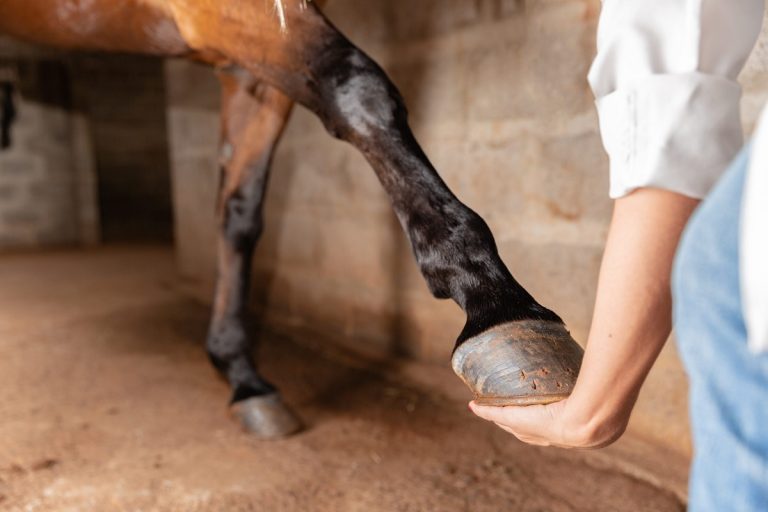
It’s also important to clean their hooves regularly. This helps avoid infections and lets you spot any injuries early on. Taking a little time each day really makes a difference!
Are Andalusian Horses Suitable for Beginner Riders?
Andalusian horses aren’t ideal for beginner riders due to their sensitive temperament and high intelligence. You’ll need experience and gentle handling to manage them safely. They can become easily flustered without proper training.
What Health Issues Are Common in Andalusian Horses?
You’ll often encounter metabolic issues like laminitis, small intestinal ischemia, and inguinal hernias in Andalusians. Regular dental, hoof, and musculoskeletal care helps prevent complications and guarantees they stay healthy and perform well.
It’s all about staying on top of their health with consistent check-ups. That way, any problems can be caught early and managed before they get serious. Taking good care of these areas really makes a difference in their overall wellbeing.
How Much Does an Andalusian Horse Usually Cost?
You’ll usually pay between $10,000 and $50,000 for an Andalusian horse, depending on age, training, and lineage.
Top-quality, well-trained horses can go for more than $100,000. This is especially true if they’re suited for competitive disciplines like dressage or show jumping.
Conclusion
Andalusian horses are your versatile partners, blending strength and grace like a finely tuned instrument. Their calm temperament and agility make them perfect for dressage, bullfighting, and traditional festivals. Whether you’re into working equitation, pleasure riding, or driving carriages, these horses adapt seamlessly.
Understanding their unique qualities guarantees you get the most from their talents, enriching both your riding experience and cultural appreciation. Andalusians truly embody equine excellence across disciplines. They’re not just horses; they’re a connection to history and art in motion.