Are Tennessee Walking Horses Good For Beginners – The Truth
Tennessee Walking Horses are an excellent choice for beginners because their smooth, natural gait reduces bouncing. This helps you maintain balance and comfort while riding. Plus, their calm, gentle temperament makes them patient and easy to handle.
That kind of personality really helps build your confidence as you learn. Proper training with gentle cues guarantees a relaxed head carriage and smooth movement. Just make sure to avoid horses with artificial gaits or soring to ensure ethical riding.
It’s also important to understand the costs, care, and selection process. Doing so will make your beginner experience even better as you explore more details about these wonderful horses.
Why Tennessee Walking Horses Are Great for Beginners
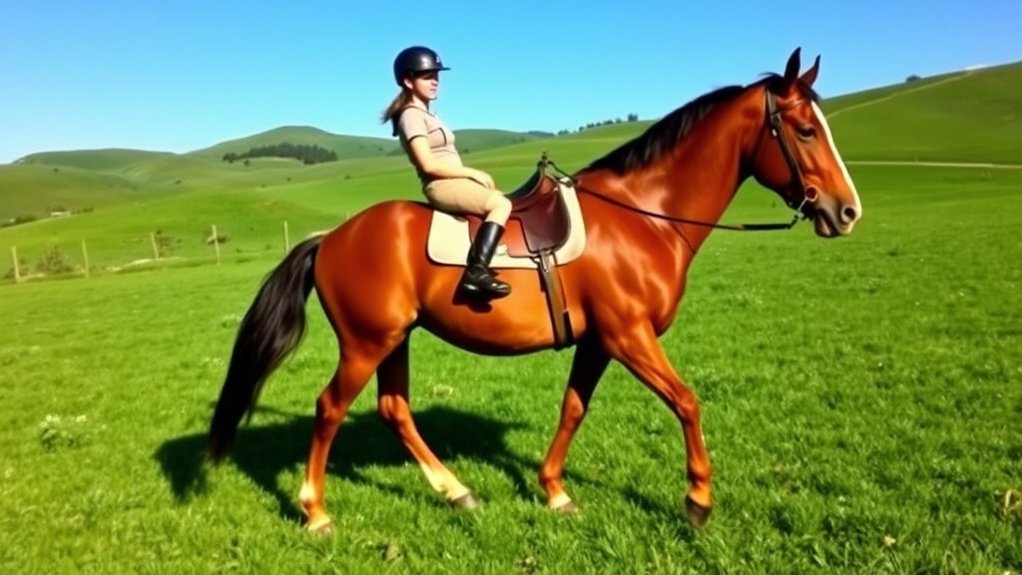
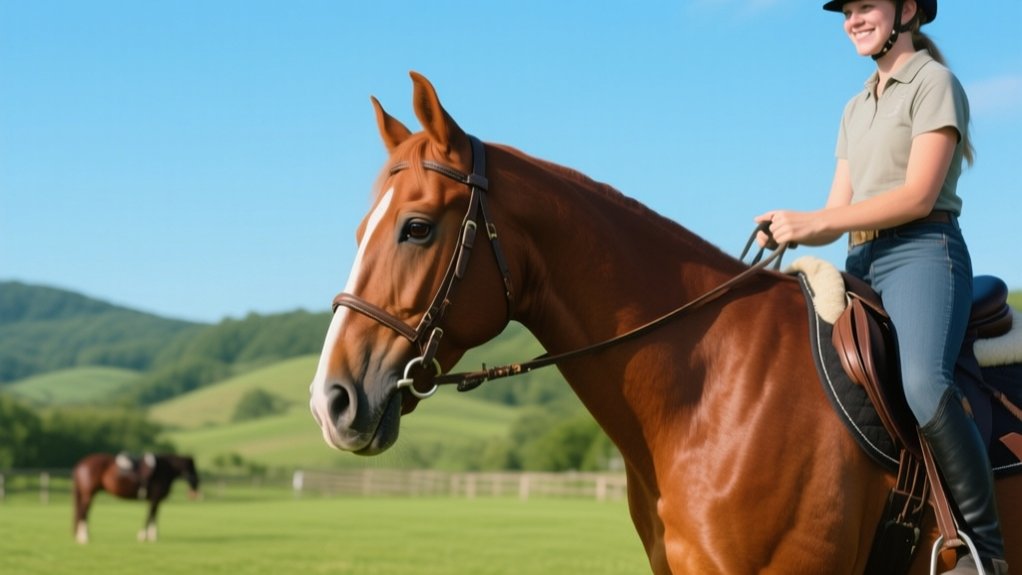
Because Tennessee Walking Horses offer a smooth, natural gait and a calm, gentle temperament, they’re an excellent choice for beginner riders. You’ll find their relaxed attitude reduces the risk of spooking, providing a safer environment as you develop your riding skills.
Their manageable size and versatility suit various activities like trail and pleasure riding, which don’t demand advanced techniques. This breed’s temperament makes handling straightforward, allowing you to focus on building confidence without dealing with behavioral challenges.
Their natural gait contributes to comfort, minimizing physical strain during rides. Overall, Tennessee Walking Horses combine physical and behavioral traits that support a positive, secure learning experience, making them ideal for riders just starting out.
How the Smooth Gait of Tennessee Walking Horses Helps New Riders
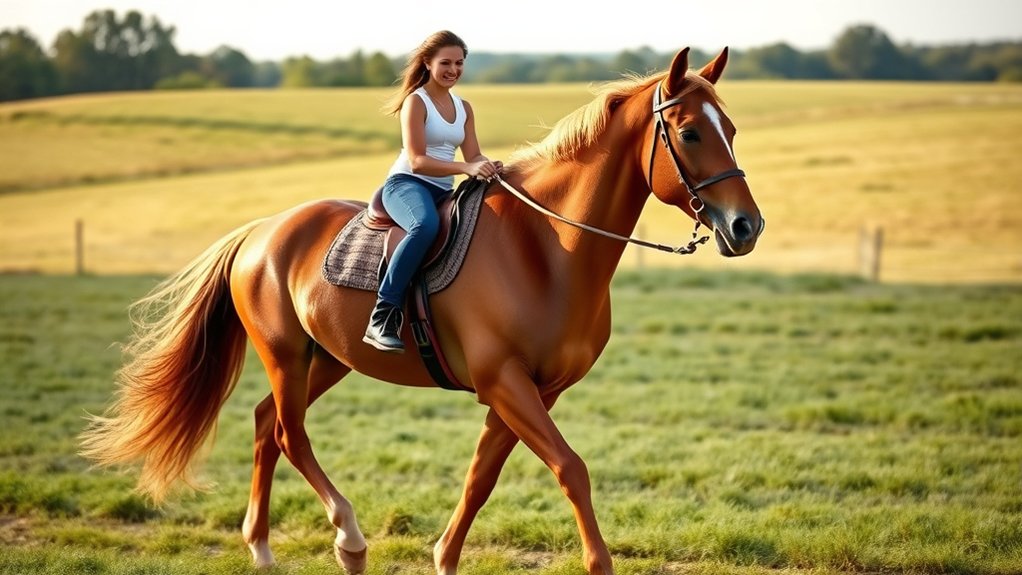
You’ll really appreciate how the Tennessee Walking Horse’s smooth gait cuts down on jolts and fatigue, making your rides way more comfortable.
Because the stride is so consistent and even, it’s easier to keep your balance and build confidence as you’re learning.
Plus, that relaxed rhythm helps you maintain good posture, so you can stay centered and coordinated throughout your training.
Benefits Of Smooth Gait
Although learning to ride can be challenging, the smooth gait of Tennessee Walking Horses considerably eases this process for beginners. Their natural, even stride reduces jolts and bumps, helping you maintain balance and build confidence quickly.
This consistent motion minimizes bouncing, which lowers rider fatigue. That means you can enjoy longer trail rides without discomfort. Plus, their relaxed, low head position enhances your control and stability, making it easier to focus on mastering riding basics.
Because the gait remains steady and predictable, you won’t be destabilized by irregular movements. This is super important when you’re still developing your riding skills.
Comfort For New Riders
When you ride a Tennessee Walking Horse, their smooth gait really boosts your comfort, especially if you’re new to riding. The flat walk and running walk create a steady, gentle rhythm that cuts down on jolts and bumps. This means you’ll feel less tired and uncomfortable even during longer rides.
This easy, low-impact movement also takes the strain off your back, knees, and hips. So, it’s a great choice if you have any physical limitations.
Plus, the horse’s natural, relaxed motion helps you feel secure and confident, which makes learning to ride easier.
Because the gait is so smooth and predictable, you can concentrate on building good posture and balance without getting distracted by uneven or jarring movements.
All in all, the Tennessee Walking Horse offers a comfortable and stable riding experience that’s perfect for beginners.
Understanding the Temperament of Tennessee Walking Horses
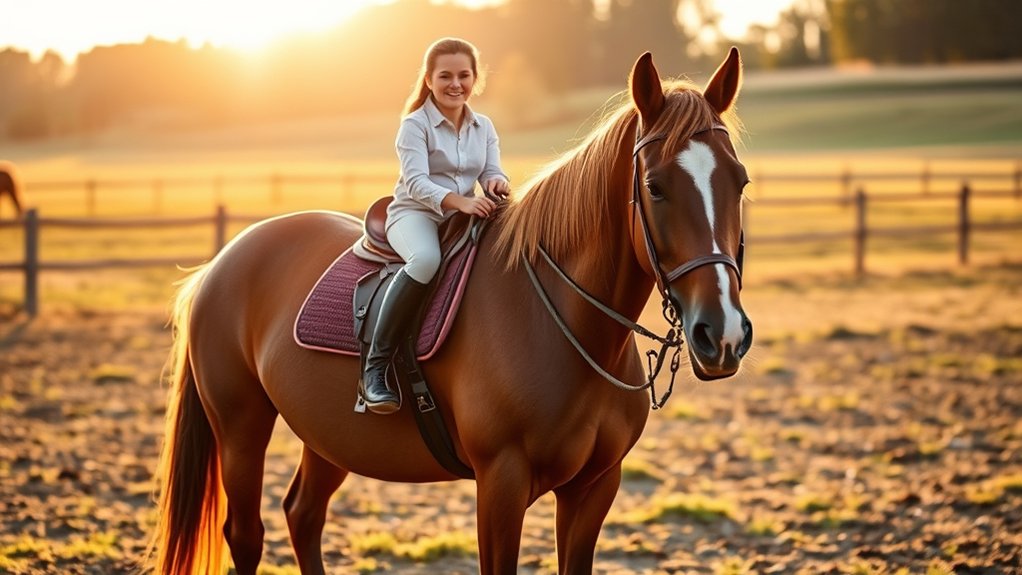
Because Tennessee Walking Horses possess a gentle and calm temperament, they suit beginner riders exceptionally well. You’ll find their friendly and willing personality fosters strong bonds, which enhances training and trust.
This breed’s natural gait is smooth and relaxed, providing a comfortable riding experience that minimizes beginner discomfort.
Additionally, they exhibit patience and tolerance, often accommodating novice mistakes without agitation. Their adaptable and easy-going nature means you can confidently manage typical beginner errors while progressing in skill.
These temperament traits collectively make Tennessee Walking Horses an excellent choice for first-time horse owners and riders.
Understanding these behavioral characteristics helps you anticipate responses and guarantees a safe, enjoyable learning environment as you develop horsemanship skills. It really makes the whole experience more rewarding and less stressful.
Why You Should Avoid Soring and Artificial Gaits
If you want to protect your Tennessee Walking Horse’s health and guarantee ethical treatment, you must avoid soring and artificial gaits. Soring is when people deliberately cause pain to the horse’s legs, which leads to bleeding and discomfort just to exaggerate its gait. This practice is illegal and is considered abuse because it’s so cruel.
Using pads, wedges, or weights to create high-stepping artificial gaits is also a problem. These things mess with the horse’s natural movement and can cause soreness, lameness, and long-term health issues.
Basically, these unnatural tricks put your horse’s comfort and well-being at serious risk.
Choosing naturally gaited horses without any artificial modifications means you’re giving your horse humane care and avoiding the dangers of soring. When you focus on ethical training methods, you’re not just protecting your horse’s body—you’re also setting yourself up for a better, more enjoyable riding experience.
How to Choose a Well-Trained Tennessee Walking Horse
Selecting a well-trained Tennessee Walking Horse requires careful evaluation of its gait, temperament, and training history to guarantee a smooth and safe riding experience. You should prioritize horses exhibiting natural, relaxed gaits without artificial aids, ensuring comfort and authenticity.
Check how they move over ground poles or on trails, watching for consistent head lowering and signs of relaxation. A calm, willing disposition that responds positively to rider commands is a good sign of proper handling.
Also, ask for training documentation or references that confirm the horse’s behavior and gait quality. Avoid horses showing soreness, resistance, or dependence on pads or weights as these suggest improper training.
Confirm natural gait quality in varied environments. Assess temperament for beginner compatibility. Observe relaxation and responsiveness during rides. Obtain credible training history and references. Reject horses reliant on artificial gait enhancements.
Common Training and Riding Challenges for Beginner Tennessee Walking Horse Owners
You’ll often run into challenges when trying to get consistent, smooth gaits, especially if your horse resists keeping its head in the right position and staying relaxed.
It’s really important to maintain the correct head carriage because that’s key to the natural four-beat gait Tennessee Walking Horses are famous for.
So, developing patience and sticking to gradual, structured training methods will go a long way in helping you overcome these common obstacles.
Taking it step by step makes the process much more manageable and effective.
Gait Consistency Challenges
Although Tennessee Walking Horses are known for their smooth gaits, maintaining a consistent rhythm can be challenging for beginner riders who lack proper training and understanding of gait mechanics. You might find that uneven rein pressure or insufficient reinforcement of relaxed, forward movement leads to gait irregularities.
Also, the horse’s conditioning and training frequency play a big role in how steady the gait stays. If the horse is anxious or tense, you’ll notice rhythm disruptions right away.
To tackle these challenges, focus on patience and repetition while keeping an eye on your horse’s relaxation and head carriage.
Key points to consider:
- Avoid uneven rein pressure that disrupts gait rhythm
- Ensure training sessions are regular and adequately timed
- Condition your horse progressively for endurance and balance
- Recognize and reduce signs of tension or anxiety in your horse
- Reinforce relaxed, forward movement through consistent cues
Head Position Issues
Maintaining a steady gait rhythm depends heavily on how well your Tennessee Walking Horse holds its head, making head position a key factor in effective training.
As a beginner, you’ll often face challenges caused by inconsistent rein contact and your horse’s tension, which leads to resistance in lowering its head.
To address this, apply gentle, steady rein pressure paired with cues that promote relaxation and flexion before initiating gait work. Avoid forcing the head down, as tension disrupts the natural frame required for smooth movement and rider control.
Techniques like deep breathing and rewarding your horse’s calmness help reinforce a relaxed head carriage.
Consistent practice in these areas improves communication and supports the development of a stable, low head position critical for effective gait training.
Patience And Progress
While training a Tennessee Walking Horse, patience proves essential as you work through common challenges like gait hesitation and resistance to head lowering. These issues often stem from tension and underdeveloped gaiting muscles. So, consistent, gradual training is key to achieving smooth, relaxed movement.
You’ll need to focus on building strength and encouraging relaxation to prevent frustration for both you and your horse. Using specific techniques and tools can really help with progress.
Key strategies include:
- Gradual muscle conditioning to support natural gait
- Using ground poles to promote rhythm and balance
- Applying relaxation techniques to reduce tension
- Consistent, gentle reinforcement of desired behaviors
- Maintaining a positive, patient mindset to accommodate individual learning curves
Success depends on steady progress, not rushing. This way, your horse can develop confidence and a comfortable gait.
How to Start Training Your Beginner Tennessee Walking Horse
When you start training your beginner Tennessee Walking Horse, keep sessions short and consistent to build relaxation and a positive response to cues. Begin by focusing on softness and calmness, using gentle rein and leg aids to encourage a low, relaxed head carriage.
Incorporate ground poles spaced evenly to improve gait quality and promote an even, smooth stride. Reinforce correct behavior with patient praise, gradually increasing training difficulty as your horse gains confidence and comfort.
Prioritize your horse’s comfort throughout, avoiding any forceful methods or rushing gait development. Maintaining a positive, pressure-free environment guarantees your horse learns proper gait mechanics efficiently.
This lays a solid foundation for advanced training while fostering trust and relaxation.
Finding Reputable Tennessee Walking Horses for Beginners
Although Tennessee Walking Horses are known for their smooth gaits, not every horse suits a beginner rider. When finding a reputable Tennessee Walking Horse for beginners, focus on calm temperament and consistent, relaxed gaiting. Prioritize horses with proven smooth flat and running walks.
Not all Tennessee Walking Horses are beginner-friendly; seek calm temperament and consistently smooth flat and running walks.
Avoid those with signs of inhumane training. It’s best to work with trusted breeders or trainers who emphasize health and natural movement.
Before you buy, make sure to do a thorough gait analysis and health evaluation to confirm the horse is a good fit.
Key considerations include gentle temperament and good ground manners. Look for reliable, smooth flat walk and running walk gaits.
Also, check for a transparent history free from artificial gait enhancements.
Health certifications from qualified veterinarians are important too. And always choose reputable sources that prioritize humane training and horse welfare.
This way, you’ll set yourself up for a positive experience with your Tennessee Walking Horse.
What to Expect in Price and Maintenance for a Beginner Tennessee Walking Horse
If you’re considering purchasing a beginner-friendly Tennessee Walking Horse, expect to invest between $4,000 and $10,000 for a seasoned, reliable animal. Pricing varies based on training, bloodlines, and gait quality, with show-quality horses reaching $15,000 or more.
Solid-colored, well-trained horses typically cost less and suit beginner riders well.
Annual maintenance ranges from $1,500 to $3,000, covering essentials like feed, veterinary care, farrier services, and tack. Regular grooming and health checkups are essential to maintaining your horse’s condition and performance.
Investing in proper riding equipment also guarantees safety and comfort for both you and your horse.
Understanding these costs upfront helps you budget responsibly and gives you a clear picture of the financial commitment involved in owning a Tennessee Walking Horse.
Comparing Tennessee Walking Horses to Other Beginner-Friendly Breeds
Understanding the costs and upkeep of a Tennessee Walking Horse sets a solid foundation for evaluating how this breed compares to other beginner-friendly horses. Tennessee Walkers stand out for their smooth, natural running walk and calm temperament, making the ride comfortable for novices.
Knowing the costs and care of Tennessee Walkers helps beginners choose the right horse for a smooth, calm ride.
While other breeds like Morgans, Paints, and Haflingers also offer gentleness, Tennessee Walkers excel in gait ease and versatility. However, expect similar training patience as required with Welsh Cobs or Appaloosas to develop their gait fully.
Key comparisons include:
- Smoothness of gait: Tennessee Walking Horse vs. Missouri Fox Trotter
- Temperament: Tennessee Walker vs. Morgan
- Training complexity: Tennessee Walker vs. Welsh Cob
- Versatility in disciplines
- Ride comfort for beginner confidence
This comparison helps you select the breed matching your riding goals and skills.
Frequently Asked Questions
What Type of Tack Is Best for Tennessee Walking Horses?
You’ll want a well-fitted, padded western or English saddle, paired with a lightweight snaffle or low-port bit. Use soft reins and a comfortable headstall.
Also, consider breastplates or martingales to keep the saddle in place and help with control. These pieces make a big difference when riding Tennessee Walking Horses.
It’s all about comfort and functionality to get the best performance and experience.
Can Tennessee Walking Horses Be Used for Trail Riding?
You can trust Tennessee Walking Horses for trail riding. They glide like a gentle breeze over rough terrain. Their smooth gait and sure-footedness help reduce fatigue.
Proper training guarantees safety and confidence on varied, challenging trails. With the right preparation, these horses can make your trail rides enjoyable and comfortable.
How Long Do Tennessee Walking Horses Typically Live?
Tennessee Walking Horses typically live 25 to 30 years with proper care. You can extend their lifespan beyond 30 years by making sure they get excellent health management and regular veterinary check-ups.
Balanced nutrition plays a big role too, and it’s super important to minimize stress or injury risks. Taking these steps can really help your horse live a long, happy life.
Are Tennessee Walking Horses Good With Children?
Think of a Tennessee Walking Horse as a gentle giant cradling your child with its smooth gait and calm nature. You’ll find their patient temperament perfect for kids learning to ride, ensuring safety and comfort every time.
They’re easygoing and steady, which helps build confidence in young riders. Plus, their smooth walk means less bouncing around, making the ride more enjoyable for little ones. Overall, Tennessee Walking Horses are great companions for children just starting out.
What Health Issues Are Common in Tennessee Walking Horses?
You’ll often see osteoarthritis, hoof problems, and leg injuries in Tennessee Walking Horses, especially from artificial gait training. Practices like soring cause inflammation, bleeding, and chronic pain. This leads to long-term tissue damage and lameness.
It’s really important to recognize these issues early. Proper care and avoiding harmful training methods can make a big difference. Keeping these horses comfortable and healthy should always be the priority.
Conclusion
Choosing a Tennessee Walking Horse for your first ride is like picking the perfect pair of shoes. They fit smoothly and support you every step. With their gentle temperament and naturally smooth gait, these horses make learning easier and safer.
Just remember to avoid artificially trained horses to guarantee a healthy start. By selecting a well-trained, reputable horse, you’re setting yourself up for a rewarding, steady journey into riding. Beginners consistently praise these horses for comfort and confidence.