What Is An American Quarter Horse – Straight Answer
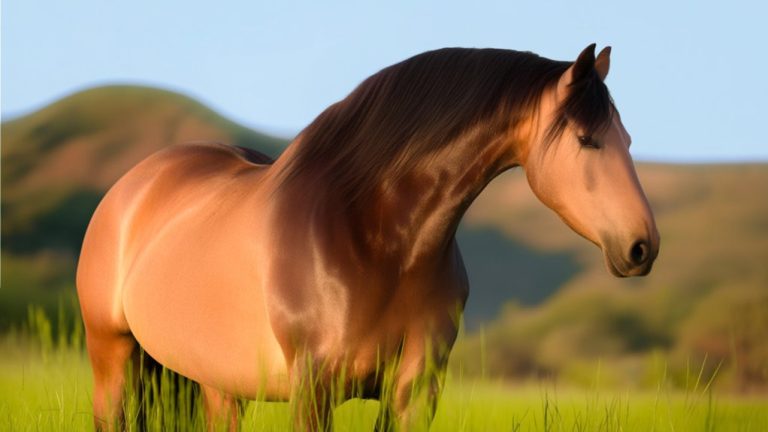
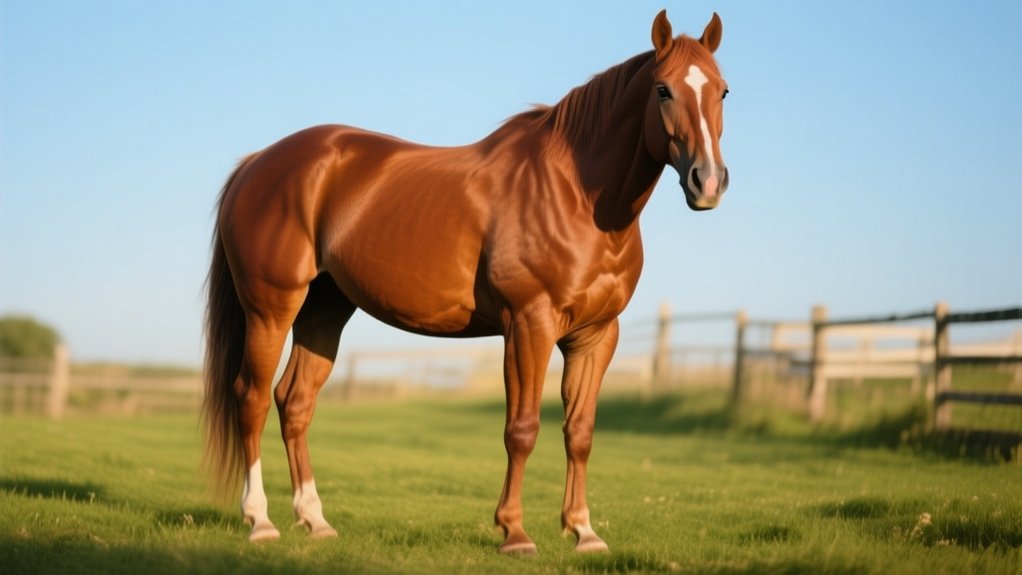
If you want a horse known for explosive speed over a quarter-mile, the American Quarter Horse fits perfectly. You’ll recognize it by its compact, muscular build standing 14.3 to 16 hands tall and smooth gaits like the jog and lope.
It’s calm and highly trainable, excelling in short-distance racing, ranch work, and Western events. This breed combines agility, power, and reliability, making it versatile for many riders and disciplines.
Exploring its traits reveals why it’s so widely appreciated.
What Is an American Quarter Horse?
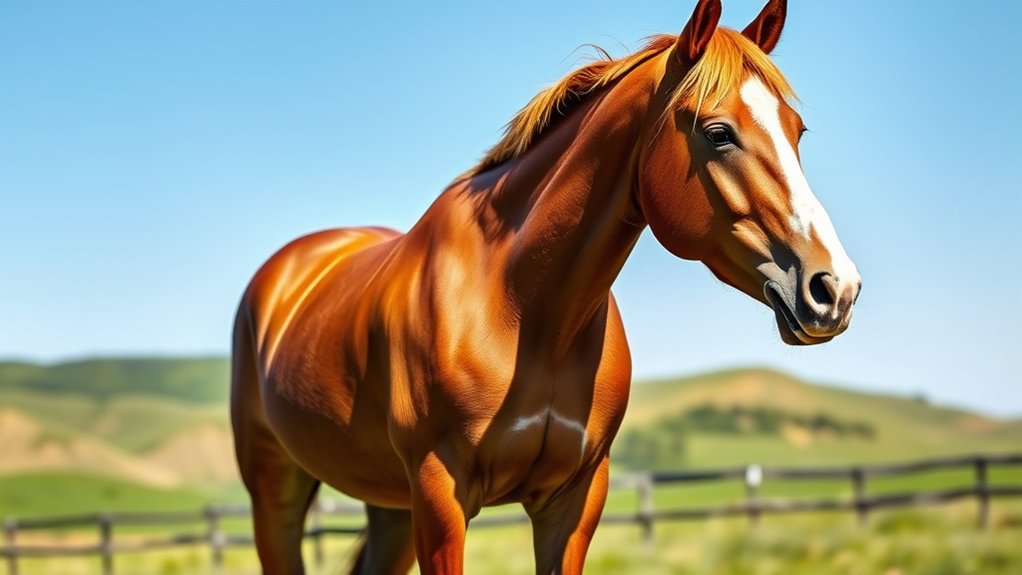
Although you might be familiar with many horse breeds, the American Quarter Horse stands out for its exceptional speed over a quarter-mile and its versatility across disciplines such as Western riding and cutting.
The American Quarter Horse excels in speed and versatility across Western riding and cutting disciplines.
You’ll recognize this breed by its muscular build, typically standing between 14.3 and 16 hands tall, combined with a calm temperament that enhances trainability and performance.
It exhibits smooth gaits, including the jog and lope, ideal for varied working and competition scenarios.
When registering an American Quarter Horse with the AQHA, you must provide documented lineage to guarantee breed standards.
This breed’s adaptability makes it invaluable for reining, ranch work, and other Western events, where strength and a gentle nature are essential.
Its design optimizes short-distance sprinting without sacrificing endurance or temperament.
The History Behind the American Quarter Horse Name
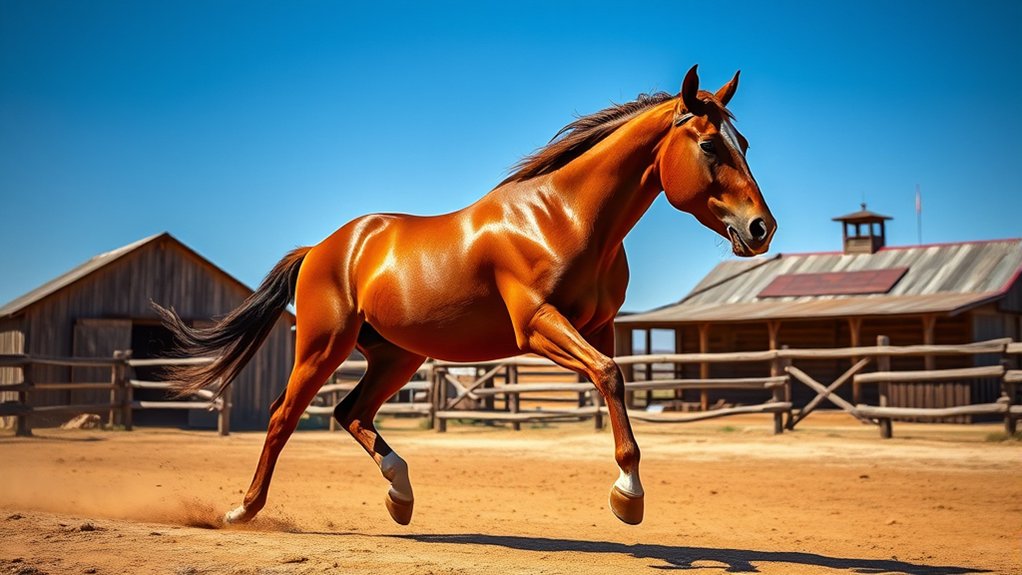
When you think about the name “Quarter Horse,” it really highlights the breed’s amazing speed over a quarter-mile stretch. That distance was a super popular race length back in the American West.
This breed came about in the early 19th century by crossing English Thoroughbreds with native American horses. The goal was to create a versatile stock horse that could accelerate quickly and move with agility.
Early settlers and ranchers bred these horses to be great at short-distance racing and quick cattle work.
The word “Quarter” points to the breed’s dominance in quarter-mile sprint events, where it usually left other breeds in the dust.
Even though the American Quarter Horse was officially recognized in the early 20th century, its name and reputation had already been linked to its incredible short-distance speed and usefulness on the frontier for a long time.
Key Physical Traits of the American Quarter Horse
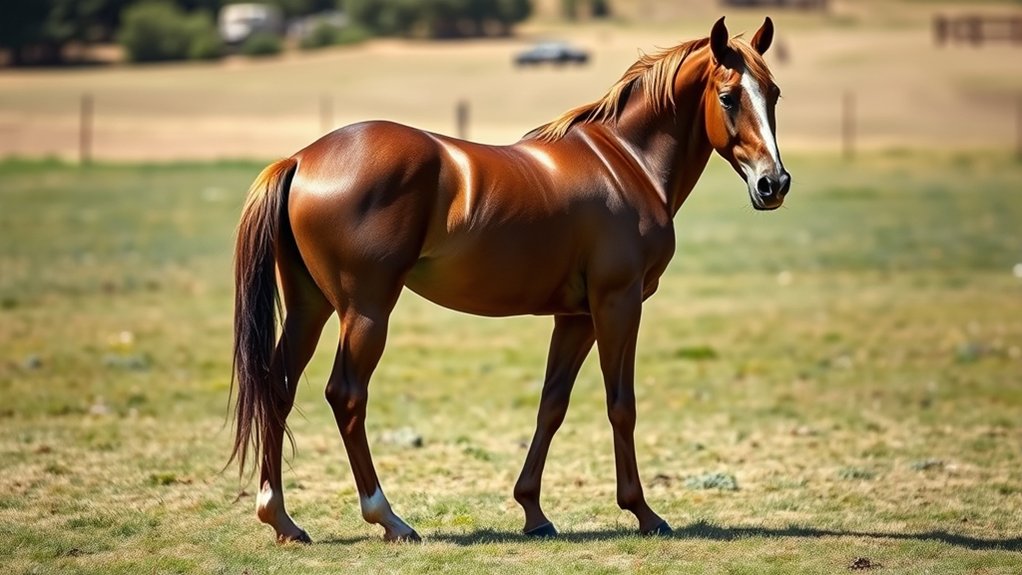
Because the American Quarter Horse was bred for both speed and versatility, its physical traits reflect a balance of power, agility, and endurance. You’ll notice they stand between 14.3 and 16 hands high, with a compact, muscular build that supports explosive bursts of speed and sustained work.
Their broad croup and strong, well-defined legs provide stability and propulsion. The head is refined, featuring a straight or slightly convex profile and expressive, alert eyes, signs of intelligence and responsiveness.
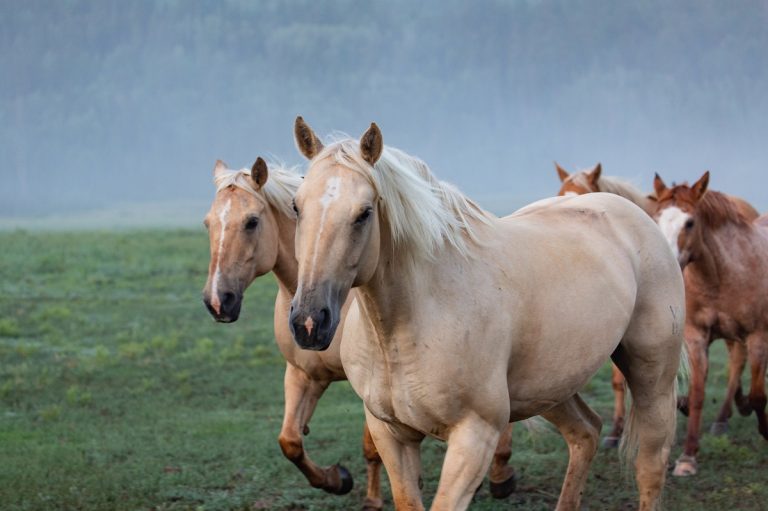
Coat colors vary but commonly include Sorrel, Bay, Buckskin, Palomino, and Grullo. When you observe their movement, the gait is smooth and relaxed, with a controlled jog and an easy lope, optimized for efficiency and comfort over varied tasks.
These traits create a physically capable and balanced horse. It’s easy to see why the American Quarter Horse is such a popular and versatile breed.
Traits That Make Quarter Horses So Versatile
You’ll notice Quarter Horses have a powerful, muscular build paired with balanced conformation. This combination gives them both strength and agility, which comes in handy across different riding styles.
Plus, their adaptable gaits—like a smooth jog and a controlled lope—make them great for everything from competitive events to casual riding.
On top of that, they tend to have a calm temperament. This makes them really easy to work with, which adds to their versatility across a bunch of different disciplines.
Physical Attributes
Although often admired for their speed, American Quarter Horses owe much of their versatility to their distinctive physical attributes. You’ll notice their muscular, compact build stands between 14.3 and 16 hands tall, optimized for power and agility.
Their broad croups and well-defined muscles ensure explosive bursts in short sprints. At the same time, their smooth jog and controlled lope provide rider comfort. This makes them great for a variety of activities.
Their body structure supports diverse uses, from reining to trail riding. Plus, their coat colors like Sorrel, Bay, Buckskin, Palomino, and Grullo add to their standout appearance.
| Attribute | Description | Benefit |
|---|---|---|
| Height | 14.3 to 16 hands (150-163 cm) | Balanced size for agility |
| Musculature | Broad croup, compact body | Power and quick acceleration |
| Gaits | Jog and controlled lope | Smooth, comfortable ride |
Adaptability Across Disciplines
When you look at American Quarter Horses, their adaptability across disciplines stands out as a defining trait. You’ll find them excelling in Western pleasure, reining, cutting, and barrel racing, thanks to their muscular build and smooth, controlled gaits.
Their ability to execute quick turns and sharp stops is essential for performance and ranch work.
You’ll appreciate their calm temperament and balanced movement, which make them ideal for both beginners and advanced riders. Their intelligence and enthusiasm enable rapid learning across multiple disciplines.
Bloodlines like Peptoboonsmal and Dual Rey enhance their agility and stamina, ensuring consistent performance in diverse competitive and working environments.
This combination of traits makes the American Quarter Horse a uniquely versatile equine athlete you can rely on across varied equestrian pursuits. It’s really no wonder they’re so popular!
Popular Disciplines for American Quarter Horses
How do American Quarter Horses excel across such a wide range of equestrian activities? Their balanced conformation, agility, and quickness give them the versatility needed for multiple disciplines.
You’ll find them thriving in western events like reining, cutting, and ranch riding, where short bursts of speed and sharp turns are essential. They also do great in English disciplines such as hunt seat and show jumping, showing off their adaptability in style and technique.
Speed-focused competitions like barrel racing and pole bending are right up their alley too, relying on rapid acceleration and precise control.
Plus, they’re fantastic for trail and pleasure riding, thanks to their smooth gaits and dependable nature.
This combination of physical traits and enthusiasm to perform makes Quarter Horses a top choice for both competitive and recreational riders across diverse equestrian sports.
Why Quarter Horses Have Such Great Temperaments
You’ll notice that Quarter Horses tend to have a calm and patient nature. This is super important because, historically, they were used for some pretty demanding ranch work.
Plus, they’re really enthusiastic about working and have a cooperative attitude, which makes training both efficient and enjoyable.
When you understand these traits, it’s easy to see why they’re perfect for riders of all skill levels.
Calm And Patient Nature
Because Quarter Horses were bred for versatility and steady work on ranches, they exhibit a calm and patient temperament that suits riders of all skill levels. You’ll appreciate these key traits:
- Their gentle demeanor makes them approachable and safe for beginners.
- Patience allows them to remain relaxed in high-pressure or unfamiliar situations.
- A balanced nature ensures steady, reliable behavior essential for ranch tasks.
- Their composed attitude and relaxed gait contribute to easy handling and control.
This combination results from selective breeding focused on consistent, dependable workhorses. When you work with a Quarter Horse, you benefit from a partner who stays calm, steady, and cooperative. It makes training and riding more effective and enjoyable.
Their temperament is fundamental to their success in disciplines requiring patience, like trail riding and ranch duties.
It’s one of the main reasons they’re so popular with riders who need a reliable and easygoing horse.
Eager To Work
The calm and patient nature of Quarter Horses sets the foundation for their enthusiasm to work, a trait that makes them exceptional partners in both ranch and competitive settings. You’ll find their readiness to work stems from a strong desire to please and an attentive, responsive mindset.
Selective breeding has reinforced their balanced temperament, ensuring they remain steady under pressure while maintaining a friendly disposition ideal for riders of all levels. This combination of intelligence, patience, and willingness allows you to train them efficiently and rely on them across various disciplines.
When you work with a Quarter Horse, you benefit from a dependable, versatile partner whose temperament supports consistent, high-performance results without compromising safety or ease of handling. They’re truly eager to work and ready to meet your needs.
Why Are Quarter Horses Ideal for Beginners?
What makes Quarter Horses particularly well-suited for beginners is their calm and gentle temperament. This creates a safe and approachable environment for novice riders. Their forgiving nature also helps reduce spooking and aggressive reactions, which is great for building rider confidence.
Quarter Horses’ calm temperament fosters safety and confidence, making them ideal for beginner riders.
You’ll benefit from smooth gaits, as their jog and lope offer comfortable, steady rides. They’ve high trainability, meaning they quickly learn and respond to basic commands.
Plus, they’re versatile, so you can explore disciplines like Western pleasure, trail riding, or ranch work.
Another great thing is their enthusiasm to please. This motivates them to cooperate and progress with your skills. All these traits combined make Quarter Horses reliable partners as you build your foundational riding abilities.
It really ensures a secure and enjoyable learning experience.
How to Identify a Registered AQHA Quarter Horse
To identify a registered AQHA Quarter Horse, start by looking at the registration papers. These documents provide important details like the horse’s name, breed, birth date, and pedigree.
You can also verify the horse’s parentage through DNA testing, which is usually documented on these papers—this helps ensure everything is authentic.
Another thing to check is whether the horse’s registered name follows AQHA naming rules.
Plus, don’t forget to look for microchip information, as it’s often part of the identification process.
Registration Paper Essentials
Although you might recognize a Quarter Horse by its appearance, identifying a registered AQHA Quarter Horse requires examining its official registration certificate, often called the “blue paper.” This document contains critical information such as the horse’s registered name, registration number, birth date, color, and lineage, all verified by the American Quarter Horse Association.
To confirm registration, check the horse’s unique AQHA registration number. Also, look for verified parentage and bloodline details. Make sure the birth date and color match the horse.
Don’t forget to check for proper signatures and transfer endorsements if ownership has changed.
These papers are essential for breeding, showing, and legal ownership transfers. Without them, a horse may be a true Quarter Horse but lacks official AQHA recognition. That means it won’t have the breeding documentation necessary for formal activities.
Verification Through DNA
Since visual identification and registration papers can sometimes be forged or incomplete, verifying a registered AQHA Quarter Horse through DNA testing offers a definitive method to confirm its pedigree and authenticity.
The AQHA mandates DNA sampling for parentage verification, matching the horse’s genetic profile against official registration records.
You can submit a hair or blood sample to an authorized AQHA laboratory. There, technicians analyze the DNA to confirm lineage accuracy.
This process safeguards against registration fraud and guarantees the horse’s identity aligns with AQHA standards.
By obtaining DNA verification, you validate your horse’s eligibility for registration, breeding programs, and competitive events.
This helps maintain the integrity of AQHA bloodlines through objective genetic confirmation.
It’s a smart way to be sure your horse’s background is exactly as it should be.
Name And Chip Checks
When you want to confirm a Quarter Horse’s registered status, checking its name and microchip is essential. You’ll rely on specific identifiers tied directly to the AQHA registry.
Here’s how to do it precisely:
First, locate the horse’s registered name and make sure it follows AQHA formatting rules. Then, find the unique registration number on the AQHA certificate.
Next, verify the microchip or DNA number against the AQHA database to confirm authenticity.
Finally, cross-check that the registered name and chip number match the official AQHA paperwork. It’s a straightforward process once you know what to look for.
Essential Tips for Buying a Quarter Horse
Before you finalize the purchase of a Quarter Horse, you’ll want to conduct a thorough veterinary examination, including radiographs if necessary, to guarantee the animal’s health.
Verify the horse’s bloodlines and registration papers to ensure breed authenticity and confirm suitability for your intended discipline.
Assess the horse’s temperament, training level, and specialization to match your riding experience and goals precisely.
Schedule multiple visits and ride the horse in varied environments to evaluate behavior, fitness, and compatibility with your style.
Finally, use a detailed, written contract outlining ownership transfer, health guarantees, and training expectations to protect your investment.
This technical due diligence minimizes risk and ensures your Quarter Horse aligns with your professional or recreational needs effectively.
How Quarter Horses Excel in Western Riding Events
Although Western riding events demand quick reflexes and precise control, Quarter Horses consistently deliver exceptional performance thanks to their rapid acceleration and agility over short distances. You’ll find their abilities especially valuable in events like reining and cutting.
Here’s why they excel:
- Their muscular build and strong hindquarters generate the power for explosive stops, spins, and rollbacks.
- Smooth gaits, including the relaxed jog and controlled lope, enhance performance and rider comfort.
- Balanced temperament combined with an enthusiastic work ethic allows for precise, quick maneuvers.
- Their versatility lets them adapt seamlessly across disciplines like ranch riding, trail, and Western pleasure.
When you compete or work in Western riding, Quarter Horses provide unmatched technical skill and responsiveness. They really make a difference out there.
Frequently Asked Questions
How Much Does an American Quarter Horse Typically Cost?
You’ll typically pay around €10,900 for an American Quarter Horse, though prices range from €4,000 to €32,000 depending on age, training, bloodlines, and competition history.
Keep in mind, there are additional costs like veterinary care and ongoing training. These can add up over time, so it’s good to budget for them early on.
Buying the horse is just the start of the investment!
What Is the Average Lifespan of an American Quarter Horse?
The average lifespan of an American Quarter Horse ranges from 25 to 30 years. With proper nutrition, genetics, and veterinary care, you can expect some to live into their early to mid-thirties.
That said, they can face age-related health challenges along the way. But with good care, many Quarter Horses enjoy a long, healthy life.
Are American Quarter Horses Suitable for Trail Riding?
You’ll find American Quarter Horses ideal for trail riding; their calm gait, muscular balance, and adaptability handle rugged terrain like a seasoned explorer. Their steady temperament and sure-footedness make every trail safer and more enjoyable for you.
They’re pretty much built for this kind of adventure. Whether you’re navigating rocky paths or winding forest trails, these horses stay confident and reliable. It’s like having a trusty buddy who knows the ropes and keeps things smooth.
What Are Common Health Issues in American Quarter Horses?
You’ll encounter common health issues like navicular syndrome, developmental orthopedic diseases (OCD, angular limb deformities), equine recurrent uveitis, and genetic conditions such as HYPP.
Regular vet care and management help you prevent and manage these effectively.
Keeping an eye on your horse’s health and catching problems early can make a big difference. Just stay consistent with check-ups and don’t hesitate to ask your vet if you notice anything unusual.
Can American Quarter Horses Be Trained for English Riding Disciplines?
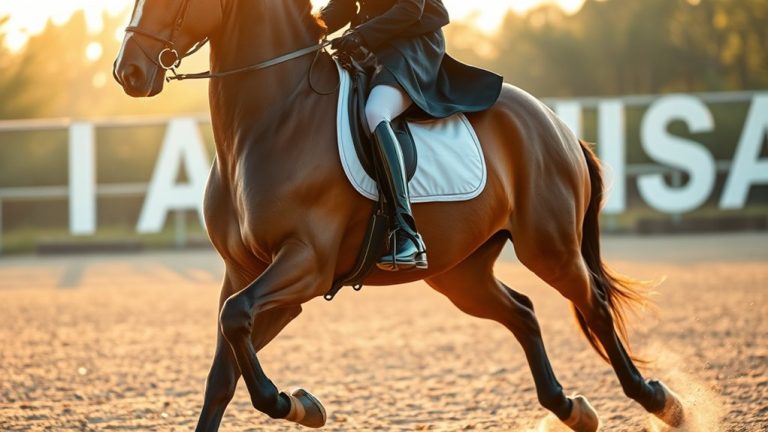
Yes, you can train American Quarter Horses for English disciplines like dressage and jumping. Their athleticism and conformation support these activities.
That said, you’ll need to tailor training to develop specific skills, like a balanced canter and an extended trot. It’s definitely doable with the right approach.
Conclusion
Think of the American Quarter Horse as a Swiss Army knife of the equine world. It’s compact, powerful, and incredibly versatile. Just like that tool fits every need with precision, this breed adapts seamlessly from beginner lessons to advanced Western riding events.
Understanding its history, traits, and registration guarantees you’re not just choosing a horse but investing in a performance partner built for speed, agility, and reliability. With the Quarter Horse, you’re equipped for every riding challenge ahead.