How Much Weight Can A Tennessee Walking Horse Carry – Guide
You should keep your Tennessee Walking Horse’s rider weight at or below 20% of its body weight to avoid strain. That usually means around 180-240 lbs for horses weighing 900-1,200 lbs.
Structural traits like wider loins, a strong back, and larger cannon bones help improve load capacity and reduce the risk of injury. Proper fitness, tack fit, and hoof care also play a big role in supporting weight limits.
It’s important to watch for signs of overload to keep your horse sound and performing well. Take some time to explore how your horse’s build, conditioning, and care all influence safe weight carrying.
How Much Weight Can a Tennessee Walking Horse Carry?

Although individual horses vary, a Tennessee Walking Horse can typically carry about 20% of its body weight without strain. For horses weighing between 900 and 1,200 pounds, this means roughly 180 to 240 pounds.
Structural conformation plays a key role. Wider loins and larger cannon bones help the horse bear weight safely.
Conditioning is just as important. Well-fit, properly trained horses can handle heavier loads with less risk of soreness or fatigue.
On the other hand, poorly conditioned or unbalanced horses are more likely to get injured under similar weights.
Also, keep in mind that rider skill, terrain, and the horse’s overall health all affect how much weight is safe to carry.
Why Rider Weight Matters to Your Tennessee Walking Horse
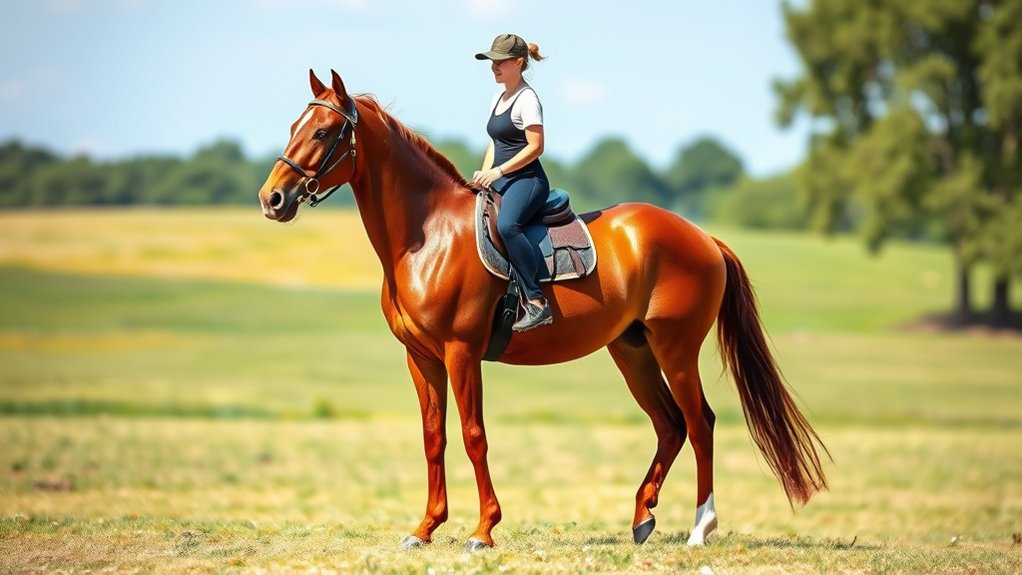
Because rider weight directly influences a Tennessee Walking Horse’s comfort and performance, understanding its impact is crucial for maintaining the horse’s health and longevity. You should aim to keep your weight at or below 20% of your horse’s body weight to avoid excessive strain.
Carrying more weight increases pressure on joints, tendons, and the back, leading to soreness or potential injury over time.
Regularly evaluating your weight relative to your horse’s size and fitness helps prevent overloading. By maintaining an appropriate rider-to-horse weight ratio, you support your Tennessee Walking Horse’s smooth gait, reduce the risk of musculoskeletal damage, and promote sustained performance and well-being throughout its working life.
This careful consideration ensures both safety and comfort during every ride. It’s all about keeping your horse happy and healthy so you both can enjoy the journey together.
How Your Horse’s Build Affects Its Carrying Capacity

When you’re thinking about how much weight your Tennessee Walking Horse can carry, it really helps to take a good look at its build. Horses that have wider loins and bigger cannon bones are usually able to handle more weight without any trouble.
On the other hand, if your horse has smaller bones, it might be more prone to soreness or even lameness.
Besides just the bones, you’ll want to consider things like how strong your horse’s back is and its overall bone structure. These factors play a big role in determining how much weight your horse can comfortably and safely manage.
Conformation And Load Tolerance
When evaluating how much weight your Tennessee Walking Horse can carry, its conformation plays a critical role in determining load tolerance. Horses with wider loins and larger cannon bones typically tolerate heavier loads more comfortably.
On the other hand, smaller cannon bones increase the risk of lameness and soreness, which limits weight capacity.
Key structural traits, including back strength and balance, directly affect your horse’s ability to safely carry additional weight. A well-developed topline enhances load-bearing capacity by reducing strain and injury risk.
Horses with a compact, sturdy build generally handle higher weight percentages relative to their body weight.
By examining these conformation features carefully, you can better estimate your Tennessee Walking Horse’s safe carrying limits. This helps ensure both performance and long-term soundness.
It’s all about keeping your horse healthy and comfortable while carrying what it can handle.
Bone Structure Impact
Although many factors influence a Tennessee Walking Horse’s load capacity, bone structure plays a pivotal role in determining how much weight it can safely carry. Horses with wider loins and larger cannon bones typically bear weight more comfortably, as these features enhance load distribution and shock absorption.
In contrast, narrower cannon bones increase the risk of lameness and limit the horse’s carrying ability under stress. A strong back combined with balanced conformation supports endurance by evenly spreading the rider’s weight.
Additionally, a well-developed topline and sturdy leg structure directly contribute to the horse’s capacity to carry loads without strain. Understanding these structural traits helps you assess your horse’s suitability for various weight demands and maintain its long-term soundness and performance.
How Fitness and Conditioning Boost Your Tennessee Walking Horse’s Weight Limit
Because fitness and conditioning directly impact a Tennessee Walking Horse’s strength and endurance, they play an essential role in increasing the weight the horse can safely carry. A well-conditioned horse can handle closer to 20-25% of its body weight, whereas less fit horses may struggle with lower percentages.
Regular exercise improves muscle strength and balance, enabling even weight distribution and lowering injury risk. Conditioning also enhances cardiovascular health, allowing your horse to carry heavier loads without excessive fatigue or soreness.
Gradual, consistent training builds the topline and core stability, directly boosting weight-carrying capacity.
Additionally, a fit Tennessee Walking Horse can manage longer rides and uneven terrain more effectively, supporting greater weight limits safely and reliably.
Prioritize structured conditioning to maximize your horse’s performance and safety under load.
How Tack and Hoof Care Support Your Horse’s Weight Capacity
You want to make sure your Tennessee Walking Horse’s saddle fits just right. When the saddle fits properly, it helps spread the weight evenly and keeps those pressure points from forming.
On top of that, regular hoof care—like trimming and shoeing—is really important. It keeps your horse’s limbs aligned and lowers the chance of injuries.
When you combine good tack fit with proper hoof maintenance, your horse stays balanced and stable. This all adds up to better weight-carrying ability and overall comfort for your horse.
Proper Saddle Fit
When your saddle fits properly, it distributes weight evenly across your Tennessee Walking Horse’s back, minimizing pressure points that cause soreness. A well-fitted saddle aligns with your horse’s conformation, enhancing gait efficiency and reducing strain on joints and tendons.
To maintain ideal saddle fit and support your horse’s weight capacity, focus on these key aspects:
- Regularly assess saddle fit to match changes in your horse’s physique and workload.
- Guarantee the saddle’s tree width and panel shape correspond to your horse’s back contours.
- Use quality padding to prevent uneven pressure distribution.
- Monitor your horse for discomfort or behavioral signs indicating ill-fitting tack.
Proper saddle fit preserves musculoskeletal health. It helps your horse carry weight safely and perform effectively.
Regular Hoof Maintenance
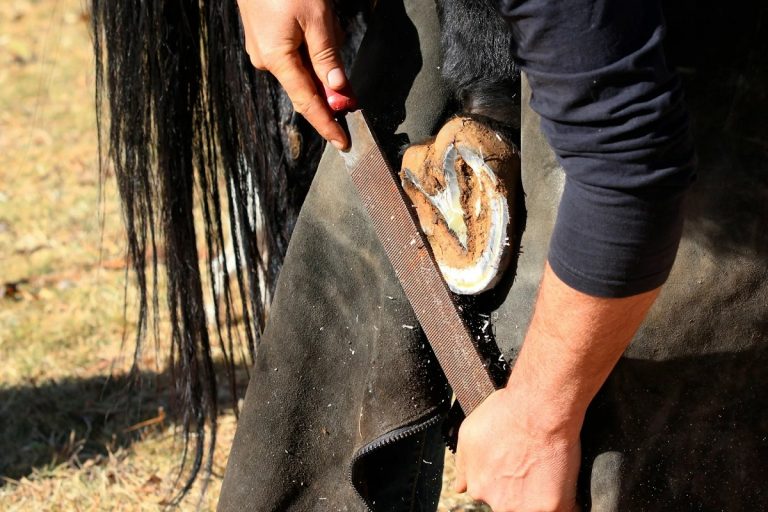
Alongside a properly fitted saddle, maintaining your Tennessee Walking Horse’s hooves plays an essential role in supporting weight capacity. Regular trimming and correct shoeing ensure ideal weight distribution, which reduces strain on your horse’s legs and back.
Well-maintained hooves prevent lameness and back soreness, common issues that limit carrying ability. Proper hoof care also preserves a smooth, efficient gait, which is critical for safely bearing weight.
Routine maintenance helps catch hoof problems early, so you can intervene before they become serious. When combined with correctly fitted tack, consistent hoof care promotes better posture and balance.
This enhances your horse’s comfort and load-bearing capacity. Prioritizing regular hoof maintenance is key to maximizing your horse’s strength and longevity under saddle.
How to Spot When Your Tennessee Walking Horse Is Overloaded
How can you tell if your Tennessee Walking Horse is carrying too much weight? Monitoring your horse closely during and after activity is essential to catch overload signs early. You want to watch for changes in behavior, physical symptoms, and other key signs that indicate strain.
First, look out for visible muscle soreness, especially in the back and loin areas. Your horse might also show reluctance to move forward, which is a big red flag.
Watch for visible muscle soreness and reluctance to move, especially in the back and loin areas.
Next, check for an increased heart rate, rapid breathing, and a higher rectal temperature than normal. These are clear signs your horse is working too hard.
Also, notice any gait irregularities or stiffness. Stiffness in the loin area is a common sign that the load may be too much.
Finally, keep an eye out for persistent lameness or a refusal to perform usual tasks. These behaviors often mean your horse is overloaded.
Catching these signs early helps prevent injury and keeps your horse healthy. After all, respecting weight limits is key to your horse’s well-being.
Tips to Safely Increase Your Horse’s Weight Capacity
Although increasing your Tennessee Walking Horse’s weight capacity can enhance its versatility, you need to proceed gradually to guarantee safety. Start by conditioning your horse with regular exercise. Then, incrementally add small weights to allow muscles and joints to adapt.
Make sure the saddle fits correctly and that the weight is distributed evenly to prevent injury. Keep a close eye on vital signs for any signs of fatigue. Don’t forget to include rest periods to help your horse recover.
| Step | Action | Purpose |
|---|---|---|
| 1 | Fitness conditioning | Prepare muscles and joints |
| 2 | Gradual weight increase | Adapt to added load |
| 3 | Correct saddle fit | Prevent pressure points |
| 4 | Monitor heart rate & respiration | Detect stress and fatigue |
| 5 | Rest and recovery | Avoid overexertion |
Frequently Asked Questions
What Types of Terrain Are Best for Tennessee Walking Horses?
You’ll find Tennessee Walking Horses perform best on smooth, flat terrains like paved trails, arena floors, and well-maintained dirt paths. They also handle gentle hills and moderate unevenness pretty well.
But it’s best to avoid rough, rocky, or heavily rugged surfaces. Those kinds of terrains can cause injuries, and nobody wants that. Just stick to the easier ground, and your horse will thank you!
How Often Should a Tennessee Walking Horse Be Rested After Heavy Riding?
You should rest your Tennessee Walking Horse for at least 24 to 48 hours after heavy riding.
If you notice any soreness or fatigue, it’s a good idea to extend the rest period.
Keep them in a clean, dry area during recovery, and limit their activity.
This helps your horse bounce back stronger and ready for the next ride.
Can Tennessee Walking Horses Carry Children Differently Than Adults?
You’d think Tennessee Walking Horses could carry children like featherweights, but they actually carry them similarly to adults. You must keep weight under 20% of the horse’s body weight.
Using proper saddles and technique is important for safety. So, whether it’s a child or an adult, the rules pretty much stay the same. Just be sure to ride smart!
What Dietary Changes Support a Tennessee Walking Horse’s Stamina?
You should increase high-quality forage and low-starch feeds. Adding fats like OmegaPrime+ can give your Tennessee Walking Horse a solid energy boost. Supplements such as MSM are great for supporting joint health.
When your horse’s activity spikes, make sure to adjust their feed gradually. This helps prevent digestive upset and keeps their stamina steady. Taking it slow with changes really makes a difference.
Are Tennessee Walking Horses Suitable for Beginner Riders?
You’ll feel like you’re riding the calmest cloud ever. Tennessee Walking Horses are incredibly suitable for beginners because of their gentle temperament, smooth gait, and manageable size.
All these qualities help you build confidence and ride safely. They’re just great for anyone starting out. You’ll get comfortable in no time!
Conclusion
Just like the mythic Atlas bore the weight of the world, your Tennessee Walking Horse carries your trust and care with every step. Knowing its weight capacity isn’t just about numbers. It’s about respecting its build, fitness, and well-being.
By monitoring rider weight, maintaining proper tack, and ensuring conditioning, you’ll keep your horse strong and sound. Remember, a well-supported horse performs best. So never push beyond its limits for a safe, lasting partnership.