How Tall Is A Tennessee Walking Horse – Quick Answer
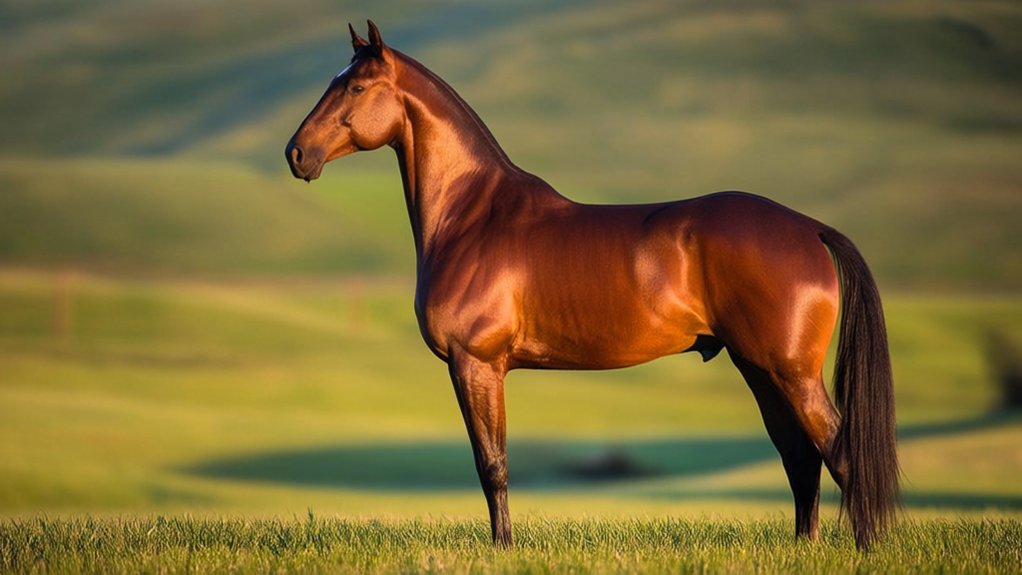
A Tennessee Walking Horse typically stands between 15 and 17 hands tall, with the average around 16 hands (64 inches) measured at the withers. You’ll find males are usually taller, while females tend to be slightly shorter within that range. Height depends on factors like age, genetics, and nutrition.
The measurement is taken with a height stick from the ground to the highest shoulder point. Keep exploring to understand how these factors influence the horse’s overall height and performance.
What Is the Typical Height Range of a Tennessee Walking Horse?
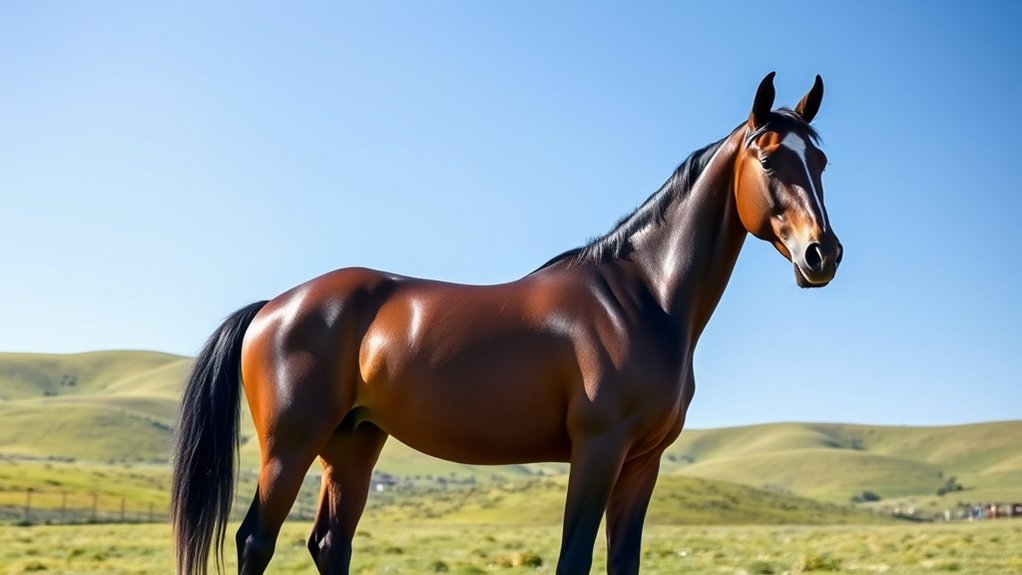
Although Tennessee Walking Horses can vary in size, they typically stand between 15 and 17 hands tall. That translates to about 59 to 68 inches at the shoulder. You should know that a hand equals exactly 4 inches, which is the standard measurement for horse height.
Most Tennessee Walkers fall within the 14.3 to 17 hands range, but the average mature horse stands around 16 hands, or 64 inches.
While you may encounter individuals slightly shorter or taller, they still conform to this general height range.
Understanding this typical size helps you assess whether a horse fits breed standards or your specific riding needs.
In short, the Tennessee Walking Horse’s height offers a balance between versatility and breed consistency.
Physical Traits That Determine Tennessee Walking Horse Height
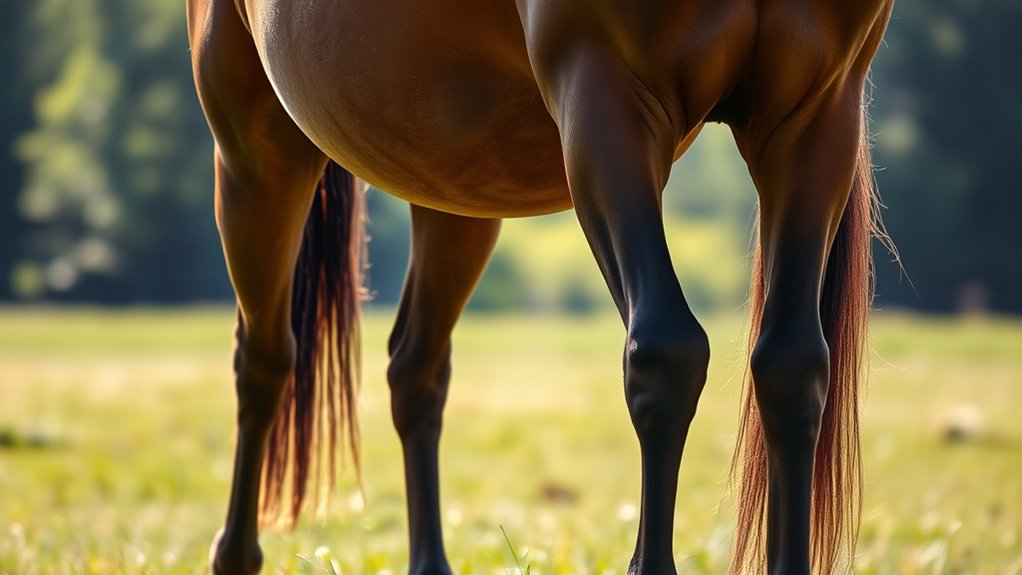
When you evaluate a Tennessee Walking Horse’s height, you’ll find that its long, sloping shoulders and neck play an essential role in defining its stature. These features extend the horse’s frame vertically, contributing considerably to its overall height.
Additionally, the breed’s elegant build includes a short back paired with a long, strong bottom line, which supports a balanced, upright posture that influences height measurement.
You measure the horse’s height from the ground to the highest point of the withers, the ridge between the shoulder blades, reflecting these physical traits accurately.
While genetics dictate variations, most Tennessee Walking Horses fall within the 15 to 17 hands range.
Understanding these anatomical characteristics helps you appreciate how the breed’s distinctive form shapes its typical height.
How Age and Gender Impact Tennessee Walking Horse Height
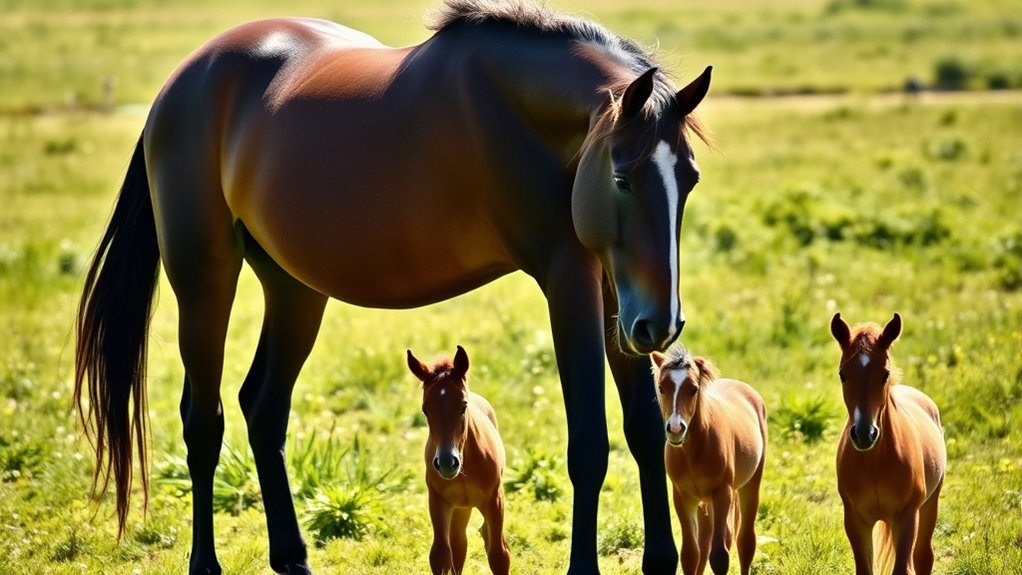
You’ll notice that Tennessee Walking Horses grow steadily until they reach full maturity between 4 and 6 years old.
Males generally stand taller than females, too.
Typically, stallions and geldings range from 15 to 17 hands, while mares usually measure between 15 and 16.5 hands.
Growth Patterns by Age
Because Tennessee Walking Horses continue growing well into their early years, understanding their height progression means paying close attention to age and gender.
You’ll notice these horses usually reach their full height between ages 4 and 6. By age 3, most have hit about 90% of their adult height, showing steady growth during their first few years.
Growth plates in their legs usually close around 4 to 5 years, which signals the end of major height increases.
Colts and young horses are noticeably shorter than mature adults but keep gaining height consistently as they get older.
While gender does play a role in height, the big age-related milestone is that by 5 or 6 years, growth slows down a lot. That’s when your Tennessee Walking Horse will have basically reached its mature size.
Gender Differences In Height
Although both age and genetics influence the height of Tennessee Walking Horses, gender plays a distinct role in determining their overall stature. Male horses typically stand taller, averaging about 16 hands, while females average around 15.5 hands. This difference, though slight, is consistent across the breed.
By the time a Tennessee Walking Horse reaches four to five years old, it usually attains its full height, with males maintaining that slight advantage over females.
You’ll notice that younger foals start much smaller, around 10 to 12 hands at birth, and grow steadily until maturity.
While individual genetics can cause variations, understanding how gender impacts height helps you set accurate expectations for the physical development of Tennessee Walking Horses.
It’s pretty interesting to see how these small differences play out as the horses grow.
Maturity and Final Size
When do Tennessee Walking Horses reach their full height? Typically, they achieve their mature size between 4 to 6 years. Before this, horses under 4 years haven’t fully developed their skeletal structures, so their height measurements can be misleading.
The closure of growth plates in the legs around age 4 to 5 signals the end of vertical growth. You’ll notice that stallions and geldings generally surpass mares slightly in height.
On average, a mature Tennessee Walking Horse stands between 15 to 17 hands (59 to 68 inches).
Understanding this timeline helps you gauge the horse’s growth accurately and avoid premature size assessments. This is crucial when planning training or competitions.
Your horse’s final height depends on both its age and gender, so keep these factors in mind.
How Does Height Affect a Tennessee Walking Horse’s Riding Ability?
If you’re selecting a Tennessee Walking Horse for riding, understanding how height impacts its abilities is essential. Taller horses, around 17 hands, often offer longer strides and a more commanding presence. This makes them ideal for show and performance disciplines.
Their extended gait can really enhance your riding experience. But keep in mind, you might need to adjust your mounting and riding techniques because of their size and longer legs.
On the other hand, horses near 14.3 hands provide greater agility and are generally easier to handle. This is especially true if you’re a smaller or less experienced rider.
The height versatility means you can pick a horse that fits your riding style. Whether you want impressive performance or prefer a comfortable, manageable mount for pleasure and trail riding, there’s an option for you.
How Does Tennessee Walking Horse Height Compare to Other Breeds?
Since height plays a crucial role in a horse’s suitability for various disciplines, comparing the Tennessee Walking Horse to other breeds can help you understand where it stands regarding size. Tennessee Walkers typically measure between 15 and 17 hands, placing them in the medium to large category.
They are taller than Arabians but a bit shorter than American Saddlebreds. When you look at draft breeds like the Clydesdale, Tennessee Walkers are noticeably smaller. Their height is pretty close to Standardbreds, though.
| Breed | Height Range (hands) |
|---|---|
| Tennessee Walking | 15 – 17 |
| Arabian | 14 – 15 |
| American Saddlebred | up to 17.2 |
| Clydesdale | 18+ |
| Standardbred | 15 – 16 |
Why Does Height Matter for Tennessee Walkers in Different Riding Disciplines?
You’ll find that a Tennessee Walker’s height plays a big role in how well it performs, especially in riding disciplines where stride length and clear gait are important. When you pick the right height, it makes a huge difference in how comfortable the ride feels and how well the rider fits the horse.
This isn’t just about comfort, though. The right height also helps with control and balance, which are key to getting the most out of your ride.
Height Impact On Performance
Although Tennessee Walking Horses come in a range of heights from 14.3 to 17 hands, this variation considerably influences their suitability across riding disciplines. Taller horses (16 to 17 hands) offer longer strides, which enhances endurance and trail riding performance.
On the other hand, shorter to mid-sized horses (14.3 to 16 hands) provide agility and stability, which are essential for Western and technical riding. Height also impacts gait presence in saddle seat competitions, where taller horses typically excel.
But keep in mind, extreme height can reduce maneuverability in tight courses.
| Height Range | Performance Strength |
|---|---|
| 14.3 – 15.5 hands | Agility, maneuverability, technical riding |
| 15 – 16 hands | Stability, comfort, Western & trail riding |
| 16 – 17 hands | Endurance, stride length, saddle seat presence |
Rider Compatibility And Comfort
When selecting a Tennessee Walking Horse for different riding disciplines, matching the horse’s height to the rider’s stature directly affects comfort and control. Tennessee Walkers range from 15 to 17 hands, offering versatility for riders of varying heights.
Taller horses provide enhanced leverage and stability, which are ideal for saddle seat and endurance riding, where balance and control are paramount.
Conversely, shorter horses around 15 hands suit beginners and children, ensuring ease of mounting and a manageable size. This breed’s height comfortably supports both Western and English riding styles, accommodating diverse rider physiques.
Proper height alignment improves your balance and riding posture, reducing fatigue and increasing precision, especially in show and trail disciplines.
Choosing the right height guarantees you maintain ideal control and enjoy a comfortable, responsive ride. It really makes a difference in how connected and confident you feel on your horse.
How Does Breeding Affect Tennessee Walking Horse Size and Height?
Because breeding directly shapes the genetic makeup of Tennessee Walking Horses, it plays a crucial role in determining their size and height. The breed typically stands between 14.3 and 17 hands tall, a range influenced by incorporating bloodlines from Standardbred, Morgan, Thoroughbred, and Saddlebred horses.
When breeders cross taller breeds like Standardbreds and Saddlebreds, offspring often reach the upper height limit of 17 hands.
Selective breeding also targets physical traits such as long necks and sloping shoulders, which affect overall height and proportions.
This genetic diversity from mixed origins allows you to find Tennessee Walking Horses with varied sizes tailored for specific disciplines or rider preferences.
Understanding these breeding influences helps you predict and select horses suited to your height requirements.
Can Nutrition Affect Tennessee Walking Horse Growth?
You can really influence a Tennessee Walking Horse’s growth by giving it a balanced diet that’s packed with essential minerals, vitamins, and enough protein. Proper nutrition plays a big role in supporting bone and muscle development, which is key for reaching their ideal height.
On the flip side, poor or overfeeding can actually stunt their growth or lead to skeletal problems.
Nutritional Impact On Height
Although genetics largely determine a Tennessee Walking Horse’s height, nutrition plays a vital role in ensuring the horse reaches its full growth potential. You need to provide balanced nutrition rich in protein, vitamins, and minerals to support ideal bone growth and skeletal development.
Calcium and phosphorus are particularly important; deficiencies can stunt growth or cause developmental problems.
However, overfeeding or an imbalanced diet can lead to weak or disproportionate skeletal structures, compromising height and soundness. By carefully managing feed quality and including appropriate supplementation, you help your Tennessee Walking Horse develop a strong, well-proportioned frame.
Proper nutrition during the horse’s developmental years isn’t just beneficial—it’s essential for maximizing its genetic height potential and ensuring a structurally sound adult horse.
Growth-Enhancing Dietary Factors
When aiming to maximize your Tennessee Walking Horse’s growth, focusing on specific dietary factors can really influence its ultimate height. Proper nutrition should include balanced protein, vitamins, and minerals to support bone and muscle development.
Make sure your horse gets enough calories from high-quality forage and grains. This helps promote healthy skeletal growth during those critical developmental stages.
Pay close attention to calcium and phosphorus intake because these minerals are essential for skeletal strength and height potential. Malnutrition or deficiencies during growth can permanently stunt your horse’s stature.
To optimize growth, you might consider supplementing with targeted nutrients. Just be sure to do this under veterinary supervision to avoid any imbalances.
How Do You Measure a Tennessee Walking Horse’s Height Correctly?
Measuring a Tennessee Walking Horse’s height requires attention to detail and proper technique to guarantee accuracy. Start by ensuring the horse stands squarely on a level surface, with all four legs evenly placed. Have an assistant hold the horse still and keep its head in a natural, upright position.
Measure from the ground to the highest point of the withers, the ridge between the shoulder blades, using a horse-specific measuring stick or height tape. Record the height in hands, where one hand equals 4 inches.
| Step | Details |
|---|---|
| Position | Horse stands square on level ground |
| Assistance | Hold horse steady, head upright |
| Measurement tool | Use horse height stick or height tape |
| Measurement point | From ground to top of withers |
What Height Should You Expect When Choosing a Tennessee Walking Horse?
Now that you know how to measure a Tennessee Walking Horse’s height accurately, it’s important to understand what height range you should expect when choosing one.
Typically, these horses stand between 15 and 17 hands tall, translating to 59 to 68 inches at the shoulder. Expect most show-quality Tennessee Walkers to measure around 16 hands, offering a perfect balance of elegance and stature.
Tennessee Walking Horses usually stand 15 to 17 hands tall, with show-quality horses around 16 hands.
Individual genetics may cause some variation, so a horse slightly outside this range isn’t unusual.
Keep in mind that foals and younger horses will be smaller but usually reach their full height by 4 to 5 years old.
When selecting your horse, aim for one within this standard range to guarantee it meets breed expectations and performs well in its intended activities.
Frequently Asked Questions
What Is the Average Weight of a Tennessee Walking Horse?
The average weight of a Tennessee Walking Horse ranges between 900 and 1,200 pounds. You’ll typically see mature horses weighing around 1,000 to 1,100 pounds.
Stallions and larger geldings tend to be on the heavier side. So, if you’re looking at one, expect it to be a bit bigger than the average. Overall, they’re pretty solidly built horses.
How Long Does It Take for a Tennessee Walking Horse to Reach Full Height?
You’ll see your Tennessee Walking Horse reach full height typically between 3 to 4 years old. Genetics, nutrition, and health all play a role in how they grow.
But by age four, most have achieved their mature size and stature. It’s pretty amazing to watch them grow!
Are Tennessee Walking Horses Prone to Any Height-Related Health Issues?
You aren’t likely to face height-related health issues with Tennessee Walking Horses unless they’re extremely tall.
In that case, you’ll need to manage joint stress and tendon strain carefully through proper conditioning and regular veterinary care.
It’s all about keeping them fit and monitoring their health so any problems don’t sneak up on you.
How Does Climate Affect the Growth of Tennessee Walking Horses?
Think of your horse like a plant. If you don’t give it the right climate, whether it’s too hot, too cold, or too humid, it struggles to grow strong.
You’ll need to provide shade and plenty of water to help your Tennessee Walking Horse thrive.
Keeping an eye on the weather and adjusting their care can make all the difference in their health and growth.
What Are the Common Coat Colors of Tennessee Walking Horses?
You’ll commonly see Tennessee Walking Horses in bay, black, chestnut, gray, dun, palomino, and roan.
They also sport pinto patterns like overo, tobiano, sabino, and tovero, showcasing impressive color diversity. It’s pretty cool how many different colors and patterns these horses can have!
Conclusion
When choosing a Tennessee Walking Horse, expect a height between 15 and 17 hands, influenced by age, gender, and breeding. For example, a 5-year-old gelding standing at 16 hands offers a balanced mix of strength and agility, ideal for trail riding.
By understanding how genetics and nutrition shape their height, you can confidently select a horse that fits your riding needs and preferences with precision. It’s pretty cool how these factors come together to determine the perfect horse for you.