How To Train Tennessee Walking Horses – Beginner’s Guide
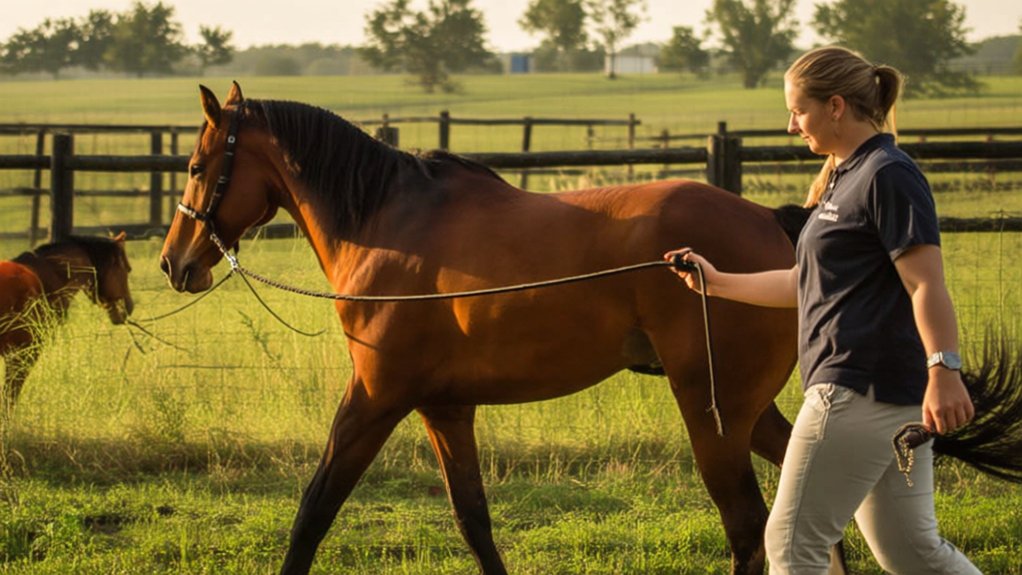
To train your Tennessee Walking Horse, start by building trust with consistent, calm groundwork like lunging and leading. Use clear, simple cues for basic commands such as walk, stop, and turn, rewarding good responses promptly.
Keep yourself relaxed, as your calmness helps your horse stay confident. Begin riding gently, focusing on steady communication and observing your horse’s body language.
Incorporate hill and trail work gradually to build strength and balance. As you progress, you’ll discover even more ways to enhance your horse’s training and comfort.
Understanding Tennessee Walking Horse Temperament and Gait
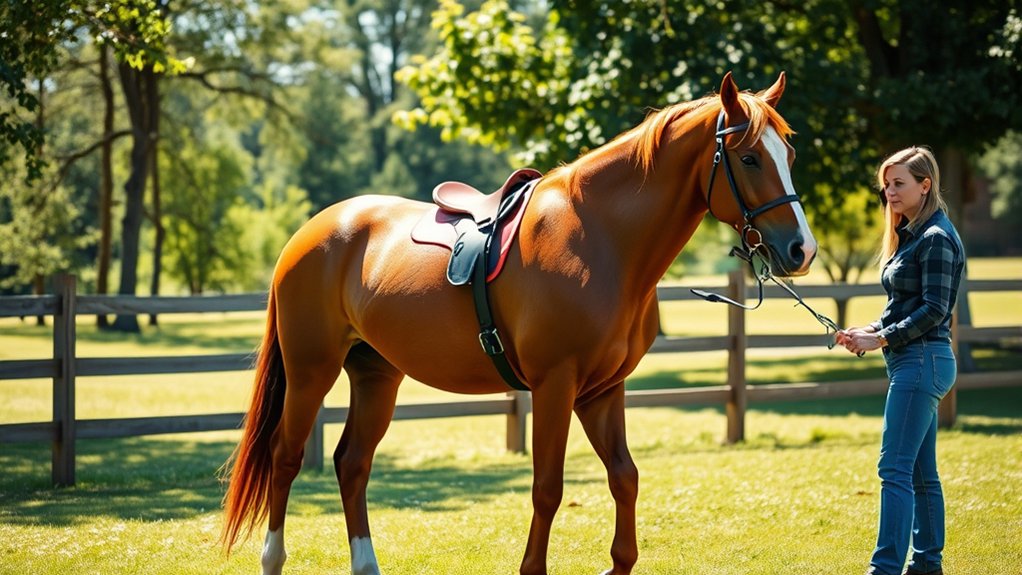
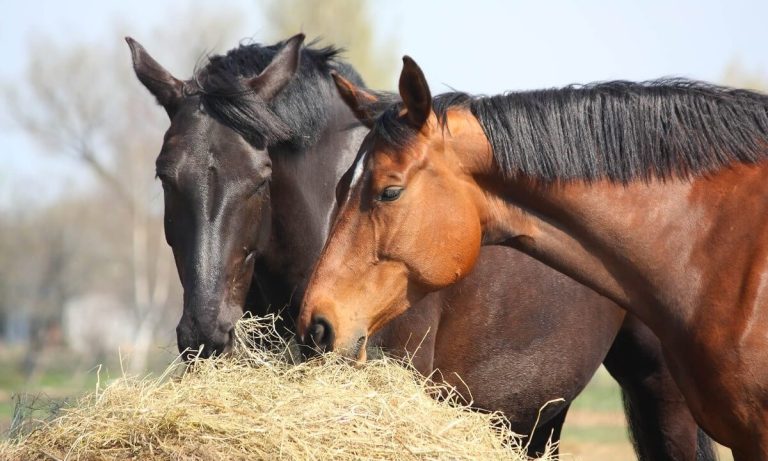
Although Tennessee Walking Horses are celebrated for their smooth running walk, their calm and gentle temperament is just as important for riders. You’ll find these horses naturally friendly and cooperative, making them excellent partners, especially if you’re new to riding.
Tennessee Walking Horses combine a smooth gait with a naturally friendly and gentle nature, ideal for new riders.
Their desire to please and high intelligence mean they quickly respond to your cues, which helps you communicate clearly and build a solid connection.
The running walk itself offers you a comfortable, steady ride, reducing fatigue during longer sessions. These horses also adapt well to different environments, staying calm even when situations change.
Understanding this combination of temperament and gait helps you approach training practically, setting a foundation for positive experiences and effective learning with your Tennessee Walking Horse.
Starting Groundwork: Building Trust Before Riding
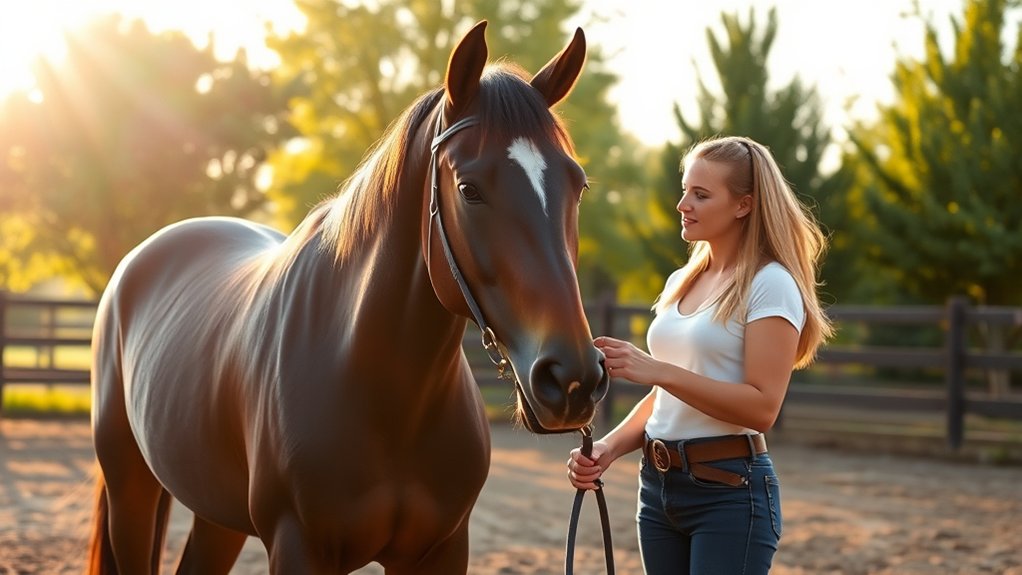
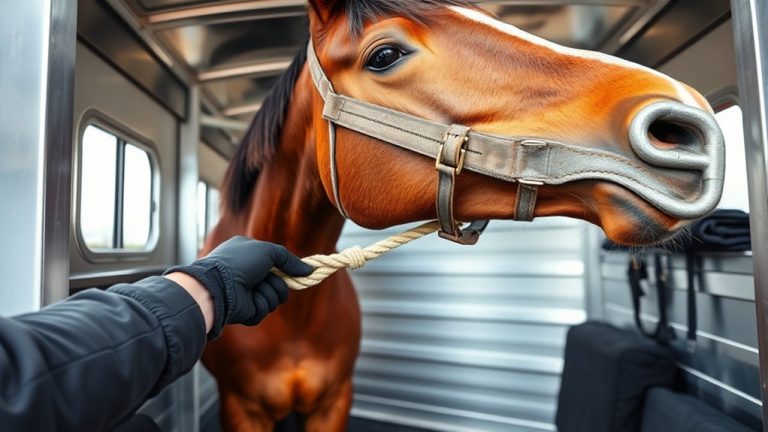
You’ll want to start by establishing clear communication through consistent leadership signals that your Tennessee Walking Horse can understand. It’s all about tuning in to their body language, so you can respond in the right way and build trust.
When you have that foundation, every step of training becomes smoother and safer for both of you.
Establishing Clear Communication
When you start training your Tennessee Walking Horse, establishing clear communication through calm and consistent groundwork sets the foundation for trust and mutual respect. Use gentle cues and reward positive behavior to help your horse understand expectations.
Exercises like lunging and leading develop responsiveness and confidence before riding. These early steps are key to building a strong connection between you and your horse.
| Communication Element | Purpose |
|---|---|
| Calm Routine | Builds trust and reduces stress |
| Gentle Cues | Encourages understanding |
| Reward Reinforcement | Reinforces positive behavior |
| Precise Commands | Clarifies expectations |
| Groundwork Exercises | Develops responsiveness |
Reading Horse Body Language
Building a strong connection with your Tennessee Walking Horse involves more than clear cues and consistent routines. It requires understanding the subtle signals your horse gives through its body language.
Watch the ears: forward means interest, while pinned ears show discomfort or irritation.
Check the face for a soft eye and a slightly open mouth. These are signs your horse feels comfortable.
Also, observe the tail. A naturally hanging tail suggests calmness, but if it’s swishing or clamping, that signals tension.
Notice weight shifts or changes in stance, like leaning on one leg. These can show hesitation or unease.
Finally, pay attention to breathing patterns and licking or chewing. These often indicate relaxation and growing trust.
Consistent Leadership Signals
Although establishing trust takes time, consistent leadership signals during groundwork are essential to help your Tennessee Walking Horse understand what you expect. Start by using clear, consistent cues paired with calm, assertive body language to create a safe learning environment.
Positive reinforcement encourages your horse to relax and engage willingly.
Focus on asking questions with proper timing and clarity so your horse can respond appropriately. Gradually introduce exercises like leading, yielding, and lunging to build respect and responsiveness.
Maintain patience and consistency throughout, reinforcing trust and confidence in your leadership.
Teaching Basic Commands: Walk, Stop, and Turn
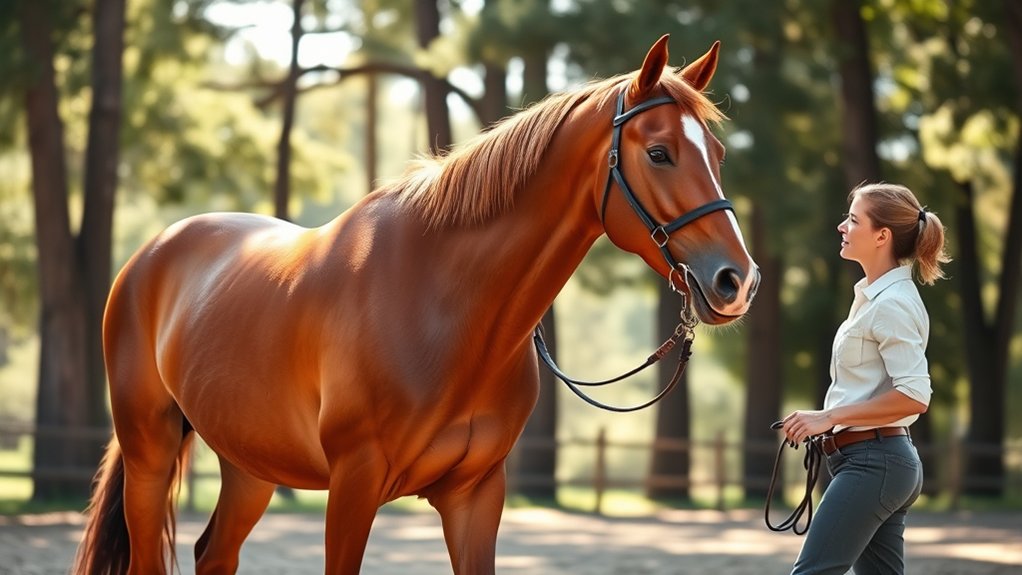
You’ll want to start by establishing clear, consistent cues for each command. For example, a gentle squeeze or a voice prompt works well for walking.
Then, practice these commands regularly so your horse can connect the signals with the actions.
Staying calm and steady during training really helps your Tennessee Walking Horse respond confidently.
Clear Cue Signals
When teaching your Tennessee Walking Horse basic commands like walk, stop, and turn, it’s essential to use clear and consistent cues that your horse can easily recognize. Choose simple voice commands or a distinct whistle, and pair each with a unique physical signal, like gentle rein pressure or a subtle body shift, to reinforce the message.
Practice these cues in a calm, distraction-free setting at first. Then, gradually introduce distractions to build reliability. Always reward your horse immediately with praise or a gentle touch when it responds correctly.
Keeping each cue distinct prevents confusion and helps your horse understand exactly what you expect. Clear cue signals form the foundation for effective communication.
This makes your training process smoother and more enjoyable for both of you.
Consistent Command Practice
Since teaching your Tennessee Walking Horse basic commands requires patience and consistency, you should always use clear voice commands paired with gentle rein or body cues. Practice each command calmly in a distraction-free space, gradually increasing the challenge as your horse responds better.
Use positive reinforcement like praise or light touches to encourage willingness and understanding. Consistent timing and signals help your horse associate cues with actions, building reliable responses over time. Regular review strengthens muscle memory for walk, stop, and turn commands.
| Command | Voice Cue | Physical Cue |
|---|---|---|
| Walk | “Walk” | Light rein pressure forward |
| Stop | “Whoa” or “Stop” | Gentle rein pull back |
| Turn | “Turn left/right” | Slight rein and body lean |
Stay patient and consistent for best results.
Managing Rider Nervousness and Building Clear Communication
Although managing rider nervousness can be challenging, calming yourself with deep breathing and positive self-talk sets the foundation for clearer communication with your Tennessee Walking Horse. Remember, your anxiety can transfer to the horse, so staying relaxed is key.
Use consistent, clear cues to avoid confusing your horse and build trust.
Practicing groundwork exercises helps you gain confidence and better understand your horse’s responses before you ride. Gradually introduce new environments or obstacles to reduce anxiety for both of you.
Maintain a relaxed posture and steady breathing to convey calmness, encouraging your horse to respond calmly and attentively.
Introducing Riding Sessions With Confidence
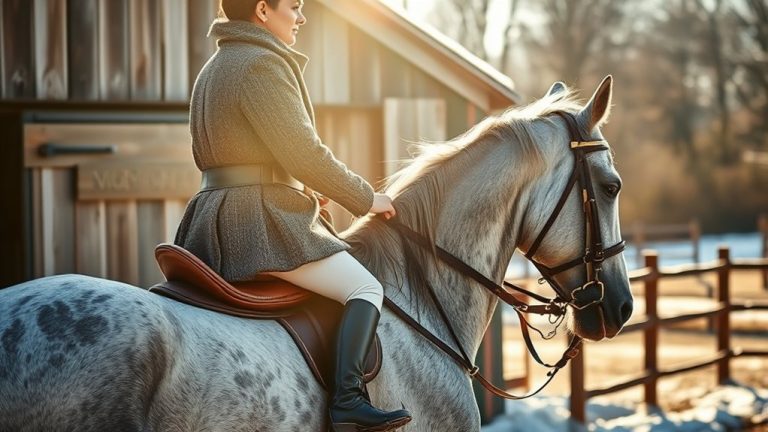
Calming your nerves and establishing clear communication on the ground sets you up to introduce riding sessions with confidence. Start with short, relaxed rides to help your Tennessee Walking Horse feel at ease and build its trust in you.
Use consistent, clear cues paired with gentle leadership to maintain that trust before extending ride length or adding complexity.
Incorporate ground exercises like lunging or join-up to reinforce communication and calmness before mounting. Always watch your horse’s body language closely. If it shows stress, slow down and adjust your approach.
End each session on a positive note to leave your horse feeling successful and enthusiastic for the next ride. Taking these steps ensures both of you develop confidence and enjoy your training journey together.
Conditioning Your Tennessee Walking Horse With Hill Work and Trails
When you include hill work and trail rides in your Tennessee Walking Horse’s conditioning routine, you target key muscles that improve balance and gait. Hill work strengthens the hindquarters by encouraging muscular development during ascents and descents. Start gradually, increasing intensity and duration to avoid fatigue or strain.
Trail riding on varied terrain, like woodlands and open fields, builds your horse’s confidence and adaptability. It also boosts mental stimulation and physical endurance, leading to a more relaxed, responsive gait.
Pay close attention to your horse’s behavior during rides. It offers valuable feedback on fitness levels and helps you adjust the conditioning plan.
With consistent, patient effort, hill and trail work become essential tools for developing a well-balanced, confident Tennessee Walking Horse. Just take it step by step, and you’ll see great results over time.
Choosing Proper Equipment for Tennessee Walking Horses
Selecting the right equipment plays a crucial role in enhancing your Tennessee Walking Horse’s performance and comfort. Start with a well-fitting dressage saddle designed for gaited horses to support natural movement.
Choose lightweight, padded bridles and snaffles that won’t interfere with your horse’s smooth gait.
Bell boots with velcro closures protect legs during training and adjust easily for a snug fit.
Make certain girths and cinches fit properly to prevent slipping and evenly distribute pressure across the back.
Don’t forget to check stirrups and reins, adjusting them to fit both your horse’s build and your comfort.
Taking time to select and fit each piece carefully will help your horse move freely, reducing stress and improving training results.
It’s worth the effort because a comfortable horse is a happy horse, right? So, go ahead and give your Tennessee Walking Horse the best gear to shine!
Frequently Asked Questions
How Often Should I Groom My Tennessee Walking Horse?
You should groom your Tennessee Walking Horse at least 3 to 4 times a week. This keeps their coat healthy, removes dirt and sweat, and lets you check for injuries or skin issues regularly.
Grooming isn’t just about looks; it’s also a great way to bond with your horse. Plus, it helps you catch any problems early before they become serious. So, try to make grooming a regular part of your routine.
What Is the Best Diet for a Tennessee Walking Horse?
You should feed your Tennessee Walking Horse mostly high-quality forage like hay or pasture. Add grains moderately for energy, and guarantee fresh water is always available.
Include supplements based on age, activity, and health with vet guidance. It’s all about balancing their diet to keep them happy and healthy.
How Do I Recognize Signs of Common Health Issues?
You might think spotting health issues is tricky, but you can recognize them by watching for uneven gait, swelling, discharge, or behavioral changes.
Trust your observations. They’re your best tool for keeping your horse healthy and comfortable.
When Is the Best Age to Start Training a Tennessee Walking Horse?
You should start training your Tennessee Walking Horse around 2 to 3 years old, once it’s physically and mentally ready. Begin with gentle groundwork, focusing on patience and gradual progress to build confidence and prevent injury.
Take your time with each step. Horses learn best when they feel safe and not rushed. So, keep the sessions short and positive. That way, both you and your horse enjoy the process.
Can Tennessee Walking Horses Be Trained for Other Disciplines?
Certainly, you can confidently cross-train Tennessee Walking Horses for diverse disciplines. Their natural nimbleness and notable nature let you nurture skills in dressage, trail, and western riding.
You can blend their gait with specialized training for smooth success. It’s pretty impressive how versatile these horses can be once you put in the work. Give it a try, and you might be pleasantly surprised!
Conclusion
Training your Tennessee Walking Horse patiently builds a strong, trusting bond essential for success. Did you know these horses can perform a unique four-beat gait called the “running walk” at speeds up to 10-20 mph?
Start with groundwork, teaching clear commands, and gradually introduce riding sessions. You’ll set a solid foundation this way.
Remember, consistent practice and proper equipment help your horse stay comfortable and confident. That way, you both can enjoy the journey together.