What Are Tennessee Walking Horses Known For – A Closer Look
You’ll recognize Tennessee Walking Horses for their smooth, natural four-beat running walk that reduces rider fatigue and offers unmatched comfort. Their calm, steady temperament makes them easy to handle, while their well-muscled, balanced build ensures sure-footedness across terrains.
They sport a variety of solid and patterned coats, adding to their distinctive appeal. These traits make them ideal for trail and pleasure riding. Explore further to understand their unique gait, care needs, and versatility.
How Did Tennessee Walking Horses Get Their Start?
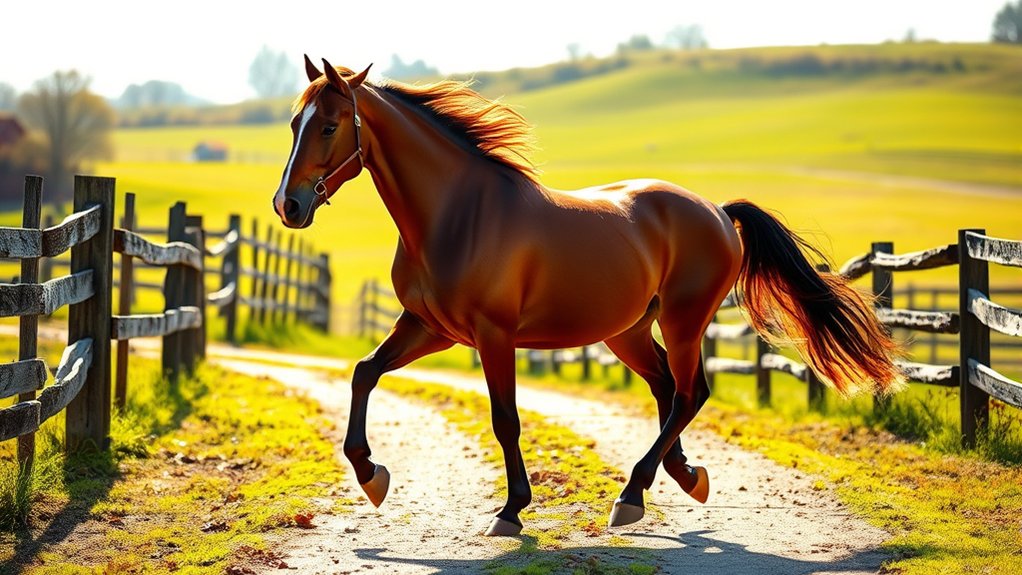
Although Tennessee Walking Horses originated in the late 19th century, their development involved careful crossbreeding of Narragansett Pacers, Canadian Pacers, Morgans, and Saddlebreds to create a horse with a smooth, distinctive gait.
You should know the foundation sire, Black Allan, born in 1886, played a pivotal role despite being a pacing failure. Instead, he became a prolific breeding stallion, passing on traits that shaped the breed’s signature gait.
Initially called Tennessee Pacers, these horses served both farm work and trotting races, prized for their comfortable ride.
The breed’s lineage also incorporated Standardbreds, Thoroughbreds, and American Saddlebreds, enhancing versatility.
Organized breeding efforts began with the Tennessee Walking Horse Breeders and Exhibitors Association in 1935, which closed the studbook in 1947, preserving breed standards.
This helped keep the breed consistent and true to its roots.
What Physical Traits Make Tennessee Walking Horses Unique?
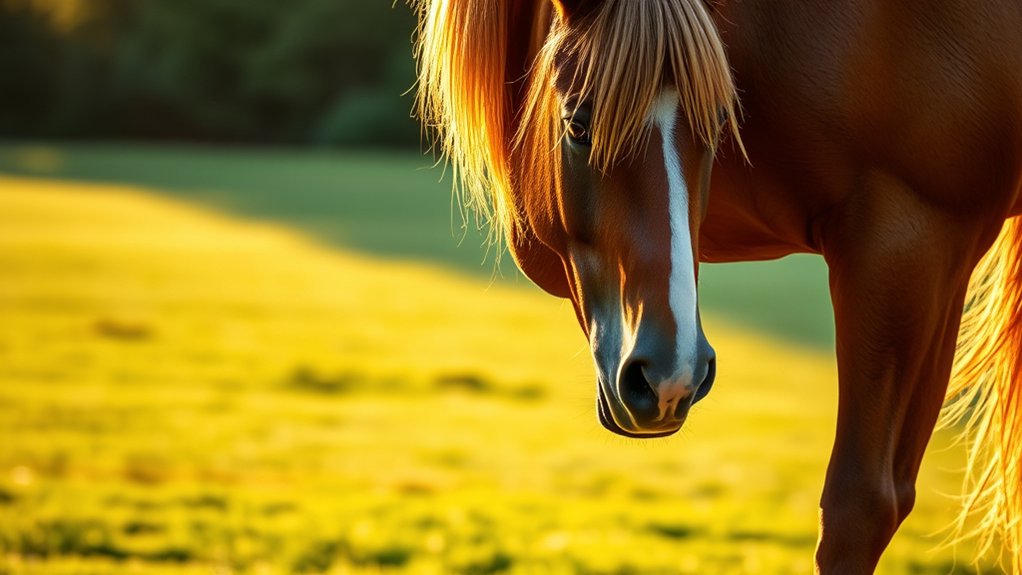
You’ll notice Tennessee Walking Horses really stand out because of their distinctive four-beat running walk. What’s cool is that their rear feet actually overstep the front ones by up to 18 inches, which makes their gait incredibly smooth and easy to ride.
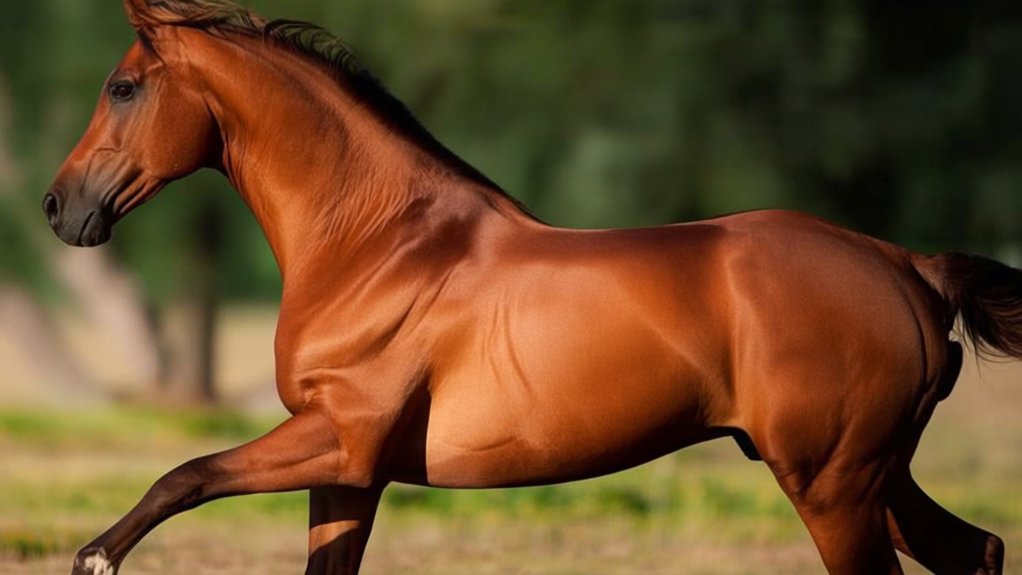
On top of that, their body structure is pretty elegant. They’ve a refined head and a long, sloping neck, plus a well-muscled frame. Their longer bottom line helps support those comfortable, extended strides that you don’t see in every horse.
And if you look at their coat colors, you’ll find a lot of variety. They can be solid bays or chestnuts, but you’ll also spot some striking pinto patterns and even silver dapple. All these traits together give Tennessee Walking Horses their unique and memorable presence.
Distinctive Running Walk
When you watch a Tennessee Walking Horse move, its distinctive running walk really catches your eye because of some special physical traits. This natural four-beat gait can reach speeds of 10-20 mph while staying incredibly smooth and comfortable.
The horse’s long, sloping shoulders and strong, well-muscled hips help create an extended, elevated stride that defines the running walk.
One of the coolest things is how the hind feet consistently step ahead of the front footprints by 6-18 inches, giving the movement a graceful overreach.
The smoothness you see comes from unique mechanics that cause a rhythmic head nod, which improves balance and fluidity.
This natural, inherited gait truly makes Tennessee Walking Horses stand out from other gaited breeds.
It’s what makes their running walk both efficient and unmistakable when you see them perform.
Elegant Body Structure
What physical traits give Tennessee Walking Horses their unmistakable elegance? You’ll notice their height ranges from 14.3 to 17 hands, combined with long, upright necks that accentuate their graceful profile. Their robust, well-structured bodies feature short backs and longer bottom lines, optimizing stride length.
They also have long, sloping shoulders and hips, which enable their signature smooth, flowing gait. A finely chiseled head, adorned with small, well-placed ears, completes their refined look.
| Trait | Description |
|---|---|
| Height | 14.3 to 17 hands |
| Neck | Long, upright |
| Body Structure | Robust, short back, long bottom line |
| Shoulders & Hips | Long, sloping for smooth gait |
These traits define their unique, elegant form.
Diverse Coat Colors
Alongside their elegant structure, Tennessee Walking Horses stand out through a remarkable variety of coat colors that catch the eye. You’ll find solid shades like bay, black, and chestnut, alongside striking pinto patterns such as overo, tobiano, and sabino.
This breed also showcases dilution genes, producing dun, palomino, and silver dapple coats, enhancing their visual diversity. Unlike many breeds, Tennessee Walking Horses aren’t restricted by coat color standards, allowing a broad spectrum of unique appearances.
This diversity contributes markedly to their popularity and appeal in both show rings and recreational riding.
Key coat variations include:
- Solid colors: bay, black, chestnut
- Pinto patterns: overo, tobiano, sabino
- Dilution colors: dun, palomino, silver dapple
What Colors and Patterns Are Common in Tennessee Walking Horses?
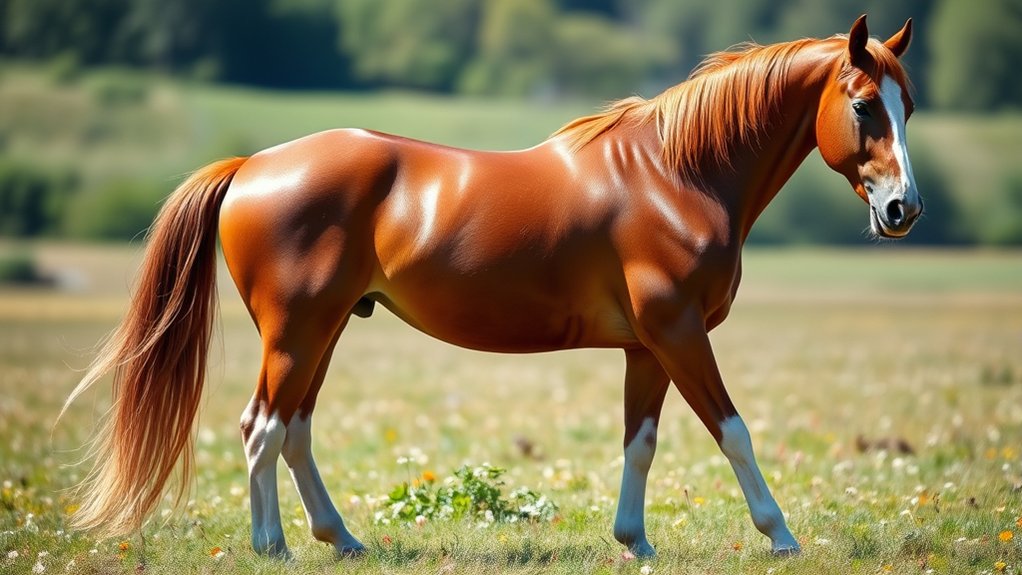
Although Tennessee Walking Horses are known for their smooth gait, their coat colors and patterns also play a big part in their appeal. You’ll find these horses in solid shades like bay, black, chestnut, and gray. They also come in striking pinto patterns that really catch the eye.
Common coat patterns include overo, sabino, tobiano, and tovero. Each of these adds unique markings that make the horses look even more interesting. Plus, dilution genes often create palomino, dun, and silver dapple colors, which expand the breed’s color palette.
Both solid and patterned coats meet breed standards and are welcome in show rings. This really shows how versatile the breed is.
Knowing about these colors and patterns helps you appreciate the breed’s striking look, which goes perfectly with their famous gait. It also explains why they’re so popular among enthusiasts and competitors alike.
Why Are Tennessee Walking Horses Known for Their Gentle Temperament?
Because Tennessee Walking Horses have been selectively bred for a calm and steady disposition, they exhibit a gentle temperament that suits riders of all skill levels. Their historical role as farm and plantation horses demanded a docile nature, which remains a defining trait today.
This calmness makes them ideal for therapeutic riding and family activities, as they help reduce rider anxiety and promote confidence.
You’ll notice their temperament in qualities like:
- Friendly and enthusiastic to please attitude, fostering a positive rider-horse connection
- Patience and steadiness, ensuring safe, enjoyable experiences for novices and experts alike
- Relaxed demeanor, contributing to their reputation as dependable, approachable companions
These traits make Tennessee Walking Horses a preferred choice when you want reliability paired with gentleness.
What Is the Signature Gait of Tennessee Walking Horses?
You’ll notice that the Tennessee Walking Horse’s signature four-beat running walk is really smooth and comfortable. That’s because of its unique gait mechanics.
This natural stride has the rear foot stepping over the front foot by about 6 to 18 inches, which creates a long, gliding motion.
When you understand these details, it’s easy to see why this gait stands out, whether in show rings or out on trail rides.
Four-Beat Running Walk
When you watch a Tennessee Walking Horse in motion, you’ll notice its signature four-beat running walk. It’s a smooth, rhythmic gait that really sets this breed apart.
This gait features a distinctive overstep, where the rear foot lands 6 to 18 inches ahead of the front foot, producing a flowing and continuous stride.
It’s naturally inherited and can reach speeds of 10 to 20 miles per hour. This allows for swift, efficient travel over long distances.
Key characteristics include a four-beat rhythm with evenly spaced footfalls, minimal vertical bounce that enhances stability during movement, and a gliding motion that combines speed and elegance.
This precise gait defines the breed’s unique locomotion and adds to its lasting appeal among riders.
It’s really what makes the Tennessee Walking Horse stand out.
Smoothness and Comfort
The four-beat running walk doesn’t just define the Tennessee Walking Horse’s movement, it also delivers unmatched smoothness and comfort. As you ride, the horse’s hind foot oversteps the front foot by 6 to 18 inches, creating a distinctive rhythmic pattern that feels steady and vibration-free.
This natural gait allows speeds from 10 to 20 miles per hour without sacrificing ride quality. It’s perfect for long-distance trail riding or any activity where comfort is the top priority.
You’ll notice the gait’s fluidity really sets Tennessee Walking Horses apart from other gaited breeds. It provides a uniquely smooth experience that reduces fatigue for both horse and rider.
This smoothness is why the running walk remains the breed’s signature feature and a key reason riders choose Tennessee Walking Horses.
Gait Mechanics Explained
How does the Tennessee Walking Horse achieve its signature smooth and rhythmic motion? It performs the four-beat running walk, a natural, inherited gait unique to the breed. This gait features a distinct pattern where the rear foot oversteps the front foot by 6 to 18 inches, producing an elongated, flowing stride.
You’ll notice the horse maintains a level head carriage while traveling comfortably at speeds between 10 and 20 miles per hour. The running walk’s mechanics emphasize both speed and smoothness without artificial aids, making it ideal for show and recreational riding.
Key features of the running walk include:
- Four evenly spaced beats creating a rhythmic cadence
- Rear foot overstepping front foot to extend stride length
- Consistent forward momentum with minimal vertical movement
Why Do Tennessee Walking Horses Excel in Various Riding Disciplines?
Because Tennessee Walking Horses have a unique combination of a smooth four-beat running walk and a calm, adaptable temperament, you’ll find them highly effective across various riding disciplines. Their gait versatility, including rack, stepping pace, and fox trot, lets you tailor their movement to different riding styles.
Their elegant build enhances balance and fluidity. This really benefits both English and Western disciplines.
| Discipline | Key Advantage | Suitable Gaits |
|---|---|---|
| Trail Riding | Comfort over rough terrain | Running walk, fox trot |
| Endurance | Stamina and smoothness | Running walk, stepping pace |
| Pleasure Riding | Calm temperament | Running walk, rack |
This adaptability and dependability make Tennessee Walking Horses a reliable choice for riders of all skill levels. They’re just great all-around horses.
How Do Tennessee Walking Horses Perform in Shows and Competitions?
When you watch Tennessee Walking Horses in shows, you’ll notice they compete in different classes like flat-shod and performance. Each class highlights a unique gait style that really shows off what these horses can do.
Judges pay close attention to how smooth and rhythmic the horse’s movements are, especially their signature running walk.
At the same time, the rider’s control and how well they present the horse also matter a lot. Plus, using the right equipment and wearing proper attire isn’t just for looks—it helps showcase the horse’s natural movement and makes sure everything matches the breed standards.
Show Classes Overview
What sets Tennessee Walking Horses apart in competitions is their distinctive gait and versatility across various show classes. You’ll see them perform in both flat-shod and performance divisions, where judges evaluate gait quality, manners, and overall appearance.
The breed’s signature four-beat running walk is a key focus, assessed for smoothness, rhythm, and consistency.
In shows, you can expect to encounter big lick performance classes featuring exaggerated, high-stepping gaits with padded shoes. These are subject to strict regulations.
Then there are flat-shod classes emphasizing natural gait and barefoot movement aligned with breed standards.
You’ll also find various discipline categories like saddle seat, pleasure riding, and trail classes. These highlight the horse’s adaptability.
All these classes showcase the breed’s unique movement and diverse capabilities across competitive settings.
Gait Styles Judged
Although Tennessee Walking Horses perform several gaits, judges focus primarily on the quality and consistency of their four-beat running walk during competitions. This signature gait, capable of speeds between 10 and 20 mph, must be smooth and comfortable. It should demonstrate rhythm, cadence, and impulsion.
Depending on the class, you’ll also see horses evaluated on the flat foot walk, rack, stepping pace, fox trot, and single-foot. In performance divisions like the Big Lick, horses exhibit exaggerated gaits enhanced by padded shoes. These are heavily regulated because of controversy.
Judges critically assess head carriage and overall harmony with the rider, making sure the horse moves fluidly and responsively. To succeed, your Tennessee Walking Horse must maintain consistent gait mechanics with precise footfall timing and balanced movement throughout the show ring.
Equipment And Attire
Because presentation plays a crucial role in Tennessee Walking Horse shows, handlers carefully select equipment and attire to highlight the breed’s elegance and smooth movement. You’ll notice horses often sport long, braided manes and tails, enhancing their refined appearance.
In competition, tack varies: English or Western saddles are standard, with some classes requiring artificial tails or specific grooming to emphasize gait and conformation.
Footwear also differs. Flat-shod divisions use natural shoes, while performance classes showcase padded shoes, especially in the Big Lick style.
Key elements include braided manes and tails combined with show halters, tailored riding attire designed for polished presentation, and shoe types tailored to class requirements, affecting gait display.
This precise equipment selection ensures the horse’s natural grace and smooth gait stand out in the ring. It really helps to bring out the best in these beautiful horses.
What Common Health Issues Affect Tennessee Walking Horses?
When managing Tennessee Walking Horses, you need to be aware of several genetic and physical health challenges that can impact their performance and well-being. These horses commonly face congenital stationary night blindness (CSNB), which is linked to mutations in the GRM6 and TRPM1 genes. This condition affects their vision in low light.
Cervical vertebral compressive myelopathy (CVCM) can cause ataxia and neurological deficits, making coordination difficult.
Polysaccharide Storage Myopathy type 1 (PSSM1) results in muscle stiffness and abnormal gait patterns.
Plus, over-angulated hindlegs can lead to soft tissue injuries, joint degeneration, and lameness.
On top of that, Tennessee Walking Horses are vulnerable to metabolic syndrome, digestive complications, respiratory issues, and infectious diseases, especially during long-distance travel.
Recognizing these conditions early is key. That way, you can address them proactively and help your horse maintain ideal health and functionality.
How Should You Care for and Feed Tennessee Walking Horses?
To maintain your Tennessee Walking Horse’s health and performance, you need to provide a carefully balanced diet combined with attentive daily care. Focus on low-starch, high-soluble fiber feeds like beet pulp and low-ESC options to support metabolic health and manage PSSM risks.
A balanced diet with low-starch, high-fiber feeds supports your Tennessee Walking Horse’s health and performance.
Daily grooming, turnout, and social interaction help preserve their calm temperament and overall well-being. Preventative care is critical. Vaccinations, dental exams, and regular hoof trimming prevent gait-affecting issues and promote longevity.
Monitor and limit grass intake using grazing muzzles or small-hole hay nets to control sugar consumption. Incorporate nutritional supplements like Omega-3 oils and MSM for joint, skin, and immune support.
Maintain consistent grooming routines to reduce stress and enhance coat condition. This integrated approach guarantees your horse’s ideal health and performance.
Why Are Tennessee Walking Horses Popular for Trail and Pleasure Riding?
Proper care and feeding set the foundation for your Tennessee Walking Horse’s performance and comfort during rides. Their smooth, four-beat running walk ensures a comfortable ride, especially over long distances.
You’ll appreciate their calm temperament, which suits riders of all skill levels. This makes trail and pleasure riding accessible and enjoyable.
| Feature | Benefit | Impact |
|---|---|---|
| Running Walk | Smooth, four-beat gait | Reduces rider fatigue |
| Temperament | Calm, gentle | Easy handling for beginners |
| Sure-footedness | Balanced conformation | Confident navigation on rough terrain |
This combination of traits makes Tennessee Walking Horses a reliable, versatile choice for diverse riding environments.
Frequently Asked Questions
How Long Do Tennessee Walking Horses Typically Live?
Tennessee Walking Horses typically live around 25 to 30 years. With proper nutrition, healthcare, and management, you can help your horse reach its full lifespan. Sometimes, they even compete successfully into their early 30s.
It’s pretty amazing how well these horses can do when they’re taken care of right. Just a little extra attention goes a long way in keeping them healthy and active for years. So, if you’re thinking about raising one, know that with the right care, they can be by your side for a good long time.
Are Tennessee Walking Horses Good for Beginner Riders?
If you’re dipping your toes into horseback riding, Tennessee Walking Horses make a smooth sail. Their calm temperament and manageable size are perfect for beginners. Plus, their distinctive four-beat running walk gives a really comfortable ride.
This gait helps new riders feel stable and confident. So, if you want a horse that’s easygoing and gentle, these horses are a great choice. They can make your first riding experiences enjoyable and stress-free.
What Is the Average Height and Weight of Tennessee Walking Horses?
You’ll find Tennessee Walking Horses average between 14.3 and 17 hands tall, standing 59 to 68 inches. They weigh around 900 to 1,200 pounds.
This gives them a balanced and versatile build. Perfect for various riding activities. They’re really adaptable and comfortable to ride.
How Do Tennessee Walking Horses Behave Around Other Animals?
You’ll find Tennessee Walking Horses behave calmly and non-aggressively around other animals, forming strong social bonds. They exhibit patience and curiosity, making them ideal for mixed-animal environments and therapeutic or educational settings.
They’re pretty easygoing and tend to get along well with different kinds of animals. This makes them great companions whether you have other horses, pets, or even farm animals around. Their gentle nature really shines in group settings.
Can Tennessee Walking Horses Be Trained for Therapy Work?
Like a gentle river shaping stones, you can train Tennessee Walking Horses for therapy work. Their calm nature and smooth gait let you teach them patience and responsiveness. This makes them ideal for aiding individuals with diverse therapeutic needs effectively.
They’re naturally gentle and easygoing, which really helps when working with people who need extra care. With consistent training, these horses become reliable partners in therapy sessions. It’s pretty amazing how well they adapt to this important role.
Conclusion
You might’ve heard Tennessee Walking Horses got their smooth gait from selective breeding, but the real secret lies in their unique genetic makeup combined with careful training. Their distinctive running walk and calm nature aren’t just luck—they’re the result of generations of breeding focused on comfort and versatility.
So, whether you’re trail riding or competing, you can trust these horses deliver a smooth, gentle experience, backed by biology and expert care.