What Is Soring In Tennessee Walking Horses – A Closer Look
Soring in Tennessee Walking Horses is a cruel practice where trainers purposely inflict pain using chemicals like mustard oil and harsh devices such as stacked pads and chains. This causes exaggerated, high-stepping gaits but leads to severe tissue damage and lasting harm.
Even though soring was legally banned back in 1970, it still happens. That’s mostly because some people accept it as part of the culture, and it’s tough to enforce the laws against it.
You’ll discover how these harmful techniques work, signs to spot sored horses, and the ongoing legal efforts that are trying to combat this abuse. It’s important to know what to look for if you want to help protect these horses.
What Is Soring and Why It’s Used in Tennessee Walking Horses
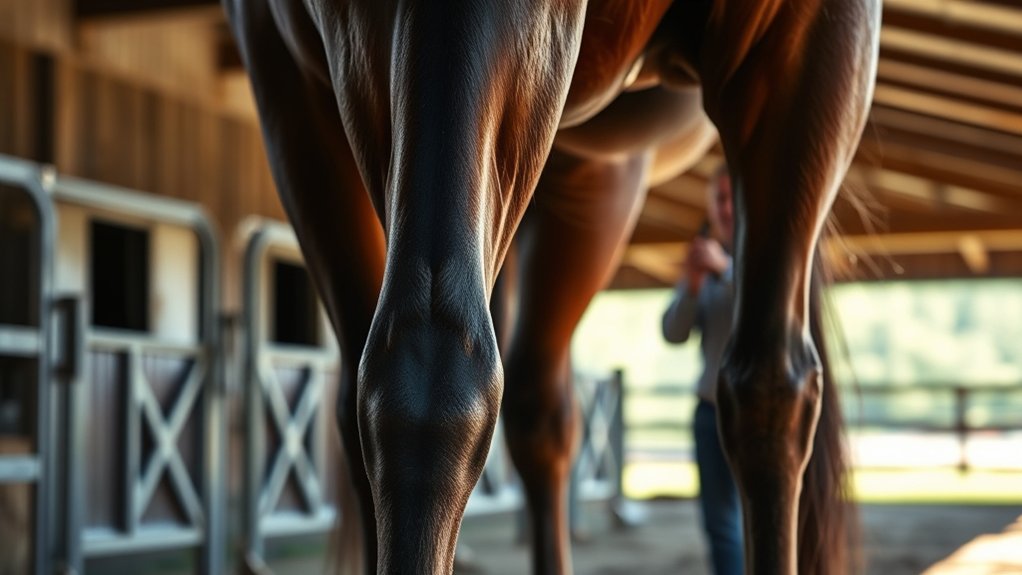
What exactly is soring, and why does it persist in the Tennessee Walking Horse industry? Soring is an illegal method used to produce the breed’s exaggerated high-stepping gait by inflicting pain through chemical irritants, mechanical devices, or hoof alterations.
You’ll find substances like mustard oil or diesel applied to sensitive leg areas, then wrapped to intensify discomfort.
Trainers often combine this with stacked pads, chains, and other equipment to artificially exaggerate the horse’s stride.
Visible effects include scars, hair loss, and abnormal stance, while behavioral signs show as resistance to hoof handling and walking difficulties.
Despite being banned under the 1970 Horse Protection Act, soring continues due to entrenched cultural practices and enforcement challenges. So, it remains a persistent issue within the industry.
How Chemicals and Pressure Shoes Cause Painful Soring
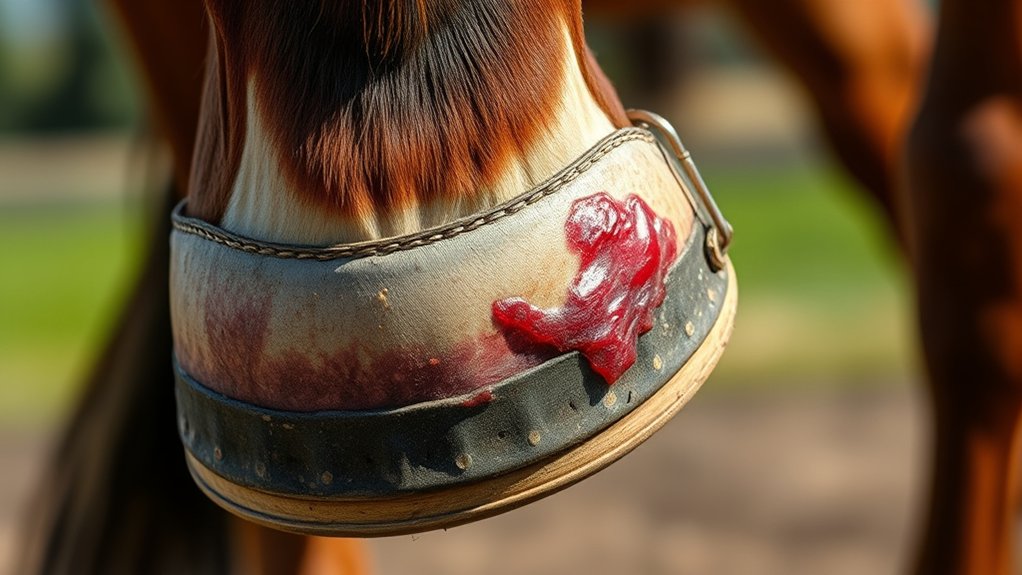
You’ll find that chemicals like mustard oil and kerosene are applied to a horse’s legs to cause severe tissue irritation and pain.
Pressure shoes add weight and concentrate force on the hooves, which increases inflammation and discomfort.
When used together, these methods trigger intense pain responses that make the horse exaggerate its gait.
Chemical Irritants Used
Although it may seem counterintuitive, trainers apply chemical irritants like mustard oil, kerosene, diesel fuel, and salicylic acid directly to the sensitive areas of Tennessee Walking Horses’ legs to induce pain. These substances cause burning, blistering, and scarring, leading to inflammation and long-term tissue damage.
Trainers often wrap the treated areas with plastic or duct tape, trapping the chemicals against the skin for days and intensifying the pain. To conceal the resulting scars and chemical trauma, dyes or other camouflage techniques are frequently employed during inspections.
The application of these irritants is a deliberate method to cause discomfort. When combined with pressure shoes, it forces the horse to exaggerate its gait by lifting its feet higher.
This ultimately masks the severe physical abuse inflicted through soring.
Effects Of Pressure Shoes
When trainers combine pressure shoes with chemical irritants, they intensify the pain inflicted on Tennessee Walking Horses’ hooves and legs. Pressure shoes, often stacked pads or thickened footwear, increase pressure on the hoof structures. This changes the horse’s natural movement and causes deliberate soreness.
Applying chemicals such as kerosene or mustard oil beneath these shoes makes things worse. These substances cause inflammation, blistering, and scarring, which leads to more tissue damage. This painful combo forces the horse to exaggerate its gait to avoid discomfort.
The added weight and pressure also change how the hoof strikes the ground. This promotes resistance when handling the horse and causes an abnormal stance.
To detect soring from pressure shoes, you need thorough palpation, radiographic imaging, and to watch for behavioral responses when the hooves are touched.
These steps help identify inflammation and structural changes caused by these harmful practices. It’s important to recognize these signs to protect the horse from ongoing pain.
Pain Mechanisms Explained
Understanding how chemicals and pressure shoes cause pain in Tennessee Walking Horses helps clarify why soring produces such exaggerated and unnatural gaits.
Chemicals like mustard oil, diesel fuel, and kerosene are applied to the pasterns, inducing burning, blistering, and inflammation, which trigger intense pain.
Pressure shoes and stacked pads make things worse by concentrating force on sensitive tissues, causing tissue damage and soreness.
Often, irritants are hidden using dye or plastic wraps, which masks the injury during inspections.
Plus, mechanical devices like chains wrapped around the pasterns cause pain and encourage higher foot lifts, adding to the horse’s discomfort.
These methods take advantage of the horse’s pain response, forcing unnatural gait patterns while also hiding the evidence.
How Stacks and Chains Cause Soring

You’ll notice that stacks and chains actually work by changing the horse’s gait. They add extra weight and put pressure on sensitive spots.
This isn’t just a small adjustment—it causes pain by applying targeted pressure and leading to inflammation. Because of this, the horse ends up lifting its feet much higher than normal.
When you understand how these tools cause discomfort, it becomes easier to see just how much soring affects the horse.
Mechanical Device Effects
Although stacks and chains may seem like simple tools, they play an essential role in causing soring by mechanically altering a Tennessee Walking Horse’s gait.
Stacks are built-up pads attached to the hooves, increasing weight and changing hoof strike.
Chains wrap tightly around the pasterns, creating discomfort that forces the horse to lift its feet higher.
You should understand these mechanical device effects:
- Stacks exaggerate gait by adding weight and modifying pressure distribution on the hooves.
- Chains cause mechanical irritation and encourage the high-stepping motion characteristic of sored horses.
- The combination of stacks and chains manipulates natural movement, producing an unnatural, exaggerated gait.
These devices, when misused, induce inflammation and mechanical stress.
This contributes directly to the soring phenomenon.
Pain Induction Methods
When stacks and chains are applied to Tennessee Walking Horses, they induce pain through targeted mechanical and chemical means that alter the horse’s natural gait.
Stacks are built-up pads made from plastic, leather, rubber, or wood, placed under the hooves to add weight and exaggerate movement.
Chains, wrapped tightly around the pasterns, create discomfort by applying pressure.
Chemical agents are often applied beneath stacks or on chains to cause inflammation and intensify pain, forcing the horse to lift its legs higher to avoid discomfort.
Although chains under six ounces with lubricant are legal, any use causing trauma or pain is prohibited.
These combined methods mechanically and chemically irritate sensitive areas, producing the characteristic elevated gait associated with soring.
How to Recognize Signs of Sored Horses
How can you identify a sored Tennessee Walking Horse? You need to carefully observe physical and behavioral indicators that suggest pain or trauma. Key signs include scars, hair loss, or darkened hair on the pasterns, often from chemical burns or mechanical injury.
Also, look for an abnormal stance, like shifting weight to the hind legs or twisting hocks, which the horse might do to reduce discomfort. Resistance to hoof handling is another red flag. You might also notice visible swelling, blistering, or inflammation on the lower legs.
On top of that, watch for unusual gait patterns such as exaggerated high-stepping or refusal to flex the pasterns normally. Limping or difficulty walking can also point to underlying pain.
Paying attention to these details helps you spot soring without invasive methods, so you can recognize horses suffering from this harmful practice.
Legal Protections and Enforcement Challenges
Since soring involves subtle and often concealed methods, enforcing legal protections has proven difficult despite the Horse Protection Act of 1970, which explicitly bans these abusive practices. You’ll find that the USDA depends on trained inspectors and diagnostic tools to identify soring, but trainers frequently use anesthetics or temporary techniques to mask pain responses.
Enforcing anti-soring laws is challenging as trainers often conceal abuse using anesthetics and other masking techniques.
They may also apply dyes to hide scars or leave shows during inspections, which makes detection even more complicated.
The USDA’s 2024 rule to replace industry-run inspections with USDA officials aimed to strengthen enforcement, but legal challenges have delayed its implementation. Investigations and undercover footage keep revealing violations, showing just how hard it’s to police an abuse method designed for concealment.
Effective enforcement means overcoming these covert tactics and making sure inspectors have full authority and the resources they need. Without that, it’s tough to protect horses properly.
Famous Legal Battles Against Soring Abuse
Although soring remains a covert and challenging abuse to detect, several high-profile legal battles have had a big impact on enforcement and public awareness. You can learn from these cases how legal action helps shape efforts against soring.
Take Jackie McConnell’s 2011 undercover exposure, for example. It revealed his use of caustic chemicals and physical abuse, which led to federal raids. In 2013, he got a lifetime ban, and in 2012 he pleaded guilty to animal cruelty, receiving probation and fines.
Then there’s the McGartland family, who faced multiple legal challenges between 2013 and 2016 after USDA inspections found their horses were sore. This shows how enforcement can be a constant struggle.
Media coverage of these cases really brought more public attention to the issue. It also put pressure on regulatory bodies to tighten oversight.
All these battles highlight why vigilant monitoring and strict legal consequences are so important to effectively stop soring practices.
Frequently Asked Questions
How Did Soring Practices Originate in the Tennessee Walking Horse Community?
You’ll find soring originated in the 1950s when trainers aimed to exaggerate the Tennessee Walking Horse’s gait for competition by using weighted shoes, chains, and chemical irritants. They really wanted to make the horse’s movement look dramatic.
The problem was, this came at the expense of the horse’s welfare. Instead of focusing on the animal’s comfort, the goal was all about the show. It’s a practice that definitely raised a lot of ethical concerns.
What Alternatives Exist to Achieve a Flashy Gait Without Soring?
You can achieve a flashy gait that dazzles like fireworks by using natural training methods, selective breeding, balanced riding aids, and positive reinforcement.
These techniques develop the horse’s movement ethically without causing pain or harm. It’s all about working with the horse’s natural abilities and encouraging them in a kind way.
When you focus on these methods, you get results that are both impressive and humane. It’s a win-win for you and your horse!
How Do Trainers and Owners Respond to Accusations of Soring?
You’ll find trainers and owners often deny soring, claim legality, or assert natural talent. Some avoid inspections, dismiss accusations, or litigate against inspectors.
They emphasize tradition and competition over acknowledging or addressing animal welfare violations. It’s like they’d rather defend their practices than face the issues head-on. This attitude really shapes how the problem is handled in the industry.
What Impact Does Soring Have on a Horse’s Long-Term Health?
You’ll find soring causes chronic tissue damage, joint inflammation, nerve injury, and lameness in horses. It leads to persistent pain, heightened sensitivity, psychological distress, and ultimately diminishes their mobility and overall quality of life permanently.
In other words, soring doesn’t just hurt them in the moment—it creates long-lasting problems. These issues can follow a horse throughout its life, making everyday movement difficult and painful. So, it’s really something that impacts their well-being in a big way.
Are There Organizations Dedicated to Rescuing and Rehabilitating Sored Horses?
Yes, several organizations, like the Tennessee Walking Horse Trainers Association and ASPCA, actively rescue and rehabilitate sored horses. They provide medical care, foster homes, and specialized treatment to restore these horses’ physical and mental well-being effectively.
These groups work hard to give the horses a second chance. It’s not just about healing their bodies but also helping them feel safe and cared for again. Many of these horses have been through a lot, so the rehab process can take time. But the goal is always to get them healthy and happy.
Conclusion
Now that you understand how soring inflicts pain through chemicals, pressure shoes, and chains, you might wonder how much longer this cruelty will persist. Despite laws and legal battles, enforcement struggles leave many horses suffering in silence.
The question remains: will you stand by as these majestic Tennessee Walking Horses endure hidden abuse, or will you join the fight to expose and end soring once and for all? The choice is yours.