How Tall Are American Quarter Horses – Quick Facts
American Quarter Horses typically stand between 14 and 16 hands tall, with most falling around 14.3 to 15.3 hands. Their height varies by type: stock types are shorter and agile, halter types are larger and muscular, while racing types often reach up to 16.2 hands.
Genetics, nutrition, and selective breeding largely determine their final size. This height range supports their versatile performance across disciplines.
Exploring their height in more detail reveals how these factors shape their capabilities and standards. It’s pretty interesting to see how much variety there is within the breed!
How Tall Are American Quarter Horses on Average?
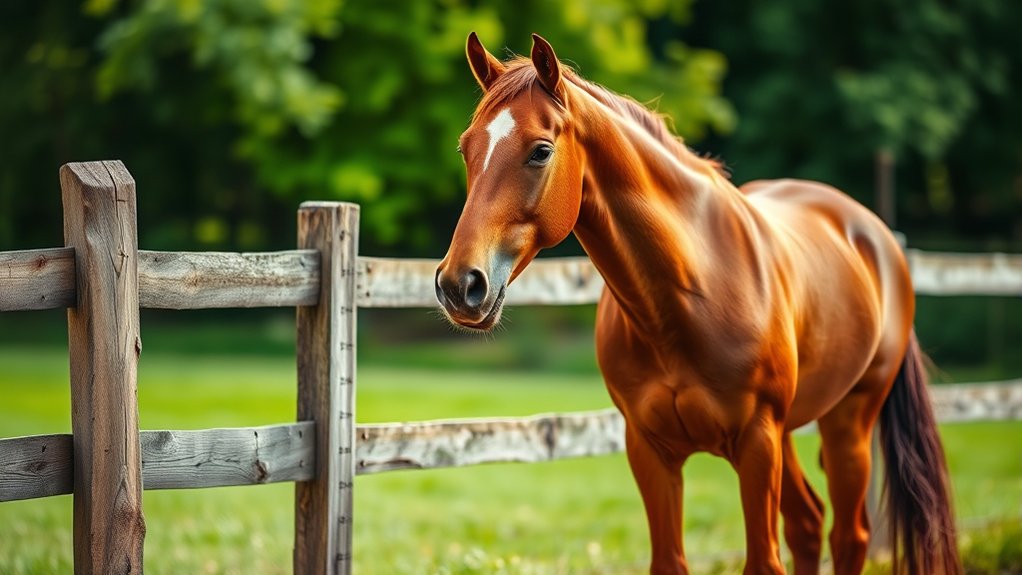
Although American Quarter Horses come in various types, their average height typically ranges from 14 to 16 hands (56 to 64 inches, or 142 to 163 cm). Most individuals fall between 14.3 and 15.3 hands, placing them squarely in the medium-sized horse category.
American Quarter Horses average 14 to 16 hands, fitting firmly within the medium-sized horse category.
This range guarantees a compact, muscular build optimized for versatility and performance.
While some exceptional Quarter Horses, particularly in halter or English disciplines, may reach up to 17 hands, these are outliers rather than the norm.
The breed’s height reflects its functional design, balancing strength and agility.
When evaluating an American Quarter Horse’s height, you’ll find it comfortably fits within the medium range.
This supports its reputation as a robust, well-proportioned breed suited for various equestrian activities.
Height Ranges for Stock, Halter, and Racing Types
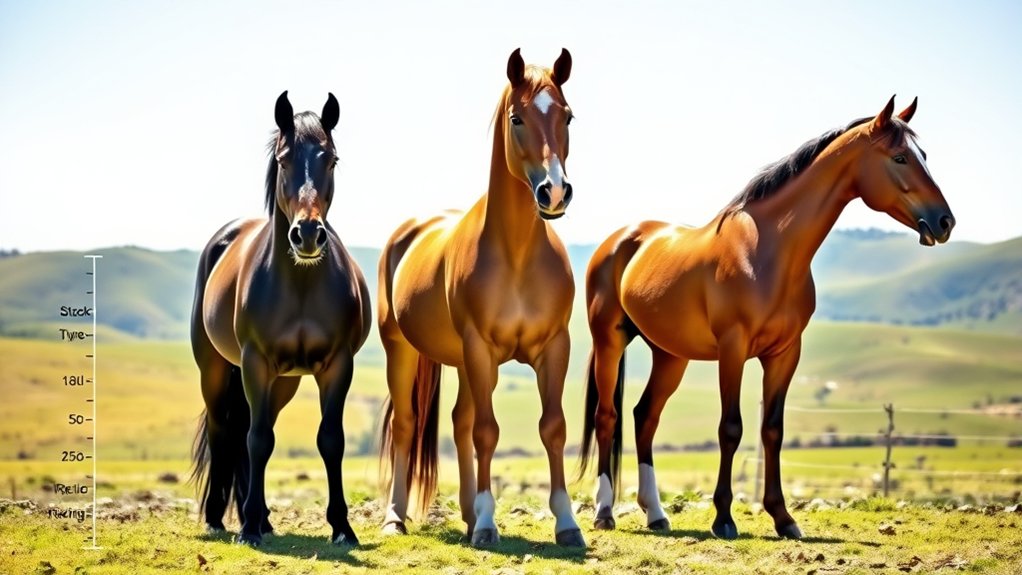
You’ll find stock type American Quarter Horses typically range from 14 to 15.2 hands in height. They’re optimized for agility and strength, making them really versatile.
Halter types, on the other hand, usually measure between 15.2 and 16 hands. This reflects their larger, more muscular build.
Then, when it comes to racing or hunter types, they often reach up to 17 hands, emphasizing speed and stride length.
Stock Type Height
When evaluating the height of American Quarter Horses, you’ll find distinct ranges corresponding to their specific types. The stock type typically stands between 14 and 15.2 hands. This range is optimized for a muscular build and agility.
This contrasts with halter and racing types, which generally grow taller. Understanding these distinctions helps you select the right horse for your needs.
| Type | Height Range (Hands) | Characteristics |
|---|---|---|
| Stock | 14.0 – 15.2 | Muscular, compact, agile |
| Halter | 15.2 – 16.0 | Larger, robust for show |
| Racing/Hunter | 15.2 – 16.0+ | Taller, lean, built for speed |
Focusing on the stock type height range guarantees you’re aware of their functional design. It also highlights their typical stature within the breed spectrum.
Halter And Racing Heights
Because height considerably influences performance and suitability, understanding the differences between halter and racing type American Quarter Horses is essential.
Halter types typically measure between 15.2 and 16 hands, favoring a larger, more muscular build optimized for conformation and show purposes.
In contrast, racing or hunter types often reach up to 16.2 hands, leveraging increased height for enhanced stride length, speed, and agility.
Stock types, meanwhile, generally stand between 14.2 and 15.2 hands, balancing compactness with power.
Overall, the height range for American Quarter Horses spans approximately 14 to 16.2 hands, with some specialized individuals exceeding these limits, especially in English or show disciplines.
This variation really shows how adaptable the breed is to different equestrian roles and performance demands.
How to Measure Your Quarter Horse’s Height Accurately
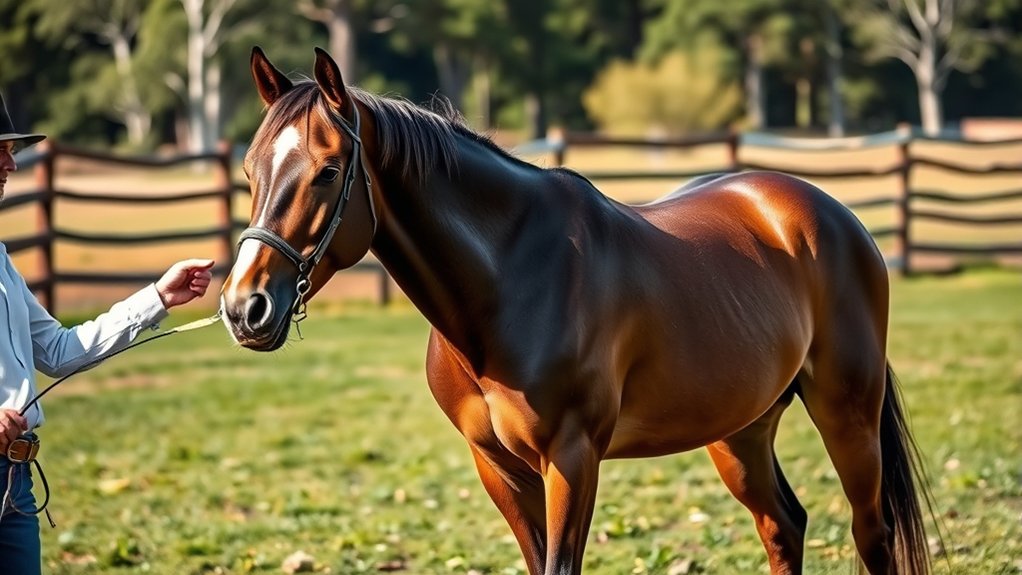
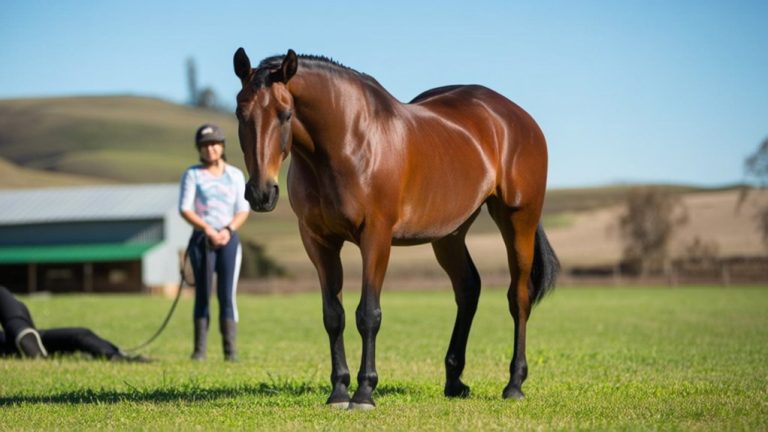
Although measuring your Quarter Horse’s height might seem straightforward, accuracy depends on following specific steps. First, position your horse on a flat, level surface, making certain it stands square with all four legs evenly bearing weight.
Use a height measuring stick or device, placing it upright at the withers, the highest point between the shoulder blades.
Position the measuring stick upright at the withers, the highest point between the shoulder blades.
Avoid tilting or leaning your horse’s head; keep it natural to guarantee precision. Take the measurement at eye level to reduce parallax error.
Record the height in hands (one hand equals 4 inches), centimeters, or inches, depending on your preference.
By sticking to these technical guidelines, you’ll get a reliable, consistent measurement that truly reflects your Quarter Horse’s height. It’s all about being methodical and paying attention to the details.
That way, you can be confident in your results every time.
Key Factors Influencing Quarter Horse Height and Growth
You’ll find that genetics play a big role in determining a Quarter Horse’s height. This can vary quite a bit depending on whether you’re looking at stock, racing, or halter types.
On top of that, nutrition and how quickly they grow during their early development really impact their final size. So, making sure they’ve the right diet and exercise is super important.
When you understand these factors, it becomes a lot easier to predict and manage your horse’s growth potential effectively.
Genetic Influences on Height
When you examine the height of American Quarter Horses, you’ll find that their genetic makeup plays a crucial role in determining skeletal growth and overall size. Specific genes control bone development and growth rates, establishing the foundation for adult height.
Selective breeding has emphasized traits linked to size, resulting in height variations typically between 14 and 16 hands.
The interplay of alleles inherited from both Thoroughbred and native stock contributes to diverse height profiles across Quarter Horse lines. You can predict potential adult height by analyzing growth-related genetic markers alongside early development data.
Breeders prioritizing genes associated with size directly influence offspring stature, guiding the breed’s physical characteristics with precision and consistency.
Understanding these genetic factors is essential for anticipating and managing Quarter Horse height effectively. It’s pretty fascinating how much control genetics gives breeders, isn’t it? This knowledge really helps in shaping the future of the breed.
Nutrition and Growth Rates
How does nutrition impact the growth rates and final height of American Quarter Horses? While genetics set the baseline height, proper nutrition during critical growth stages plays an essential role in achieving ideal stature.
You need to focus on a balanced diet that supports skeletal development without causing complications. Key nutritional factors include supplying adequate protein and minerals to promote healthy bone growth, providing high-quality forage to guarantee consistent nutrient absorption, and controlling energy intake to prevent developmental orthopedic diseases.
Overfeeding or excessive calories during growth can impair bone formation and limit maximum height potential. When combined with good overall health and management, tailored nutrition helps your Quarter Horse reach its genetic height range of 14 to 16 hands efficiently and safely.
Breed Type Variations
Beyond proper nutrition, the breed type plays a significant role in determining the height and build of American Quarter Horses. These horses generally range from 14 to 16 hands, but their specific height depends largely on their breed type and intended use.
Stock type Quarter Horses, optimized for agility and cattle work, typically stand between 14.2 and 15.2 hands and have a compact build.
Racing and hunter types are taller, usually 15.2 to 16 hands, with a leaner physique designed for speed and jumping.
Halter types emphasize size and muscle mass, often measuring 15.2 to 16 hands.
Genetics, selective breeding, and discipline requirements directly influence growth, so understanding these factors helps you predict the final height and conformation of your Quarter Horse.
How Quarter Horse Height Affects Performance and Discipline
Because height directly impacts a Quarter Horse’s biomechanics, it plays a crucial role in determining their ideal discipline and performance capabilities. You’ll find that height influences stride length, agility, and power, which are critical for performance specialization.
Height shapes a Quarter Horse’s stride, agility, and power, defining their best performance discipline.
Typically, shorter, stockier horses excel in cattle work and reining, where quick, tight movements are essential.
Taller Quarter Horses around 16 hands tend to perform better in racing and hunter/jumper events due to their extended stride and speed.
This height variation allows you to select a horse best suited to your discipline’s demands.
Stockier, shorter horses excel in roping, cutting, and reining due to superior agility.
Taller horses provide greater stride efficiency for racing and jumping.
Breed standards often dictate ideal height ranges to maximize competitive success.
How Height Affects Rider Comfort and Suitability
When you’re picking out an American Quarter Horse, it’s important to think about how your height matches up with the horse’s size. This helps make sure you both stay balanced and in control.
If you’re on the taller side, horses around 16 hands usually work best for you. On the other hand, smaller riders or kids tend to feel more comfortable on horses under 14.3 hands.
Plus, getting the height right isn’t just about comfort—it also affects how well the saddle fits. And that’s a big deal because a good saddle fit keeps you stable while riding and makes sure the horse stays comfortable too.
Rider Height Compatibility
Although American Quarter Horses vary in height from 14.3 to 16 hands, this range allows riders of different statures to find a suitable match for comfort and control. If you’re under 5’4″, you’ll likely appreciate the breed’s smaller, agile builds, which facilitate ease of movement.
Conversely, taller riders, around 5’8″ and above, benefit from selecting horses toward the 16-hand mark to ensure adequate leg clearance and balance.
Keep these factors in mind:
- Height variability accommodates diverse riding styles, from English to Western disciplines.
- Your posture directly impacts how well you adapt to the horse’s height.
- Matching your height with the horse’s build enhances stability and control during rides.
Selecting a compatible horse height optimizes your riding experience and safety. It’s all about finding the right fit for you and your horse.
Saddle Fit Considerations
Matching your height with an American Quarter Horse’s stature not only improves riding balance but also directly impacts how the saddle fits both you and the horse. Horses around 16 hands need larger saddles that accommodate longer backs and higher withers. This ensures proper weight distribution and rider comfort.
On the other hand, smaller horses near 14 hands fit smaller, youth-sized saddles. This optimizes control and prevents pressure points. The saddle tree placement varies with height, which affects your posture and the horse’s comfort.
So, selecting the correct saddle size based on the horse’s height prevents discomfort and potential health issues for both of you.
| Horse Height (Hands) | Saddle Size Recommendation |
|---|---|
| 14 | Youth/Pony-sized |
| 15 | Medium |
| 16 | Large |
Comparing Quarter Horse Height to Other Popular Breeds
While American Quarter Horses usually stand between 14.3 and 16 hands tall, you’ll find that this height is shorter than that of Thoroughbreds, which average 15.3 to 17 hands.
Quarter Horses are more compact and muscular, optimized for ranch work and short-distance sprinting.
When comparing their height to other popular breeds, consider these points:
- Standardbreds range from 15 to 16 hands, making them slightly taller but less stocky than Quarter Horses.
- Arabians average 14 to 15 hands, so Quarter Horses generally stand taller.
- Warmbloods typically exceed Quarter Horses in height and are built for English disciplines rather than the versatility Quarter Horses offer.
This height profile enables Quarter Horses to excel in diverse activities, balancing strength, agility, and versatility across disciplines.
Why Some Quarter Horses Grow Taller Than Others
Height differences among American Quarter Horses stem largely from genetics and breeding goals. You’ll find some lines specifically bred for taller stature, while others emphasize a more compact build to suit distinct purposes.
For example, Quarter Horses bred for racing often grow taller compared to those bred for halter classes, where a stockier frame is preferred.
Environmental factors like nutrition and overall health during development also directly influence their final height.
Additionally, certain genetic markers linked to growth predispose some horses to reach greater heights. Because of diverse lineage and functional demands, Quarter Horses typically range from 14 to 16 hands.
Understanding these variations helps you appreciate why height differs and how selective breeding and management practices shape their stature.
The Role of Genetics in Quarter Horse Height
Because genetics govern the fundamental growth potential of American Quarter Horses, understanding their hereditary traits is essential for predicting height outcomes. You need to take into account how specific genes influence skeletal growth and stature.
Selective breeding further shapes these traits by favoring certain height ranges.
Key genetic factors include genes controlling limb length and bone density, which are critical for overall height. There are also alleles identified through genetic testing that correlate with size variations.
Plus, inherited growth potential sets maximum height limits, beyond which environmental factors have limited effect.
Breed Standards and Size Trends Over Time
Although American Quarter Horses vary in size, the breed standard typically ranges from 14 to 16 hands in height. Over time, the average height of registered Quarter Horses has remained stable, with most individuals measuring between 15 and 16 hands.
Taller types, such as the English or hunter variants, can reach up to 17 hands but are uncommon within the breed.
Through selective breeding, the characteristic compact, muscular build has been preserved, ensuring consistency in conformation alongside height standards.
Recent performance lines show a modest increase in height, yet the core size range remains steady across generations.
Understanding these trends helps you appreciate how breed standards guide the Quarter Horse’s development while maintaining its hallmark physical traits. It’s pretty interesting to see how they keep that classic look even as some subtle changes happen over time.
Frequently Asked Questions
What Is the Average Weight of an American Quarter Horse?
You can expect an American Quarter Horse to weigh between 950 and 1,200 pounds. Most of them average around 1,000 to 1,050 pounds.
Of course, the exact weight depends on their type, build, age, sex, and activity level. So, it can vary quite a bit from one horse to another. But generally, that’s the range you’ll see.
How Long Do American Quarter Horses Typically Live?
American Quarter Horses typically live around 25 years. But with proper care, nutrition, and veterinary attention, some can reach their early 30s.
Genetics and health management play a big role in how long they live. So, the way you look after them really makes a difference. It’s not just about their breed, but also how they’re cared for every day.
What Colors Are Common in American Quarter Horses?
You’ll find American Quarter Horses commonly in sorrel, bay, black, chestnut, palomino, buckskin, and gray. Their coats often feature white facial and leg markings.
That said, solid colors remain predominant across the breed. These horses really show off a beautiful range of shades. It’s one of the things that makes them so striking to look at!
How Much Exercise Does a Quarter Horse Need Daily?
You’ll need to provide your Quarter Horse 30 minutes to 2 hours of daily exercise, adjusting for age, discipline, and health. Consistent activity prevents metabolic issues, supports fitness, and maintains mental well-being.
This is especially important for performance horses. Keeping them moving regularly helps them stay in top shape and feel good. Just pay attention to what your horse needs and tailor their exercise accordingly.
Are American Quarter Horses Good for Beginner Riders?
Wondering if American Quarter Horses suit beginners? They’re ideal, thanks to their calm temperament, manageable size, and eagerness to please. You’ll find them steady, reliable, and responsive.
That makes your learning experience safer and more enjoyable. They’re a great choice if you’re just starting out and want a horse that’s easy to handle and fun to ride.
Conclusion
When you measure your American Quarter Horse’s height, you might be surprised to find it matches the breed’s versatile nature. It’s neither the tallest nor the shortest, but perfectly balanced.
This ideal stature supports its renowned agility and strength across disciplines. Understanding how genetics and breed standards shape their height helps you appreciate why these horses excel.
So, next time you see a Quarter Horse, you’ll know its height isn’t just a number. It’s a key to its exceptional performance.